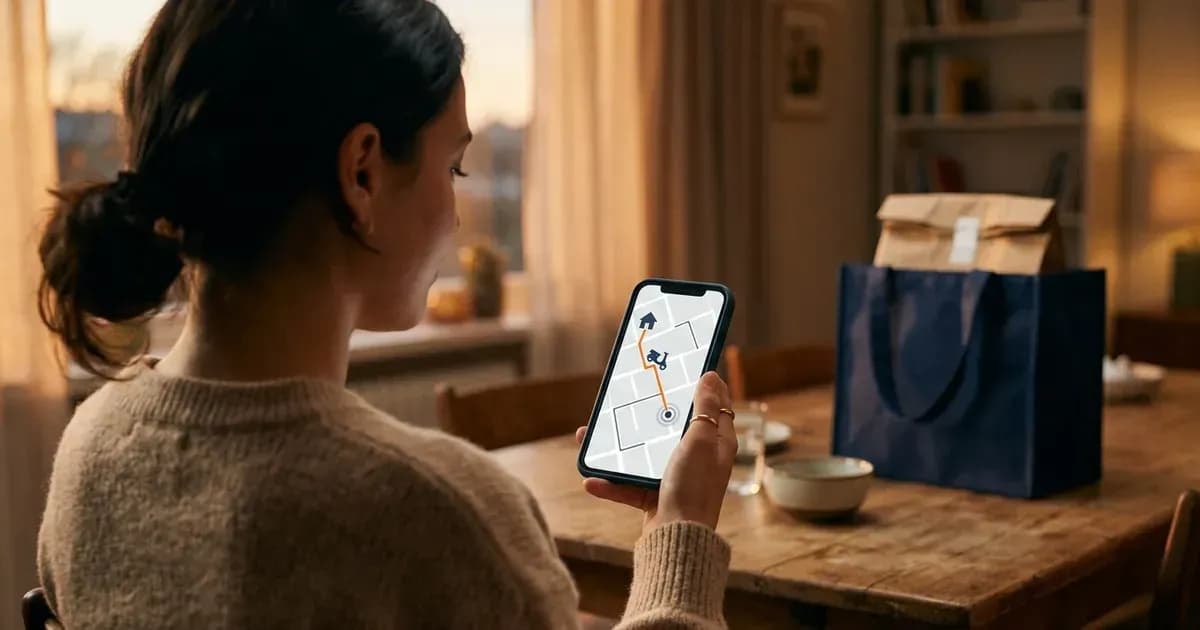



So you’re asking this in 2026? You’re not alone. Entrepreneurs, food business owners and startup founders around the world are building delivery apps that offer more than just food. But launching a delivery app today takes more than hiring a developer and going live.
With the rise of real-time features like GPS tracking, instant payments, smart recommendations and seamless UX, the cost to create a delivery app in 2026 depends on functionality, scalability, platform choices, and how fast you want to hit the market. In this expert-backed cost breakdown, you’ll learn:
- What affects your delivery app budget in 2026
- What developers charge and what the app costs to run
- Essential vs advanced features and their cost impact
- Realistic price ranges based on different business needs
- How to save time and money without compromising on quality
Whether you’re bootstrapping or backed by investors, this guide will help you make the right investment decisions as you step into the booming on-demand delivery app space.
Why Businesses Are Building Delivery Apps in 2026
The on-demand delivery market is growing not just in size but in speed, innovation, and user expectations. Businesses in 2026 aren’t asking if they should launch a delivery app; they’re asking how fast they can get to market without compromising on quality or performance.
The Delivery App Economy Is Worth Over $1.5 Trillion
According to Statista, revenue in the online food delivery market, including grocery delivery, is projected to reach $1.51 trillion in 2026.
And that’s just one vertical. When you add in grocery, medicine, courier, and multi-service delivery apps, the total addressable market becomes even bigger, a golden opportunity for entrepreneurs and enterprises alike.
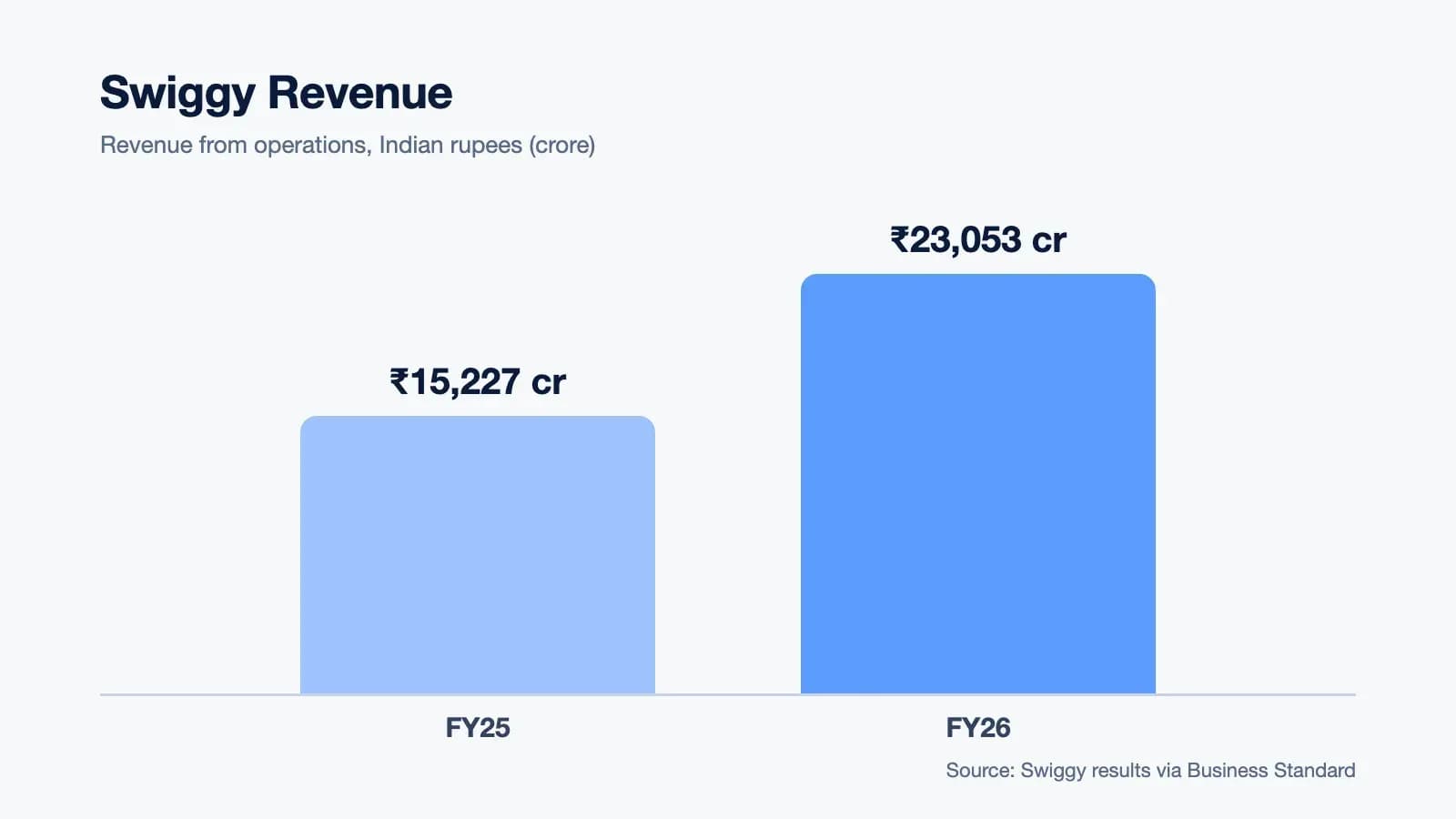
Swiggy in Numbers
Swiggy shows both the size of the opportunity and its cost. Its revenue grew from ₹15,227 crore in FY25 to ₹23,053 crore in FY26, while its net loss widened to ₹4,154 crore. In the June 2026 quarter, revenue rose 37% to ₹6,812 crore and the loss narrowed to ₹791 crore. Food delivery now makes money, while quick commerce is still where the cash goes.
Customers Now Expect Smart, Fast, and Seamless Delivery
Users don’t just want their order delivered. They expect:
- Real-time GPS tracking with no delay
- Personalized recommendations
- One tap payment
If an app falls short, customers switch to another. The bar is high, and only well-built apps keep their users.
Zepto and Blinkit Prove Speed Wins
Zepto and Blinkit raised customer expectations with very fast delivery from micro-warehouses. The rules are changing too: Blinkit dropped its 10-minute delivery branding in January 2026 after a push from India’s Labour Ministry, so speed now has to fit rider-safety rules.
New models keep appearing. Rapido’s Ownly offers zero-commission food delivery and has expanded from Bengaluru to Hyderabad, showing that a new app can compete on its own commission model.
Smart Routing Cuts Delivery Costs
Route optimization, often powered by AI as a feature inside the rider app, helps delivery businesses:
- Deliver more orders per hour
- Cut down fuel usage
Must-Have Features for a Delivery App in 2026
Building a delivery app in 2026 means going beyond basic ordering and delivery functions. Today’s users demand speed, convenience and personalization, while businesses need powerful tools to manage operations efficiently. Here’s a complete breakdown of the essential modules and feature sets your app must include:
User Panel – Seamless & Intuitive Experience
Your delivery app’s success starts with the end-user experience. Users should be able to navigate, order and track deliveries effortlessly. Key features include:
- One-tap onboarding & sign-up (via social login or OTP)
- Location auto-detection using GPS
- Smart search with filters
- Live order tracking with ETA
- Secure in-app payments & saved cards
- Real-time order notifications
- Ratings and reviews for service quality
Delivery Partner App – Built for Speed & Accuracy
Your delivery personnel need a lightweight, responsive app that minimizes confusion and maximizes efficiency. Critical features include:
- Real-time task assignments
- Route optimization to reduce delivery time
- In-app calling/chat with customers
- Earnings dashboard & withdrawal management
- Delivery status updates in one tap
- Availability toggle and duty log
Restaurant / Store Dashboard – Control at Their Fingertips
Vendors should be able to manage their offerings easily. The store panel should have:
- Menu and pricing management
- Inventory control with low-stock alerts
- Offer and coupon configuration
- Live order management dashboard
- Order preparation timer
- Sales analytics & performance insights
Admin Panel – Total Control and Insights
As the platform owner, the admin dashboard is your command center. It should have:
- User, delivery partner and vendor management
- Commission configuration
- Advanced analytics & reports
- Manual order adjustment
- Payment and refund tracking
- Multi-tier rating and review moderation
Smart Add-Ons That Matter in 2026
To stand out in the crowded delivery app space without overspending, consider these high-impact, forward-looking features:
Dark mode, voice search, and accessibility tools
AI-powered product/food recommendations based on user behavior
Predictive delivery time estimation to set expectations
Loyalty programs and gamified reward points
Multi-language support for regional targeting
Types of Delivery Apps and What Drives Their Cost
The type of delivery app you choose sets most of the budget. Here is what each type needs and what pushes its cost up:
| Type of App | What It Needs | What Pushes the Cost Up |
|---|---|---|
| Food delivery (single restaurant) | Menu, ordering, payments, delivery tracking | Custom design, loyalty programs |
| Restaurant marketplace (multi-vendor) | Vendor dashboards, commissions, search, ratings, rider app | Number of cities, payout rules, live tracking at scale |
| Grocery or quick commerce | Inventory, store slots, substitutions, rider app | Real-time stock sync, dark-store operations |
| Courier or parcel delivery | Booking, pickup and drop, proof of delivery | Route optimization, business accounts |
| Multi-service on-demand | Several service types in one app | Separate flows and pricing rules for each service |
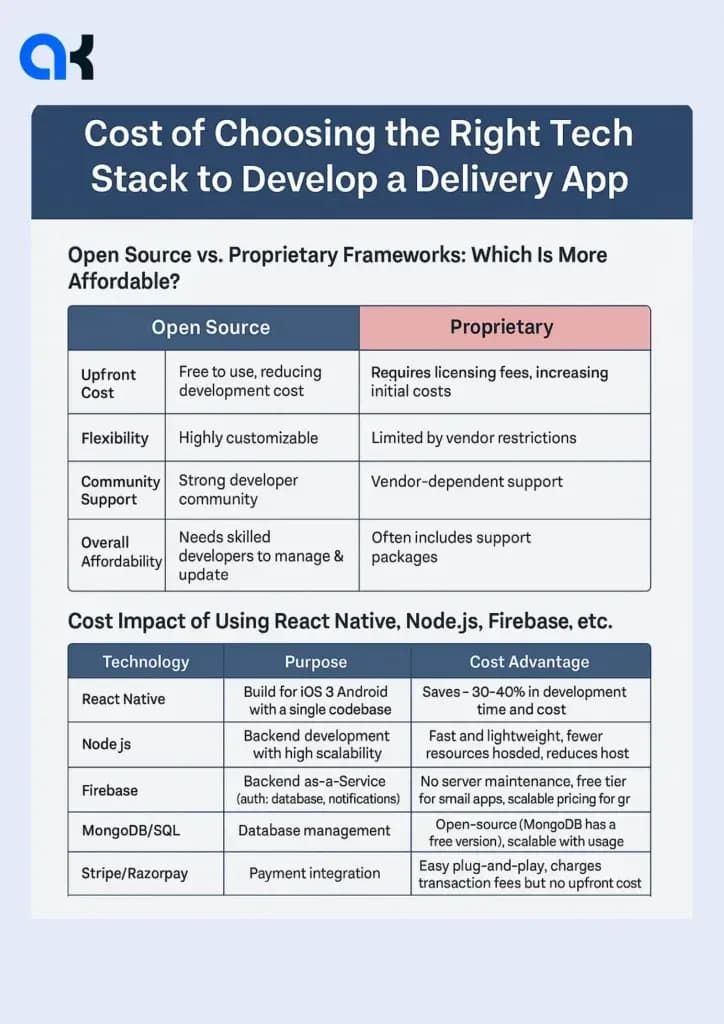
Cost of the Right Tech Stack to Develop a Delivery App
Your tech stack, the languages, frameworks and services used to build your app, affects both the first build and long-term running costs. Cross-platform frameworks such as Flutter or React Native let one codebase serve iOS and Android.
Custom Build or Off-the-Shelf Software?
Off-the-shelf delivery software gets you started quickly, but you rent the features, share the design with other businesses and pay monthly fees. A custom build costs more up front, but the app, its features and its data are yours, and it can grow in any direction your business needs.
What Developers Charge in 2026
Where your team is based changes the hourly rate a lot. Clutch’s 2026 pricing guide shows typical agency rates:
| Region | Typical Hourly Rate |
|---|---|
| India | Under $25 |
| USA, Ukraine, Philippines | $25–$49 |
| Poland, Canada | $50–$99 |
| Australia | $100–$149 |
Clutch also reports that most app projects reviewed on its platform cost between $10,000 and $49,999.
Post-Launch Costs: Running Your Delivery App
Launch is only the start. Every order uses paid services such as maps, messages and payments. These are the main running costs, with current prices:
| Running Cost | Current Price | Notes |
|---|---|---|
| Google Maps: Dynamic Maps | $7 per 1,000 loads after 10,000 free a month | The $200 monthly credit was replaced by free usage caps in March 2025 |
| Google Maps: route calculation | $5 per 1,000 requests after 10,000 free a month | Google Maps Platform pricing |
| SMS notifications (US) | $0.0083 per message plus carrier fees | Twilio SMS pricing |
| Phone number verification (OTP) | $0.05 per successful verification plus SMS | Twilio Verify pricing |
| App store accounts | Apple $99 a year; Google Play $25 once | Apple Developer Program |
| Payments | Payment gateway fees on each order | Food and parcels are physical goods, so app store commission does not apply |
| Maintenance | 15–20% of the build cost each year | Bug fixes, OS updates, security patches |
If you sell digital extras such as subscriptions inside the app, store fees apply: Google Play’s new fee starts at 10% in the US, UK and EEA, and Apple charges 15% to small developers.
How Appkodes Helps You Build a Delivery App
At Appkodes, we design and build every delivery app new for its client, around your business model, your cities and your delivery flow.
- A first release starts from $8,000, with a costed plan at a fixed price before work starts.
- Most first releases go live in about 30 days.
- Customer, rider, store and admin apps for Android, iOS and web.
- 100% source code ownership, with no recurring licence fees.
Final Thoughts: What’s the Right Delivery App Budget for You?
There’s no one-size-fits-all budget for food delivery app development. Start with the features your first customers need, launch in one city, then add features as orders grow.
Ready to build your delivery app? Talk to our delivery app team to get a costed plan for your idea.
Common questions
How much does it cost to create a delivery app in 2026?
With Appkodes, a first release starts from $8,000, with a costed plan at a fixed price. Industry-wide, Clutch reports most app projects cost between $10,000 and $49,999.
How much does it cost to build an app like Swiggy?
A full Swiggy-style marketplace with customer, restaurant, rider and admin apps costs more than a single-restaurant app. Start with the features your first city needs and grow from there.
How long does it take to build a delivery app?
With Appkodes, most first releases go live in about 30 days. Larger marketplaces with more cities and services take longer.
What are the running costs of a delivery app?
Maps, SMS and payment fees per order, app store accounts, hosting and maintenance of about 15–20% of the build cost a year.

Arun Andiselvam
LinkedInI am a startup veteran who has built five brands. I sold the first, an SEO tool, for a six figure exit, and now lead Appkodes, building custom mobile and web apps for founders and businesses. I bootstrapped every one of them from day one.