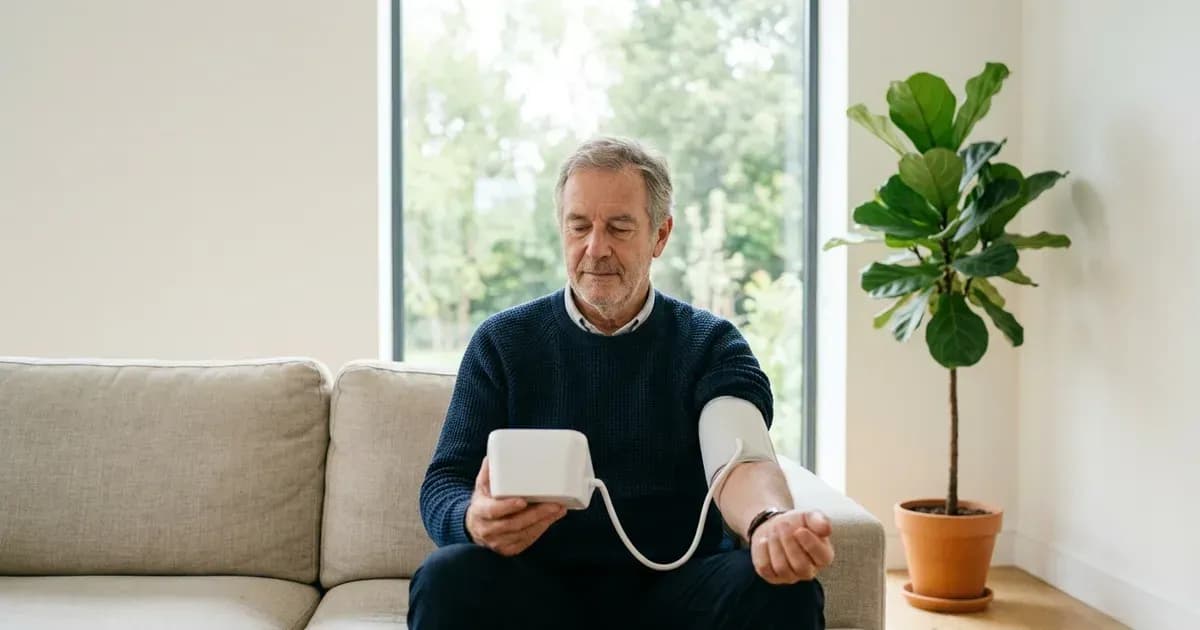
Want to build remote patient monitoring software that improves care, not just checks a box? In a time when healthcare systems are stretched thin, the ongoing digital transformation in healthcare has made Remote Patient Monitoring a powerful lever to improve care access and reduce system strain.
Health systems such as Providence use RPM for conditions like hypertension, heart failure and type 2 diabetes, helping patients stay on track at home and making them less likely to need urgent care.
But here’s the truth: not all RPM software is created equal. Cutting corners on development often leads to bare-minimum platforms that look functional but fail under real clinical pressure. These low-cost builds might:
- Lack proper compliance
- Crash under data loads
- Offer generic features that don’t scale with patient needs.
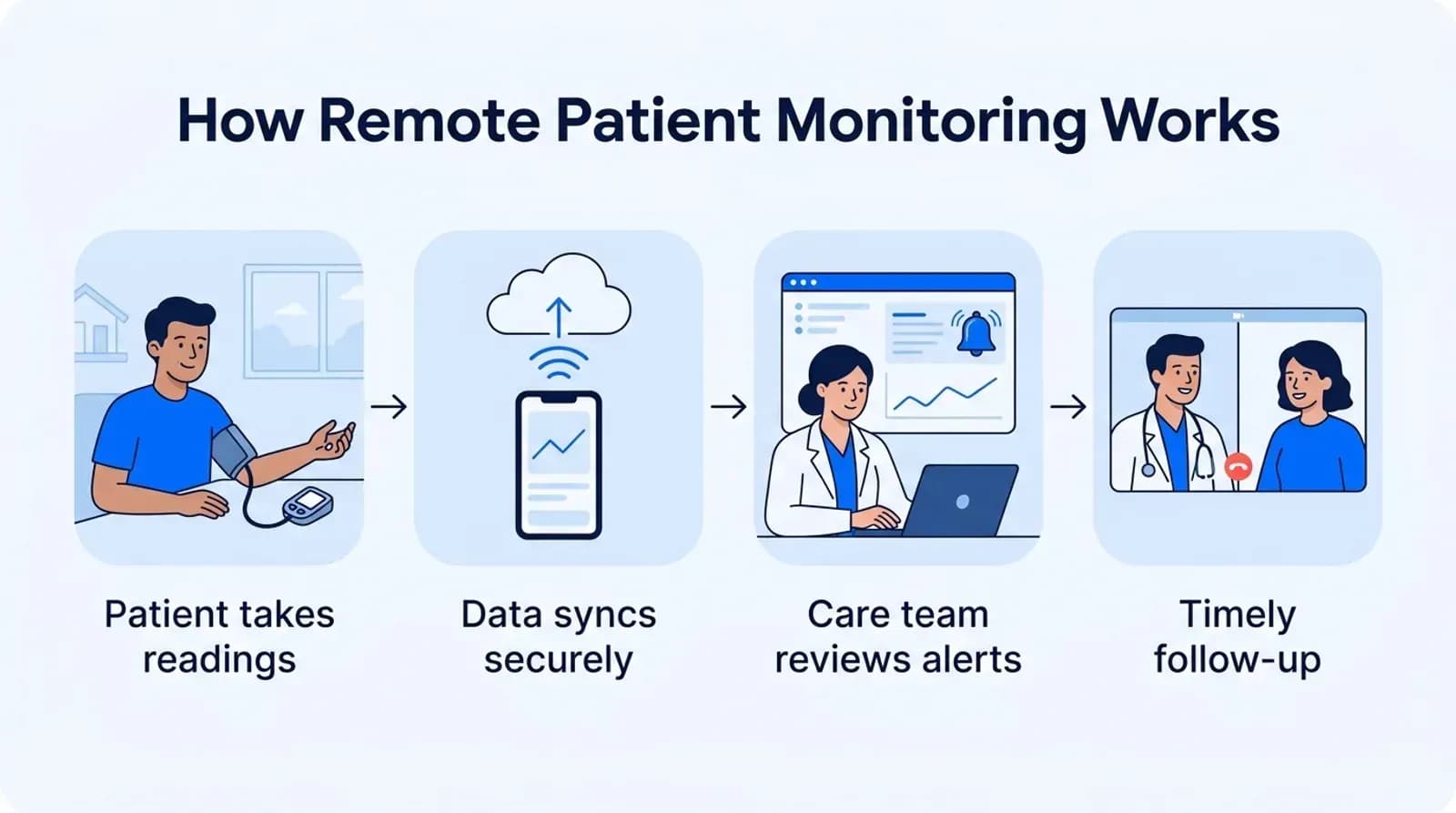
In contrast, a well-designed, properly funded RPM solution can be a strategic asset,
- One that adapts to your workflows,
- Integrates seamlessly with EHR systems,
- Supports multiple devices
- Delivers intelligent alerts that empower care teams rather than overwhelm them.
So, how much does it cost to develop remote patient monitoring software that’s built to last, not just to launch? The answer varies based on your goals, technical requirements, and clinical vision.
In the next section, we break down what shapes the cost, from the scope of the first release to billing, compliance and devices.
Remote Patient Monitoring Software Cost: What Sets the Scope
RPM software grows in clear steps. Each step adds work, and each has its own effect on what you can bill:
| Scope | What It Includes | Billing Note |
|---|---|---|
| Starter | Patient and care-team apps, manual readings, alerts and messaging | Manual entries do not qualify for Medicare RPM codes |
| Connected devices | Automatic readings from one or two FDA-cleared devices, reminders, reporting | Supports device-supply and management codes |
| EHR-integrated | EHR sync (FHIR), audit logs, billing time tracking, video visits | Adds the records practices need to bill and pass audits |
| Multi-device, multi-site | Several device types, several clinics and roles, analytics, optional AI-assisted triage | Scales billing across programs |
Why Knowing the Real Cost of Remote Patient Monitoring Software Matters
Cost is more than a number on a proposal; it’s a reflection of how well your RPM software will perform in the real world. Whether your goal is to reduce hospital readmissions, improve remote care delivery, or support overstretched clinical teams, the actual cost of RPM software plays a direct role in long-term ROI, patient safety, and regulatory compliance. That’s why getting it right from the start is so critical.
Yet many healthcare leaders still ask: Why do RPM projects go over budget? What are the hidden costs no one talks about? How do I know if I’m budgeting enough for long-term success? These are not just budgeting questions; they’re strategic ones. The answers often reveal the difference between a successful rollout and a stalled project.
What commonly drives up RPM costs unexpectedly?
Integration fees, third-party API charges, and the time it takes to customize workflows for different clinical teams often get overlooked in early budgeting. Other hidden costs include cross-platform device support, secure cloud hosting, training sessions for clinical staff, post-launch support, and ongoing updates for HIPAA or GDPR compliance.
Can I go live with a basic version and add features later?
Technically, yes, but skipping foundational features like EHR sync, device calibration, or HIPAA-grade encryption in early stages often leads to costly rework, disrupted care delivery, or noncompliance issues. Worse, trying to retrofit such capabilities later can result in delays, budget spikes, or even regulatory penalties.
What happens if I underestimate the budget?
Delays, incomplete rollouts, frustrated users, and in worst cases, a system that never gains clinical adoption. Critical features may be cut, go-live dates pushed back, or corners cut on user training and testing. In some cases, the lack of robust infrastructure leads to performance issues or data security vulnerabilities, putting both patients and providers at risk.
These pitfalls don’t just drain your budget; they compromise your ability to deliver quality care, meet compliance mandates, and achieve a return on investment. A rushed build might check technical boxes but often lacks the flexibility, reliability, and safeguards that real clinical environments demand.
On the other hand, budgeting based on a clear understanding of actual needs, including workflow complexity, third-party integrations, device interoperability, scalability, and ongoing regulatory demands, allows you to build a solution that supports long-term goals instead of chasing short-term shortcuts.
Before moving forward with development, healthcare leaders should ask: Am I planning for a minimum product or a maximum outcome? The answer to that question starts with understanding what a strong RPM platform demands and costs.
Why the Demand and Cost of RPM Software Keep Rising
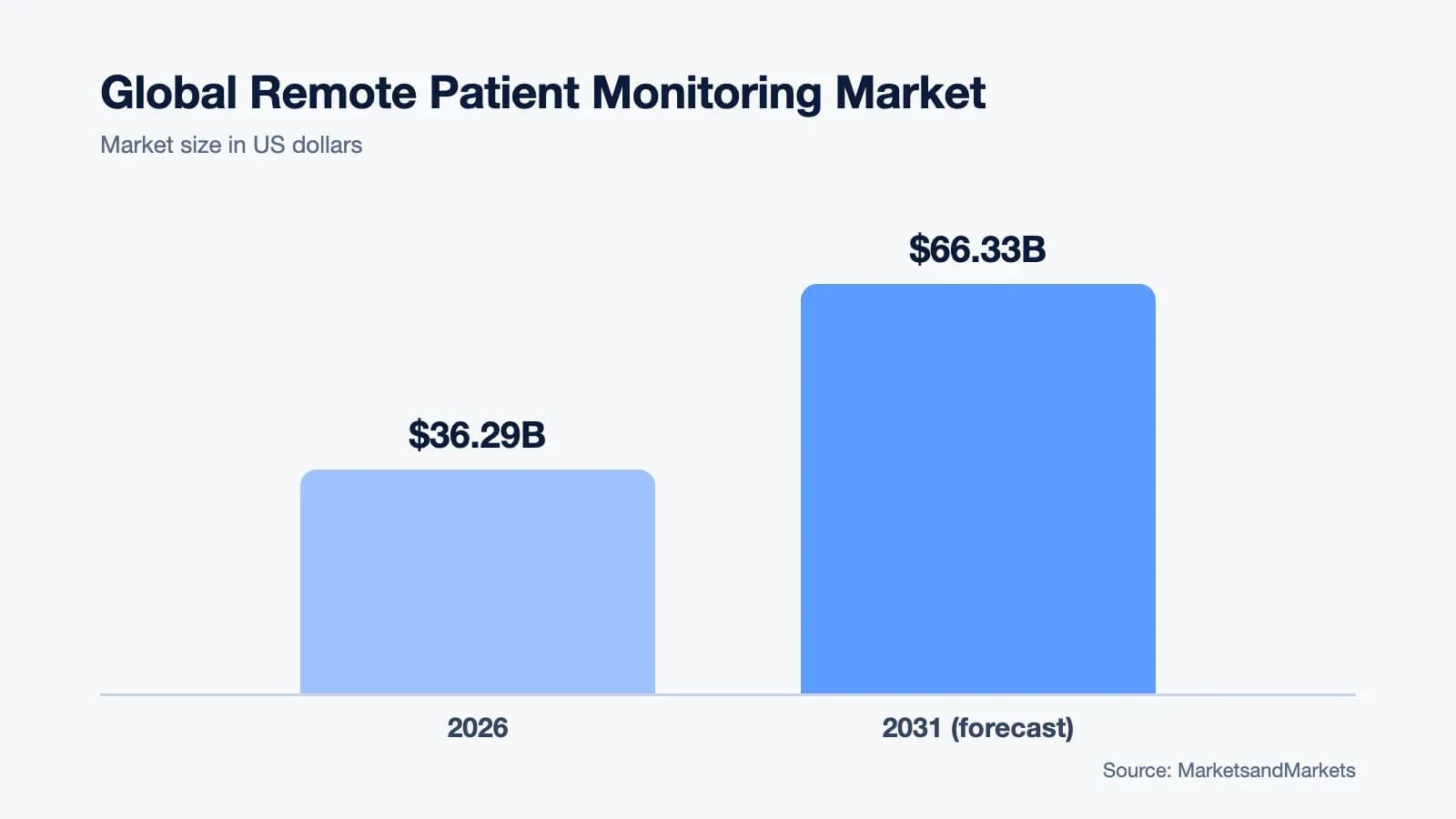
Healthcare is going digital, and RPM is a big part of it. MarketsandMarkets projects the global RPM market to grow from $36.29 billion in 2026 to $66.33 billion by 2031. In the US, Medicare payments for remote patient monitoring passed $500 million in 2024, according to the HHS Office of Inspector General.
What began as an emergency response during the pandemic became a long-term solution. Patients found freedom from waiting rooms. Providers discovered new ways to stay connected beyond clinic walls.
At the heart of this evolution? Remote Patient Monitoring. Once seen as a niche feature, RPM is now central to proactive, preventive care. From chronic disease management to early symptom alerts, it’s turning passive data into real-time decisions and changing how care happens.
But with high expectations comes high complexity. Healthcare teams aren’t just asking for “something that works.” They’re demanding RPM platforms that integrate with wearables, communicate with EHRs, fit into clinical routines, and meet global data standards.
This sophistication affects development costs in big ways, so let’s look at what drives the budget.
Key Factors That Influence RPM Software Development Cost
The cost to build remote patient monitoring software depends on a few critical elements. Each one adds development and testing time:
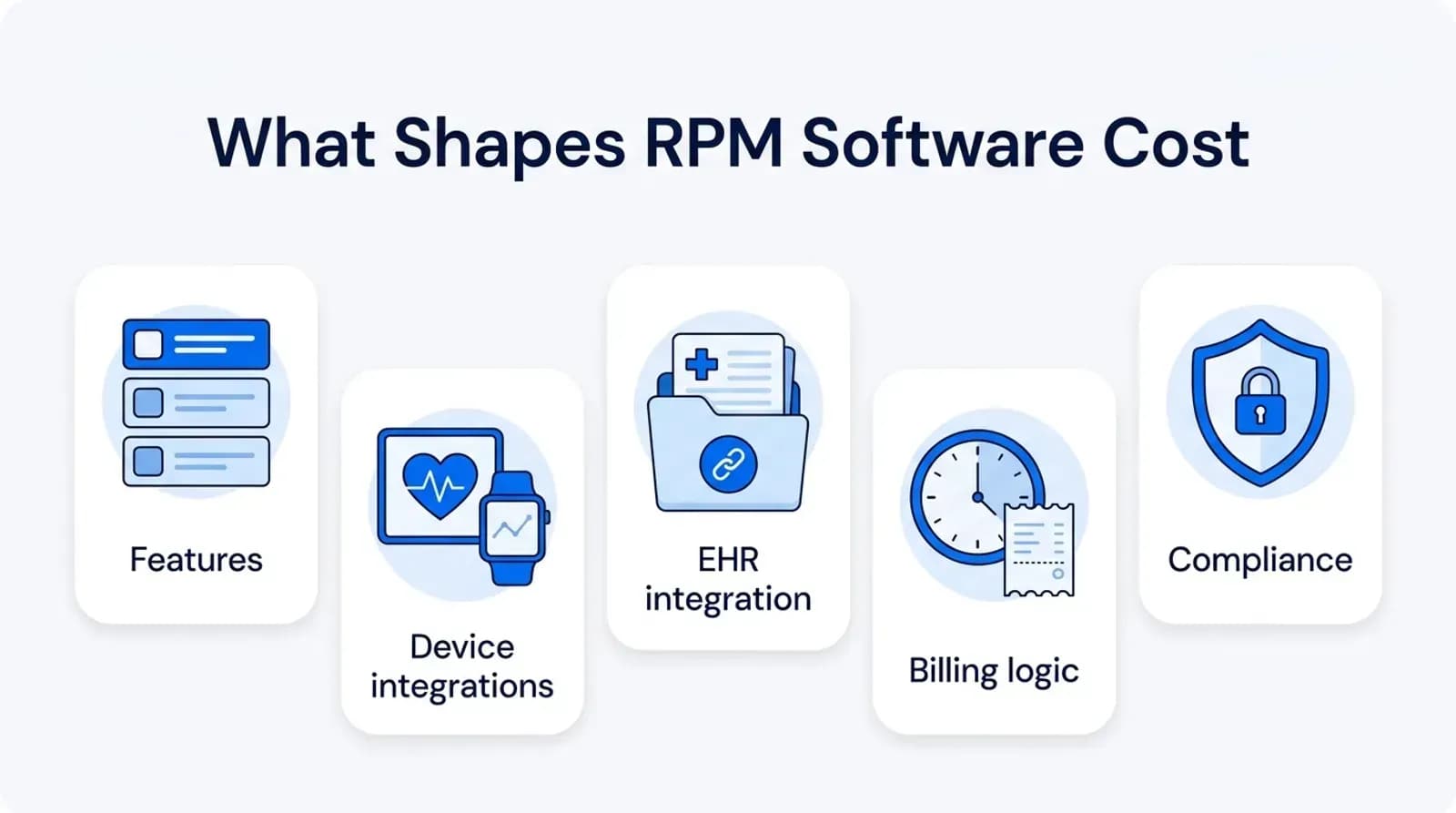
#1 Feature Complexity
Basic reading capture and messaging keep costs low. Multi-condition care plans, real-time dashboards, secure video visits and alert rules for each condition add development and testing time. AI-assisted triage can be added as a feature where it helps care teams.
#2 Design and User Experience
Patients, clinicians and administrators all need an app that is simple to use. Many RPM patients are older, so large text, clear steps and accessibility support matter.
#3 Billing Logic
If your customers bill Medicare, the software has to count reading days, log care-team minutes, record patient consent and real-time interactions, and export claims. The HHS Inspector General has flagged RPM billing problems, so a clear audit trail matters.
#4 Compliance Requirements
RPM software handles sensitive health data, so it needs encryption, access controls, audit logs and a business associate agreement with the cloud host. The rules keep moving; see the compliance section below.
#5 Device and Data Integrations
Each device type, EHR and phone health platform adds integration work. Plan for changes too: Google Fit APIs will be supported only until the end of 2026, with Health Connect replacing them on Android, and Fitbit data is moving to the Google Health API.
Medicare RPM Billing Codes in 2026
Medicare pays for RPM through a set of codes. The 2026 Physician Fee Schedule added two new codes for shorter monitoring and management time:
| Code | What It Covers |
|---|---|
| 99453 | Device setup and patient education |
| 99454 | Device supply with readings on 16–30 days in a 30-day period |
| 99445 (new in 2026) | Device supply with readings on 2–15 days in a 30-day period |
| 99457 | First 20 minutes of care-team management in a month |
| 99458 | Each additional 20 minutes |
| 99470 (new in 2026) | First 10 minutes of care-team management in a month |
Payment amounts vary by location, so check the current fee schedule. The device must be a medical device that sends readings automatically, and patient consent is required.
Compliance Rules to Plan For in 2026
- HIPAA: build in risk analysis, encryption, multi-factor sign-in and a business associate agreement with your cloud host. An update to the HIPAA Security Rule is still pending.
- FTC Health Breach Notification Rule: direct-to-consumer health apps not covered by HIPAA must report breaches.
- FDA: software that diagnoses or treats may be a medical device. The FDA’s January 2026 guidance widened what counts as a general wellness product, so check where your claims fall.
- EU: RPM software sold in Europe may fall under the EU Medical Device Regulation (MDR), along with GDPR.
Ongoing Costs of Remote Patient Monitoring Software
Beyond the build, plan for these running costs:
- Cloud hosting and secure data storage, which grow with patients and readings.
- Maintenance, bug fixes and updates for new iOS and Android versions.
- New features and device integrations as your program grows.
- Staff training and support for care teams.
- Devices, shipping and replacements, usually bought or rented from a device vendor.
Is RPM Software Worth the Cost?
It can be, when the program is well run. A study of an NYU Langone hypertension RPM program found an average program cost of $330 per patient per year, with staff time reviewing data as the biggest expense. Good software cuts that review time, which is where much of the return comes from.
Build Your RPM App with Appkodes
At Appkodes, we design and build every healthcare app new for its client, with the security safeguards, device integrations and billing logic an RPM program needs.
- A first release starts from $8,000, with a costed plan at a fixed price before work starts.
- Most first releases go live in about 30 days.
- Patient, care-team and admin apps for iOS, Android and web.
Talk to us to plan your remote patient monitoring app.
Common questions
How much does it cost to develop remote patient monitoring software?
With Appkodes, a first release starts from $8,000, with a costed plan at a fixed price. EHR integration, more device types and billing logic add scope.
How long does it take to build an RPM app?
With Appkodes, most first releases go live in about 30 days. EHR integration and multi-site programs take longer.
Is remote patient monitoring covered by Medicare?
Yes. Medicare pays for RPM through codes for setup, device supply and care-team time, including two new codes added in 2026 for shorter monitoring periods.
What does it cost to run an RPM program?
A study of an NYU Langone hypertension program found an average of $330 per patient per year, with staff review time as the biggest cost.
Which regulations apply to RPM software?
HIPAA in the US, the FTC Health Breach Notification Rule for consumer apps, FDA rules if the software diagnoses or treats, and the EU MDR and GDPR in Europe.

Arun Andiselvam
LinkedInI am a startup veteran who has built five brands. I sold the first, an SEO tool, for a six figure exit, and now lead Appkodes, building custom mobile and web apps for founders and businesses. I bootstrapped every one of them from day one.