
“Your innovative and extremely popular app has taken off in the market, impressing users and achieving notable download numbers. Despite this massive success, you are facing a substantial challenge, turning this popularity into considerable profits.”
Now, this is a familiar scenario in the startup world, where grand visions and innovative concepts should be integrated with robust business strategies to generate revenue.
Consider Spotify as an example. As a startup, they did a commendable job of transforming the music streaming industry with their freemium model: a free service supported by ads alongside a premium subscription with the features people want.
Apart from developing their user base with this approach, they also paved a clear path for users to upgrade to paid subscriptions. This strategy maximized their users’ experience and significantly boosted their revenue.
Dropbox used a different strategy. In the beginning it gained popularity by offering free storage, and it grew fast by giving extra free space to users who invited friends. Paid tiers followed, and by the end of 2025 Dropbox had 18.08 million paying users.
Likewise, successful and popular brands today have attained impressive heights by handling varied market needs and diversifying their revenue streams straight from their startup phase.
This is how they managed to provide their customers with incredibly high levels of satisfaction and confirmed sustainable growth and profitability as well.
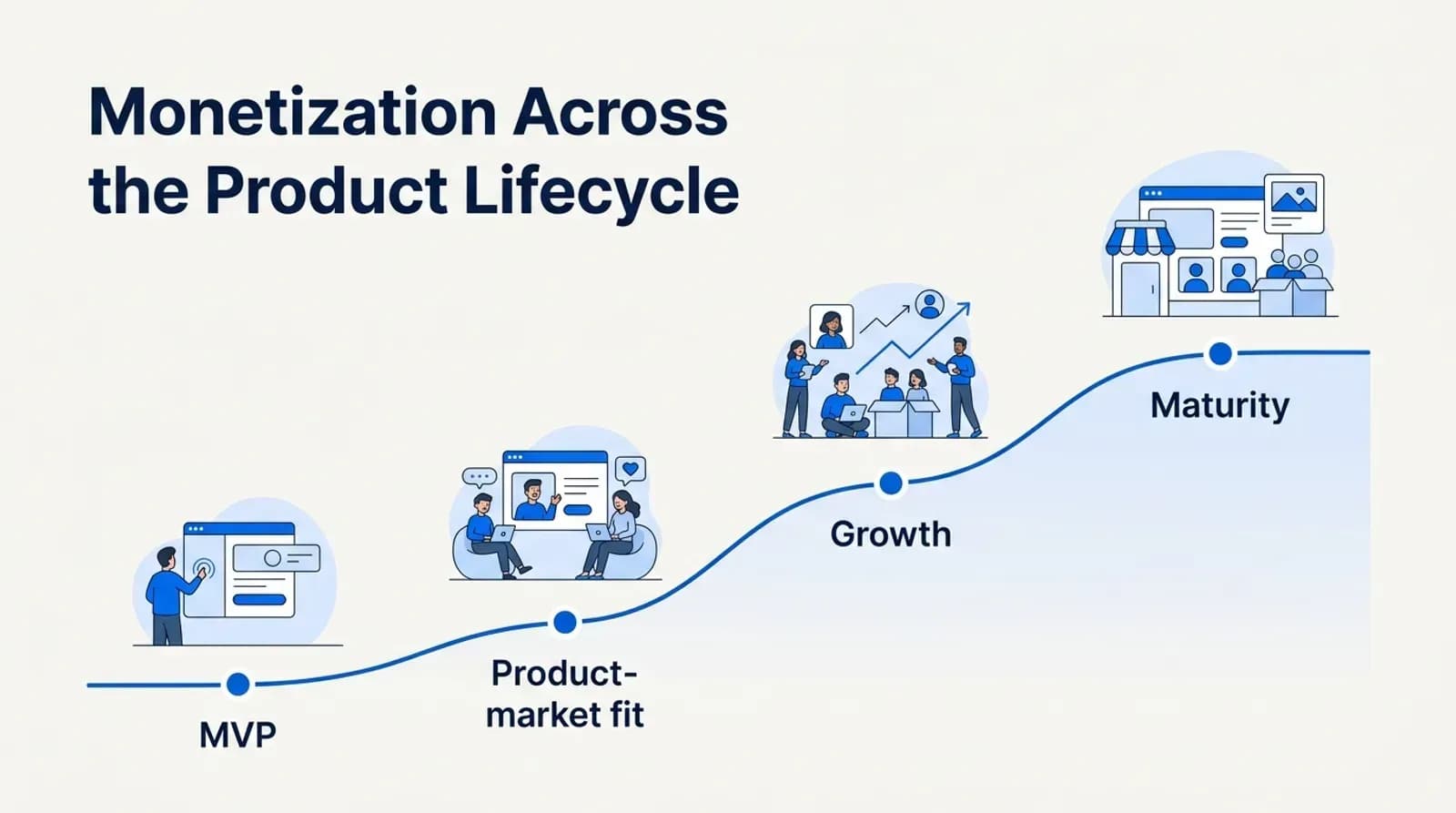
What do these brands convey? Monetization strategies are not just about making money but also about creating value and understanding customer needs to make them happier.
Start-up mobile app development teams, and indeed, any other startup entrepreneurs should therefore endeavor to consider and explore different monetization models in a bid to increase revenue and sustenance.
Are you ready to unveil the best of your startup? Keep reading to discover the most effective monetization methods so that your business evolves, customers stay satisfied, and you generate more revenues.
Now, let us discuss how you can execute these strategies to transform your business into a highly lucrative entity.
Understanding Your Business Model
Successful completion of your startup journey depends on a thorough knowledge of your business model. Your pricing strategy has to fit the development of your startup from the Minimum Viable Product development (MVP) to the finished good.
Different business models suit different monetization methods: a marketplace takes a cut of each sale, SaaS charges a subscription, and a free consumer app often relies on ads.
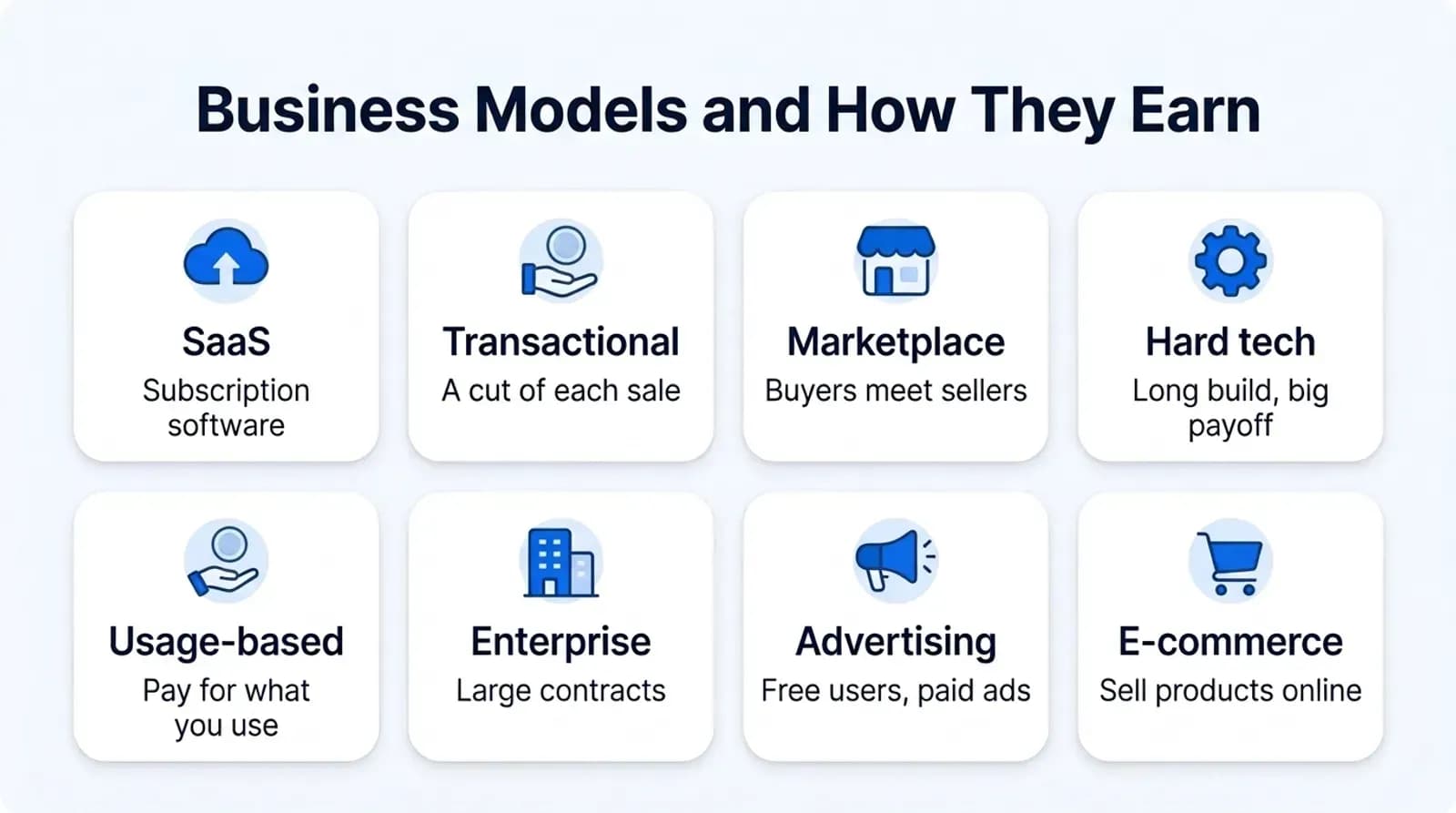
After successful completion, the last product should capture your whole solution and show a well-considered monetizing plan from the first. Targeting a particular market effectively depends on this significantly.
Starting a tech startup as a non-technical person offers significant difficulties, particularly with the appropriate monetizing plan. As the founder, you must view your startup idea holistically. Your pricing models should be always in line with the several phases of development of your startup.
Any startup must be monetized, hence reaching this goal calls for a thorough awareness of your target market. Understanding the need for a strong monetizing plan will help you negotiate the complexity of company development and market penetration.
Importance of Generating Revenue in Startups
A company cannot show its viability without generating income. App developers are quite important for startups, especially those in the tech industry, in properly applying monetizing strategies.
Making money shows that your company model is working and draws potential customers, investors, and partners, not only helps to meet expenses. Even if your firm solves special issues that no other market has covered, failing to reach the proper monetizing plan could bring about its demise.
Integrating strong monetizing techniques from the beginning is essential to guarantee the long-term viability and profitability of your company. Startups can confirm their market presence and open the path for future development and expansion by emphasizing efficient income generation.
Identifying Your Target Audience
Finding the proper strategy for your startup depends on an awareness of market trends. Whether you are creating mobile games or another technology product, effective product monetizing depends on knowing your target market.
Examining customer comments and reviews of current market solutions helps you to identify areas where your product may shine and expose present industry challenges. Once you have found these holes, create a strategy on how your startup will close them.
Think about how your monetizing plan, which includes choices like banner ads or other in-app purchases, may affect the purchasing of your consumers. Building a devoted user base mostly depends on making sure your approach is both economical and efficient.
By concentrating on these features, you can differentiate your firm in the same industry by matching its business needs to the demands and tastes of your target market.
Choosing the Right Monetization Strategy
Maximizing revenue depends on selecting the appropriate monetizing approach, particularly for mobile apps published in app stores. Your monetizing strategy might be directly impacted by several factors including technological restrictions and the number of monthly active users.
For example, if you have a good startup app idea, the subscription model you decide upon has to follow app store policies and fees, which changed a lot in 2026 (see below). Considering these elements will help you create a monetizing plan that makes good use of the possibilities of your app and conforms with platform restrictions.
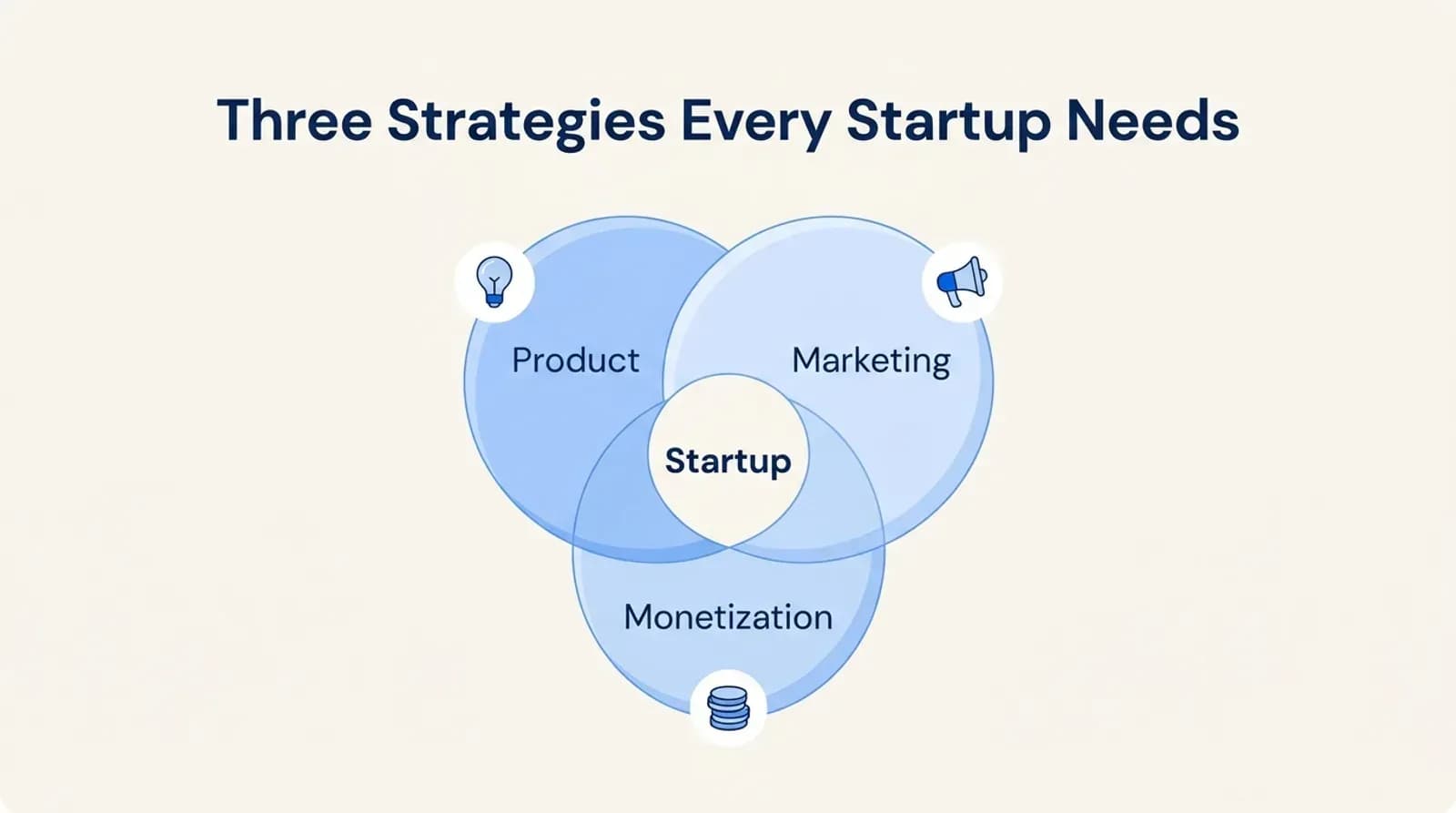
Business Model Considerations
The stage of your product’s lifetime and general business model directly affect a monetization plan. For monetizing startups, they should match their income-generating strategies with the stages of development for their product.
Some startups might choose acquisition or talent acquisition over first monetizing concerns. Still, strong pricing strategies are therefore crucial to show the worth and possibilities of your startup even in such situations.
Your monetizing approach is much shaped by the size of the market as well. If your market is large, for example, using a billing system with reasonable rates, akin to Zoho Corporation’s approach, may be quite successful in optimizing income generation.
Carefully weighing these factors, including app promotion and online services, allows you to create a strong business plan supporting the startup’s success.
Evaluating Your Options
When assessing your monetizing choices, you should pick and give tactics that fit your company’s needs and product capabilities top priority. While market dynamics are always changing and many revenue generation sources are required to maintain development and profitability across multiple industries, concentrating on a single monetization strategy might be constrictive.
Diverse monetizing techniques help you to better position your startup to earn money and gain access to a larger clientele. Plan your break-even point also based on your sunk costs, that is, the whole amount you have invested in your startup.
Providing advanced features and first-rate services can help speed up income production and guarantee the long-term viability of your company.
Carefully analyzing and applying monetization strategies will help you build a strong structure supporting the financial situation and expansion goals of your firm.
Marketing Campaign Evaluation
Your marketing plan should be very much taken into account while developing your monetizing approach. Your pricing policies directly depend on the budget for your marketing efforts, particularly in cases when your sole monetization approach is under attention. Significant funding for short-term marketing initiatives could need more prices to rapidly pay for expenses.
Conversely, since these expenses are spread across time, long-term marketing techniques including content marketing and organic promotion have less bearing on your pricing approach. This method makes managing pricing simpler by allowing more slow and deliberate spending.
You run the danger of losing your startup if you approach finalizing your monetizing strategy incorrectly. Many businesses have collapsed because of inadequate pricing strategy, which emphasizes the need for a unified approach. Let’s review a few instances of how bad monetization techniques caused company failures.
Companies That Failed to Adapt Their Business Model
Any startup may fail with the wrong monetizing approach, and even giants fall when their business model stops fitting the market. These are some noteworthy instances.
Blockbuster Video: An American Multimedia Brand
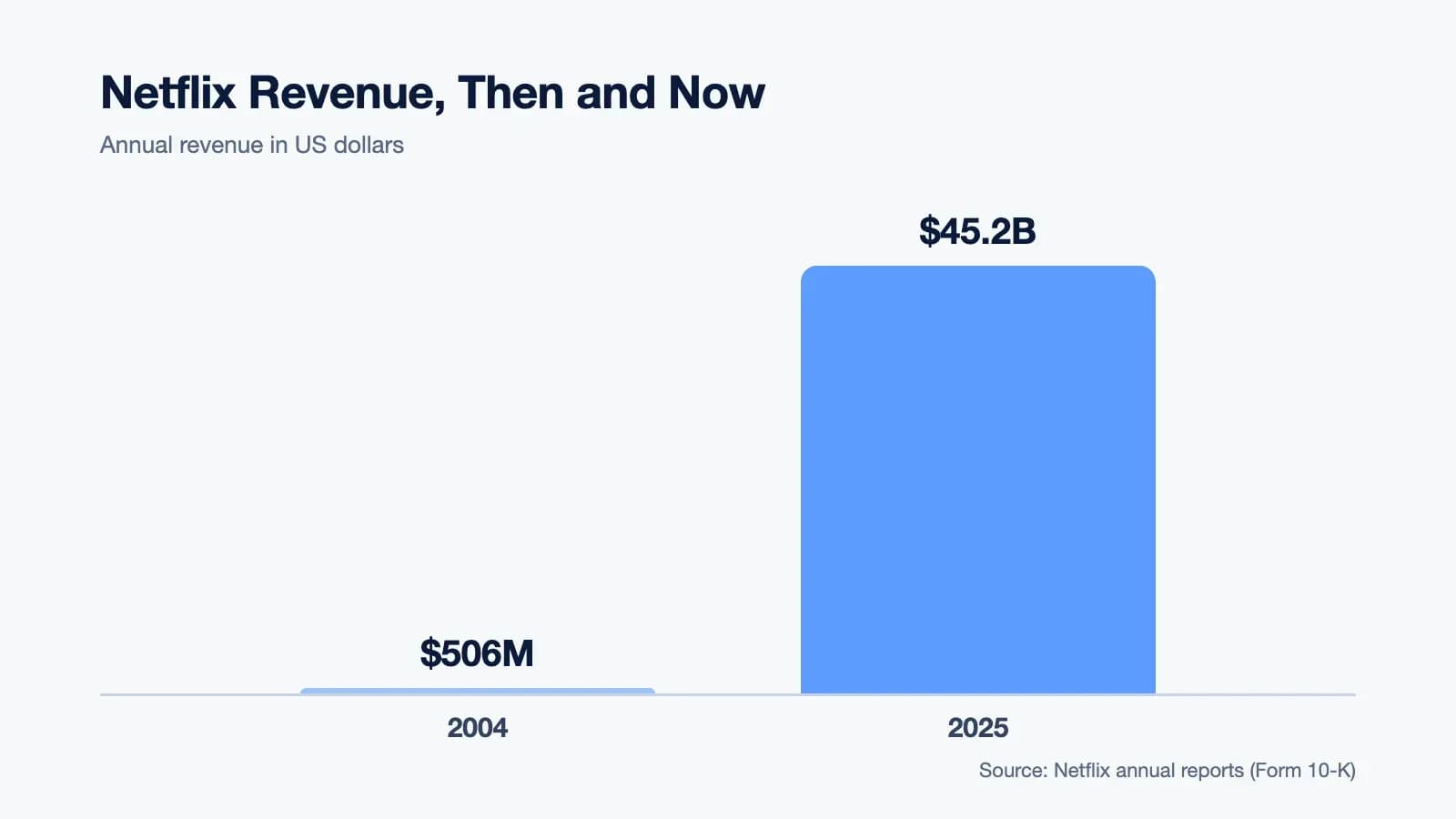
Once a major participant in the video rental business, Blockbuster neglected to change with the times and accommodate the emergence of streaming services. In 2000 it even turned down the chance to buy Netflix for $50 million.
Among Blockbuster’s many blunders was its hated late fee policy. Netflix’s subscriptions never charged late fees, and when Blockbuster dropped its own in 2005 to compete, it lost a large source of income. Later, Blockbuster started the “Total Access” scheme whereby online consumers could return DVDs to Blockbuster stores and get a free in-store rental in exchange, all for one low flat charge.
Popular at first, the program made Blockbuster lose about $2 for every DVD a customer swapped. Blockbuster had to raise the program’s fee to offset these losses, which drove many customers away, and the company filed for bankruptcy in 2010.
Kodak
Kodak collapsed with an ineffective monetization plan that discounted the digital revolution. Kodak gave its profitable film business top priority even though the digital camera was invented in 1975, worried about cannibalization of movie sales.
The business missed out on building a significant digital market presence and delayed digital adoption. Rivals had already controlled the market when Kodak at last embraced digital.
Furthermore, Kodak’s attempts to make money off of its large patent portfolio were unable to offset declining film sales. This lack of adaptation brought about bankruptcy in 2012. Kodak survived as a much smaller company, a warning about depending too much on an outdated business model.
Sears
Once a retail behemoth, Sears neglected sufficient investments in digital transformation, lagging behind online rivals like Amazon. Customer engagement dropped as the corporation relied more on physical stores and lacked innovation.
Sears neglected to upgrade its product offers and shop experiences and mishandled its real estate holdings as well. Reducing staff and maintenance failed in attempts to save expenses, therefore undermining consumer happiness.
Its fall and final bankruptcy in 2018 resulted from its incapacity to change with the times regarding consumer behavior and market dynamics.
These cases show the need to choose the appropriate monetizing strategy and to keep adapting it as customer habits change.
Popular Monetizing Strategies
Your firm does not have to copy the well-liked monetizing techniques of rivals to make money and stand out in the market. Rather, concentrate on creative pricing schemes catered to consumer tastes.
To guarantee success, pick the appropriate plan given below depending on your particular company model.
1. Subscription-based Monetization
For businesses functioning in both B2B and B2C markets, a subscription-based model is a great strategy. Users of this model pay access fees at regular intervals, weekly, monthly, or annual.
This approach creates a consistent income source and gives consumers constant access to premium features. Zuora’s 2025 Subscription Economy Index found that subscription companies grew revenue 11% faster than the S&P 500.
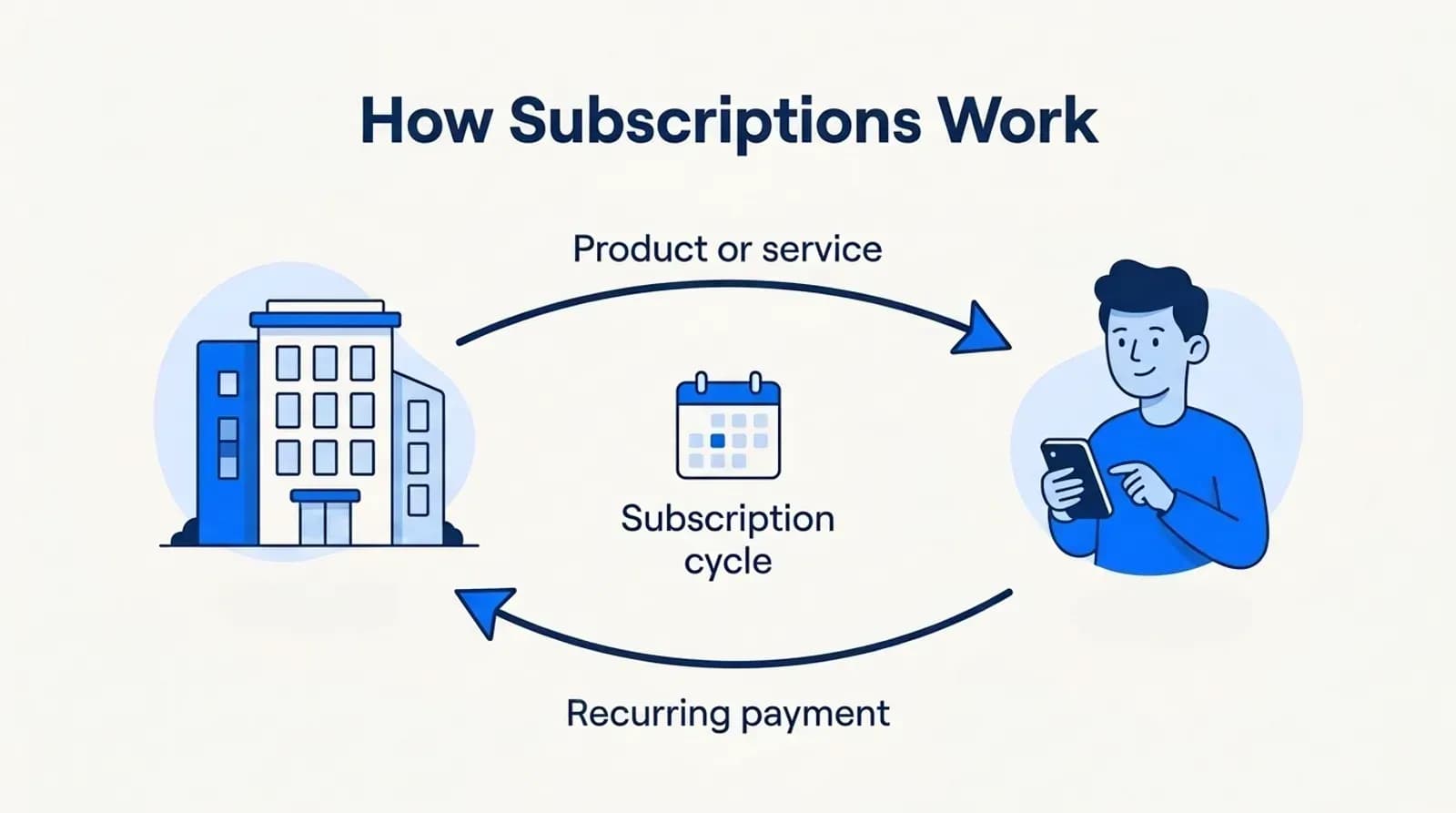
Starting a startup gives you the benefit of always improving your pricing strategies by including feature gating, down selling, and in-app purchases. These tactics give consumers more value and freedom, thereby greatly increasing income generation.
For cloud-native applications, where consistent updates and enhancements can be easily included in the subscription model, this strategy is especially helpful since it guarantees customers always have access to the newest features and improvements.
Successful Subscription-Based Model: Netflix
With a subscription-based approach, Netflix epitomizes success. It moved from DVD rentals to streaming, giving monthly access to a vast library, and passed 325 million paid memberships at the end of 2025. It now also offers a cheaper plan with ads, a mix of subscription and advertising.
2. Advertising and In-App Advertising
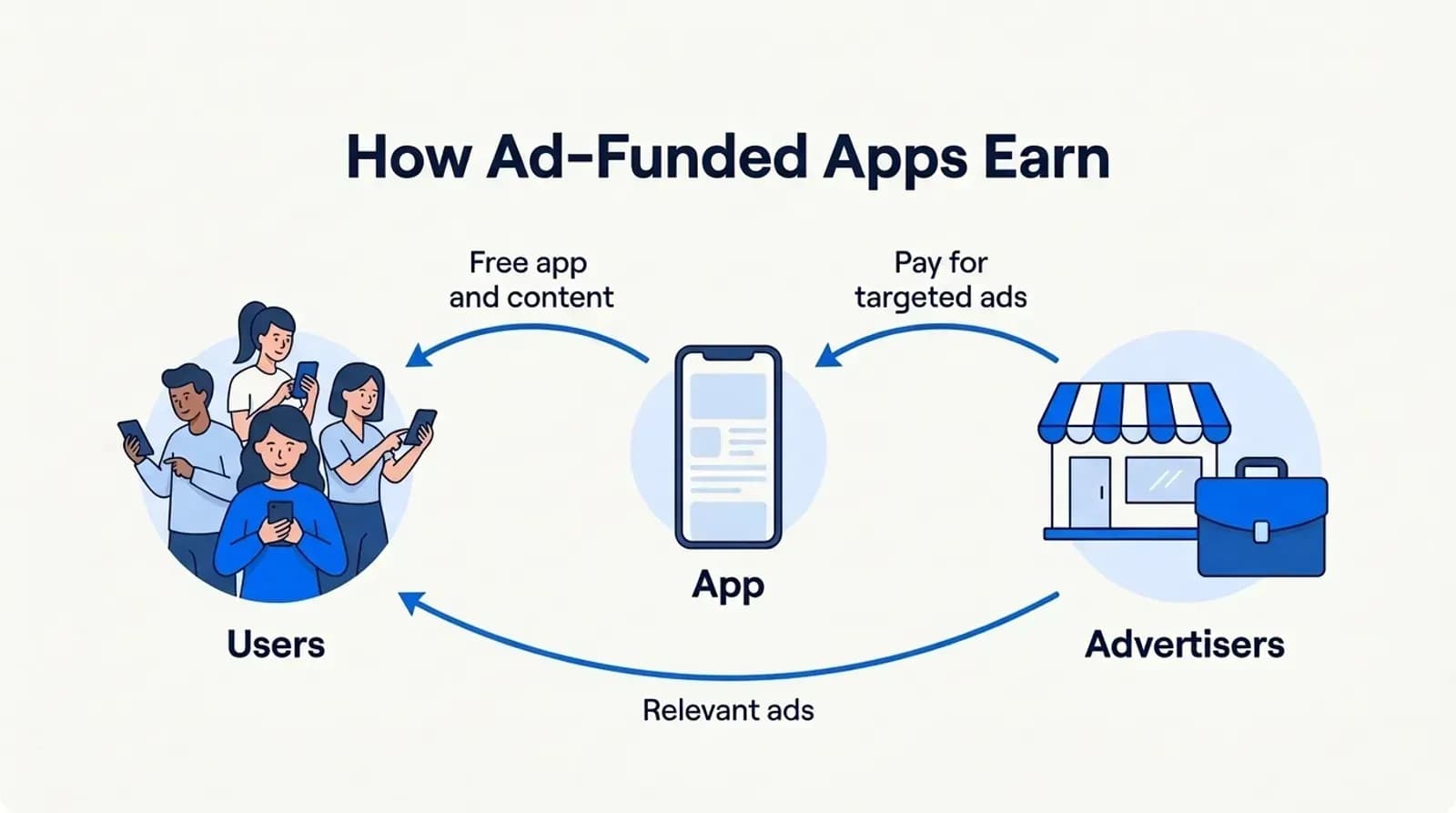
Many firms use standard monetizing techniques including advertising and in-app advertising (Native ads) for mobile apps. Important for creating significant income and growth prospects include in-app advertising, in-app purchases, and freemium monetization model among other approaches.
For startups, especially those with free access to everyone, in-app advertising is a great tool, because it earns money from users who will never pay.
In-app purchases, such as virtual currency or premium features, let consumers improve their app experience without a big upfront cost. Spending on in-app purchases and paid apps reached $167 billion in 2025, according to Sensor Tower.
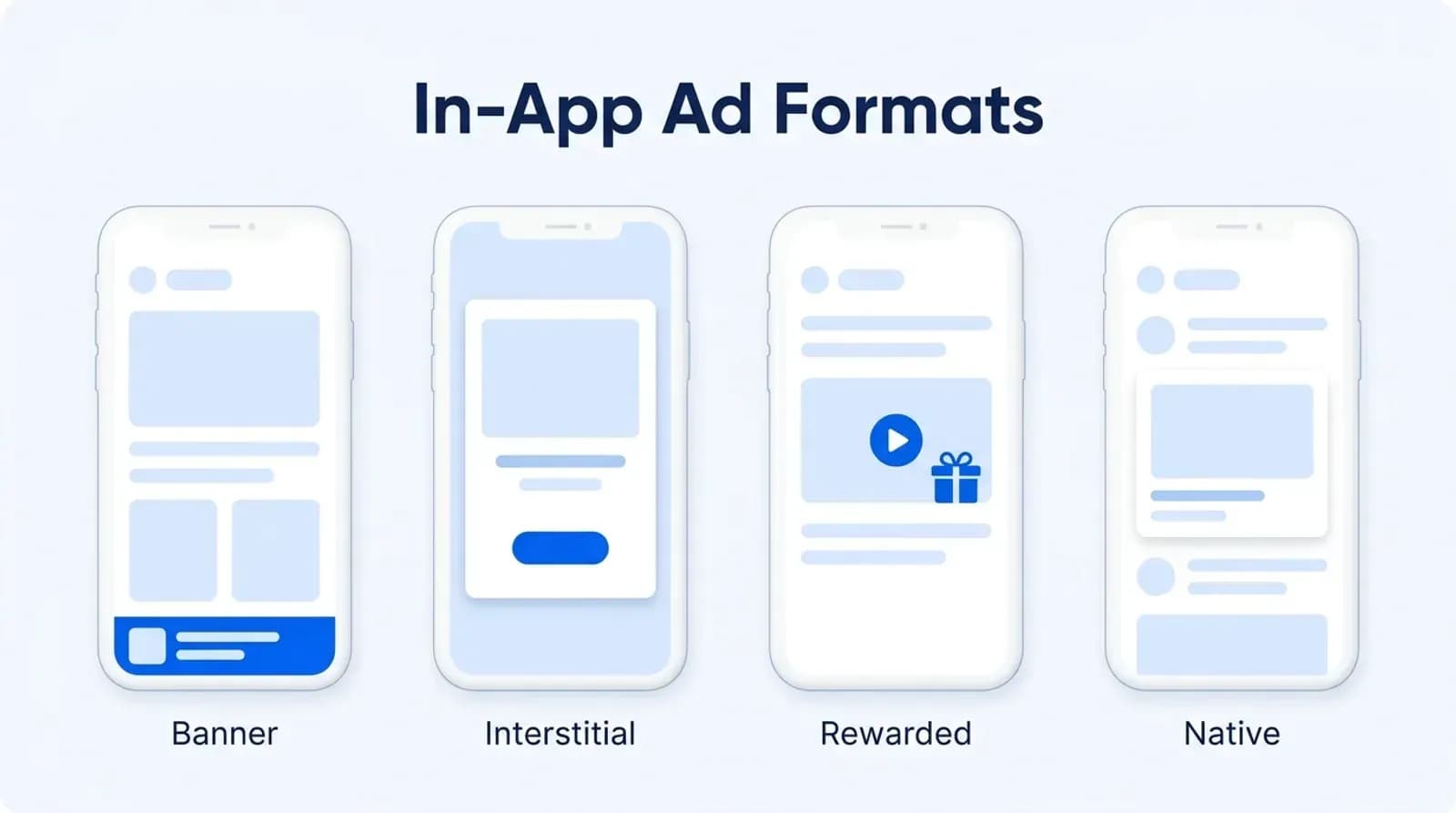
Native advertising increases ad efficacy and user involvement by deftly incorporating adverts into the content of the app. These techniques taken together build a strong structure for app monetization, guaranteeing consistent income sources and encouraging long-term expansion.
Successful Use of Advertising and In-App Advertising: Angry Birds
Rovio’s Angry Birds shows how models can change over time. It launched in 2009 as a paid app, then moved to free versions supported by ads and in-app purchases. Rovio is now owned by Sega, which bought it in 2023.
3. Freemium Model
The freemium model encourages users to sign up and test a product by giving free partial access to it. Because the product is free at first, it does not discourage consumers from trying it.
Free editions of mobile games and apps often show banner ads, while a paid subscription removes the ads and unlocks more features. Freemium works best with a big market, since only a small share of users pay. RevenueCat’s 2026 benchmarks show a median 2.1% of freemium users converting to paid, against 10.7% for apps with a hard paywall.
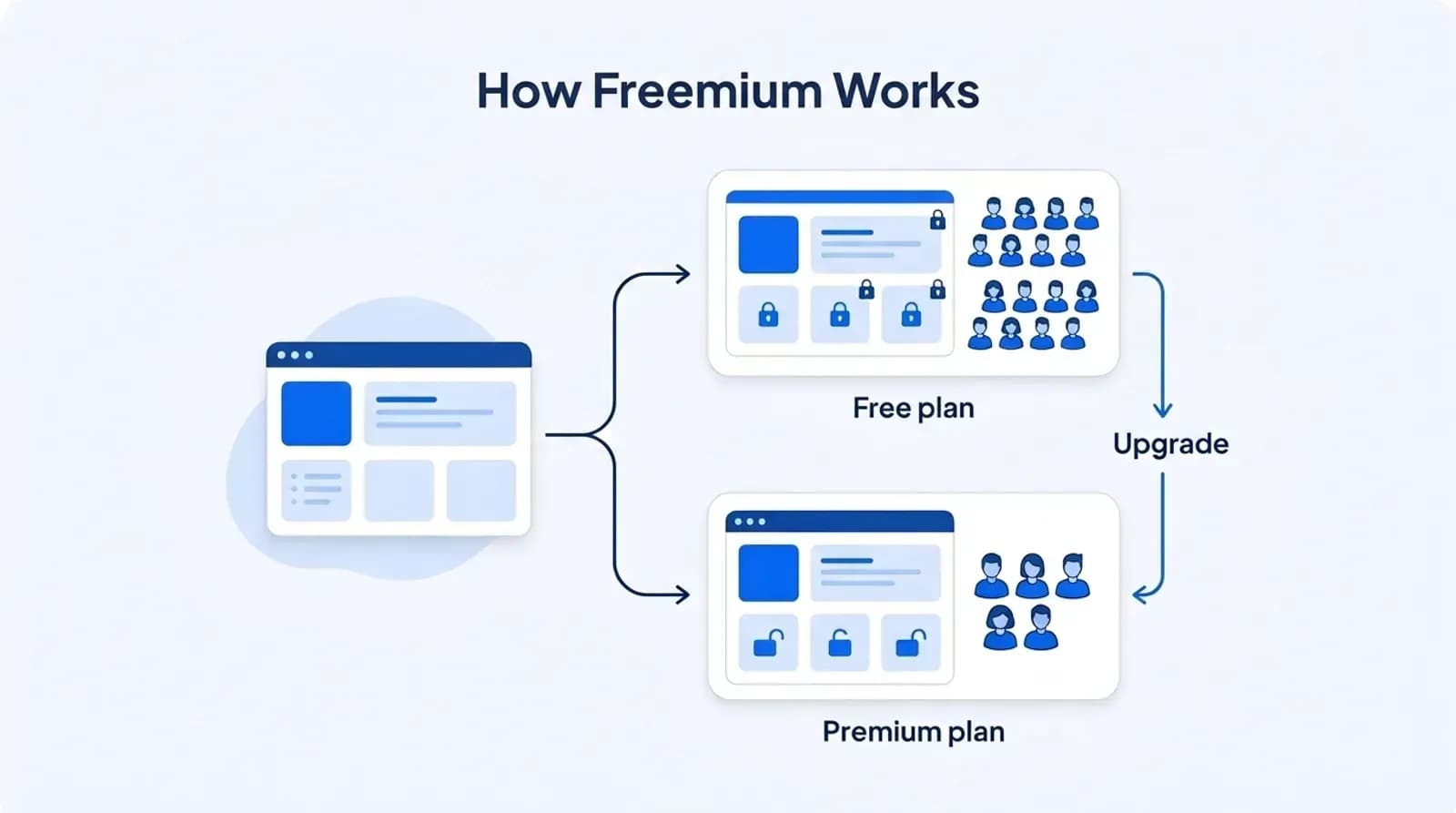
Startups that offer value upfront can draw a large user base and progressively turn free users into paying consumers with more attractive paid version access. A startup’s success depends on using this approach since it strikes a mix between possible income and great accessibility.
Successful Use of Freemium Model: Spotify
Spotify has achieved notable success with the freemium approach. By providing free access with advertisements and premium subscriptions for an ad-free experience, it reached 300 million Premium subscribers out of 777 million monthly users in mid-2026.
4. Software Licensing
A legal-based tool, software licenses control the whole software use and distribution process. This approach exists to secure products against intellectual property damages, therefore preserving the value and innovation of the program.
Software licensing is especially helpful for companies selling software that customers install on their own devices or servers. Offering paid versions and editions allows businesses to profit from their software.
Successful Use of Software Licensing Model: Microsoft
Microsoft built its business by licensing Windows and Office to consumers and companies. Over the last decade it moved Office to Microsoft 365, a subscription, showing how licensing and subscriptions can work together.
All things considered, using several monetizing techniques tailored to your customer preferences will significantly increase your startup’s success. Choose the best monetization method that fits perfectly your company objectives.
Alternative Monetization Strategies
Investigating different monetizing techniques would help in monetizing startups that can develop and greatly improve customer experience.
Startups might open fresh chances for consistent income and market competitiveness by concentrating on creative ideas that give customers happiness and involvement a top priority.
The techniques listed below guarantee flexibility in a market always-changing scene.
5. Selling Goods and Services
For ed-tech companies especially, selling goods and services serves as one of the product monetization strategies that fits quite well. Under this strategy, one recognizes consumer wants and offers customized solutions to satisfy them.
EdTech startup companies that concentrate on the particular needs of their target market can provide consumers with worthwhile instructional goods and services. This approach not only increases income but also improves client loyalty and happiness, hence building a sustainable company model.
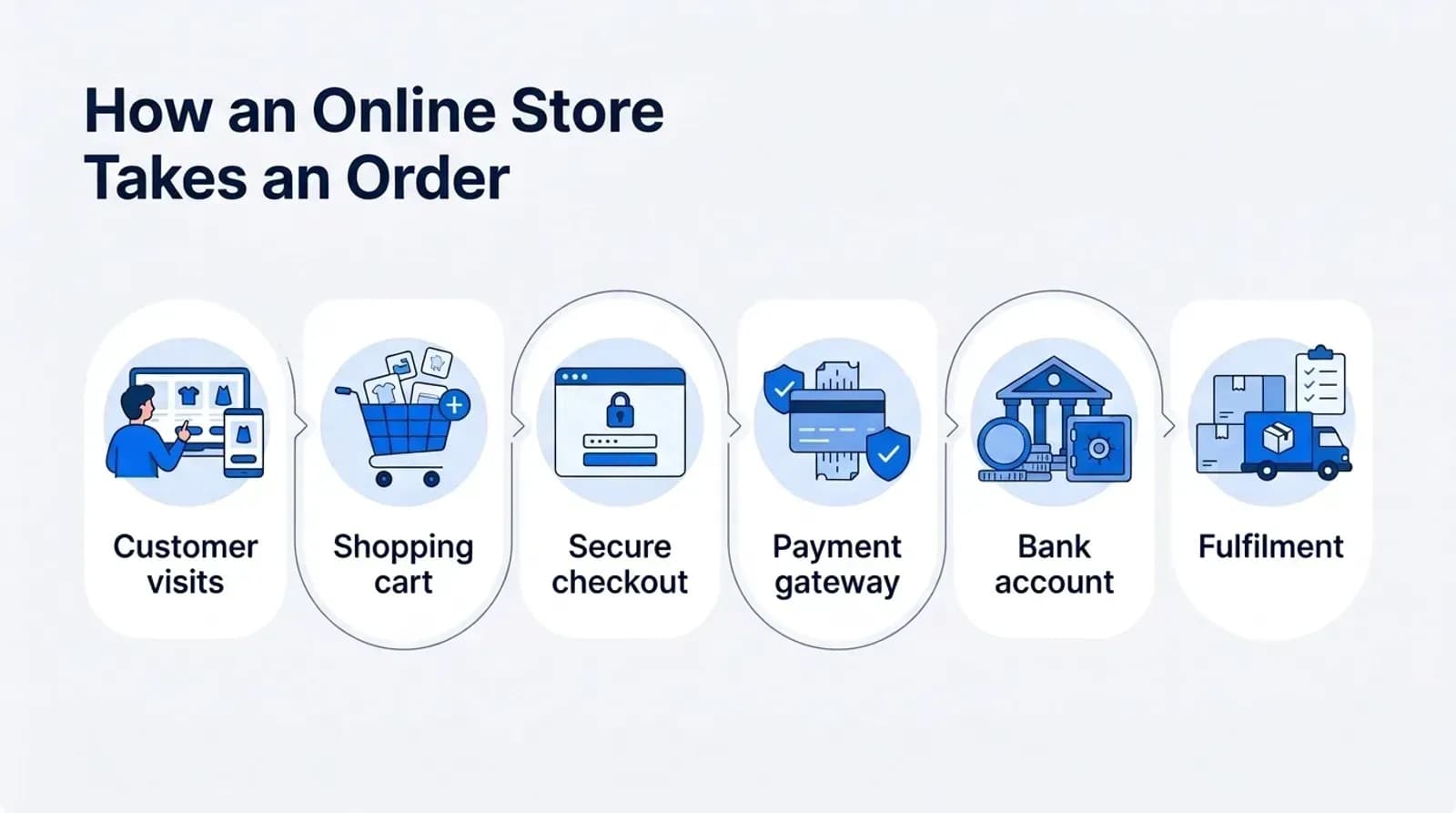
Successful Use of Selling Goods and Services Model: Amazon
With its goods and services approach, Amazon has been especially rather successful. Amazon has become a major participant in e-commerce by providing a large range of goods, reasonable prices, and first-rate customer support. Their creative approach, which includes cloud services and Prime memberships, has propelled consistent industry leadership and expansion.
6. Open-Source Revenue Model
For developers, the open-source concept is quite easy to build and can bring in big income. This approach lets everyone access and manage the program code, therefore enabling community-driven development and innovation.
Offering top-notch features, support services, or enterprise-level solutions on top of the free, open-source base would help businesses maximize their products and create a cooperative environment. This method promotes general acceptance and ongoing development of the program and software.
Successful Use of Open-Source Revenue Model: Red Hat
Red Hat’s open-source revenue strategy has brought about notable success. The company has grown into a thriving business by offering enterprise-level support, training, and services for open-source software like Red Hat Enterprise Linux.
Their approach gives value-added services to clients and uses open-source advantages to maximize revenue streams. The model was valuable enough that IBM bought Red Hat for about $34 billion in 2019.
7. Data and Content Monetization Strategy
Leveraging valuable consumer data to link ads with the appropriate audience can help the data and content monetizing strategy pay for itself. Businesses that gather and examine large volumes of data will especially find this method appropriate.
Targeting advertising and customized content helps companies maximize income and improve the consumer experience. This approach makes use of data-driven insights’ increasing significance in developing successful marketing campaigns and content distribution optimization.
Successful Use of Data and Content Monetization Model: Meta
Meta, the owner of Facebook and Instagram, makes almost all of its money by using user data to provide focused advertising. Its revenue reached $200.97 billion in 2025. Privacy rules such as Apple’s App Tracking Transparency now limit how apps can track users, so plan your ad model with that in mind.
Advanced Startup Monetization Strategies to Generate Revenue
Investigating sophisticated monetizing techniques will help your income model be much improved. Customizing services to user behavior guarantees a consistent flow of income. Together with ongoing innovation, various monetization strategies listed below will improve the market situation and profitability of your startup.
8. Pay-as-you-go (PAYG) Revenue Model
Pay-as-you-go is a pricing model where you pay for a product or service based on how much you actually use it, rather than a fixed fee upfront like in a subscription model. This gives users the flexibility to pay only for what they use, allowing them to easily adjust their usage and manage costs. Since billing is based on usage, the system should offer high transparency, enabling users to track their activities and see exactly what they are paying for.
Since the model is usage-based, users can switch to other services easily if they don’t feel tied to your product. Many apps now mix models: a subscription plus usage credits, especially for costly features such as AI tools inside the app.
Successful Use of Pay-as-you-go Revenue Model: Amazon Web Services
The pay-as-you-go revenue model has helped Amazon Web Services (AWS) to be very successful. From startups to big companies, customers pay only for the cloud resources they use, and AWS sales reached $128.7 billion in 2025.
9. Affiliate Revenue Model
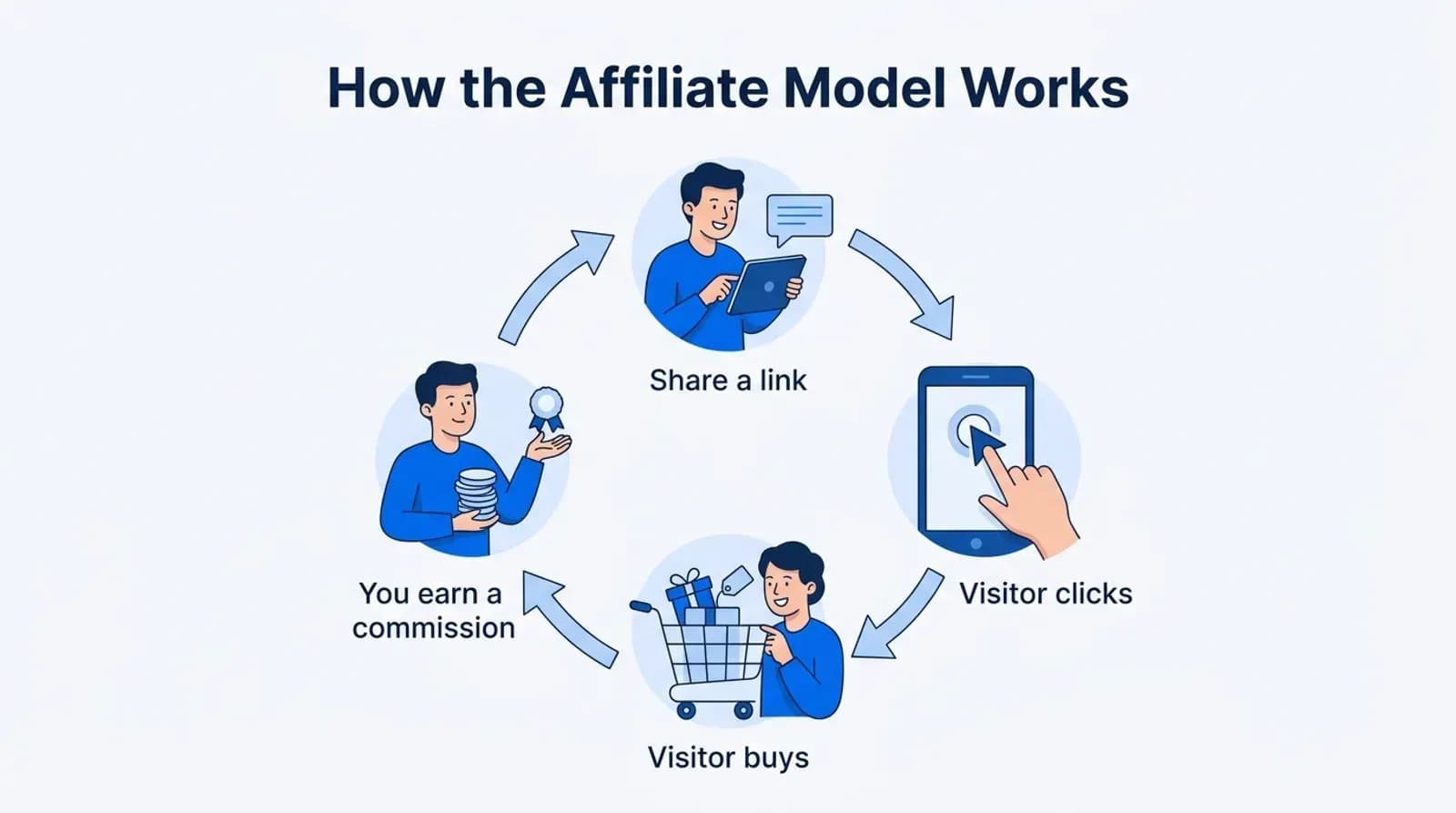
The Affiliate Revenue Model is a performance-based marketing strategy where a business rewards affiliates for each visitor or customer they bring. Each affiliate gets a unique ID, which tracks the visitors and customers they send to your online store.
Finding a right marketing agency for startups could improve your affiliate income efforts for thorough ideas and techniques.
Successful Use of Affiliate Revenue Model: Rakuten
Through its affiliate business, now called Rakuten Advertising, the Japanese e-commerce group Rakuten has applied the affiliate revenue model with success. It links advertisers with publishers and has become a big participant in the worldwide affiliate marketing scene.
10. Email-based Monetization
The email-based monetizing plan uses email marketing tools to properly advertise products. Personalized email marketing can grab your audience’s attention and inspire them to act, hence this method is quite successful in increasing user involvement.
Through their email campaigns, companies may build a devoted customer base and consistently create income by routinely contacting members with tailored offers and updates.
Successful Use of Email-Based Model: Morning Brew
Morning Brew’s email-based monetizing strategy has worked well. It built a large readership by sending short business news straight to subscribers’ inboxes and earns from sponsors and ads inside the newsletters. The model was strong enough that Axel Springer took full ownership in 2025.
App Store Fees in 2026: What Changed
If your app sells digital goods or subscriptions, store fees shape your pricing. The rules changed a lot in 2025 and 2026:
- Apple standard: 30% on in-app purchases, or 15% for small developers and for subscriptions after the first year.
- Apple in the US: apps may link to outside payment, and after court rulings Apple takes no commission on those links for now. Apple has proposed new link-out fees and the case is still going on, so treat this as in flux.
- Apple in the EU: from October 1, 2026, the commission is 26% with Apple’s In-App Purchase, with lower rates for other payment options.
- Google Play: from June 30, 2026 in the US, UK and EEA, the service fee starts at 10% on your first $1 million a year and on auto-renewing subscriptions, with a separate billing fee if you use Google Play’s billing. Other billing systems and web links are allowed.
- Japan: since December 2025, Apple allows other app stores and payment options.
- Physical goods and real-world services, such as rides or deliveries, pay no store commission.
A web checkout can save a lot on fees, but it adds steps for the user. Test both before you decide.
Effective Monetization Strategy Implementation
Any company striving for profitability and sustainable development depends on a good monetizing strategy being followed. Whether via subscriptions, advertising, or affiliate marketing, it entails determining the most appropriate income sources and then deftly including them in the company model.
Important actions are knowing the intended audience, examining market trends, and using technology to maximize income. Refining the strategy and making sure it fits changing corporate goals and consumer needs depend on regular assessment and iteration grounded on performance data.
Since it guarantees financial sustainability and supports long-term development, therefore addressing one of the most important software development challenges for startup using the final monetizing plan becomes very important.
Avoiding Common Mistakes
Maintaining long-term profitability and brand integrity depends on avoiding typical pitfalls in the application of monetization strategy. One common mistake is selecting a monetizing approach without thinking through the value proposition.
Choosing a plan that fits the special qualities of your good or service as well as the requirements of your target market is vital.
Choosing the incorrect ad format is another error. The advertisement style should fit your platform and involve people without invading their space. Misaligned ad formats might cause a bad user experience, therefore lowering general interaction and income.
Moreover, changing your pricing too often can damage your brand. Rising taxes or costs may force changes, but constant alterations can alienate and confuse your consumers.
Maintaining a consistent strategy for monetization is crucial. Only make adjustments required to keep dependability and confidence.
Neglecting customer comments, not routinely analyzing performance data, and not following industry trends are other frequent errors. Steering clear of these traps will enable a strong and successful monetizing plan to be developed.
Optimizing Your Startup Monetization Strategies
Making sure your monetizing plan enhances the user experience and does not compromise it is part of optimizing it. Good integration of a strategy should improve user satisfaction and general involvement.
One should try a monetization plan on a small number of users and assess its effects before deciding on it. Getting comments and evaluating the outcomes can assist in finding possible problems and guide required corrections.
This method guarantees the strategy is both efficient and understandable for users. Finally, a well-thought-out and tested monetizing approach can generate income while preserving a good user experience, therefore promoting long-term success and expansion.
How Appkodes Helps You Build Your Monetization Model
Ultimately, entrepreneurs trying to increase their income and attain sustainable development depend on choosing appropriate monetizing techniques. Choosing techniques that fit your value proposition and improve user experience can help you generate a consistent income without sacrificing client happiness.
Small-scale testing plans and data-driven changes will help you hone your strategy. Furthermore, including excellent project management methodologies for startups helps to guarantee that these ideas are carried out properly and effectively by simplifying their application.
Startups can maximize their income potential with meticulous planning and ongoing improvement.
At Appkodes, we build your app so your chosen model works from day one: paywalls, subscriptions, in-app purchases, ads, usage metering, and web checkout.
We design and build every app new for its client, with a costed plan at a fixed price before work starts, and most first releases go live in about 30 days. Talk to us about the model you have in mind.
Common questions
What is the best monetization strategy for a startup app?
It depends on your users and product. Subscriptions suit apps used often, freemium suits big markets, ads suit free apps with many users, and marketplaces take a cut of each sale.
Is freemium or a paywall better?
RevenueCat’s 2026 data shows a median 2.1% of freemium users converting to paid, against 10.7% for hard paywalls. Freemium brings more users; a paywall brings more revenue per user.
How much do Apple and Google take from app sales?
Apple takes 30%, or 15% for small developers and renewing subscriptions. Google Play’s new fee starts at 10% in the US, UK and EEA. Rules differ by region and changed in 2026.
Can I combine several monetization models?
Yes. Many apps mix a subscription with in-app purchases or ads, as Netflix does with its ad plan. Test each change on a small group first.
Can Appkodes build the payment side of my app?
Yes. Appkodes builds custom apps with paywalls, subscriptions, in-app purchases, ads and web checkout, with a costed plan at a fixed price before work starts.

Arun Andiselvam
LinkedInI am a startup veteran who has built five brands. I sold the first, an SEO tool, for a six figure exit, and now lead Appkodes, building custom mobile and web apps for founders and businesses. I bootstrapped every one of them from day one.