
At times, we get stuck on many things such as staring at our mobile app with the frozen screen, making ourselves confused with unwanted steps to get things done instead of doing it straight, sinking in too many things to find one small need and many more situations. These are all pain points you run into as a user of the apps already on the market.
When you realise that this is not done in the right way, that is when you get the spark to make it better and start thinking about how to come up with a good app idea. This is just the beginning of any startup mobile app idea.
I once got stuck with a Google rank-tracking tool. It had many features but made it hard to see my Google rankings. Every time, I had to click through many screens to reach the ranking reports. It’s not their fault, they are trying to satisfy everyone and I am just one more user to them.
I realised there are so many things that can be done other than Google ranking. So I found a new idea and started my own product, Serpple, which I later sold.
Finding new ideas can be an easy task but doing it right is the toughest one. A great app idea starts with the right potential users you find in the beginning. Instead of explaining more about your startup app idea, ask them where they are stuck and which pain points they share with you.
Those are the fundamental steps you need to do in the beginning to make sure your app idea is good. The data you collect from potential users becomes the long-term roadmap for your product.
The next step for your app idea is to finalise all the features and find the right development team. Making it a successful app includes further steps like finding the right monetization strategy and preparing pitch decks to raise money from angel investors for further development.
Let’s discuss more about how to come up with a good app idea in this blog.
Step 1: Identifying Opportunities for a Mobile App Idea
New app ideas begin with an opportunity to do something no company has done yet. It does not matter how big the target market is. As a startup founder, you are often the one dealing with things manually and believing they could be done easily with a mobile app.
Now, the question is how to come up with a good app idea? And does it need to be a new idea, or can it be an improvement on an existing system? For example, there are popular apps on the market with good features. They solve many issues, but the problem is the target audience. Such an app solves problems for a wide range of people, but the same can perform even better when it is designed for a specific group of audience.
Trust me, the SaaS industry is moving along with this approach where apps target a specific industry or group rather than a wide audience.
Try to find your idea’s value proposition.
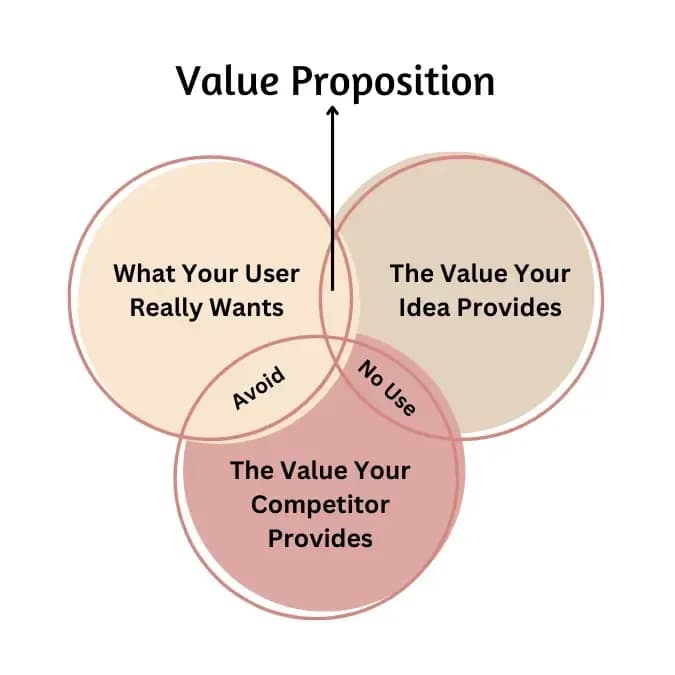
Value Proposition
A value proposition is a simple statement that summarizes why a customer would choose your product or service.
It communicates the clearest benefit that customers receive by giving you their business.
Source: Value Proposition Examples From HelpScout
How to Come Up with a Good App Idea?
In the first case, where you believe a mobile app can solve a problem in your work, do the following to make sure it solves it completely.
A manual operation without a mobile app usually follows a routine. Keep monitoring it and list the issues that come up across the whole operation.
From the complete list, separate the lists that can be solved by adapting mobile technologies for example, location tracking, updating the statuses of operations, or anything else closely related to mobile.
The final list will be your business plan. Keep in focus that the main reason for your idea is to build a mobile app that makes life simpler and make any operation smooth. So the app should solve the specific problem that you have separated from the complete list.
Get Inspired by the Current Top Apps
Once your business plan is ready, the next thing is to make sure how to design your app. Start browsing or googling existing apps that support same or similar functionalities and see the way how they solved the problem.
Generally browsing app stores for your industry specific apps can help you to come up with great app ideas. You can use the existing apps as an inspiration for your new app idea.
Look at the top charts for your category, like the top free finance apps on Google Play.
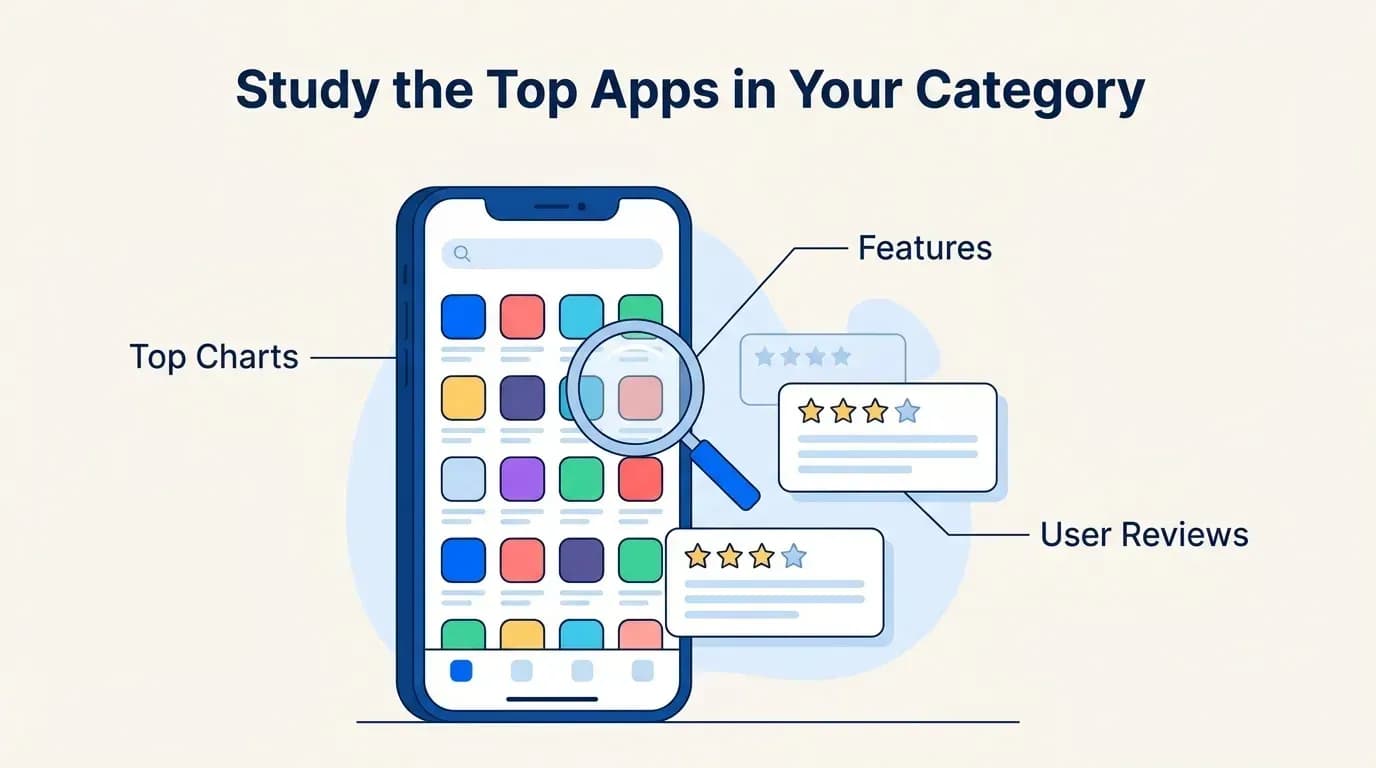
App stores have sections that list the top and most popular apps. Choose your industry and start using them; they will point you in the right direction for your own app.
The next process would be studying the market research like how these apps have been marketed and how many users are using the apps. An important thing when you do this research is finding the reviews from the existing app users.
You can find more ideas and what customers feel from the review sections. Collect as many reviews as you can and sort them into issues, feedback and performance. Start focusing the reviews with feedback first and make sure the app will not have same issues as your competitor and of course better performance than your competitor.
Keep Track of News and Events in the Tech Industry
Tech industry changes are happening rapidly. Companies keep upgrading based on their market research and users’ behaviour.
Never miss an update. Keep your finger on the pulse of your selected industry and try to be ahead by keeping your thoughts and innovations one step ahead of them.
Existing apps have a lot to consider, from their value proposition to their customers. You have just come up with your idea, so you can start fresh and use what you learn to support it.
Step 2: Brainstorming and Researching App Ideas
When do you think the idea will start making money and lead its app category? It is not just the number of installs on Google Play or the App Store. It depends completely on usage: how often your target users come back to your app, and what their life would be like without it.
Spend Time Brainstorming Your App Ideas
To make your target market users life easier with your creative app ideas, begin by brainstorming and listing all the possible solutions to a problem.
Brainstorming during your peak creative flow opens a wealth of original and insightful ideas. This active engagement fuels momentum, breaks down mental barriers, and creates a positive feedback loop, boosting both the quantity and quality of your creative output. This will create that “Aha” moment with your innovation.
And do not forget: inspiration can come from anywhere, and never forget to take note of your thoughts.
Study the Competition and Market
I am sure you don’t want to create something that already exists. To be sure, studying the competition by searching existing apps is necessary.
Start collecting the top most features of different brand’s mobile apps and do extensive market research to enhance them.
Research Your Target Audience
This research is where you finalise your features and enhancements. Create a survey using any free tools and list out the questions that are more related to your solutions and how it is going to solve the pain point.
Start collecting your target users’ details and share your survey link and get them all answered. These early users will be your potential customers.
Step 3: Validating Your App Idea
There are methods to make sure your new app ideas are valid and will work out in the market by spending less or no money when you have a small in-house team.
Read this book called “Sprint” and it helped me when I was working with a startup idea.
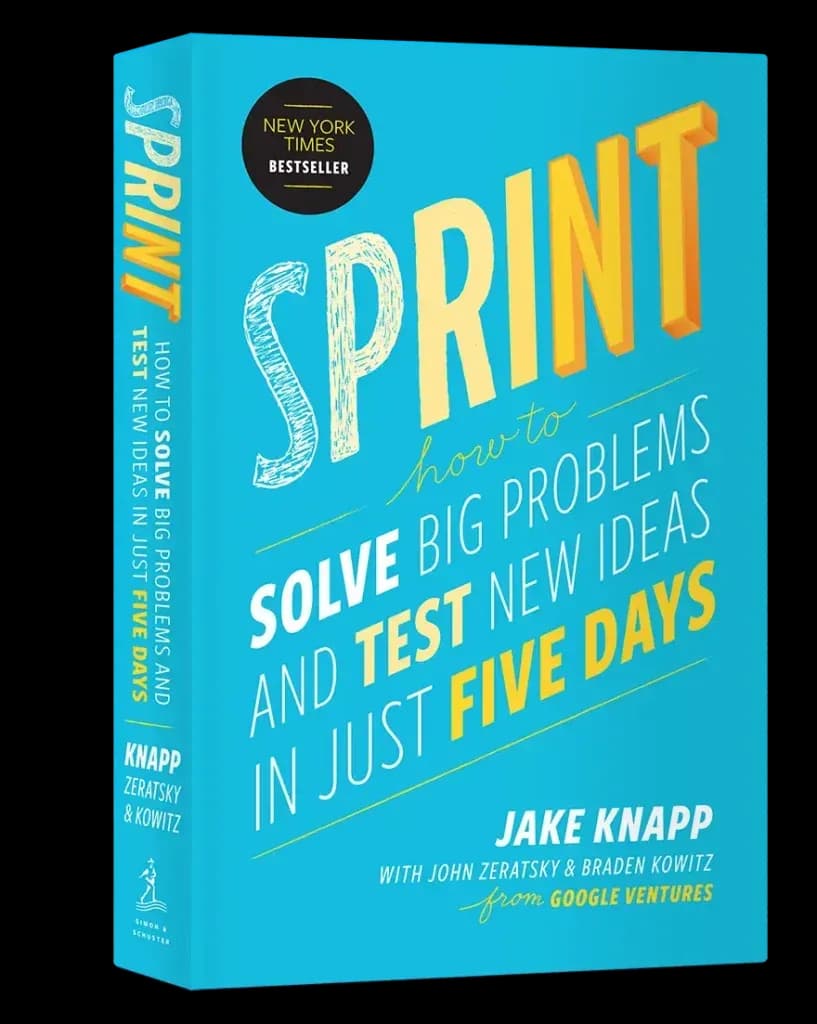
Book Name: Sprint – How to Solve Big Problems and Test New Ideas in Just Five Days by Jake Knapp. Review from Reader: Read this book according to the days mentioned. Read the contents of Monday on Monday, same for the rest of the chapters. It will help you to understand how much work is done in day and the pace required to conduct a sprint. Amazing book. A must read for every designer!
Research Your Competitors
Consider your mobile app idea and mobile app development, as a game. If all the games were the same, what would be the best choice for players? How do you understand what they expect?
This is where learning starts from the existing market. Try to understand the market and learn about its gaps and trends. As I mentioned earlier, collect all the customer reviews about your competitors from all the sources like app stores, Google and everywhere else.
Analyze your competitors from the customer’s point of view and find their apps’ pros and cons.
Create Prototypes
After finding the pros and cons, it’s time to find how your mobile app idea is going to solve those. Start creating digital prototypes and invite people to try it out.
Interactive digital prototypes are one of the best idea validation methods discussed in the book called “Sprint”. It will be cost effective and your trial users will be happy to give their opinion as it will be more interactive.
Prototype does not need to be fully functional. It should be like a wireframe design where your users can visually explore the product idea before its fully developed.
Collect and Analyze Early User Feedback
Start collecting the user feedback from your interactive digital prototypes by taking notes or using heatmap analytics software like Microsoft Clarity.
These are the fundamental elements you will fix, add or enhance with your business idea.
Step 4: Refining Your Great App Idea
At this stage, if you compare your mobile app idea at the time you got the spark, with the current stage of your great app idea, with more data collected from early users, refining the idea will not be a big problem. Just make sure what you create will meet the real purpose by properly refining it.
Fine-tune Your Chosen App Idea
Find out the places where your app concept can be improved based on your market research and competitor analysis. Define a new development plan with these improvements.
Your development plan should contain three different lists (for your own marketing strategy), which include basic features, existing and enhanced features and finally the unique features.
After this stage, make sure the development team starts working with the unique features first and analyse how these unique features solve the problem of your target audience.
Create a User Persona for Your App
As a part of your marketing strategy you need this customer or user persona. Although you know your target audiences, it’s better to drill down to more details like gender, age, location and much more which will help you to shape up your marketing campaigns.
Customer persona can also help you to redefine your roadmap based on their preferences and interests.
Step 5: Developing a Product Strategy for Your App
Time to be more technical now if you are a non-technical person who starts a tech startup. At this stage everything revolves around technical terms like web app, iOS app, android app, devices and apps, app designs and UI/UX. Buckle up and try to understand all these terms slowly. Finding a UI design agency for startups is crucial because they should understand your app idea.
Determine Your Monetization Strategy
Find the right software development company and learn about the technology stacks and their advantages and disadvantages. This will lead you to the next step of finalizing monetization model for your app.
Your monetization plan can have either free trial, premium membership or a freemium model, but it is all connected with your technology stack.
Before finalizing one plan, experiment with other startup monetization strategies with a set of customers, gather their feedback and find the right plan.
Create Full Prototype
Before the mobile app development process, it’s time to expand your digital prototype to a complete wireframe with all the basic, existing and enhanced features and unique features. At this stage, the entire app idea should be in the wireframe.
Estimate the Cost of Building Your App
This is the place you will evaluate your financial aspects like how much money the app development needs and how much to keep for marketing. Collect quotations from the multiple software development companies and compare them all.
Before selecting the right company, compare their expertise in your industry and other resources of the company. Once you finalised the company, be clear about the timelines and milestones and payment terms.
Step 6: Turning Your Idea into a Reality
Generally, app development gets complicated for big-budget prototypes and ideas. Try to find the right approach like hiring a virtual team or in-house team using hiring agents, or outsourcing the project to an established company. It’s time to decide.
Funding Your First Version
If you don’t have sufficient funds yet, keep the first version small so it costs less and gives investors something real to see. At Appkodes, a startup mobile app development company, a custom app or MVP starts from $8,000, with a costed plan at a fixed price before work starts, and most first releases go live in about 30 days. Talk to our team about your idea.
Launch and Scale
Most creative app ideas fail when it comes to scale. So find a routine of fixing bugs after launch, continuously improving app performance and collecting user feedback. This pattern will help you to scale your mobile app.
Avoiding Common Mistakes
There is no general formula to help you decide if you should move forward with your app idea or drop it. I have heard stories that products that were put on hold for a longer time got picked up and went viral once launched. So there is no guarantee whether your idea will work or not.
It’s natural that your app idea will look strong and make you feel you are completely right. There is no problem in testing and redefining your app idea. This can be done by developing an MVP with the help of the right MVP software development.
Common Mistakes to Avoid When Developing an App
There are many other things besides software development challenges for startup including the following.
Cost underestimation: Everyone believes their business model is strong, but that does not mean your cost estimate is accurate. Have a strict financial plan, as you are spending your own money. Talk to a group of app developers and ask how long it would take and what it would cost.
Ignoring market research: Good business ideas often fail when they ignore the research. The app market depends completely on how it performs and how users react.
Executing Your App Development Process
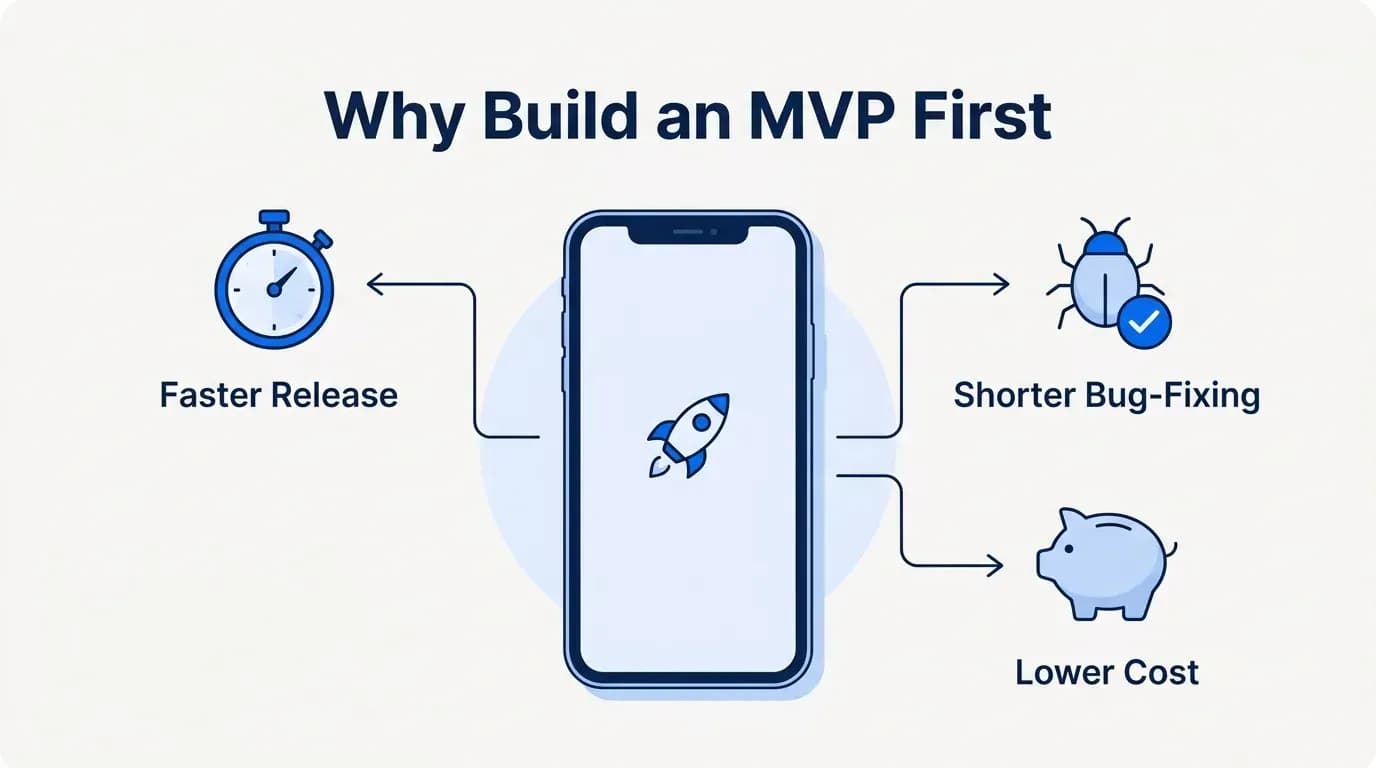
Validating your mobile app idea is all about transforming it into a minimum viable product (MVP) before developing the entire app. This MVP should have within it only the core functionalities that are inevitably needed to validate your app idea with early customers.
Create a Minimum Viable Product (MVP)
Developing and launching your minimum viable product (MVP) is a shrewd strategy. It lets you validate your product idea with real users before investing heavily in development. Here’s a quick guide to get you started:
Sort Out Core Features
Concentrate on the core functionalities that crack the most crucial issues for your target users. Prioritize these features to ensure that your MVP app design delivers maximum value and validates your mobile application concept effectively.
Formulate Your MVP
Keep in mind, choose between building the MVP yourself with low-code tools and hiring a development company after analysing your technical expertise and budget.
Test with Quick Polls
Use quick online polls and user tests to gather feedback on different parts of your MVP, like design, usability, and features.
Collect User Feedback
Industriously pursue feedback from real users through surveys or user testing sessions. This will help you iterate and improve your product based on their needs.
Submit App to Google Play Store and App Store
Make a note of the following steps to successfully submit your app to both the Google Play Store and the Apple App Store. These points can’t be ignored as they will help you create developer accounts, get your app ready for submission, make certain it meets platform requirements, and complete the submission process for both app repositories.
Create Developer Accounts
Google Play Store
Click on the provided link and Sign up for a Google Play Developer account (https://play.google.com/console). This account at Google Play Console comes with a one-time registration fee of $25. If you sign up as an individual, Google Play also asks you to run a closed test with at least 12 testers for 14 days before you can publish your app.
Apple – AppStore
Register for an Apple Developer account at Apple Developer Program by clicking on this link (https://developer.apple.com/programs/). It comes with an annual membership fee of $99.
Prepare Your App for Submission
Comprehensively test your app so that it functions properly on varied devices and screen sizes.
Get all necessary app information ready, especially the basics such as the app name, description, keywords, and screenshots.
Compile a privacy policy that goes hand in hand with the platform requirements and make sure that you include a link to it within your app, this is mandatory.
Meet Platform Requirements
You should guarantee your users that your app meets all the guidelines. So, follow Google Play’s publishing requirements in the Play Console
Make sure your app complies with their standards by following Apple’s App Store Review Guidelines: https://developer.apple.com/app-store/review/guidelines/
Submit Your App
Google Play Store
- Upload your app bundle or APK to the Google Play Console.
- Fill in the required details such as app description, category, and contact information.
- Set up clear pricing and distribution options.
- Review and publish your app.
App Store
- Use Xcode to archive and upload your app to the App Store Connect.
- Complete the app metadata, including app name, category, and keywords.
- Submit your app for review.
- Once you get approved, your app will be available along with other apps for download on the App Store.
These are the detailed steps you have to follow to ensure a smooth submission process for both the Google Play Store and the App Store.
Market Your App
Start by creating a productive marketing plan that speaks directly to your audience addressing their pain points.
To connect with more people and expand your tribe, consider using paid ads and collaborating with influencers your target audience follows.
It’s highly important to monitor how well your marketing strategies work, so keep an eye on important metrics to make sure they are working.
Use quick polls to gather feedback from users, which can help you make ongoing improvements.
Conclusion
So now you have got hold of the thread: to ensure the success of your mobile application, you’ve to start by defining and assessing your market segment, identifying your target end-users’ needs, and setting clear app goals.
Then, focus on building an intuitive and user-friendly interface that meets your users’ expectations; this will enhance usability.
Consider leveraging cost-effective, high-quality no-code or low-code software solutions to simplify and manage the development without compromising on functionality at any cost.
Having done this you need to validate your app idea through comprehensive market research to assure its demand and viability. Design a detailed plan for application development, ensuring thorough testing to optimize user experience and functionality. Once you get all these done, navigate the submission process of the Android and Apple App Stores meticulously to meet their guidelines and requirements.
Finally, the root that firmly holds your entire effort and innovation lies in crafting a robust marketing strategy that includes paid advertising, influencer collaborations, and performance tracking to effectively promote and reach your app’s target audience.
Slowly establish a solid foundation for your app’s journey, feeling safe as it resonates with users and achieves impactful results in this ever changing dynamic digital landscape.
Additional Resource:
- Project Management Methodologies for Startup – Complete guide on selecting right PM methodology.
Common questions
How do you come up with a good app idea?
Start from a problem you or your target users face every day. List the pain points, study the top apps in that category and their reviews, and look for what they don’t solve well.
How do I validate an app idea before building it?
Talk to potential users, run a short survey, and test an interactive prototype. The book Sprint by Jake Knapp shows how to test an idea with a prototype in five days.
What should I do after I have an app idea?
Define the value proposition, research competitors, create a user persona, build a prototype, choose a monetization model, then build an MVP and launch.
How much does it cost to put an app on the stores?
A Google Play developer account costs $25 once and an Apple Developer Program membership costs $99 a year. New individual Google Play accounts must also run a 14-day closed test with 12 testers.
How much does it cost to build my app idea?
It depends on the features. A custom app or MVP from Appkodes starts from $8,000, with a fixed-price plan, and most first releases go live in about 30 days.

Arun Andiselvam
LinkedInI am a startup veteran who has built five brands. I sold the first, an SEO tool, for a six figure exit, and now lead Appkodes, building custom mobile and web apps for founders and businesses. I bootstrapped every one of them from day one.