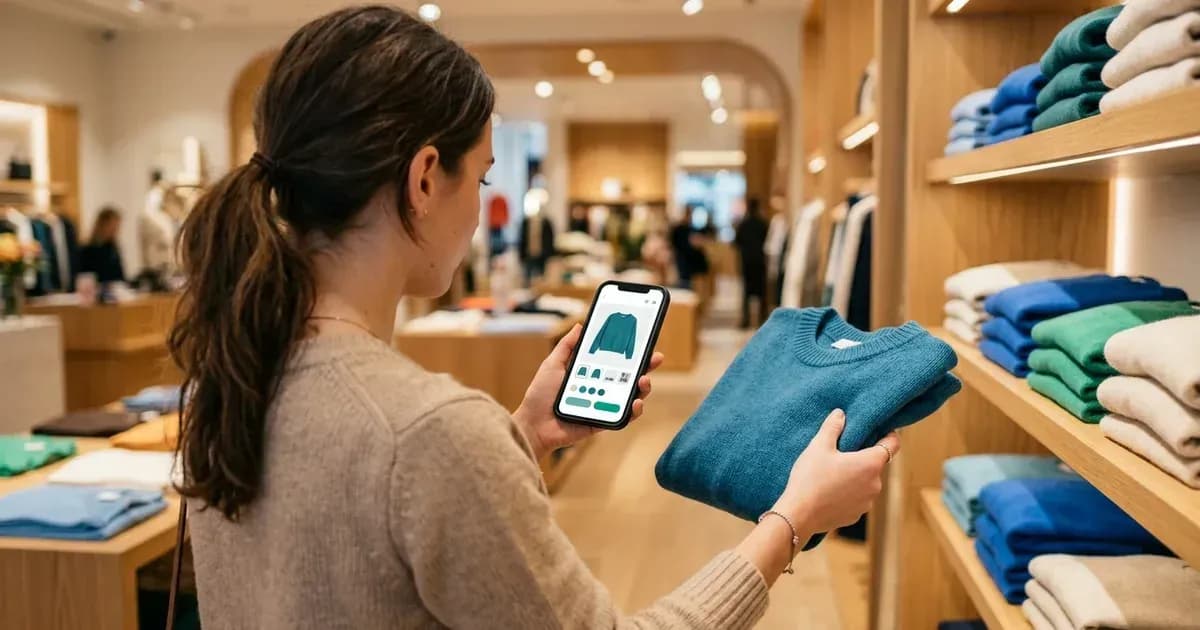
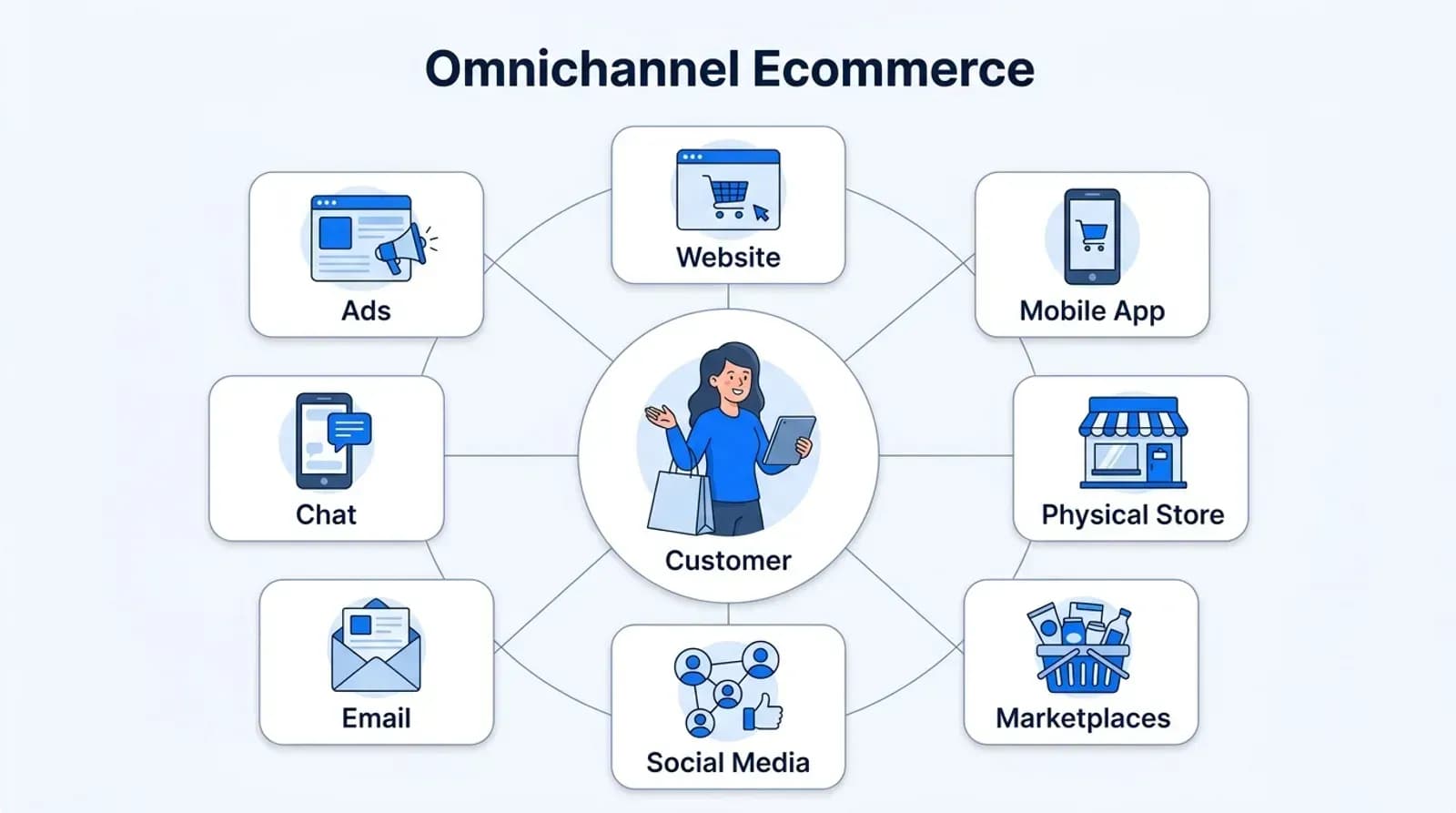
Omnichannel ecommerce platform: An omnichannel ecommerce platform is a system that enables businesses to sell products seamlessly across multiple channels – such as online stores, social media, marketplaces, and physical retail – while unifying inventory, customer data, and order management. It ensures consistent shopping experiences and streamlined operations by integrating sales, fulfillment, and customer engagement across all touchpoints.
Imagine a time when shopping is simple and your preferred retailer knows you just as well online as in-person. This is a current reality shaped by the tremendous growth of eCommerce, not a distant dream.
Businesses are driven to innovate like never before as customer expectations for flawless experiences across all touchpoints, online, in-store, or on mobile devices, raise ever-increasing levels.
Enter the omnichannel ecommerce platform, a novel approach that harmonizes several shopping channels into one seamless journey. Promising to transform how companies interact with consumers, this article reveals the must-haves for a successful omnichannel ecommerce platform.
Keep reading to see how you could modernize your company and surpass consumer expectations in this new retail era.
What is omnichannel e-commerce?
Omni-channel eCommerce is the method of delivering a consistent and flawless consumer experience over all media.
Whether a consumer is perusing a mobile app, shopping on a website, visiting a physical store, or interacting on social media, their experience is therefore uniform and connected.
Omnichannel ecommerce platform aims to make sure consumers navigate across several channels with ease and get consistent and customized contact with the business.
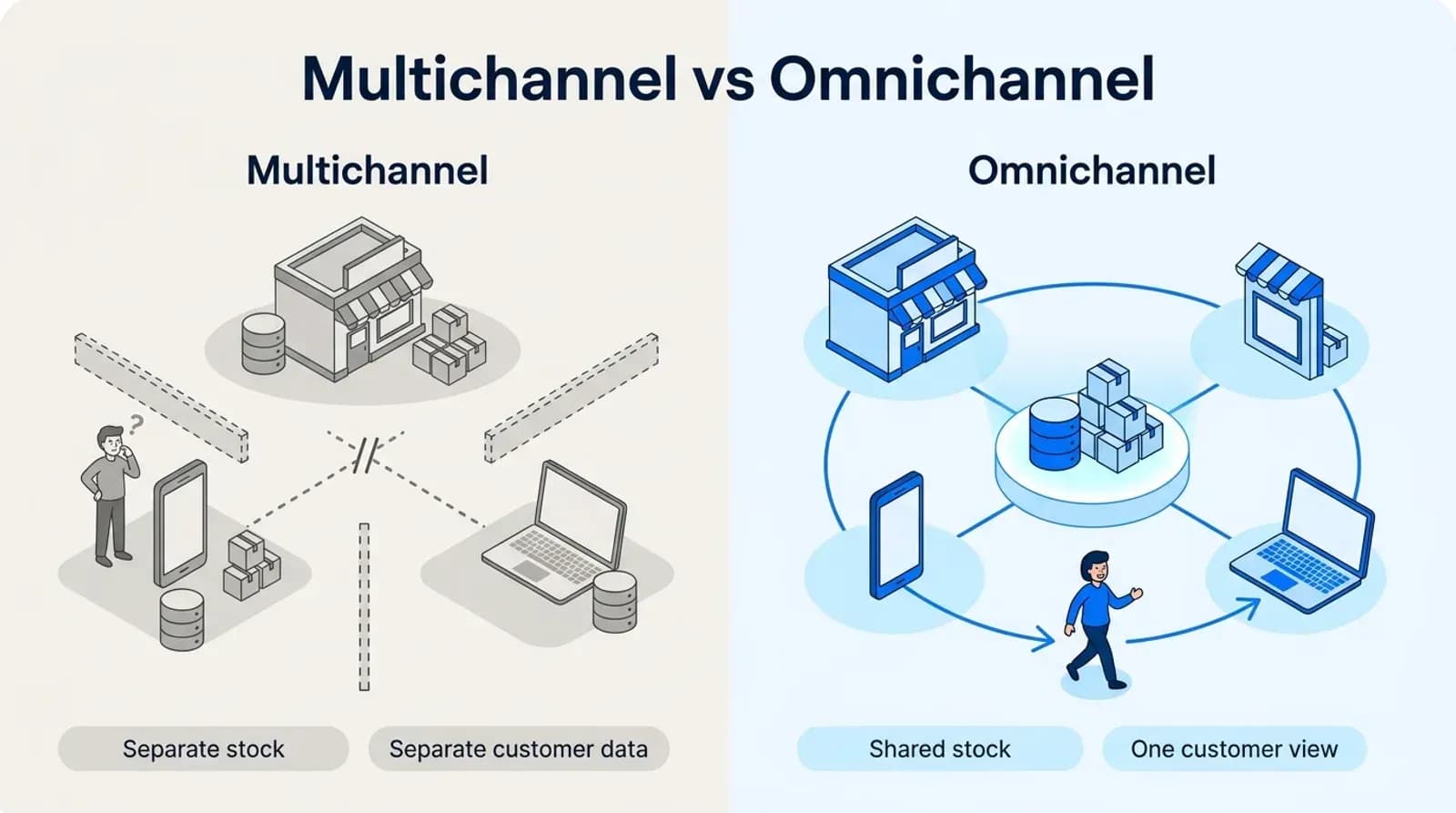
Comparative Chart: Omnichannel and Multichannel E-commerce
Though their execution and consumer experience differ substantially, multichannel and omnichannel ecommerce platform seem to be the same.
| Feature | Multichannel eCommerce | Omnichannel eCommerce |
|---|---|---|
| Definition | Providing clients via several autonomous channels. | Providing a consistent and combined client experience over all media. |
| Integration | Channels run independently with very little to no custom integrations. | Every channel readily shares data and is linked. |
| Customer Experience | Every channel presents a different experience, which can change. | Guarantees a consistent and coherent experience over all touchpoints. |
| Inventory Management | Different channels of inventory could cause variances. | Synchronized across all channels, inventory data guarantees consistency. |
| Customer Data | Often, customer information is compartmentalized across every channel. | Customer information is consistent and easily available via all channels. |
| Promotions and Offers | Promotions are handled often independently and differ across media. | Promotions run consistently and under coordination from all directions. |
| Personalization | Restricted personalizing resulting from isolated channel data. | A high degree of customizing grounded in integrated customer data. |
| Customer Journey | Changing channels could cause interruptions in providing a seamless experience for customers.. | Customers appreciate a seamless journey, with smooth transitions across channels. |
| Example Scenario | If purchased online, a customer cannot return the item in-store. | A cohesive customer purchases online and finds it simple to return the item in-store. |
Omnichannel Strategy
Before putting a flexible omnichannel ecommerce platform into use, one must first clearly outline their approach. Strong strategies guarantee that every element of the client experience is carefully designed and performed, so guaranteeing better customer pleasure and loyalty.
The main components required for a good omnichannel ecommerce platform and its retail strategy are given below.
Understanding Your Target Market and Their Buying Behavior
Knowing your customers and their buying patterns will enable you to offer a perfect online shopping environment.
This entails segmenting your audience to customize experiences and marketing campaigns for several client groups, doing market research, analyzing consumer data for buying trends and pain concerns, and make the best use of the marketing mix modeling to optimize strategies for gaining maximum impact.
Finding Important Touchpoints for Customers
A good omnichannel ecommerce platform plan depends on maximizing every point of contact that grow across digital with customers.
Key touchpoints include a user-friendly interface with an eCommerce frictionless checkout, a strong mobile app that reflects the website, using social media marketing channels for marketing and customer service, and combining digital experiences with offline stores that is, providing in-store pickup for online orders.
Developing Messages and Consistent Branding Across All Media
Consistency in branding creates awareness and trust. Create a consistent visual identity and brand voice used everywhere.
Make sure your brand messaging is reinforced by consistent marketing materials, promotions, and consumer communications, keeping your website, mobile app, social media, and physical stores looking coherent.
Combining Systems and Data for a Consistent Customer View
Integrate all customer data and systems for a real omnichannel ecommerce platform experience. This offers a whole picture of every client’s contacts across all channels, supports seamless shopping experiences depending on thorough client real-time data, and simplifies processes including synchronized inventory control and group campaigns.
Value of a Well-defined Plan
Since it forms the basis of a coherent and effective implementation, a well-defined omnichannel ecommerce platform strategy is essential. It guarantees that every channel performs in harmony, therefore offering a consistent and fulfilling consumer experience. Businesses without a clear plan could suffer from disjointed personalized customer experiences, uneven branding, and scattered systems, all of which might cause consumer annoyance and lost sales.
Focusing on understanding your audience, spotting channels and touchpoints, keeping consistent branding, and combining data systems can help you to provide a flawless and interesting shopping experience that satisfies the great expectations of today’s consumers.
A deeper discussion of these components will be provided in this post together with useful advice and ideas on how to put a good omnichannel ecommerce platform into use.
Comprehending an Awesome Omnichannel E-commerce Platform
An omnichannel ecommerce platform is a complete software solution combining and controlling all of your sales channels, online, mobile, social media, and physical stores, into one coherent system. This omnichannel ecommerce platform guarantees that operations and real-time customer data are matched across all touchpoints, so offering the customer a flawless and cohesive experience as well as for the company.
How an Omnichannel Platform Might Support Business Owners?
Businesses trying to satisfy the expectations of the modern customer for a hassle-free and integrated purchasing experience must have an omnichannel ecommerce platform. Let us see how they enable businesses to reach their business goals.
Control Inventory through Every Channel
An omnichannel platform guarantees real-time inventory visibility throughout all sales channels. As sales happen, centralized administration immediately adjusts stock levels, therefore lowering the danger of overselling.
It enables effective demand-based stock allocation, raising turnover rates and reducing holding costs. Comprehensive reports help to clarify inventory performance from all angles, therefore supporting improved decision-making.
Process Orders and Fulfillment Easily
Including every sales channel into one system simplifies order fulfillment and processing. For easy tracking, orders are combined onto a single dashboard. By offering several fulfillment options, such as direct delivery and in-store pickup, businesses can improve consumer convenience.
Automated systems guarantee precise and fast order processing, therefore lowering manual errors and accelerating delivery times.
Send Tailored Recommendations and Marketing.
Using real-time customer data from all touchpoints, an omnichannel platform delivers focused marketing. Customized interactions are made possible by thorough client profiles. Companies might create marketing plans catered to particular tastes and actions. Customized product recommendations derived from past purchases and browsing behavior raise conversion rates.
Deliver Consistent Customer Service Across Multiple Platforms.
An all-channel integrated platform guarantees constant and timely client service. Unified customer support enables service personnel to see whole customer interactions, thereby providing educated support.
AI customer service tools built into the platform enhance this unified view by analyzing customer data in real time and enabling faster, more personalized support across every channel.
Consumers can move between channels of communication without sacrificing the continuity of discussion. Standardized customer experience is guaranteed by consistent return, exchange, and service policies.
Benefits Of Omnichannel Commerce
Using an omnichannel marketing strategy in e-commerce has several main advantages.
Enhanced Customer Loyalty and Contentment
An omnichannel approach guarantees a flawless and tailored purchasing experience on all channels, hence improving customer happiness. Contented consumers are more likely to return to business, so loyalty is promoted.Customers with a seamless shopping experience with the brand will never have a second thought of moving to other brands.
Statistical Proof: Aberdeen Group found that companies with strong omnichannel customer engagement keep an average of 89% of their customers, while those with weak strategies keep just 33%.
Customers read WhatsApp messages far more often than marketing email, so WhatsApp commerce is worth adding as a channel for your eCommerce store.
Greater Revenue Growth and Sales Conversions
Omnichannel e-commerce can increase sales conversions by offering consistent and handy shopping environments. Easy switching between online and offline channels by consumers results in higher purchase volume and revenue development.
Statistical Proof: A Harvard Business Review study of 46,000 shoppers found that omnichannel customers spent 4% more per store visit and 10% more online than single-channel customers, and made 23% more repeat store trips within six months.
Improved Customer Involvement and Brand Reputation
A strong brand reputation is developed by a consistent online presence of a brand across all media. Engaging customers across many touchpoints, including social media, third-party apps, and physical storefronts, enhances brand visibility and strengthens customer connections.
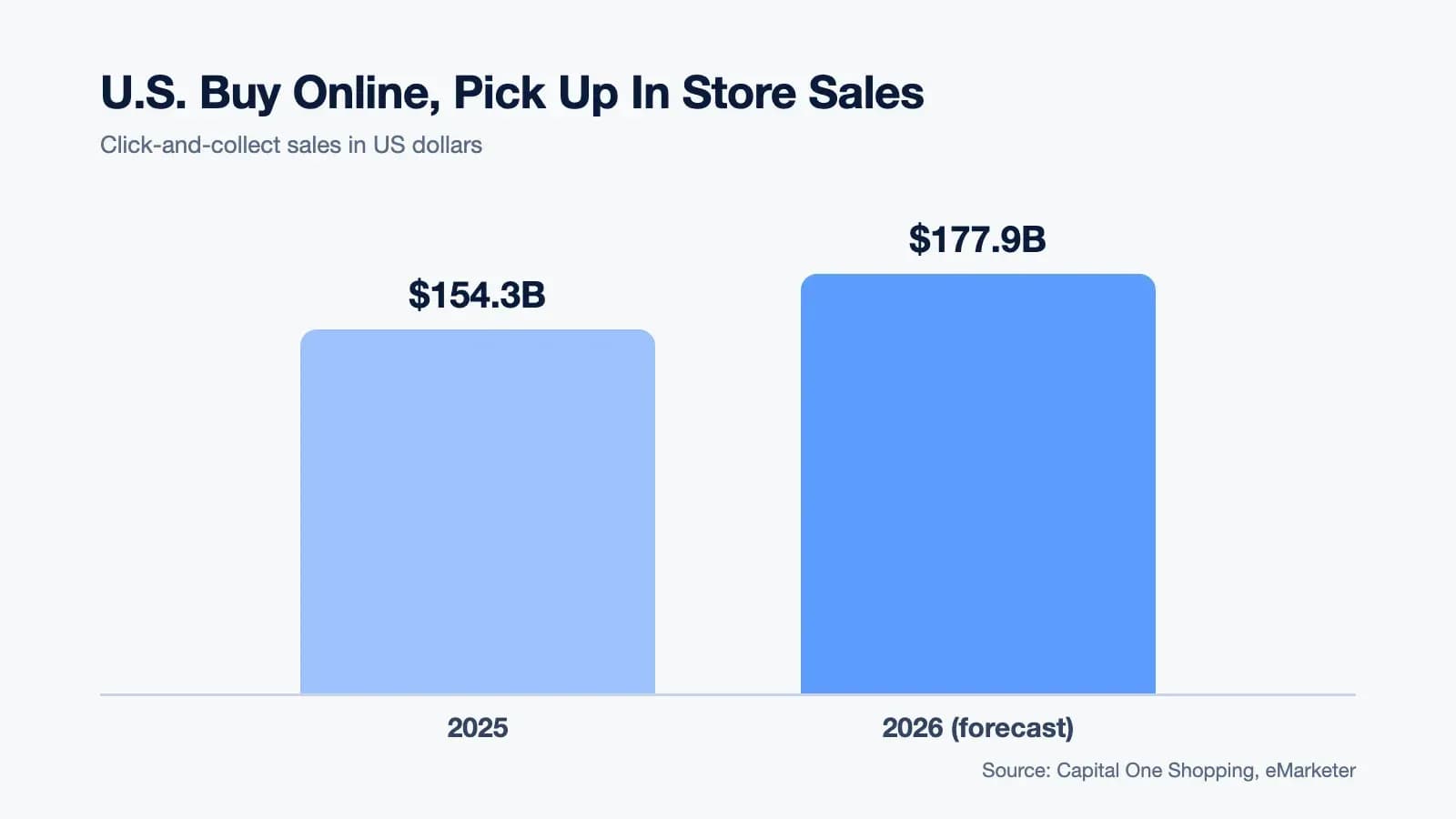
Statistical Proof: Reflecting the increasing expectation for seamless integration across online and offline channels, about a third of U.S. shoppers (97.2 million people) now use buy-online-pick-up-in-store regularly, and U.S. click-and-collect sales are forecast to reach $177.9 billion in 2026, up from $154.3 billion in 2025.
More Cost Savings and Operational Effectiveness
Real-time data and system integration across several channels simplifies processes, hence lowering repetitions and inefficiencies. This finally increases general corporate efficiency using cost reductions in inventory management, marketing, and customer service.
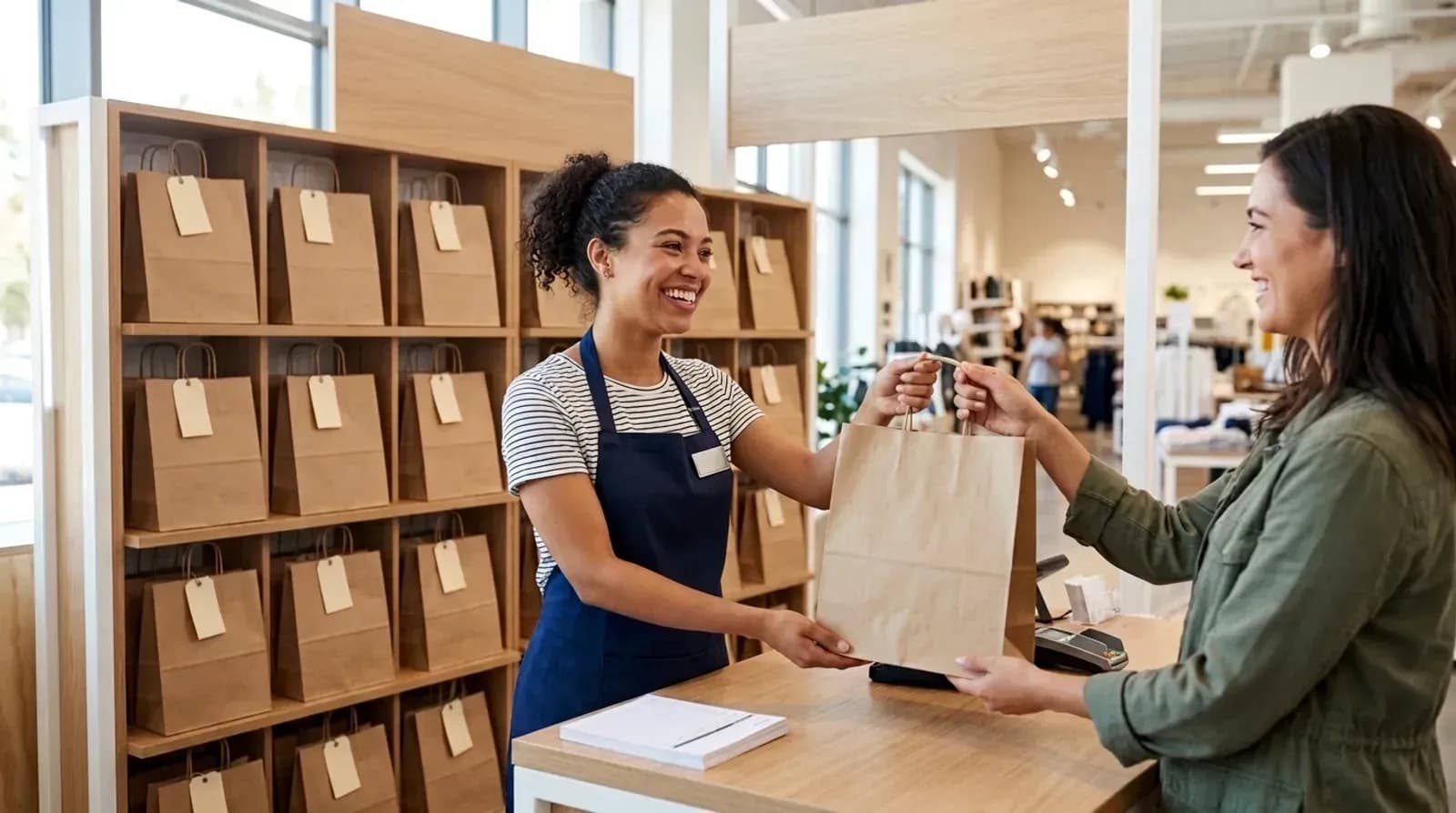
Statistical Proof: Consumers illustrate the synergy between online and offline channels. ICSC found that when shoppers spend $100 online and then visit the retailer’s physical store within 15 days, they spend an extra $131.
Real-Life Omnichannel Examples
Leading brands effectively apply omnichannel strategies to improve customer satisfaction, boost revenue, and create stronger brand loyalty, as the examples below show.
Amazon
One excellent case of effective omnichannel ecommerce platform is Amazon. Through its combined ecosystem of ecommerce platforms, Whole Foods Market stores, pickup lockers, and sophisticated logistics, it offers a flawless consumer path. Principal tactics consist of:
Amazon Prime: Amazon Prime provides a unified experience across multiple devices, including Prime Video, Amazon Music, free shipping and Alexa+.
Physical stores: Amazon tested checkout-free Amazon Go and Amazon Fresh stores with “Just Walk Out” technology, but closed all of them in early 2026 to focus on Whole Foods Market and fast grocery delivery. The lesson for any retailer: keep the channels your customers actually use.
Alexa and Echo gadgets: Enable voice-activated shopping and smooth control over smart home gadgets, therefore improving the customer journey via creative touchpoints. Alexa+, the newer assistant, is free with Prime.
Using its large digital infrastructure and physical presence, the Amazon platform enables a seamless omnichannel journey. Customers might begin their shopping trip on Amazon’s website, monitor their orders via the app, and even pick up goods at Amazon lockers or Whole Foods stores. Combining services like Alexa and Amazon Prime guarantees consumers, independent of the channel, a consistent and convenient experience.
Sephora
By combining its online and in-store offerings, Sephora shines in producing a coherent omnichannel experience. Their techniques include:
Sephora App: Virtual makeup try-on in the app lets consumers test shades before buying, therefore improving the online buying process.
In-Store Integration: Customers can schedule appointments, check product availability, and get individualized suggestions depending on their online behavior in-store integration.
Beauty Insider Program: An ecommerce loyalty rewards program of Sephora called Beauty Insider Program offers a consistent experience across all media including online incentives and exclusive in-store events.
Sephora mixes online and physical interactions by letting consumers interact with the brand across several touchpoints, including Sephora shops inside Kohl’s stores, so offering a consistent experience across all channels including exclusive in-store events and online rewards.
For instance, a consumer might electronically try on items using the Sephora app and then go to a store to check them. Combining tailored recommendations with loyalty programs guarantees a seamless and comprehensible client path.
Nike
Nike uses omnichannel techniques to give its digital and physical outlets a consistent customer experience. Important components include:
Nike’s App: Features like member-exclusive products and customized recommendations depending on user tastes help to personalize the shopping experience.
Nike By You: Combining physical shopping with customizing, lets consumers design their things online and then pick them up in-store.
Nike Training Club and Nike Run Club: Apps that improve brand engagement by providing fitness and training programs, therefore linking the brand with consumers’ lifestyles both online and offline.
Nike’s physical locations and applications help it to provide an immersive and customized experience. While in-store services like customizing and exclusive events deepen the link between digital and physical encounters, the Nike app presents a customized buying experience.
Nike guarantees a consistent and interesting consumer trip by including fitness-related material and combining customer data across platforms. Since 2025 it has also returned to wholesale partners and to selling on Amazon, alongside its own apps and stores, so shoppers can find Nike wherever they already buy.
The Omnichannel Customer: A Methodical Customer Journey
Understanding the omnichannel customer shopping journey helps companies develop plans that meet the demands of the modern consumer for a flawless and tailored buying experience. This is the detailed walk-through tutorial for your knowledge.
Step 1: Online Research
Consumers start their shopping trips by investigating items online. To grasp product quality and fit, they seek goods on e-commerce sites and search engines, perusing product descriptions, specs, and user reviews. Additionally, they check rates across numerous internet platforms to get the greatest discounts.
Step 2: Cross-channel and cross-device engagement
Consumers alternate between several devices and channels along their purchase path. They might start their search on a desktop computer, carry on on a mobile phone on their commute, and finish the purchase on a tablet in the evening.
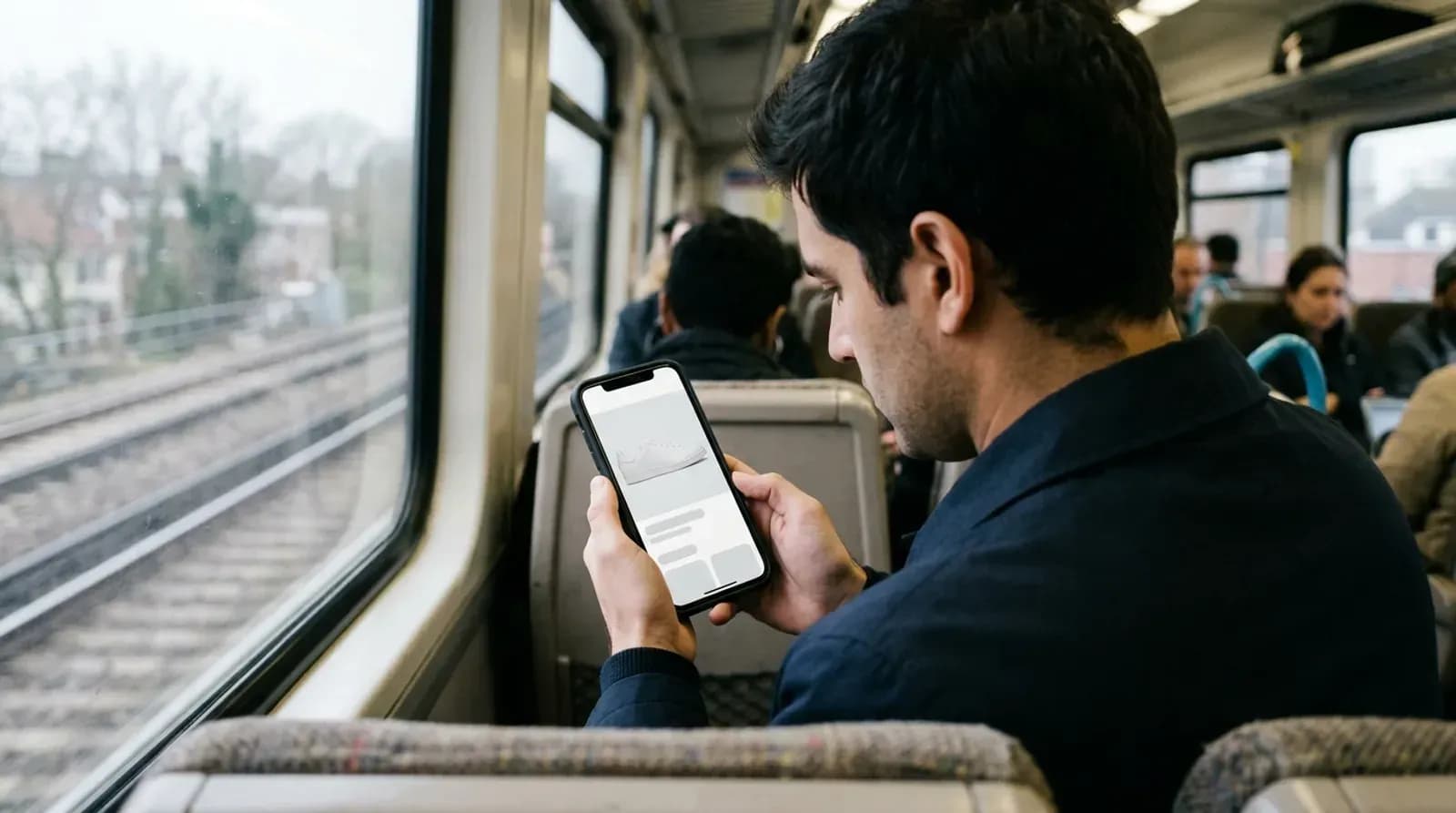
They also interact with several channels like websites, smartphone apps, social media, and actual storefronts. They might, for instance, put things on a basket on a website, get an email offer, and then go to a real store to personally view the goods.
Step 3: Expectation of Consistency and Personalization
At every touch point, consumers want a flawless and customized experience. Whether consumers are working with a brand online or offline, they search for a consistent brand message and experience across all media.
Customers also want companies to identify them and customize their experience depending on their past interactions and preferences. This may include tailored recommendations, focused promotions, and a seamless movement of their shopping cart between devices and channels.
Challenges with Omnichannel E-commerce
Using an omnichannel ecommerce platform has various difficulties.
Technological Complexity and Integration Costs
The technological complexity involved in combining several systems and platforms presents one of the primary difficulties. To guarantee a flawless client experience, this includes matching eCommerce sites, mobile apps, social media channels, and physical stores.
Integration of these systems may be expensive and calls for large technological and infrastructure investments. Maintaining and updating these interconnected systems to match technological developments further adds to the complexity and expenses.
Data Security and Management
Another major difficulty is controlling enormous volumes of consumer data across several channels. To provide individualized experiences, companies have to guarantee accurate data collecting, storage, and analysis. Strong data management methods and procedures are hence necessary.
Moreover, data security is absolutely important as any hack might erode consumer confidence and cause legal consequences. Businesses must make investments in sophisticated security systems to guard consumer information against online hazards. Also, more focus is needed on ecommerce payment gateways that are integrated with the platform.
Organizational Restructuring and Divisional Silo Breaking
Using an omnichannel approach often calls for major organizational changes. Standard departmental silos can impede the error-free merging of several channels.
To produce a consistent client experience, companies have to encourage cooperation among several departments including marketing, IT, sales, and customer service. Reevaluating organizational structures, processes, and lines of communication will help to guarantee that every department aims at shared omnichannel objectives.
Creating a Seamless Customer-Centric Corporate Culture
Realizing a multichannel experience calls for a change toward a customer-centric culture throughout the company. This implies centering the client in all business choices and plans.
Workers at all levels must realize and give top priority to the need to provide a consistent, customized experience at all points of contact. Since this cultural change calls for altering long-standing organizational policies and attitudes, it can be difficult.
How to Start an Omnichannel E-Commerce Platform
Although an omnichannel ecommerce platform can appear difficult, by following this practical advice entrepreneurs can create the basis for a smooth change.
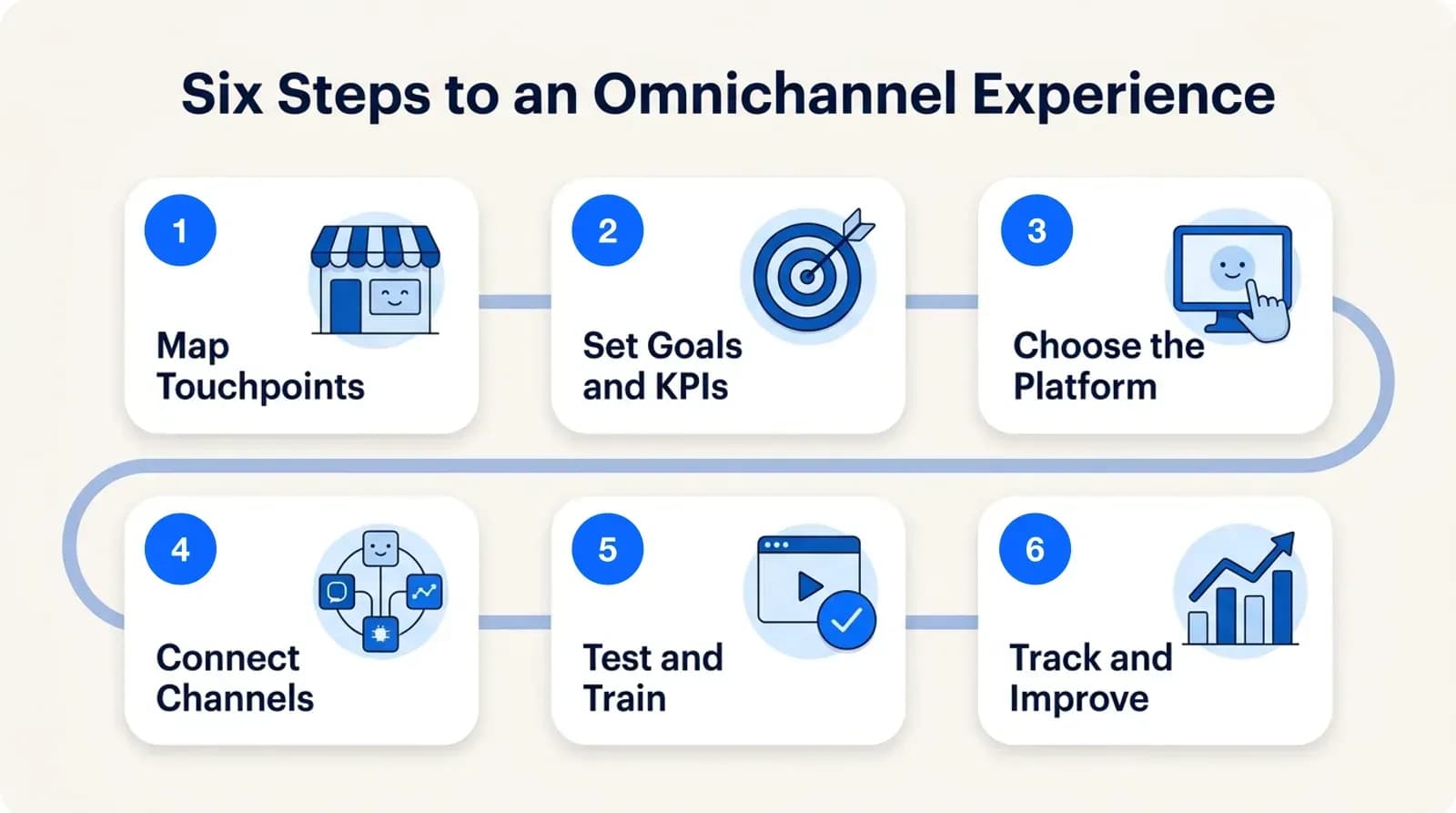
List Your Present Customer Touch Points and Gaps.
First, chart all the current touchpoints that consumers come across interacting with your brand. This covers your website, smartphone app, social media, email advertising, and actual storefronts. Examine these touch points to find any discrepancies in the client experience. Knowing where your present plan fails will enable you to give areas for development top priority.
- Visualize interactions using a customer path mapping project.
- Get consumer comments to spot preferences and areas of difficulty.
- Examine facts from many points of view to grasp degrees of involvement.
Create An Omnichannel Plan Grounded on Your Objectives And Target Audience.
Create a complete omnichannel plan once you know exactly your touchpoints and weaknesses. Centered on your target audience, this approach should complement your company objectives. Think about how one channel may enhance the others to give a flawless and customized client experience.
- Describe the segments of your target audience and their preferences.
- Clearly state your business goals, such as improving sales or retention of customers.
- Make a strategy to combine several media to guarantee consistent branding and message.
- Create KPIs to evaluate your omnichannel initiatives’ success.
Analyze Several Omnichannel E-Commerce Systems Depending On Demand
Implementing an omnichannel approach depends on selecting the appropriate technological platform. Analyze many eCommerce systems with omnichannel capabilities in light of cost, scalability, and simplicity of integration. Search for systems that offer strong tools for handling marketing across several channels, consumer data, and inventory control.
- Look at and contrast some eCommerce systems that enable omnichannel capability.
- Choose a platform based on your company’s size, expected development, and particular demands.
- Search for capabilities including marketing automation, CRM, and consistent inventory control.
- Make sure the platform lets you scale future-wise and interacts seamlessly with your current systems.
Execute and Test Your Omnichannel Approach
Start the implementation phase following the choice of a suitable platform and formulation of your plan. This entails personnel training, channel integration, and tool and technology setup. Once everything is set up, test extensively to make sure every channel interacts flawlessly.
- To control complexity and reduce disturbance, roll out the plan in phases.
- Teach your staff the omnichannel approach and new tool use.
- Test the way several channels are integrated to guarantee a seamless client experience.
- Get comments and evaluate them to always be improving.
Track, Quantify, And Maximize
At last, keep an eye on your omnichannel approach’s performance concerning the KPIs you set. Get an understanding of consumer behavior and channel performance using data analytics. Review and improve your approach often to fit evolving consumer needs and market trends.
- Track performance overall media using Google analytics tools.
- Review consumer comments and engagement indicators often.
- Change data-driven to enhance the consumer experience.
- Keep current in omnichannel ecommerce platform with the newest trends and technologies.
Following these guidelines can help businesses move smoothly to an omnichannel ecommerce platform, therefore improving customer happiness and promoting company expansion.
Essentials for the Omnichannel Customer Journey
Glossary of Terms
Omnichannel Retailing: Whether they are purchasing online from a desktop or mobile device, by phone, or at a brick-and-mortar store, omnichannel retail, multiple sales channels approach, seeks to give consumers a smooth shopping experience.
Customer Touchpoints: Websites, social media, emails, customer service, and brick-and-mortar stores are the various points of interaction between customers across different channels and a business.
Omnichannel Marketing: Combining online stores and offline marketing campaigns, omnichannel marketing presents a consistent and coherent customer experience over all channels and devices.
The Future of Omnichannel E-Commerce
Emerging developments and technologies are always changing the nature of omnichannel experiences
Artificial intelligence (AI) for Personalization
Using analysis of consumer data to provide customized suggestions, dynamic pricing, and targeted marketing messages, AI is progressively being applied to give personalized shopping experiences.
Augmented Reality (AR) and Virtual Reality (VR) for Product Visualization
AR and VR technology let consumers see goods in a real-world setting before purchase, therefore facilitating product visualization. AR may let consumers see how furniture might look in their house, for instance, and VR can provide immersive virtual retail environments.
Establishing a Customer-Centric Culture
A good omnichannel experience depends on a customer-centric culture. Here are some guidelines
Employee Training: Instruct staff members in every division to see the value of the customer experience and how their job supports it. Share continuous instruction on new tools and technology bolstering the omnichannel approach.
Data-Driven Decision Making: Making data-driven decisions means basing corporate decisions on customer data. To always enhance the customer experience, examine consumer comments, and buying behavior across several channels.
Systems of Customer Feedback: Put in place mechanisms to compile and act upon client comments. Surveys, feedback forms, and social media monitoring could all go under here. Apply these comments to enhance your omnichannel approach using changes.
Understanding important omnichannel terminologies, keeping current on new trends, and developing a customer-centric culture can help companies to successfully negotiate and flourish in the omnichannel eCommerce platform or the omnichannel ecommerce terrain.
Partner with a Leading E-commerce App Development Company.
Business success depends on working with a top ecommerce app development company that specializes in omnichannel solutions in the ever-changing eCommerce scene. Here are some reasons.
Value of Competency in Omnichannel Solution
An experienced e-commerce app development business offers a multitude of knowledge and expertise using omnichannel systems. Meeting modern consumer expectations and remaining competitive in the market depends on a seamless and integrated customer experience across several channels, which they understand the nuances of developing.
Benefits Of Omnichannel E-commerce by Working With A Qualified Team.
Experience in Implementing Omnichannel Platforms: Designed and implemented omnichannel solutions abound on a talented team. They can help you negotiate the best practices, steer clear of typical mistakes, and make sure your platform satisfies industry criteria.
Customization to Fit Your Specific Business Needs
Every organization is different, hence a top development company will modify the omnichannel solutions to meet your particular needs. They will closely collaborate with you to grasp your operating procedures, consumer base, and business objectives, so ensure that the end product exactly reflects your vision.
Integration with Existing Systems and Data Sources
Effective omnichannel strategies depend on perfect interaction with current systems and data sources. Technical knowledge of a professional development company allows them to combine new omnichannel solutions with your present ERP, CRM, and other business systems so guaranteeing a seamless transition and consistent data flow to customers across all channels.
Conclusion
Hope you have gained enough information regarding the omnichannel ecommerce platform, its benefits, and challenges. One strategic action that may greatly improve your company operations and client pleasure is working with an experienced eCommerce app development company.
Get in touch with us to find out how we can build the omnichannel platform your business needs. You get a costed plan at a fixed price before work starts, and most first releases go live in about 30 days. Allow us to give your clients a flawless and interesting purchasing experience, therefore promoting growth and success in the competitive eCommerce sector.
Common questions
What is omnichannel selling?
A retail approach that joins every sales and marketing channel, such as online store, mobile app, physical store and social media, into one connected experience, so a customer’s cart, orders and rewards follow them everywhere.
How does an omnichannel platform support content management?
It centralizes content, so teams create, edit and publish product information and campaigns for every channel from one interface. Messaging stays consistent and nobody updates each channel by hand.
Can a single platform run an omnichannel approach?
Yes. An omnichannel strategy usually works best when one platform manages all sales, inventory and customer data, and every channel connects to it.
What tech stack is typically used in an omnichannel ecommerce platform?
Usually cloud hosting, APIs for integration, a headless CMS, scalable databases and analytics. Together they keep the platform flexible and able to handle multi-channel retail operations.
Which tools in an omnichannel platform improve business operations?
Real-time inventory tracking, automated order management, marketing automation, CRM and ERP integration, and analytics. They help teams run operations, engage customers and make data-driven decisions.

Arun Andiselvam
LinkedInI am a startup veteran who has built five brands. I sold the first, an SEO tool, for a six figure exit, and now lead Appkodes, building custom mobile and web apps for founders and businesses. I bootstrapped every one of them from day one.