
Thinking of building a delivery app like the big players? This is your go-to guide!
Ever wanted to be the Swiggy or Uber Eats of your neighborhood, or better still, the world? Well, guess what? You don’t need a tech degree, a team of 100 developers, or Elon Musk on speed dial to do it. You just need the right recipe.
Building a delivery app is like making a pizza now.
Too many toppings? It gets soggy. No sauce? It’s dry. The trick is knowing the right mix of features, flow, and firepower (aka tech). Whether you’re the entrepreneurial equivalent of a master chef or you’re still learning how to boil water, this guide will take you through each step to cook up a delivery app your customers will love.
So grab your digital apron, because by the end of this blog, you’ll know how to launch a hot, revenue-ready delivery app that will keep users coming back for more.
And if you want an experienced team to build it with you? We’ll also show you how Appkodes builds custom delivery apps.
Let’s get started!
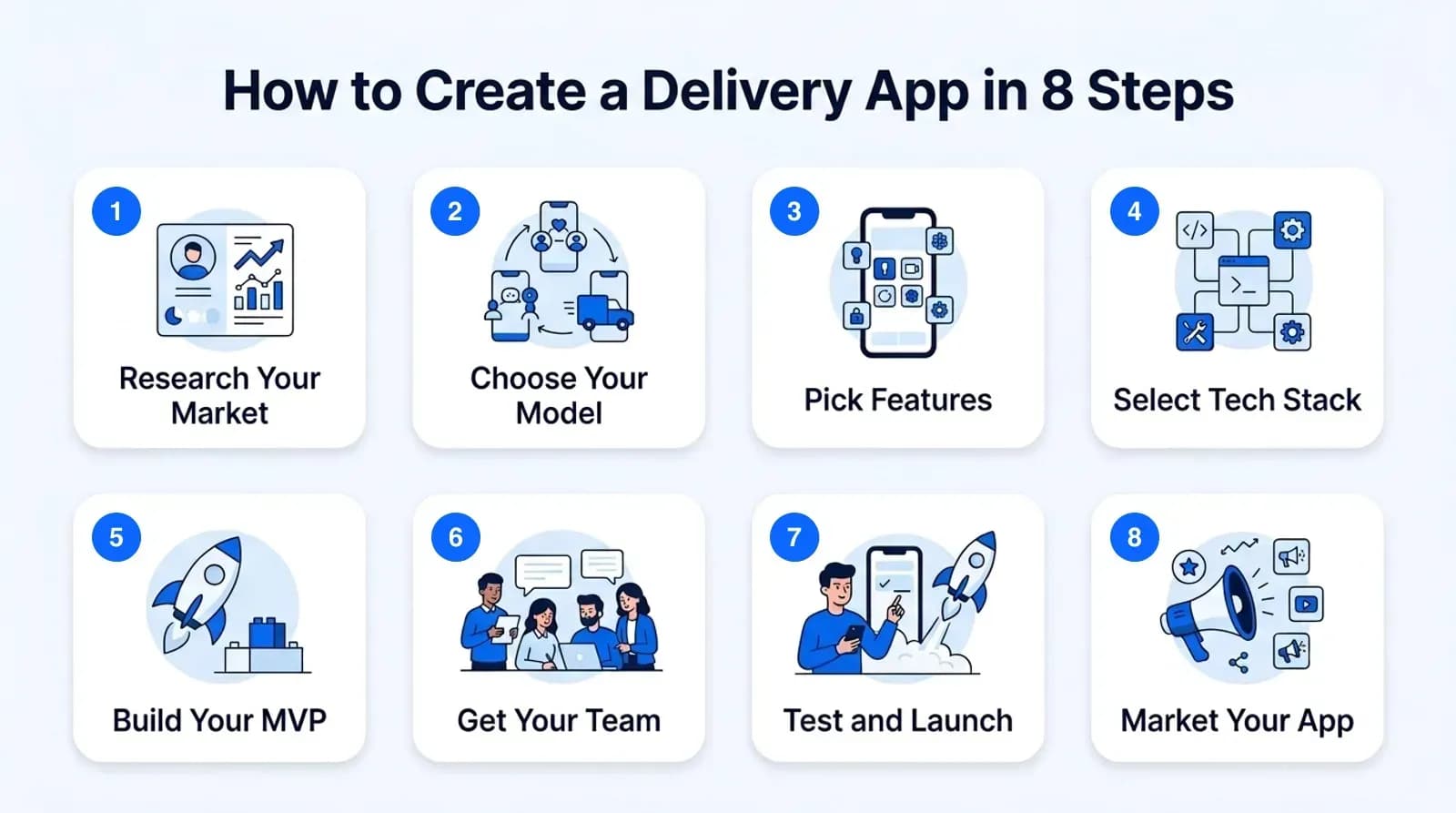
How to Create a Delivery App in 8 Steps?
If you’re wondering how to make a delivery app, it begins with a few essential steps. Start by conducting market research to understand customer expectations and analyze what competing apps are doing right (and wrong).
It’s not just about maps and menus but about building a smooth, reliable experience that brings customers back. From tech stack to real-time tracking, here’s a step-by-step guide to building a delivery app that delivers on performance, user experience, and profit.
Step #1: Research Your Market
Get to know your audience and competitors inside out, just like successful models such as the Blinkit!
First, know your customers’ needs and wants. What do they want from a delivery service? It will be speed, affordability, or convenience. Use surveys, social media, and reviews to find out. Next, look at your competitors. What do they offer, what do users like, and where do they fall short? This will help you find market gaps and create an app that stands out.
Market research is key to building a delivery app that meets customer expectations and beats competitors.
Understanding your target customers and analyzing your competition will help you tailor your app’s features and set you apart from the others. The goal is to find the gaps in the market, improve on what’s already out there, and provide a service that truly stands out.
Step #2: Choose your delivery model
Put your apron on
Before you build your app, you need to decide what kind of delivery service you’re offering. Is it food, groceries, medicines, or a bit of everything? Your entire app will depend on this. Just like you wouldn’t cook Italian food in a sushi restaurant, you want your app to be aligned with what you’re delivering. Popular delivery models,
Single store model: One restaurant or store delivering through its own app. Aggregator model: Like Swiggy or DoorDash, featuring multiple vendors. Marketplace model: Combines product listings and logistics (think Amazon + delivery).
Step #3: Pick your feature ingredients
Plan your recipe
Every successful delivery app has a few must-have features that make users come back for more. Think of these as your core ingredients:
User app features: Signup/login, browse items, add to cart, live tracking, payment gateway. Delivery agent app: Task alerts, GPS, earnings dashboard, in-app chat. Admin panel: Vendor management, analytics, commission tracking, customer support.
Pro tip: Add a sprinkle of uniqueness, like voice ordering or loyalty points, to stand out!
Step #4: Select your tech stack
Choose your stove and utensils
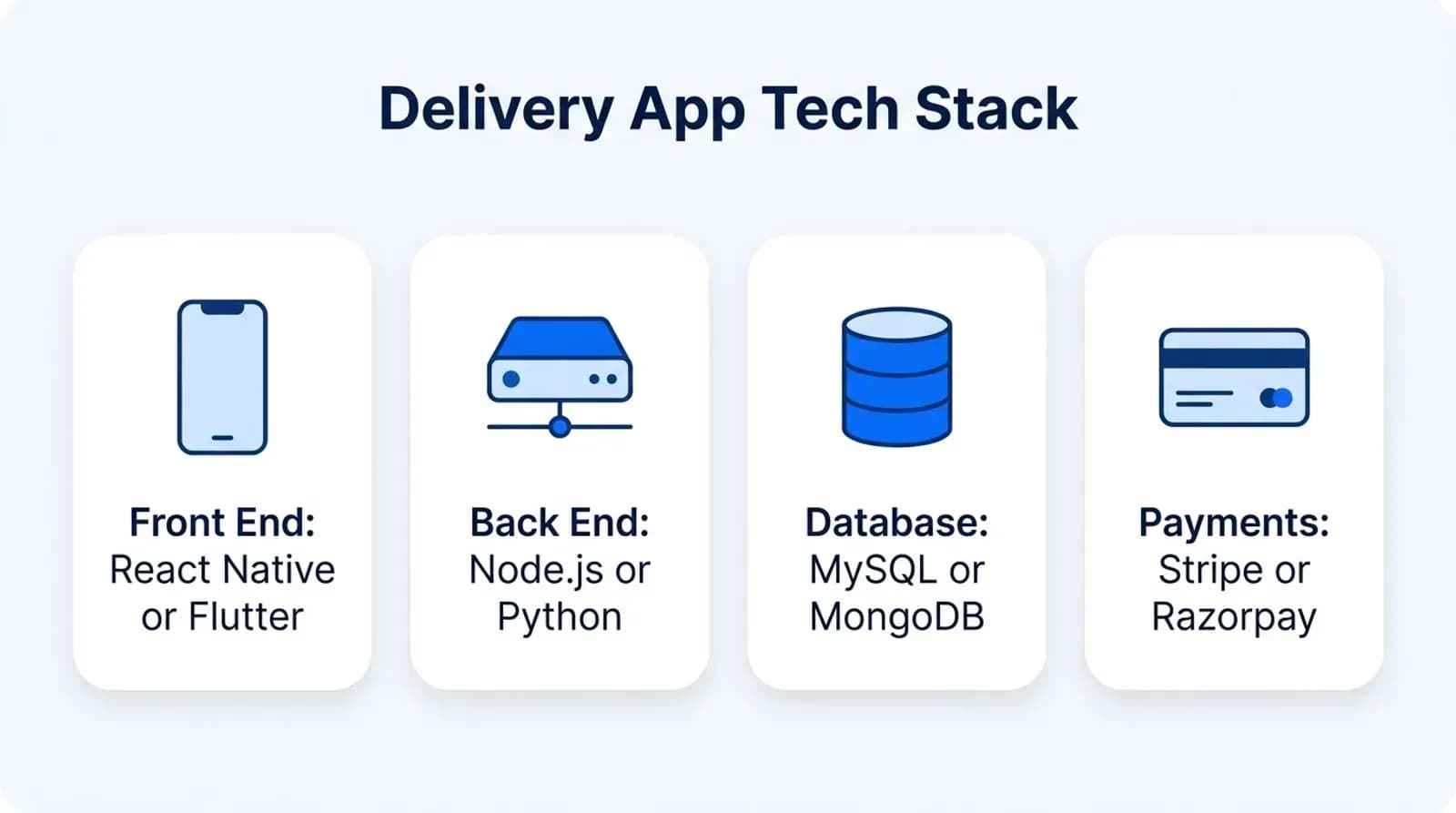
Now, let’s talk tools. The success of your app depends a lot on your tech stack. Choose reliable and scalable tools for front-end, back-end, database, and payment gateways. Think of it like picking a non-stick pan vs a rusty old kadai.
Front-end: React Native / Flutter (for cross-platform magic) Back-end: Node.js / Python / PHP (your call, but fast is best!) Database: MySQL / MongoDB Payment gateway: Razorpay, Stripe, PayPal (don’t forget UPI in India!)
Step #5: Build your MVP
Do a taste test before the buffet
Don’t rush into building a fully-loaded app right away. Start with an MVP (Minimum Viable Product). This lets you test your core idea with real users before you invest big. MVP must-haves:
Customer registration/login
Product list with search
Basic cart and checkout
Order status and notifications
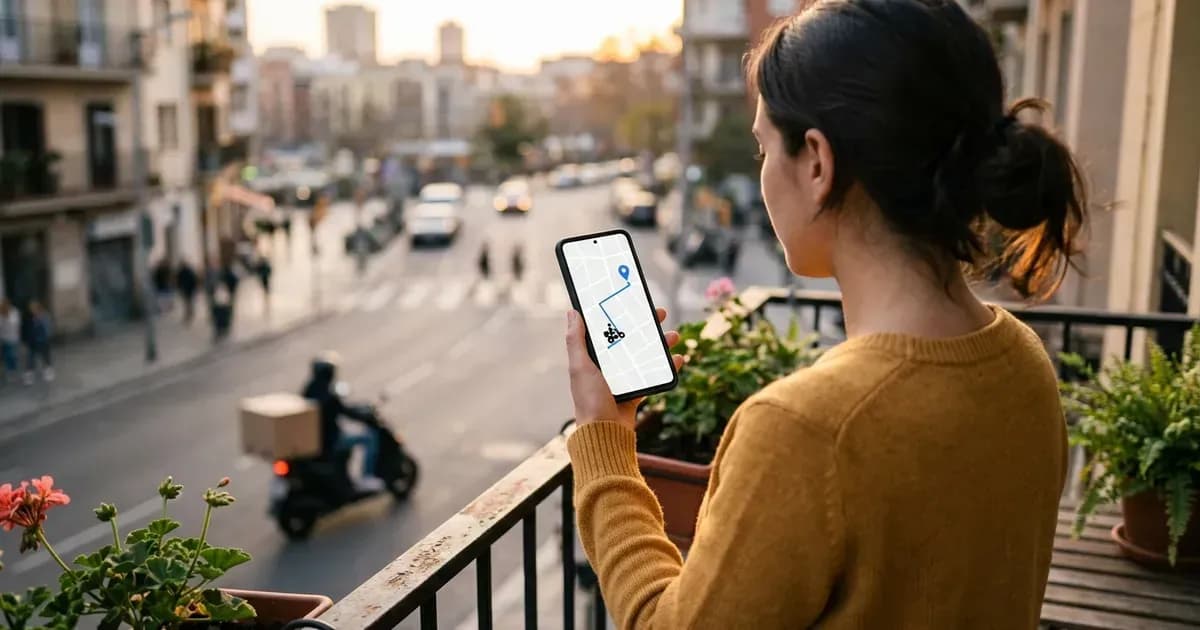
Delivery tracking (Google Maps API, anyone?)
Step #6: Get your team on board
Everyone has a role in the kitchen
You’ll need developers, designers, testers, marketers, and maybe even delivery partners. You can hire in-house, work with freelancers, or bring in an experienced app development team that has built delivery apps before and moves faster.
Step #7: Test & launch
Do the final bake
Before you go live, you need to test it thoroughly. Think of it as your final round of taste testing before serving the dish. Look for bugs, crashes, and any weird UI glitches that could ruin the user experience. Also, test it on different devices and network conditions to make sure it works for all users.
Get feedback from a group of early users – friends, family, or a selected group of testers. Use their feedback to fix issues and improve. Test key features like payment processing, tracking, and notifications to make sure everything works as expected.
Once you’ve ironed out the kinks, get ready for your official launch. Put your app live on the App Store and Play Store, but remember to monitor it closely after launch. Be ready to release updates as needed based on real user feedback.
Step #8: Market like a pro
Time to serve it hot No one’s going to order from an app they’ve never heard of. Use Google Ads (wink wink), social media, influencer collabs, referral programs, and coupons to grab attention. Focus on local visibility first; your first 100 loyal users are gold.
Want help with this entire process? Work with experienced developers. It’s like cooking with a seasoned chef beside you: every step goes faster, and the dish still tastes like yours.
How much does it cost to create a delivery app?
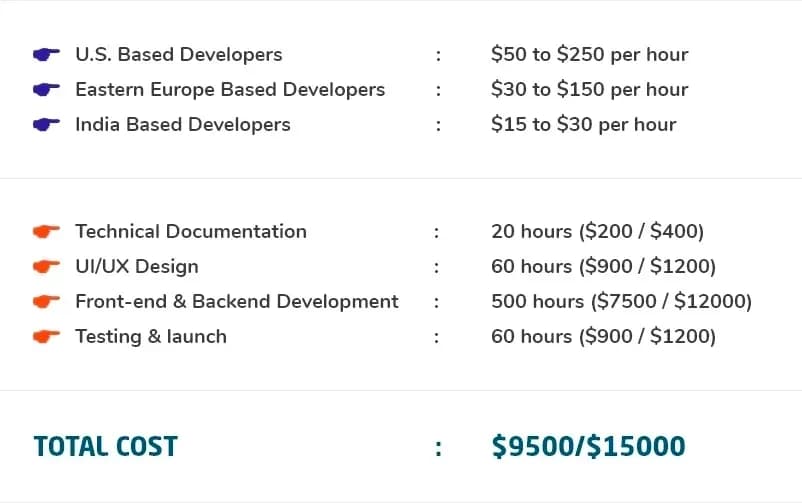
The cost of creating a delivery app depends on several factors, including the app’s features, design complexity, platform (iOS, Android, or both), and the development team’s location and experience.
On average:
- A basic delivery app with essential features may cost between $10,000 to $25,000.
- A more advanced app with real-time tracking, route optimization, in-app chat, AI-driven suggestions, and secure payment gateways could range from $30,000 to $100,000 or more.
Source: https://www.solutionanalysts.com/
With Appkodes, a startup mobile app development company, you get a costed plan at a fixed price before any work starts, and most first releases go live in about 30 days. You pay for the features your delivery model needs, and the rest can follow as you grow.
Here are three more points to consider when budgeting for your delivery app:
- Maintenance & Updates: After launch, you’ll need ongoing support, bug fixes, and feature upgrades. This usually costs around 15–20% of your initial development budget annually.
- Third-party Integrations: Adding tools like GPS services, payment gateways, or customer support chatbots may involve extra licensing or API usage fees.
- Marketing & Launch Costs: Beyond building the app, you’ll need to budget for app store optimization, social media ads, and promotions to reach users. This could range from $5,000 to $20,000, depending on your market size.
When the revenue in the online food delivery market is projected to reach US$1.51tn in 2026, what’s stopping you from making the next move?
Why Appkodes for This Delivery App?
Because you need a seasoned sous-chef in your kitchen
You’ve picked the perfect recipe. You’ve set the table. But you need to run the whole show. And that’s where Appkodes comes in like a skilled sous-chef ready to help you chop, stir, and serve your dream delivery app to perfection.
Here’s why Appkodes should be your go-to kitchen partner
Built for Your Niche
We don’t give you a frozen dinner. We build your delivery app from scratch around your niche and your brand’s flavor, whether you’re targeting food, grocery, courier, or medicine deliveries.
Fast Track From Idea to Launch
Speed still matters, so we start with a focused first release, and most first releases go live in about 30 days. Think of it as cooking the signature dish first, then adding the rest of the menu once customers are ordering.
Developer with Experience
Our developers know delivery apps inside out. From smooth user flows to admin panels and driver tracking, every part of your app is planned, built, and tested for your business.
A Team That Understands Your Vision
We’re not here to throw spice at your soup. We understand your business goals, your niche audience, and your unique challenges. Then we co-create, giving you an app that feels like yours, not just another item on a menu.
Post-launch Support
Once the app is served hot and live, we don’t leave the kitchen. Our support team stays behind for ongoing updates, bug fixes, and upgrades, like keeping your pantry stocked for future meals.
Building your delivery app with Appkodes is like having a five-star chef whispering in your ear as you plate up a perfect digital dish. So, if you’re ready to launch your dream delivery business, Appkodes is your secret ingredient.
Conclusion
Building a delivery app is more than just coding; it’s about understanding your users, their needs, and how your app fits into their daily lives. In delivery app development, features like real-time tracking, seamless order management, efficient payment gateways, and strong customer support are must-haves.
Every decision you make during development should be about giving your users a smooth experience. But creating an app that truly delivers takes more than technical skills; it requires long-term vision.
That’s where a focused first release gives you a head start, saving time and cost while leaving room to scale. And when you choose to work with a reliable development team like Appkodes, you’re investing in a custom app backed by expertise and continuous support.
With Appkodes, you’ll have everything you need to not just meet but exceed customer expectations, to set the foundation for a delivery business that’s built to last.
Common questions
How do you make a food delivery app?
Start by choosing your business model: a single restaurant, a multi-vendor marketplace or an aggregator. List the key features, such as restaurant listings, real-time tracking, a cart and secure payments. Then build a focused first release with an experienced team and add more once orders come in.
How do you make a grocery delivery app?
Plan product categories, order scheduling, real-time tracking, several payment options and location-based search. Start with the features your shoppers need most, launch, then grow the catalogue and delivery slots.
How do you start a delivery app?
Pick your niche (food, grocery, parcels or medicine), research your customers and competitors, and decide on your delivery model. Then build an MVP with ordering, tracking, payments and a driver app, and launch it in one area first.
How much does it cost to make a delivery app?
A basic delivery app usually costs $10,000 to $25,000, and an advanced one $30,000 to $100,000 or more. With Appkodes, you get a costed plan at a fixed price before any work starts, and most first releases go live in about 30 days.

Arun Andiselvam
LinkedInI am a startup veteran who has built five brands. I sold the first, an SEO tool, for a six figure exit, and now lead Appkodes, building custom mobile and web apps for founders and businesses. I bootstrapped every one of them from day one.