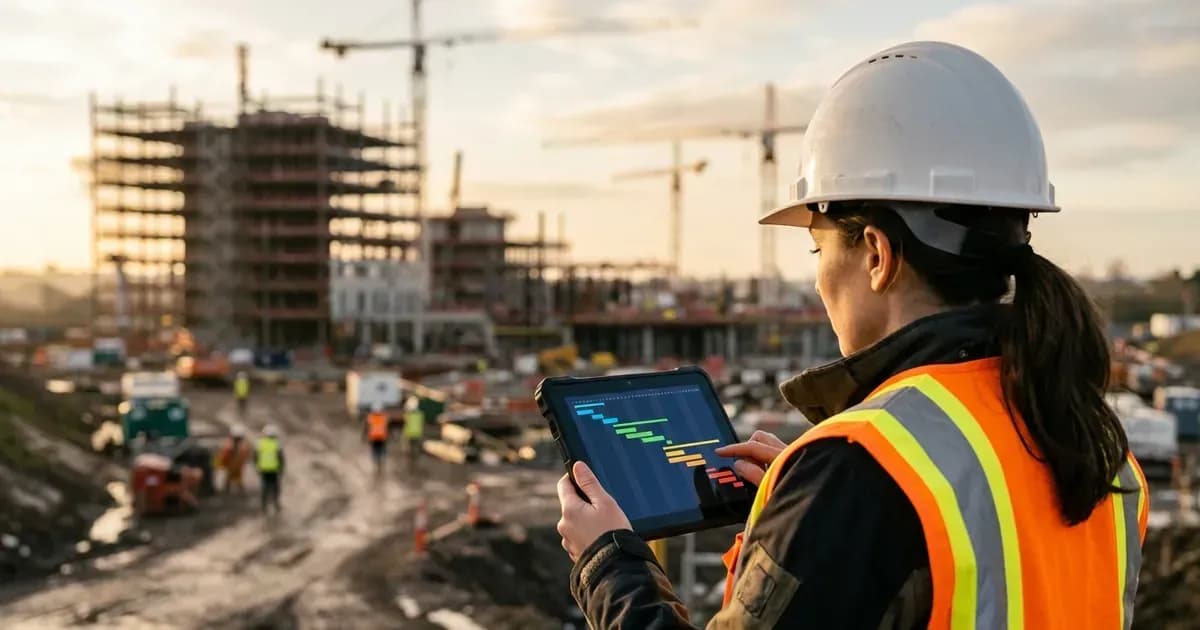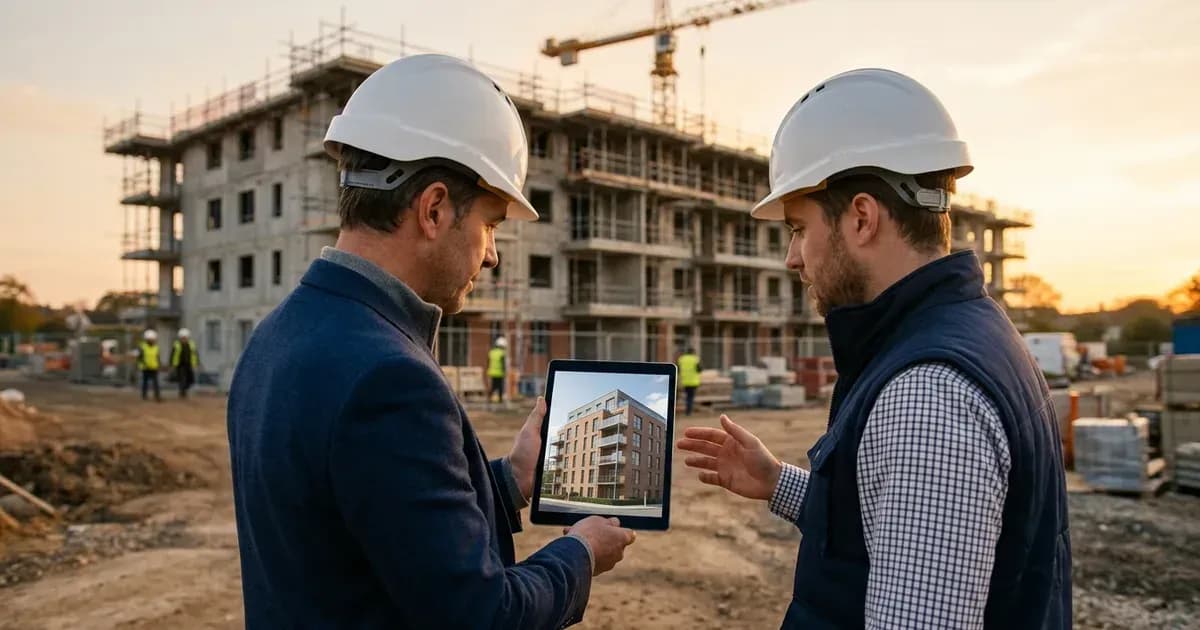
The digital transformation that has swept across many sectors has reached the real estate industry too. Traditional ways of working are being replaced by better and more convenient digital tools.
The old ways of managing development projects, tracking finances and dealing with clients are getting cumbersome and inefficient. That’s where property development software comes in and changes the game for real estate professionals.
Real estate developers face many challenges throughout the development process. From planning and budgeting to construction management and sales and marketing, each stage requires coordination and precision. Manual processes, fragmented data and communication gaps can lead to costly mistakes, delays and missed opportunities.
Property development software is the answer to these problems, allowing real estate developers to manage everything in their projects in one place. By consolidating data, automating tasks and supporting collaboration, this software helps real estate professionals make informed decisions, optimise resources and spot development opportunities at the right time.
In the following sections we will look at what property development software is, its features, the steps to develop a custom solution and how to choose the right technology partner. Whether you are an experienced developer or just starting out, understanding property development software is key to staying competitive in real estate.
What is Property Development Software?
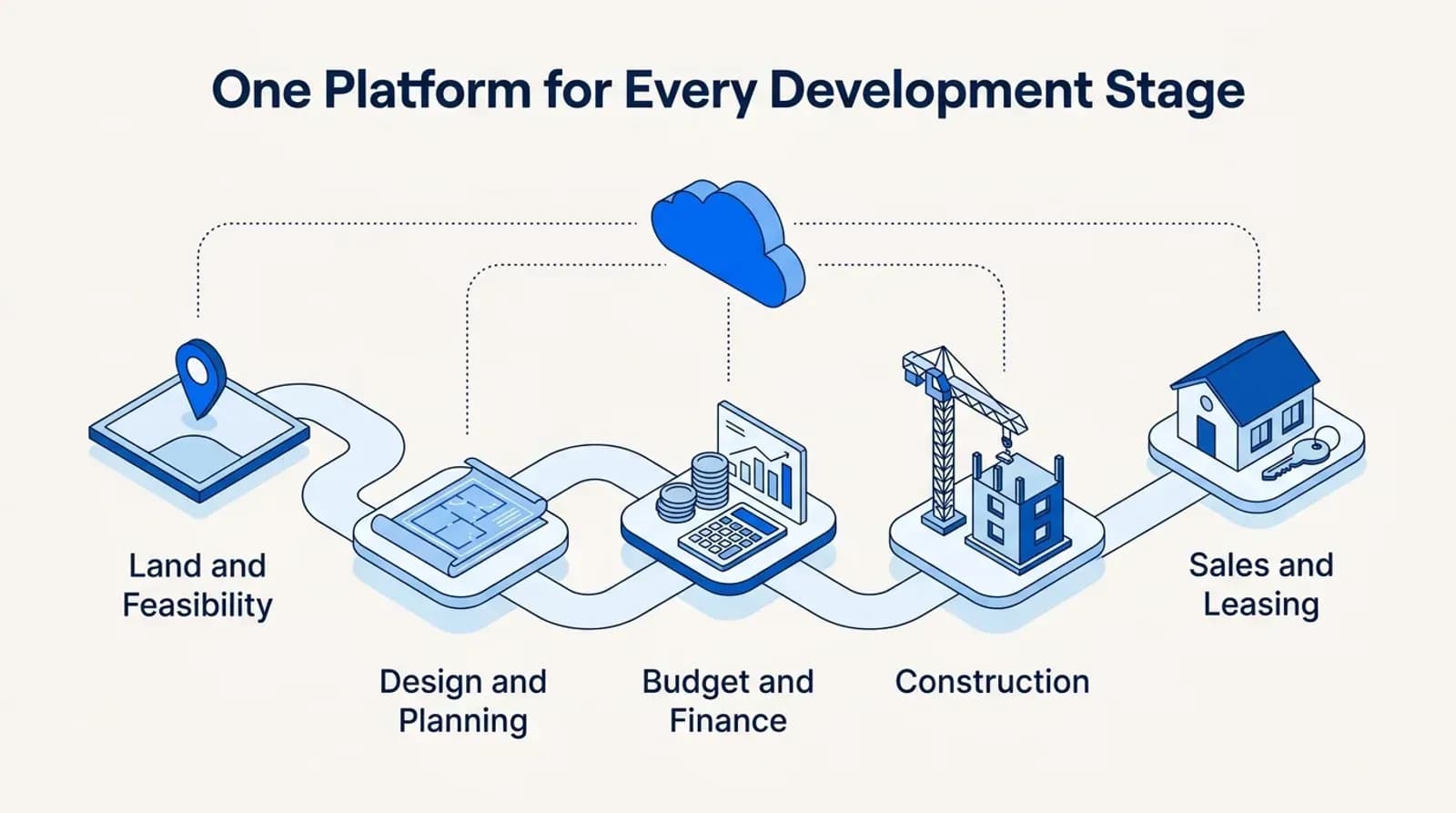
Property development is the part of real estate that covers land development, new construction projects and the redevelopment of existing buildings through an organised process. It often starts with land acquisition, where developers pick suitable sites after looking at location, zoning and market potential.
A feasibility study confirms project viability, taking into consideration the cost, market demand, and regulatory factors. Design and planning are the things that will later shape the project. Architects and engineers will be involved in creating blueprints and infrastructure plans.
Construction supervision involves controlling the budget and schedule, managing contractors’ performance and resolving problems. After construction is complete, developers sell or lease the properties through marketing and agent networks.
Property development software is a digital command centre for property developers, a suite of tools to streamline and optimise the entire development process. At its heart it’s a central hub for project data, from initial planning and financials to construction and marketing. It gives developers real time insights, data driven decision making and collaboration with stakeholders.
How Do Property Development Apps Streamline the Process?
Property development apps streamline the process by centralising project information, real-time collaboration and project management, along with financial tracking, mobile access, data analytics and approvals. Some also include marketing and sales tools that speed up the process, reduce costs and support better decisions.
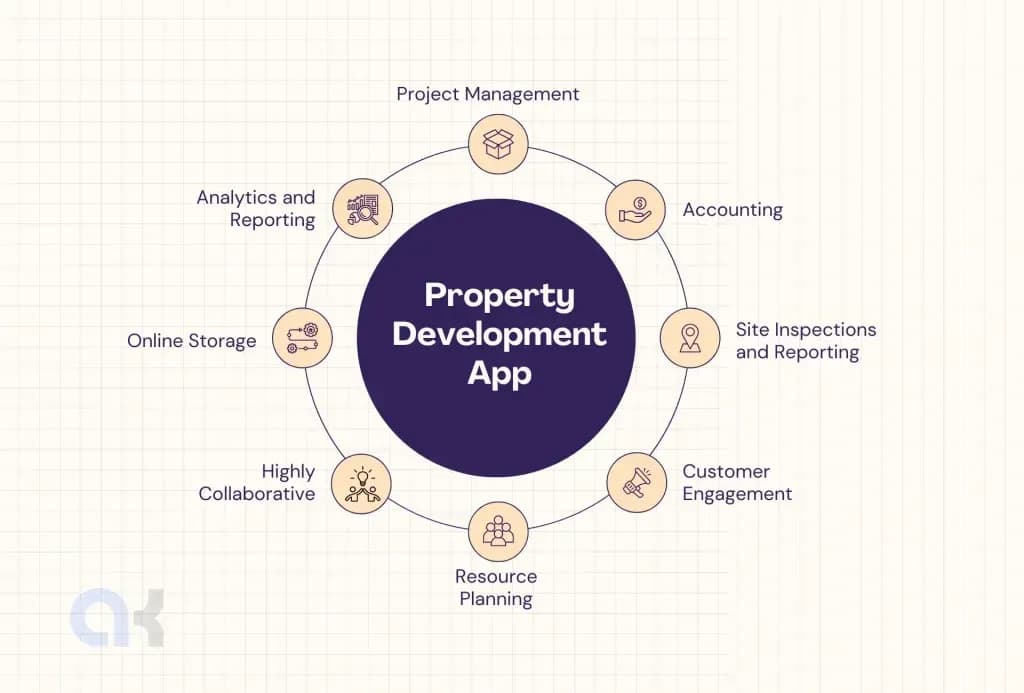
Let’s briefly look at the main functions of this software.
Management Solution
Apps are very helpful for monitoring and managing projects, as they bring all of a property development project’s details, timelines, task lists and milestones into one dashboard. This makes real-time tracking of progress, assignments and regular updates possible, resulting in better coordination and management of tasks.
Many of these tools also include time tracking, allowing teams to measure productivity and make sure deadlines are met. This added visibility helps project managers allocate resources more effectively and reduce potential delays.
Highly Collaborative
Property development apps facilitate smooth interaction between all project stakeholders, including developers, architects, contractors, and investors. Instant messaging, file sharing, and commenting are some of the features that simplify communication drastically eliminating general delays and possible miscommunication.
Online Storage
These applications will save time in document management as they provide one system where project documents, drawings, permits, contracts, and asset reports can be stored. This guarantees that all the involved parties are familiar with the newest data and it decreases the potential of mistakes resulting from obsolete documentation.
Many also include e-signatures, so contracts and approvals can be signed securely without printing.
Accounting
These apps for commercial real estate development feature financial control options to track key metrics on the budget, expenditures, cash flows, and earnings. This is used to provide a financial direction to the developers and also helps the projects remain within budget constraints.
Resource Planning
Apps ease project scheduling and resource allocation due to easy creation and management of project calendars, resource (including labor and material) allocation, and tracking of key milestones. In this way, resource utilization is optimized and scheduling conflicts are reduced.
Site Inspections and Reporting
Mobile apps make on-site inspections and reporting easier by letting users record photos, notes and observations on their iOS and Android devices. This makes inspections much faster and lets issues be reported sooner.
Customer Engagement
Apps can also improve communication with buyers on residential projects by offering virtual tours, interactive floor plans and development updates. This improves transparency and customer satisfaction throughout the sales process.
Analytics and Reporting
Property development apps often have advanced data analytics and reporting tools that give real-time visibility into project progress, market trends and potential risks. This is a significant advantage, since developers can base their decisions on data.
How to Develop Property Development Software?
Property development apps have become an important part of the real estate industry, improving how properties are developed, managed and sold.
These apps enrich the convenience, market coverage, and customer experience by bringing project tracking, virtual tours and budgeting tools together.
Many developers have decided to build their own real estate or property development apps. Choosing the right real estate app development company is key to the app’s success, as the right team has the know-how to build apps that are efficient and easy to use.
They provide advanced functions, easy integrations and technical support, and can connect your platform with IoT in the real estate industry, such as smart building sensors.
By working with a reliable app developer, your property development app can use the latest technology, automate routine work and keep you ahead in a fast-paced property sector.
Steps to Develop Property Development Software
- Map your workflow: list your projects, stages, roles and approvals.
- Choose the first-release features: projects, budgets, documents and site reports.
- Plan integrations: accounting tools such as QuickBooks or Xero, e-signatures, cloud storage and your CRM.
- Design the screens: a web dashboard for the office and mobile apps for site teams.
- Build, test and launch: test with a real project, launch, then add features in phases.
How Long It Takes and What It Costs
With Appkodes, a first release of custom property development software starts from $8,000, with a costed plan at a fixed price. Most first releases go live in about 30 days, and more features, such as BIM links or AI tools, can follow in later phases.
Deployment Options for Property Development Apps
There are two ways to deploy property development apps.
Cloud-based Property Development Apps
A web-based application is hosted and accessed on the internet through a web browser. The web browser-based application allows your team, partners and clients to log in from anywhere while staying flexible and remotely connected.
Cloud-based property development apps usually come as Software as a Service (SaaS), and the vendor provides the infrastructure, such as servers, databases and data security.
This model suits companies that want scalable solutions that can easily adapt to changing needs. Cloud-based apps are usually paid by subscription, which covers hosting, updates and support.
They do not require a high level of IT infrastructure at the user end and businesses with small to medium scale or property development firms can use these applications.
On-premises Property Development Apps
On-premises property development systems are installed and run on a business’s own servers and IT infrastructure.
This deployment model grants you more control and customization options over project data, but the maintenance, set-up, and security of the software and hardware may demand you have robust IT expertise and resources.
Large-scale real estate businesses and organizations with specific security or compliance needs may opt for on-premises solutions as they can keep their precious data on their premises under their control.
With on-premises applications, the software is usually bought or licensed once, and maintenance and updates are handled by the organisation’s IT team.
In short, the choice between cloud-based and on-premises depends on scalability, flexibility, security needs, IT capability and budget.
Cloud-based solutions offer you a chance to work remotely at your convenience as well as scalability while on-the-premises solutions provide you greater control and security but require initial investment and maintenance.
Each option has its pros and cons, so choose the one that best fits your business goals. A custom app can run either way: in your own cloud account or on your own servers.
The Essential Features Checklist of Property Development Apps
The software should be a one stop solution for property developers and real estate professionals. It should be an essential tool for everyone involved in the development projects. One platform should connect everyone, with all its features linked together.
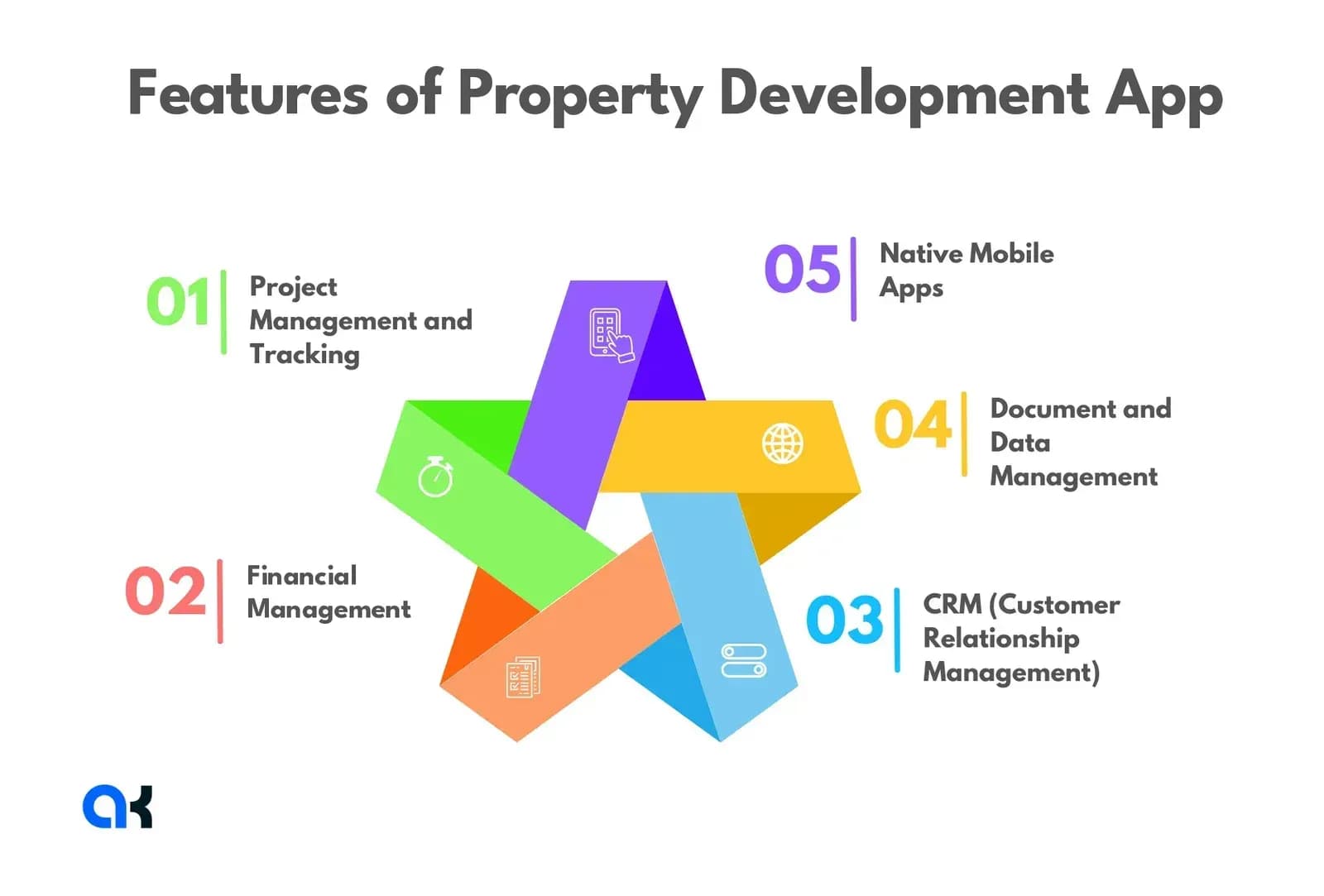
Let’s see what are the features these apps should have.
Project Management and Tracking
Development projects involve extensive time and project tracking, given the numerous moving parts in each project. So, the first thing is to get the app working as the right project management software.
It should have proper scheduling, dependencies, task management and progress tracking, with updates from everyone involved, on site and in the office.
Gantt charts and visual timelines are good to have in the software to increase productivity. They help everyone see progress at a glance.
Making the apps a better project management platform will help to improve the quality of development projects and serve the company vision.
Financial Management
The software should provide detailed budgeting and cost controls, including development margins, for land developers and senior real estate professionals.
It should also record all purchases, with online invoices, inventory and smooth payment processing, and connect with accounting tools such as QuickBooks or Xero.
A separate dashboard for financial reports and analytics is a great option, and it should update in real time. That dashboard should also include revenue forecasting and complete cash flow management.
For developers working across countries, multiple currencies and region-based tax rules are essential.
CRM (Customer Relationship Management)
A CRM is optional, but when done right it is very powerful, especially for sharing real-time project status with prospects. This integration lets prospects see the project’s progress online every day, which gives you an edge.
From lead management to tracking the entire prospect lifecycle a CRM provides huge value to the real estate developers and professionals.
Integrating the CRM with SMS, email and WhatsApp keeps communication in one place. A central database makes follow-up a breeze for teams. Personalized communication and automated follow-ups help real estate developers and professionals make decisions based on current and past interactions.
Having analytics in the CRM gives you valuable insights into your sales and marketing strategies. It can also track lead sources and conversations from multiple channels and show you the top converting sources, which is an added bonus of CRM analytics.
Document and Data Management
Physical document handling in real estate is a nightmare. Keeping them aligned and accessible is never easy when it’s all manual.
Moving to online document management in property development projects has many advantages. You can scan all physical documents, and the software should let you upload them separately for each property.
Documents such as site plans, permits, inspection reports, contracts and other project documents can be kept on a secure, central cloud server, so anyone with permission can find them online by search or by property.
Google Drive or Dropbox integration adds backup and version control, so the team can collaborate on each document.
Native Mobile Apps
Cloud applications and mobile apps are the best combination of any digital transformation. Especially for real estate development projects, mobile apps are a must.
This software should have native mobile apps for iOS and Android devices where users can access all the software features in the mobile apps.
Push notifications and SMS keep everyone on real estate development projects up to date with project status and changes to plans. This helps them make decisions on time and be more productive.
Since almost everyone on site has a smartphone, they can take photos and upload them at any time, which makes documentation and collaboration easier on projects with many team members.
Competitive Features of a Property Development App
Apart from the other necessary features, the following features listed here will make an impact on the business model and support advancements in your business.
3D Visualization and BIM Integration
3D visualization and building information modeling (BIM) are not a must-have in property development apps, but integrating third-party tools that support them is an added advantage.
For every development project these third party tools can be linked and should be accessible to all members of the development project.
These third party tools should also have virtual walkthroughs for all stakeholders to know how the project will be developed.
AI and Machine Learning Capabilities
AI features can add a lot to property development apps, but they depend on good data: real-time data needs to be synced from everyone who uses the software.
When that works, AI can flag risks and warn developers when cost forecasts are off. Common AI features include reading and summarising documents such as contracts and permits, and forecasting costs and timelines from past projects.
Customizable Reporting and Dashboards
Customizable reporting can be optional, but most new software now has dynamic dashboards.
Dynamic dashboards serve different purposes for the different people who use them, so they should be customizable by role.
When apps have custom reports, data can be pulled out in a specific format and sent to different people with their own view which will save more time by showing just what they want.
Letting users drag, move and resize dashboard elements is a big plus.
How Appkodes Helps Property Developers
At Appkodes, we design and build every app new for its client. For property developers, that means real estate software shaped around your own projects, workflows and team.
Development Projects
We can help you manage all your projects with ease by automating document handling and data collection, and keep your budget on track with accurate tracking.
We can build software focused on analytics, custom reports and dashboards.
Project Management Software
We understand that project management for property developers is different from other project management tools.
We can build software that lets you use your data and automation to get your projects to market faster. It’s time to replace guesswork with precise, centralised decisions.
Start with a Costed Plan
- A first release starts from $8,000, with a costed plan at a fixed price.
- Most first releases go live in about 30 days.
- iOS, Android and web apps, with your own branding and your own data.
Tell us about your projects and we’ll send you a costed plan.
Common questions
What is property development software?
Software that brings a development project’s planning, budgets, documents, site reports and sales into one place for developers, contractors and investors.
What features should property development software have?
Project management and tracking, financial management, a CRM, document management and mobile apps for site teams, with BIM, AI and custom dashboards as extras.
How much does it cost to build property development software?
With Appkodes, a first release starts from $8,000, with a costed plan at a fixed price.
How long does it take to build?
Most first releases go live in about 30 days, with more features added in later phases.
Should property development software be cloud-based or on-premises?
Cloud-based suits most firms, as it scales easily and needs little IT. On-premises suits large firms with strict security or compliance needs.

Arun Andiselvam
LinkedInI am a startup veteran who has built five brands. I sold the first, an SEO tool, for a six figure exit, and now lead Appkodes, building custom mobile and web apps for founders and businesses. I bootstrapped every one of them from day one.