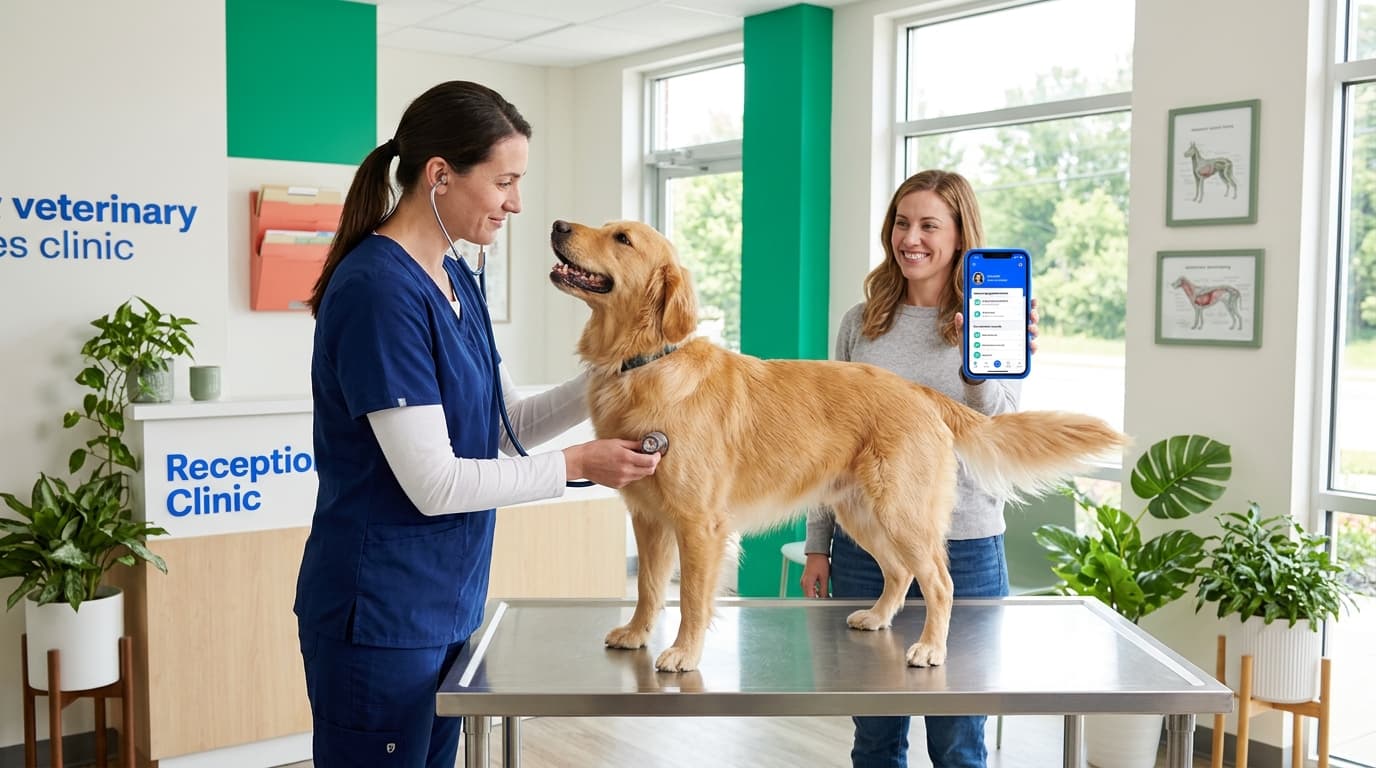
Pet owners already treat their animals like family. They remember birthdays, worry about diet, and panic when a vaccination date slips past unnoticed. What most of them don't have is one reliable place to keep it all straight. Records sit in a folder at home. Reminders live in a phone's default calendar. The vet's number is buried in a text thread from two years ago.
That gap is why Pet Care Mobile App Development keeps showing up on founder roadmaps, since it's a category with real daily utility and a clear audience. The feature set is small enough to launch without burning a year of runway.
This guide walks through what a pet care app needs to do, what it costs, and where founders overbuild. It also covers how to structure phase one so phase two doesn't mean starting over.
What a Pet Care App Actually Needs to Do
Strip away the pitch decks and most pet care apps live or die on five jobs: pet profiles, reminders, health tracking, clinic information, and account management. Everything else, social feeds, grooming marketplaces, or GPS collars, is a phase-two conversation dressed up as a launch requirement.
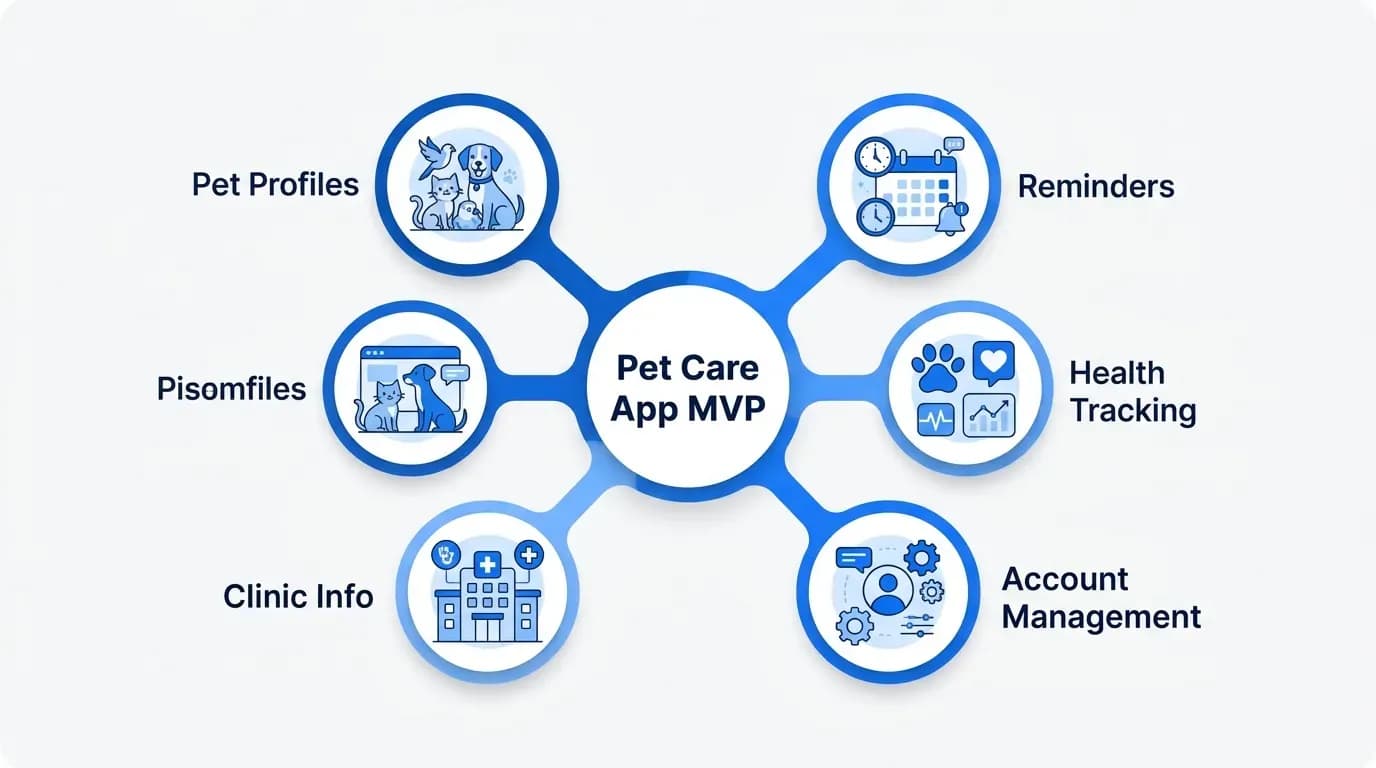
We see the same pattern often enough that it's worth naming.
The job of a pet app MVP is narrower and far more useful. It needs to prove that owners will come back to track and remember care tasks.
So the first decision in planning your pet care app features isn't which features to include. It's which five you'll do properly, and which twenty you'll park with a note explaining why they come later. That list of parked features isn't wasted work. It shapes the data model, which we'll come back to.
Pet Profiles and Health Records: The Foundation
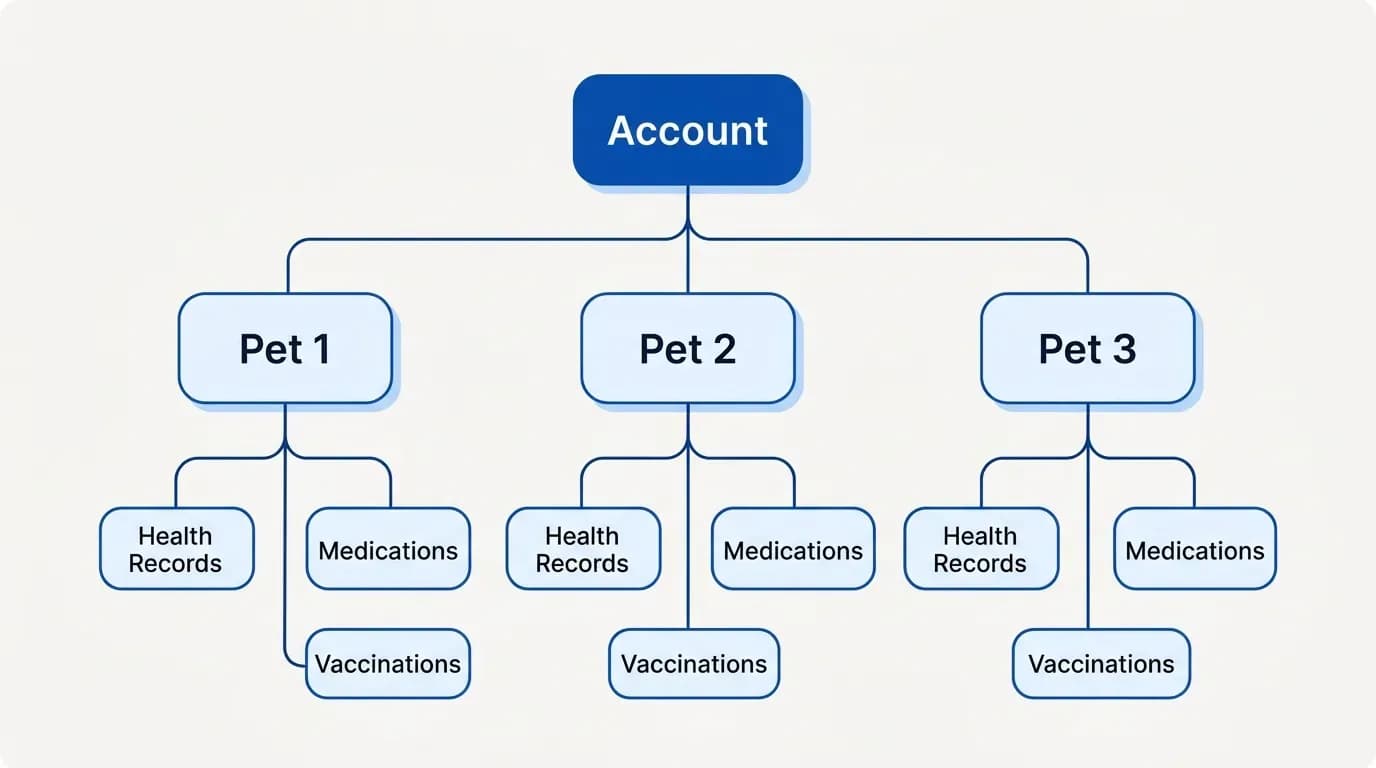
Name, species, breed, and date of birth. Weight, microchip number, spay or neuter status, and medical history, stored per pet, not per user. That distinction matters more than it sounds.
Vaccination certificates, allergy notes, and current medications with dosages. Past vet visit summaries, lab results, and insurance paperwork. In practice, this means file upload, image capture from the phone camera, and a sensible way to tag and retrieve what's been stored.
Here's the mistake we see most often: founders cut document upload from version one to save time. Ship without it and early users file your product next to a notes app, which is not a category you want to compete in.
Build the profile so one account can hold several animals from the start. A household with a dog, two cats, and a rabbit is normal, and an app that assumes one pet per login forces a data migration later. Migrations on live user data are the kind of work nobody budgets for.
Appointment and Medication Reminders
Reminders are the engine.
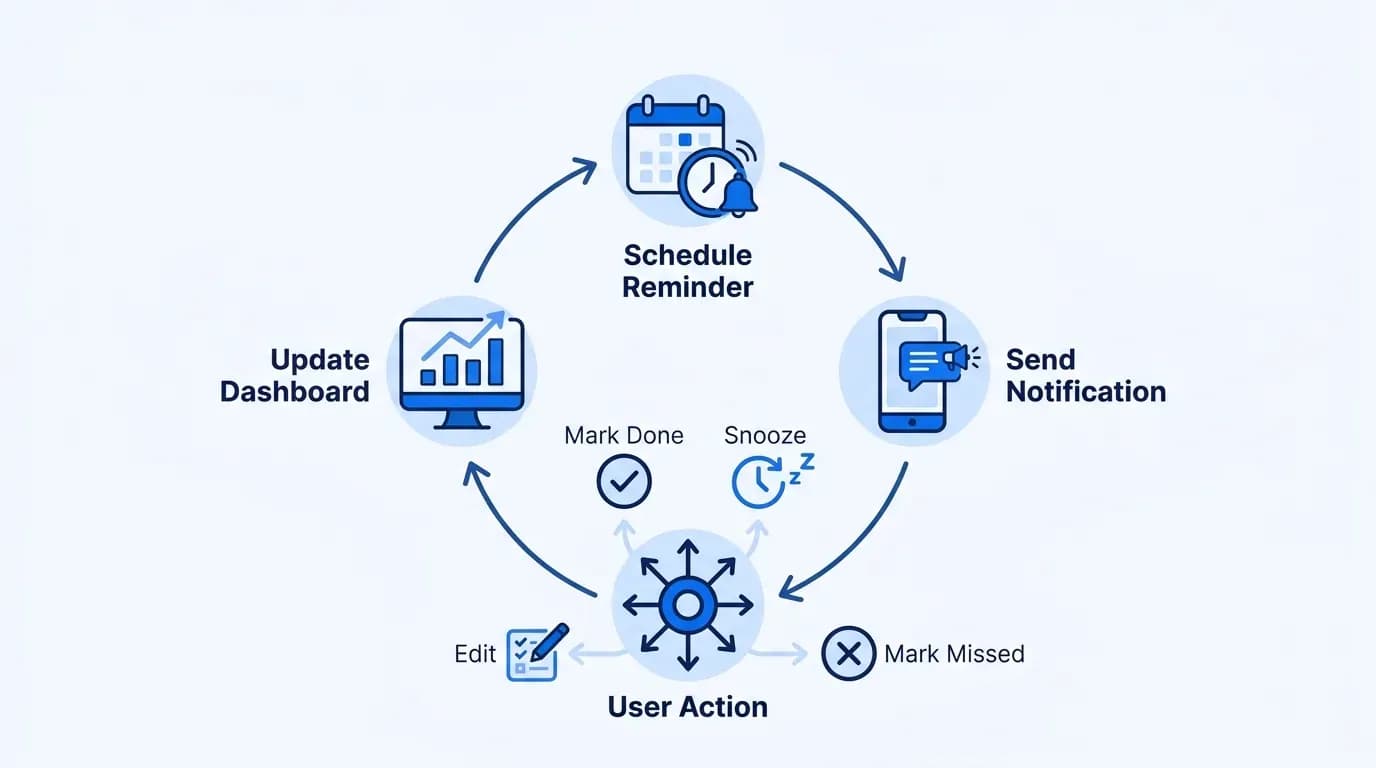
A working vet appointment reminder app needs three things. One-time reminders for scheduled vet visits and vaccination dates. Recurring reminders for medications, flea and tick treatments, and grooming. And a notification system the user controls, covering timing, frequency, and quiet hours.
That last part gets underestimated. Push notifications are the most effective retention tool you have and the fastest way to get uninstalled. Fire a medication alert at 6am when the dose is due at 6pm and you've trained the user to swipe your app away. Batch sensibly, let users adjust, and default to a cautious frequency.
Reminders also need to handle the messy reality of pet care. Doses get skipped, appointments get rescheduled, and a course of antibiotics ends after ten days. Snooze, mark as done, mark as missed, and edit the schedule all need to exist in version one. A reminder you can't dismiss properly is worse than no reminder at all.
Health Tracking Dashboard
A pet health tracking app earns its name at the dashboard. This is where scattered entries become something a pet owner can read at a glance and act on. The dashboard should track weight over time, show medication schedules and adherence, display vaccination status with what's current and what's due, and summarize upcoming appointments.
The organizing question is simple: what does my pet need this week?
This is what separates a care app from a digital notebook. When founders ask why their tracking app isn't retaining users, the answer is usually that it's doing the first job and not the second.
Pet owners aren't reading charts for fun. They want a color-coded status, a straightforward due date, and a button to mark something done.
Veterinary and Clinic Information
Clinic features are where scope quietly explodes, so be deliberate here.
In version one, this should be lightweight storage. The user saves their preferred vet clinic, emergency clinic, and groomer with addresses, phone numbers, and notes. That's a few days of work and it covers the real-world use case: finding the vet's number fast when something's wrong.
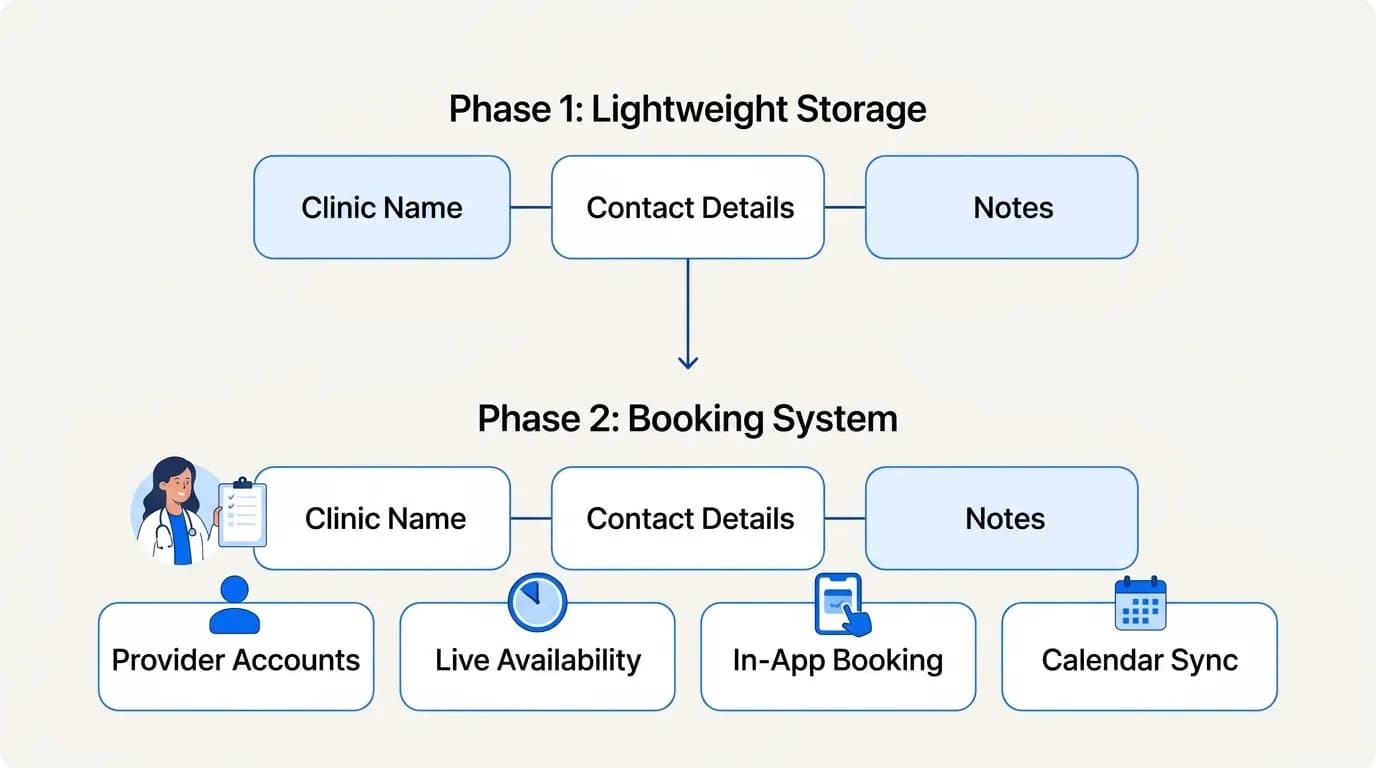
What it should not be, yet, is clinic discovery with a searchable directory, live availability, and in-app booking. That's a two-sided product. You need clinic sign-ups, a provider dashboard, calendar sync, and a support process for when a booking goes wrong. It's a legitimate business. It's just not the same business as a care tracker, and building both at once usually means launching neither on time.
What you should do is structure the data so booking can be added without a rebuild. Store clinics as proper records with their own identifiers rather than free-text fields buried in a pet profile. Keep appointments as first-class objects that happen to be manually entered today and could be system-generated tomorrow. That costs almost nothing now and saves a painful rewrite later. Doing it this way keeps budgets predictable, which is the point of a focused first release.
User Accounts and Data Management
Accounts are unglamorous and worth getting right the first time.
The architectural decision is multi-pet support under a single account, which we've already flagged twice because it's the one that bites hardest. Get that hierarchy right and adding a second pet is a form submission. Get it wrong and you're rewriting queries across the entire app.
Think about shared access early too, even if you don't build it yet. Couples, families, and roommates share responsibility for the same animal. A dog walker or pet sitter might need temporary visibility. You don't need permissions in version one, but if your data model assumes one owner per pet forever, you'll fight it later.
On storage: you're handling health documents and personal contact details. Encryption in transit and at rest, sensible access controls, and a backup policy aren't optional, regardless of what regulation technically applies to animal records. Our broader app development guides go deeper on how we approach this at the planning stage, before a line of code is written.
Custom Pet App vs Template: Which Should You Choose?
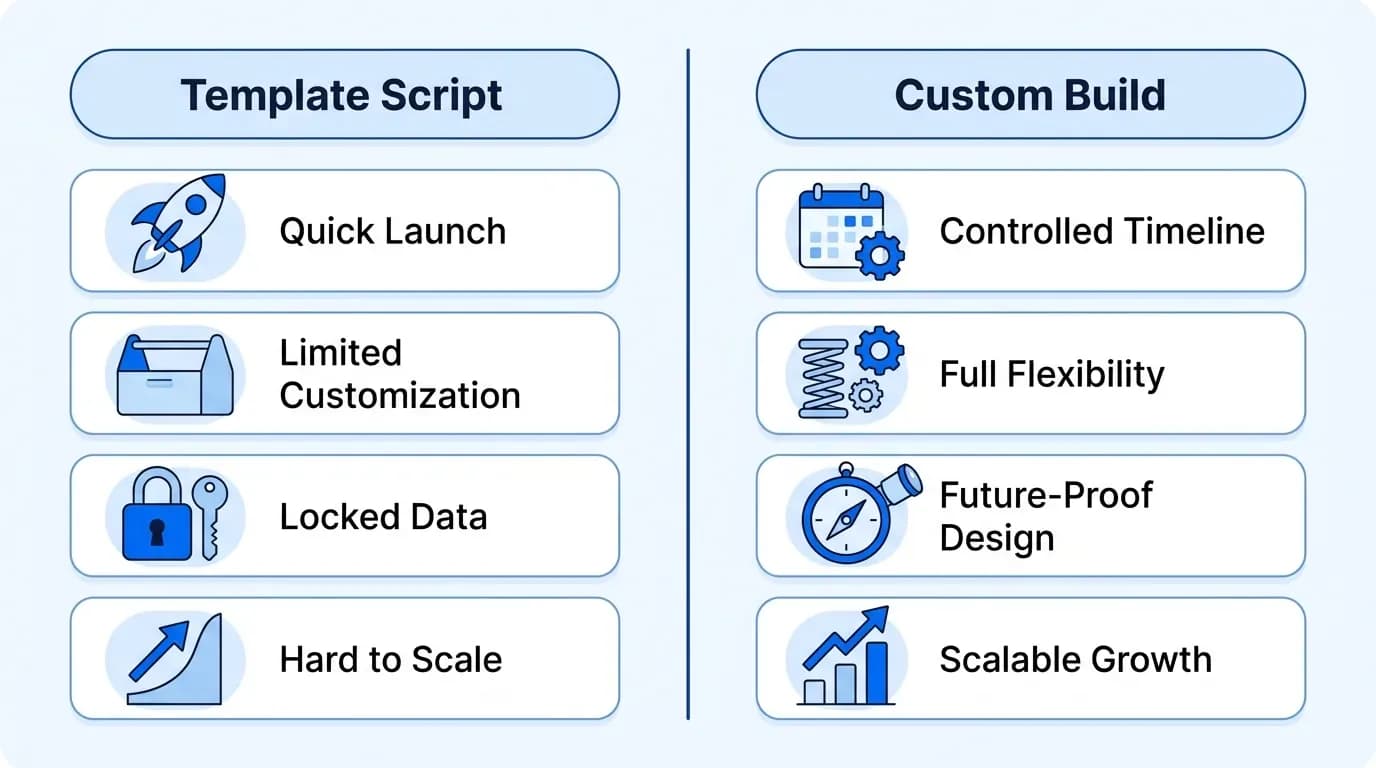
A marketplace or directory script can get something live quickly and cheaply. Pet health records are specific, with multiple pets, document attachments, and regular medication schedules.
A custom build costs more upfront and gives you control over the parts that matter: how the health tracking dashboard summarizes a week, how reminder logic handles a skipped dose, and how clinic data is structured so booking can slot in later.
Our rule of thumb is straightforward. If clinic booking, provider accounts, or a marketplace are anywhere on the roadmap, custom avoids a rebuild, and a rebuild with live users is the most expensive kind. We've written more about that decision in our guide on creating an app for your business.
Pet Care App Development Cost and Timeline
Pet care app development cost varies by scope. Anyone who quotes you a number before understanding your feature list is guessing.
That said, you deserve a real range rather than "it depends." At Appkodes, first releases for apps of comparable scope start from $4,000, with fixed price, fixed launch date agreed before work starts. We've delivered first releases at that level for a delivery app in the Swiggy mold, a Slack-like team communication app, and remote patient monitoring software, plus a medicine delivery app in roughly 30 days. Your number moves with the feature set, platforms, and integrations, but the commitment doesn't. The price and the date are agreed before we begin, not discovered halfway through.
A pet app MVP is a good fit for this model precisely because the scope is containable.
We've been doing this for 18 years across 1000+ businesses, including healthcare app development where we build HIPAA- and GDPR-ready foundations for data-sensitive products. Pet records aren't regulated the way human medical records are, but the engineering habits carry over usefully.
Where Pet Care Apps Commonly Go Next
You already have the clinic records and the appointment objects, so now you add provider accounts, availability, and confirmation flows. The patterns are well understood, and they're the same ones behind doctor scheduling software: two-sided availability, dispatch logic, and reminders on both sides.
Telehealth-style consultations for pets are a longer-term option. Pet insurance integrations, supply subscriptions, and premium tiers for multi-pet households are all reasonable revenue layers once the habit is established.
The thing that makes any of it affordable is deciding during the first build that it's coming. Pets with stable identifiers, clinics as records, appointments as objects, and documents with proper metadata: that's the difference between adding a feature and rewriting an app. For founders thinking about where a product goes after launch, our breakdown of how to build an app like Canva covers similar staged-expansion thinking.
Get a quote, fixed price and fixed launch date agreed before we start. Healthcare app development →
Common questions
How long does it take to build a pet care app?
It depends on scope. A focused first release covering profiles, document upload, reminders, and a tracking dashboard moves considerably faster than one that also includes provider accounts and booking.
Should I buy a script instead of building custom?
A script works for cheaply testing whether anyone wants the idea. Most teams find it constrains how far the health dashboard and reminder system can be customized once real users start asking for things, which is when the rebuild conversation starts.
Do I need HIPAA or GDPR compliance for a pet care app?
Animal health records generally aren't regulated the way human medical records are. You should confirm your obligations with a qualified advisor for your market.
Do I add vet booking or a marketplace later?
Yes, if phase one is structured for it. That's the whole argument for planning the data model early even when the first release stays deliberately uncomplicated.

Arun Andiselvam
LinkedInI am a startup veteran who has built five brands. I sold the first, an SEO tool, for a six figure exit, and now lead Appkodes, building custom mobile and web apps for founders and businesses. I bootstrapped every one of them from day one.