
If you want one number before you read anything else, here it is. A serious live streaming app with iOS, Android, a backend and real video delivery starts in the $30,000 to $40,000 range and climbs from there. A leaner cross-platform MVP, built tight and scoped hard, lands closer to $15,000 to $30,000. A polished product with gifting, ranking, moderation and multi-region delivery can reach $100,000 to $200,000, and those are the honest brackets most founders end up inside.
The reason the live streaming app development cost varies that widely is not mystery or markup. It is scope, team skill, and how much video you intend to push. This guide breaks all three down so you can walk into quote conversations knowing what you are buying, and spot a quote that has quietly left something out.
We have built apps for a long time, which means we have seen the same budget mistakes repeat. Founders price the app and forget the bandwidth, or price the bandwidth and forget the first year of marketing. Both are costly lessons. Neither is necessary.
The short answer: what a live streaming app costs right now
Here is the cost ladder we see most often, from smallest to largest.
A single-platform proof of concept, one app, one stream type, no monetization, is the cheapest thing you can ship. Our own first releases start from $8,000 for products of that shape. A polished cross-platform MVP built in Flutter commonly lands around $20,000 from planning through to app store publication, and that buys you a working product in real users' hands, not a prototype on a laptop.
Step up to a true two-sided social streaming app. Broadcaster tools, viewer app, chat, follows, profiles, a real backend and database push the floor to $30,000 to $40,000 for iOS and Android together. Push into the version that looks like the apps you are comparing yourself to, with virtual gifting, PK Battles, leaderboards, payouts, multi-region delivery and moderation tooling, and the range opens to $100,000 to $200,000.
What moves you between rungs is rarely a single feature. It is the number of user roles, the number of real-time surfaces, and whether money changes hands inside the app. Payments and payouts alone add compliance work, ledger logic, dispute handling and reporting that a free app never touches.
Nobody should quote you a precise figure from a one-paragraph brief. What a good agency can do is agree a fixed price against a fixed scope before any code is written. That is how we work.
Where the money actually goes
Almost all of the live streaming app development cost is expertise and time. Servers are cheap. People who know how to make video arrive in under a second, every time, on a four-year-old Android phone on a weak connection, are not.
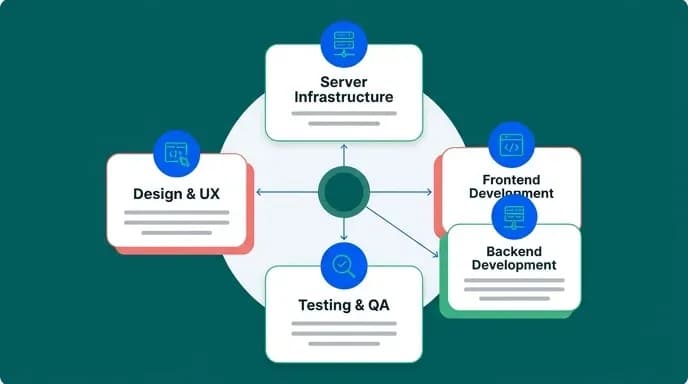
That is the whole equation in one line. More features and higher complexity need both more hours and more senior hours. A junior developer can build a chat feature just fine, but a junior developer debugging an encoding ladder, an adaptive bitrate switch, or a token that expires mid-stream will spend a week discovering what a specialist already knows. You pay either way, in fees or in calendar.
Break a typical streaming build into its real cost buckets and it looks like this:
- Product and design work. Screen flows, broadcaster UI, gifting animations, moderation views. Underestimated constantly, and the cheapest place to fix mistakes.
- Mobile client work. Camera capture, playback, permissions, background behavior, store review. Usually the largest single block of hours.
- Backend and database. Auth, profiles, follows, rooms, chat fan-out, gift ledgers, webhooks.
- Video pipeline. Ingest, transcode, package, deliver, record.
- Admin and operations tooling. The part founders cut first and need by month two.
- Testing on real devices and real networks. Not optional for video.
When a quote comes in dramatically below the ranges above, one of those buckets has been removed. Ask which.
Cost by stage: MVP, version one, and the scale build
Treating the project as one big number is how budgets break. Treat it as three stages with three different jobs instead.
Stage one, the MVP. Its only job is proving people will broadcast and watch. One platform or a tight cross-platform build, a single stream format, chat, follows, and a basic admin panel fill out this stage. Priced in the $15,000 to $30,000 band for a well-scoped cross-platform MVP, and from $8,000 for narrower first releases. Skip gifting ladders, skip multi-currency, skip anything that exists to impress investors rather than test demand.
Stage two, version one. This is the product you actually market, built for both platforms, with monetization, moderation, notifications, analytics, payouts and the operational tooling to run it daily. The $30,000 to $40,000 floor applies here, and it rises with every extra role and revenue stream you bolt on.
Stage three, the scale build. You only pay for this after traction. Multi-region delivery, caching strategy, database sharding, abuse controls, cost-per-viewer-hour optimization, and rewriting whatever the MVP faked all belong here. Budget for it as a separate project rather than pretending stage one will stretch.
Founders who fail usually do so by funding stage two before validating stage one, leaving nothing for stage three when the app finally works. Sequence the spend. We have seen a delivery-style app launch quickly because the first release was scoped to the smallest thing worth shipping. The same discipline applies to streaming, where the temptation to build everything is stronger because the category is so feature-rich.
For the full build sequence behind these stages, see our guide on how to build a live streaming app.
DIY custom stack vs hosted video services: the real comparison
This single decision swings the video streaming app development cost more than any feature on your list, and most quotes gloss over it.
The hosted route means you send your stream to a managed video platform and it handles ingest, transcoding, packaging, players and delivery. You pay per minute encoded, per gigabyte delivered, and often per minute stored. Development time drops sharply, days of integration instead of weeks of pipeline engineering, and you inherit an infrastructure team you do not employ. The trade is that your unit economics are set by someone else's price list, and they do not fall much as you grow.
The DIY stack means your own ingest servers, your own transcoder, your own packaging and a CDN contract. The build is materially more expensive and the operational burden is permanent. Someone has to be on call when a region stops serving. In exchange, your per-viewer-hour cost is the lowest it can be, and it keeps improving as volume gives you negotiating room.
The decision rule we give founders is unsentimental. Below real scale, hosted wins on total cost of ownership every time, because engineering hours cost more than egress. Above real scale, sustained concurrent audiences, long sessions, high-definition streams, the delivery bill eventually dwarfs the engineering savings and a hybrid starts to pay. Hosted for ingest and transcoding, your own CDN agreement for delivery.
Build stage one hosted, and instrument it so you know your cost per broadcast hour and per viewer hour from day one. Revisit the question with data, not a diagram.
Bandwidth and CDN costs at small and large scale
Video is the only line item in your budget that grows with success. Everything else is roughly fixed. This is the part founders consistently miss when they compare a streaming app to a marketplace or a delivery app.
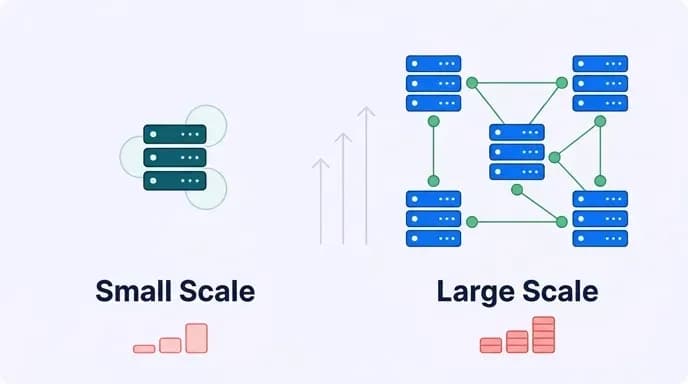
Your delivery bill is driven by four things. How many people watch, for how long, at what quality, and how multiple quality variants you generate. Each one multiplies the others. A transcoding ladder that serves four renditions creates four times the encoding work, and the viewer's player picks the heaviest one their connection can handle, which on good Wi-Fi is the expensive one.
At small scale, a few dozen broadcasters, modest audiences, short sessions, delivery is a rounding error next to salaries. Founders at this stage overengineer for a traffic level they do not have. At mid scale, the bill becomes visible and worth optimizing. Capping maximum resolution, trimming the ladder, shortening keep-alive behavior, and cutting recordings you never replay all help. At the million-plus-views level, delivery is often your single largest operating expense, larger than the team, and the levers that matter are commercial as much as technical. Committed-volume CDN pricing, multi-CDN routing, and regional caching all come into play here.
Two practical habits keep this under control. First, charge nothing to store what nobody watches, and expire recordings by default. Second, price a broadcast hour before you launch any growth campaign, so you know whether your gifting revenue clears your delivery cost per concurrent viewer. Plenty of streaming apps grow into losses because nobody ran that arithmetic.
Authentication and access control: the quiet cost center
Auth looks like a solved problem until you attach it to video. This is where first-time streaming teams lose weeks they did not budget.
The tricky parts are specific. Signed playback URLs have to expire, short enough that a leaked link is worthless, long enough that a viewer mid-session is not kicked out. Tokens expire during long watches, so clients need silent refresh that does not interrupt playback. Concurrent-stream limits mean you must track active sessions per account in real time, not just at login. Device limits add another ledger. Private rooms, paid rooms and age-gated rooms each need their entitlement checked at the point of delivery, not just in the app UI, because the app UI is trivially bypassed.
Then there is the broadcaster side. Stream keys must be rotatable, revocable, and never guessable, plus there needs to be protection against someone pushing content to a room they do not own.
Budget real hours for this. In our experience it is one of the three largest sources of unplanned work in a video project, alongside the encoding pipeline and app store review for user-generated content. The cheapest way through is to not invent it. Use a mature identity provider for accounts and sessions, use your video platform's signing primitives for playback, and write only the entitlement logic that is genuinely specific to your product. Hand-rolling auth to save licensing fees is a false economy that shows up as security debt later.
Which layer breaks first when you scale
Ask any team that has shipped a streaming product which layer becomes the bottleneck first and you get three different answers, because it depends on what you built. Knowing the order of failure helps you decide where to spend before you have a problem.
Frontend playback breaks first when your audience is diverse. Low-end Android devices, flaky mobile networks, background and foreground transitions, and battery drain surface problems that never appear on a developer's flagship phone. Symptoms are stalls, blank first frames and app-store reviews about buffering.
Backend APIs and authentication break first when your app is chatty. Real-time chat fan-out, gift events, presence, viewer counts and leaderboards all hammer the same services at once, and every one of those requests carries an auth check. A room going viral turns into a thundering herd on your session store. This is the layer where most projects hit their first outage.
Video delivery breaks first when sessions get long and quality gets high. Not usually as an outage, more as an invoice. Cost becomes the constraint before capacity does.
The practical takeaway: instrument all three from the start with foundational metrics. Time to first frame, API latency at peak, and cost per viewer hour tell you which layer to spend on next, and they cost almost nothing to collect during the build. Retrofitting observability after an incident always costs more than adding it in week two.
Technical debt and infrastructure mistakes that waste money
The most expensive mistakes in streaming projects are not bugs. They are early decisions that lock in a bad shape, and the honest reckoning from teams who have shipped one is that they would redo their storage, encoding and API choices if they started again.
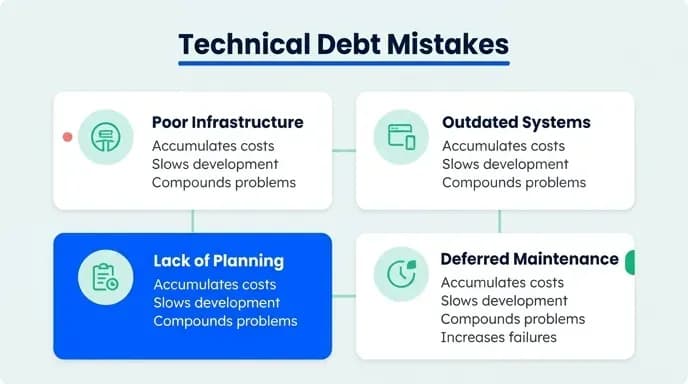
The recurring ones:
- Storing every stream forever by default. Storage is cheap per unit and ruinous in aggregate, and nobody deletes anything once there is no policy.
- Transcoding more renditions than the audience needs. Every extra rendition is encoding cost, storage cost and delivery cost compounding together.
- Coupling the app directly to one video vendor's SDK. Switching later means rewriting the client, not swapping a config value. A thin internal abstraction over playback and ingest pays for itself the first time you renegotiate.
- Building chat on the same database as the core app. Message volume behaves nothing like profile reads, and the two fight for the same resources at exactly the wrong moment.
- No environment separation. Testing streaming features against production infrastructure is how founders get surprise bills.
- Hand-rolled gift ledgers without idempotency. Duplicate gift events during a network blip turn into refund disputes and angry creators.
None of these are exotic. They are all the result of shipping fast without someone senior sanity-checking the shape. That is why team composition, covered below, affects your real cost more than hourly rates do. One reviewing architect prevents more spend than any discount negotiates.
Real first-year costs: build, infrastructure and marketing together
Here is the budget most founders never see until it is too late. Your build is one line. Your first year has three.
Infrastructure for a small app is genuinely limited. VPS hosting and website hosting together can be kept to a modest two-year total, and a bundle of API calls can total a few hundred dollars across the entire first year. Development tooling adds its own small, regular line on top of that. AI coding assistants like Cursor run around $200 per month for a team seat, which is trivial next to the hours they save.
Then there is marketing, and it dwarfs both. A realistic first-year marketing figure for an app trying to find an audience is several times the infrastructure bill and, for lean builds, comparable to the development cost itself. Streaming apps have it worse than most, because you need supply and demand at once. Broadcasters will not stay without viewers, and viewers will not come without broadcasters. Seeding creators costs money, whether as cash, revenue share or guaranteed earnings.
So when you plan, plan all three. A $20,000 build with no creator acquisition budget is a finished app with an empty home feed. We have watched that happen more than once, and the fix is always costlier than planning for it would have been.
Team composition and skill level: the hours behind the number
Two agencies can quote the same price and deliver wildly different products, because the hours behind the number are not equivalent hours.
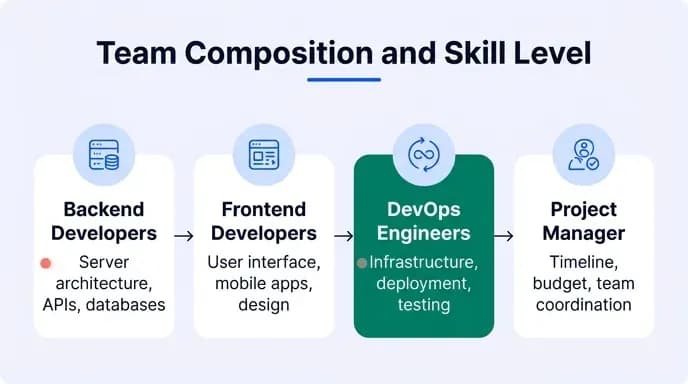
A mixed team usually looks like one product designer, two mobile developers, one backend developer, one DevOps or infrastructure engineer part-time, and a QA engineer with real devices. For streaming, add someone who has shipped video before, either on staff or on call, whose job is to stop the other five from making the mistakes in the previous section.
Skill level changes the arithmetic in both directions. A senior developer costs more per hour and needs far fewer of them for the hard parts. Encoding ladders, playback edge cases, concurrency and payout logic all go faster in senior hands. A junior developer is cheaper per hour and perfectly capable of profile screens, settings, lists and forms. The efficient build mixes them deliberately, with senior time concentrated on the parts where a wrong decision is expensive to reverse.
Solo freelancers can deliver a polished cross-platform MVP in the $15,000 to $30,000 range, and some do excellent work. The risk is not quality, it is continuity and coverage. One person cannot be a video specialist and a backend engineer and a tester at once, and they cannot be on call during your launch week. Decide consciously whether you are buying a build or a team. Choosing between a solo build and a full team affects your delivery risk far more than it affects the headline number.
What monetization features add to the build
Monetization is where a streaming app stops being a video player and becomes a small economy. It is the single biggest scope multiplier after video delivery itself.
Virtual gifting needs a currency. Purchase flows through both app stores, a coin ledger, gift catalogs with animations, real-time delivery of gift events into the room, and creator balances that reconcile exactly all have to work together. Then come payouts: identity checks, thresholds, schedules, tax handling, failed-transfer recovery and a support process when a creator disputes a number. The ledger is the part people underestimate. It has to be correct under concurrency, during network failures, and when the same gift event arrives twice.
PK Battles add synchronized multi-broadcaster streams, shared scoring, timers that cannot drift between devices, and tie-breaking rules. Technically it is the most demanding interactive feature in most streaming apps, because it needs low latency on both ingest paths and a single source of truth for the score.
Subscriptions, paid rooms and pay-per-view each need their own entitlement logic wired into playback authorization. That loops back to the access control section, which is why those two workstreams should be planned together rather than sequentially.
If budget is tight, ship one revenue mechanism properly rather than three partially. Gifting with a clean ledger beats gifting plus subscriptions plus tipping where none of them reconcile. You can add mechanisms once you know which one your audience actually uses.
Clone app, template script, or custom build
Most founders researching live streaming app development cost have a browser tab open on a cheap script. Here is the honest comparison.
A marketplace script is the cheapest start and the most expensive finish. You get something that demos well in days. What you often do not get is current SDKs, a maintained video pipeline, or auth that holds up. Database design built for your scale and any obligation on the seller's part when an app store rejects you tend to be missing too. We regularly get called in to rescue these, and rewriting someone else's undocumented codebase costs more than building clean would have.
A clone app approach done properly is different, and it is where we spend most of our streaming work. You take a proven product shape, the feed, the room, gifting, PK Battles, and build it on your own stack, scoped to what you will actually launch with. You skip the expensive part of product discovery without inheriting someone else's technical debt, and that is how a first release can start from $8,000 and still be yours to extend.
A fully custom build is right when your core mechanic is genuinely new, your compliance needs are unusual, or you are building for a market with specific payment and content rules.
Our rule: buy a script only if you would be happy to throw it away. If the plan is to grow on it, build it.
Tools and services that keep total cost of ownership down
Cheapest to build and cheapest to own are different questions. These are the choices that keep both low.
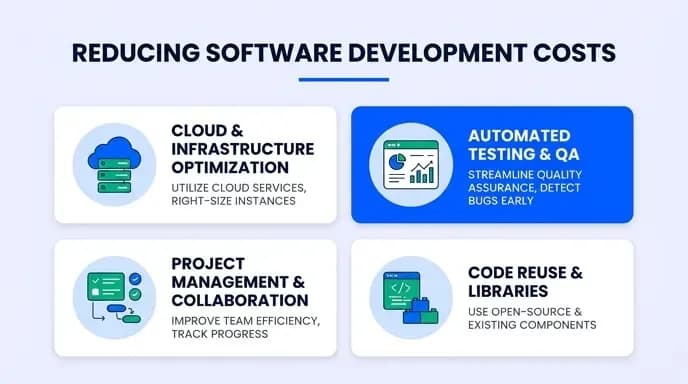
Pick one cross-platform framework and commit. Flutter or React Native halves client hours against two native codebases, and for a streaming app the native-only advantages rarely justify the duplication.
Use a managed video platform for stage one. Ingest, transcoding, packaging and players are solved for a per-minute fee you can model, so keep a thin abstraction in place to make moving later a backend change.
Use a managed identity provider. Accounts, sessions, social login, MFA. Write only your own entitlement rules.
Use managed databases and object storage with lifecycle policies set on day one. The policy is the cost control, not the storage tier.
Distinct real-time chat and presence from your core data store. A purpose-built service for messaging costs less than scaling your main database to survive a viral room.
Buy analytics and crash reporting rather than building dashboards. You need time-to-first-frame, playback failures and funnel data, not a reporting product.
Spend on developer tooling. AI assistants and good CI are among the cheapest line items in the whole budget and among the largest savers of hours.
The common thread: pay vendors for commodity infrastructure, spend your own engineering hours only on what makes your product different. Every hour spent rebuilding a solved problem is an hour not spent on the gifting mechanic that earns you money.
How we quote a streaming build: fixed price, fixed launch date
A range in an article is useful for planning. It is not a quote. What turns one into the other is scope written down in enough detail that neither side can reinterpret it later.
Our process is deliberately plain. We go through your feature list and individual it into what ships in release one and what waits. We make the video decisions explicitly, hosted or DIY, which renditions, what retention, because those drive both the build cost and the running cost. We put the number and the launch date in writing before work starts, and we do not move either unless you change the scope. That is what fixed price, fixed launch date means in practice, and it is the answer to the question every founder is really asking. Will the real cost stay inside the quoted budget.
Two honest caveats, because you should distrust anyone who gives none. Costs vary with scope, and adding a revenue mechanism or a third user role mid-build is a new conversation, not a free change. Running costs are also yours: delivery, storage and payment fees scale with your audience, and no agency can fix those for you. What we can do is model them with you before launch so there are no surprises in month three.
If you want a number for your specific build rather than a range, tell us what you want to launch with and we will scope it, price it, and date it. Start with our live streaming app development service page and request a quote. The price and the launch date get agreed before we begin.
Common questions
How much does it cost to build a live streaming app?
A serious live streaming app with iOS, Android, a backend and real video delivery starts in the $30,000 to $40,000 range. A leaner cross-platform MVP lands closer to $15,000 to $30,000, while a polished product with gifting, ranking, moderation and multi-region delivery can reach $100,000 to $200,000.
Should I use a hosted video service or build my own streaming stack?
Below real scale, hosted video platforms win on total cost of ownership because engineering hours cost more than egress fees. Above real scale with sustained concurrent audiences and long sessions, a DIY stack or hybrid approach becomes more cost-effective as your per-viewer-hour costs improve with volume.
What are the main cost drivers in live streaming app development?
Almost all of the development cost is expertise and time. The major cost buckets are product and design work, mobile client work, backend and database, video pipeline, admin and operations tooling, and testing on real devices and networks.
What happens to bandwidth and CDN costs as a streaming app grows?
Video is the only line item in your budget that grows with success. At small scale delivery is a rounding error, but at million-plus-views level, delivery often becomes your single largest operating expense, larger than the team itself.
How should I structure my streaming app budget across different development stages?
Budget for three separate stages: an MVP to prove demand ($15,000 to $30,000), a marketed version one with monetization and operations ($30,000 to $40,000+), and a scale build for multi-region delivery and optimization only after traction. Founders should sequence spending and avoid funding stage two before validating stage one.

Arun Andiselvam
LinkedInI am a startup veteran who has built five brands. I sold the first, an SEO tool, for a six figure exit, and now lead Appkodes, building custom mobile and web apps for founders and businesses. I bootstrapped every one of them from day one.