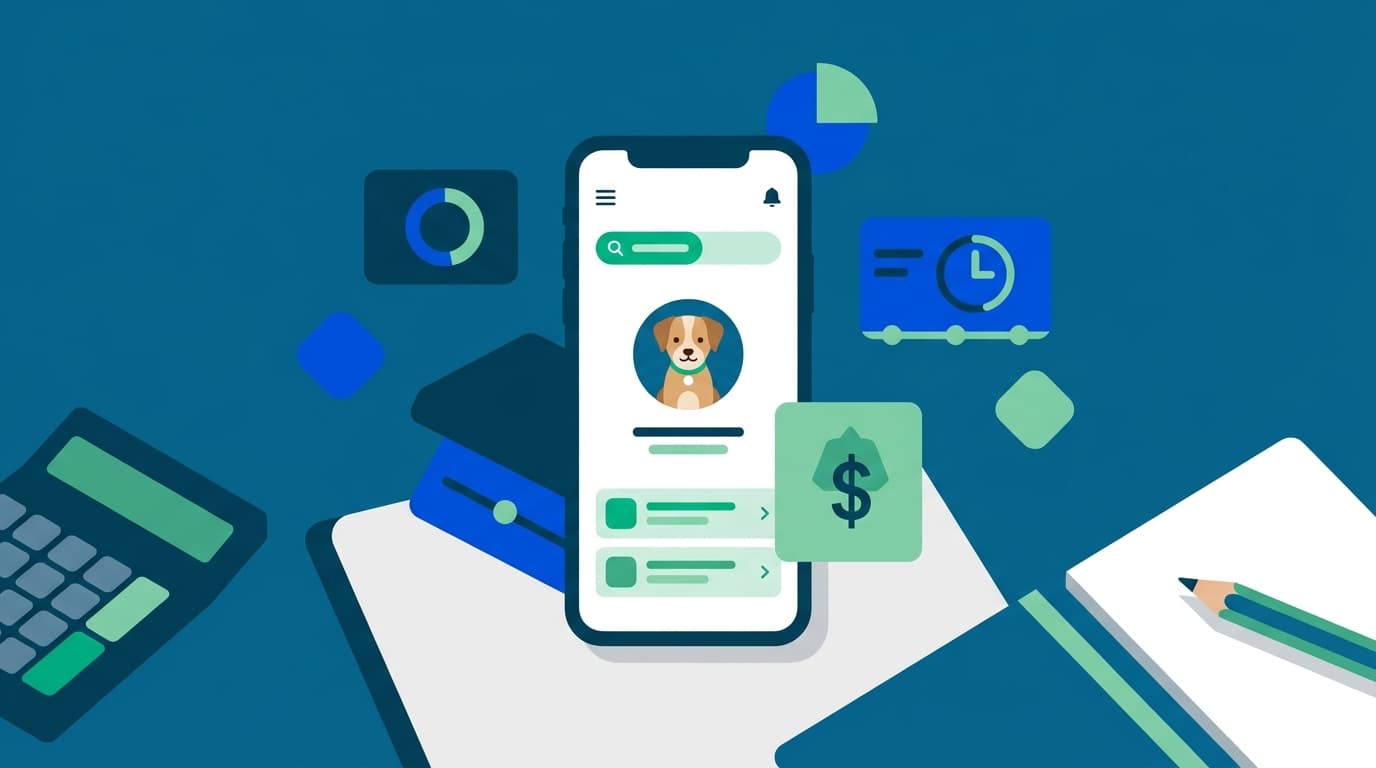
If you want the short answer first, here it is. A focused pet care app with profiles, health records, reminders, a tracking dashboard, and vet details can reach a first public release for around $8,000 to $25,000. The build itself usually runs six to twelve weeks.
The longer version matters more. The number on a quote is less important than what sits behind it, including which features made the cut, who owns the backend, and whether the price and the launch date were agreed before anyone opened a code editor. Across many years of building apps for a wide range of businesses, the projects that go badly almost never fail on engineering.
This guide covers what each part costs, how the timeline breaks down week by week, and the specific places founders burn money they did not need to spend.
What You Are Actually Building: The Five Parts of a Pet Care App
A lean, genuinely useful pet care app has five working parts. Not ten. Five.
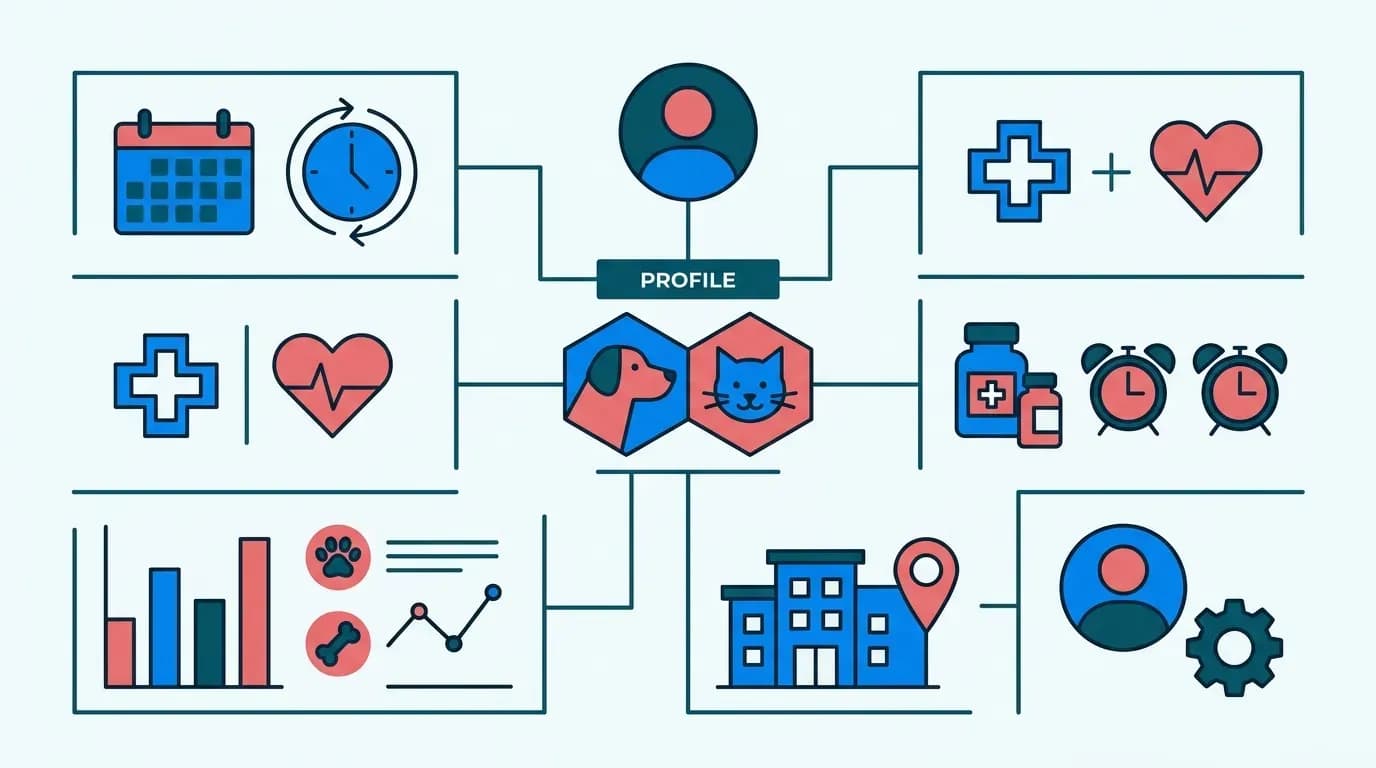
Pet profiles and health records. One account, multiple pets. Each pet gets a name, breed, age, weight, and medical history. Underneath that, you store vaccination records, allergies, current medications, and notes from veterinary visits.
Appointment and medication reminders. Users schedule vet visits and vaccination dates. Reminder preferences are not a nice-to-have, since an app that pings someone at 6 a.m. about a worming tablet gets deleted by 6:05.
A health tracking dashboard. Weight over time, medication schedules, vaccination status, upcoming appointments, pending care tasks.
Veterinary and clinic information. Clinic contact details, past visit history, and the vet's own notes all live here, so owners are not digging through old texts and paper folders when they need them.
Accounts and data management. Secure registration, login, password reset, account deletion. Several pets under one account.
That is a complete product, and it solves a real problem. Pet owners forget doses, lose vaccination cards, and cannot remember when the last checkup was. It does not require a marketplace or a vet-side application to be worth downloading.
Pet Care App Development Cost, Broken Down by Component
ComponentShare of buildWhat drives it up
Design (UX flows + UI screens)
10-15%
Custom illustration, more than one user type
Pet profiles and records
15-20%
Document uploads, multi-pet logic, data modeling
Reminders and notifications
15-20%
Recurring rules, time zones, snooze logic
Health dashboard
10-15%
Charts, historical views, export
Accounts, auth, data controls
15%
Social login, two-factor, deletion workflows
Admin panel
10%
Content management, user support tools
QA, store submission, launch
10-15%
Two platforms, device coverage
What moves you from $8,000 toward $25,000?
It is just not an MVP, and pricing it as one is how projects end up half-built.
Why Fixed Price and Fixed Launch Date Change the Math
Most founders asking about budget are really asking a different question. Will the number I am quoted be the number I pay?
Under hourly billing, the honest answer is no. Hourly rates transfer every estimate error, every change of mind, and every underestimated integration directly onto your card. You discover the real cost in month four, when you have already spent too much to walk away.
Fixed price, fixed launch date flips that.
Two honest caveats apply here. First, fixed price is fixed against agreed scope. Second, the date depends on you as much as on us.
Stay inside those boundaries and the arrangement holds up as intended.
The Real Timeline, Week by Week
A lean pet care app build runs six to twelve weeks from kickoff to store submission. Here is where the time goes.
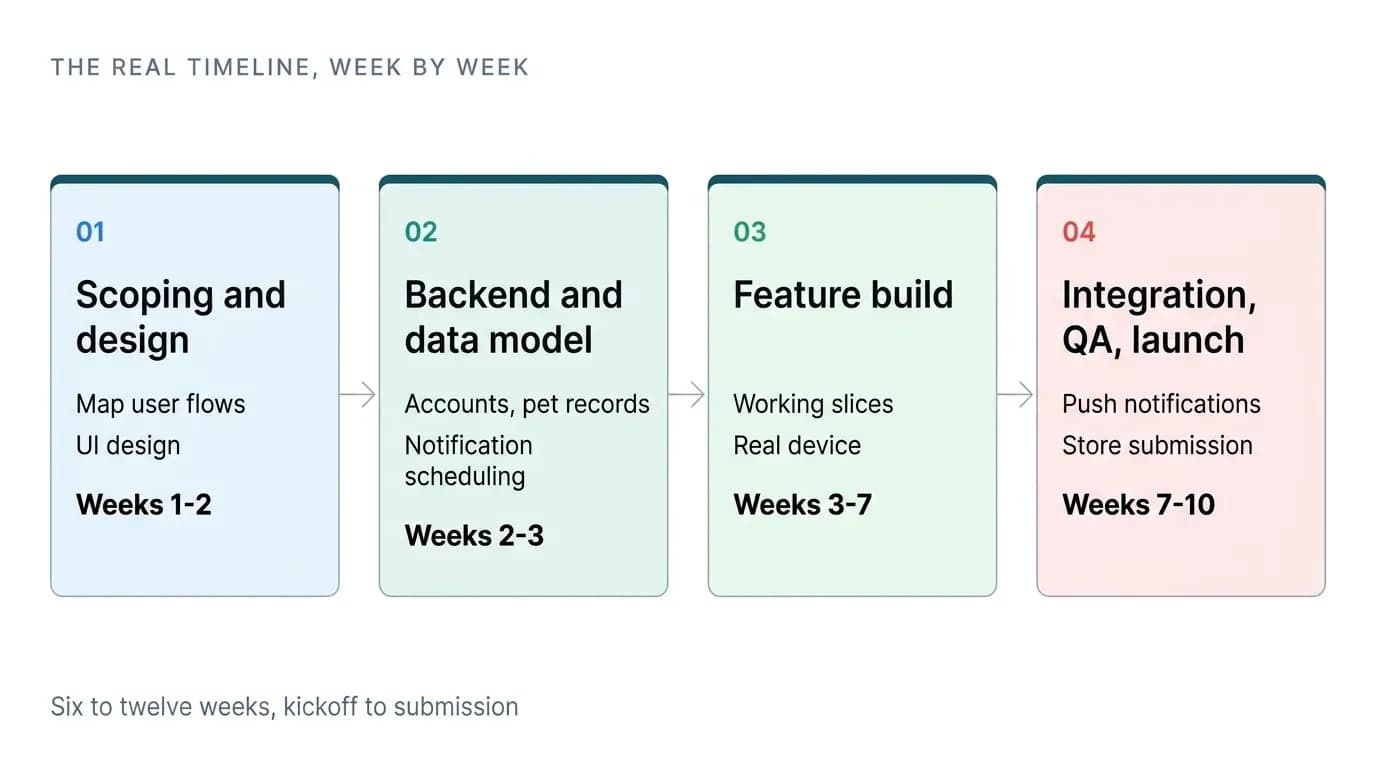
Weeks 1-2: scoping and design. We map the user flows first. That means adding a pet, uploading a vaccination record, and setting a regular medication reminder, all before we draw a single screen. Then comes UI design for the core flows. This is where you should be most involved and most willing to argue, because changes here cost minutes. The same change in week eight costs days.
Weeks 2-3: backend and data model. Accounts, pet records, document storage, notification scheduling. The data model is the single most consequential decision in the project.
Weeks 3-7: feature build. Profiles, records, reminders, dashboard, clinic details. These are built in working slices, so you are testing a real app on a real device by week four rather than looking at static screens.
Weeks 7-9: integration and QA. Push notifications across platforms, time zone behavior, offline handling, and document upload reliability on slow connections all get checked here. Reminder systems are deceptively hard to test properly, and this is where that testing happens.
Weeks 9-10: store submission and launch. App Store and Play Store listings, privacy declarations, review.
A single-platform MVP with tight scope can compress to six weeks, while two platforms with a vet portal stretches toward twelve. Anyone promising a full marketplace in three weeks is either reusing someone else's codebase or planning to miss.
Template Script or Custom Build: An Honest Comparison
If you have browsed CodeCanyon, you have seen pet care scripts for a few hundred dollars. The temptation is obvious, but here is what actually happens.
A template is written to demo well, not to run a business. That bill routinely exceeds what the custom build would have cost.
Then there is ownership. Check the license terms closely before you commit to anything.
A clone app built properly is a different proposition from a template. When we build a clone app, we are replicating a proven product's model and user flows on a codebase that is yours, that we wrote, and that we can extend. The reference is the business logic, not the source code.
Where Founders Overspend on Pet Care Apps
Five patterns account for most wasted budget in this category.
Building the vet side before you have pet owners. Build the owner app, prove retention, then approach clinics with evidence.
Running native iOS and Android in parallel from day one. Two codebases means a meaningfully higher build cost and two sets of bugs to track down instead of one. For a records-and-reminders app with no heavy graphics, cross-platform is the correct engineering answer, not a compromise. Go native later if performance genuinely demands it.
Wearable and IoT integrations in version one. These add hardware partnerships, extra testing devices, and support burden long before most pet care apps have enough users to justify them.
AI health analysis before there is any data. "Upload a photo and our AI flags skin conditions" sounds compelling in a deck. In practice it demands training data you do not have and medical review you have not arranged. It also invites claims you should not make. We will build AI features when there is a reason for them, since diagnostic claims about an animal's health are not a place to improvise.
Over-designing the onboarding. Founders spend disproportionate budget on animated splash screens and illustrated tutorials. Users want to add their dog and set a reminder. Spend the design budget on the flows people repeat, not the ones they see once.
Handling Health Data Responsibly
Nobody can hand you a compliance guarantee from a code repository. Anyone who offers one is selling something.
Practicatically, for a pet care app, write a plain-English privacy policy. Declare your data handling accurately in both app stores, and do not collect anything you cannot explain a use for. The same principles we apply in healthcare app development and doctor scheduling software development transfer directly, minus the regulatory weight.
What Comes After Launch, and What It Costs
Launch day is not the end of the budget. Plan for these.
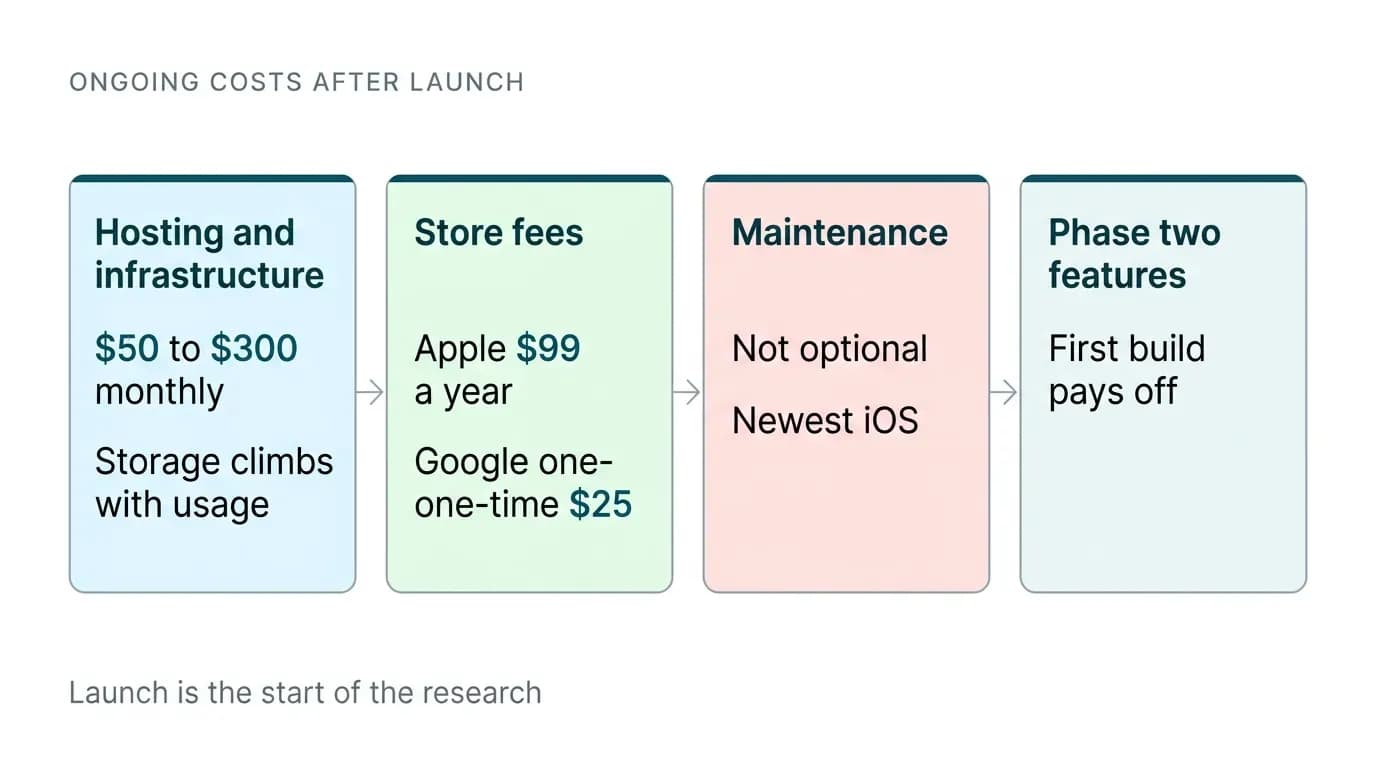
Hosting and infrastructure. A pet care app at modest scale runs on cheap infrastructure. Expect $50 to $300 a month early on. Document storage grows steadily as users upload records, so that line item climbs with usage rather than spiking.
Store fees. Apple takes $99 a year for a developer account, Google charges a one-time $25. If you add subscriptions, store commission applies on top.
Maintenance. This is not optional, since an app that stops working on the newest iOS loses its reviews in a fortnight.
Phase two features. This is where the structured first build pays off.
The founders who do well here treat launch as the start of the research, not the end of the project.
Can a Non-Technical Founder Actually Do This?
Who the app is for. "Pet owners" is not an answer. "Owners of dogs with ongoing medication needs" is, because it tells us which features matter and which are decoration.
What problem it removes. Missed doses. Lost vaccination cards. Not knowing when the last checkup was. Name it in one sentence and the feature list writes itself.
What success looks like in 90 days. A download target, a weekly-active target, a retention target. Without it, you cannot tell whether to build phase two or change direction.
What you will not build yet. The most valuable list in the entire project.
Bring those, and the technical decisions are ours to make.
Get a Fixed Price Before Anyone Starts Building
The single best thing you can do for your budget is to refuse to start without an agreed scope, an agreed price, and an agreed launch date in writing. Not an estimate. Not a range with an asterisk.

Arun Andiselvam
LinkedInI am a startup veteran who has built five brands. I sold the first, an SEO tool, for a six figure exit, and now lead Appkodes, building custom mobile and web apps for founders and businesses. I bootstrapped every one of them from day one.