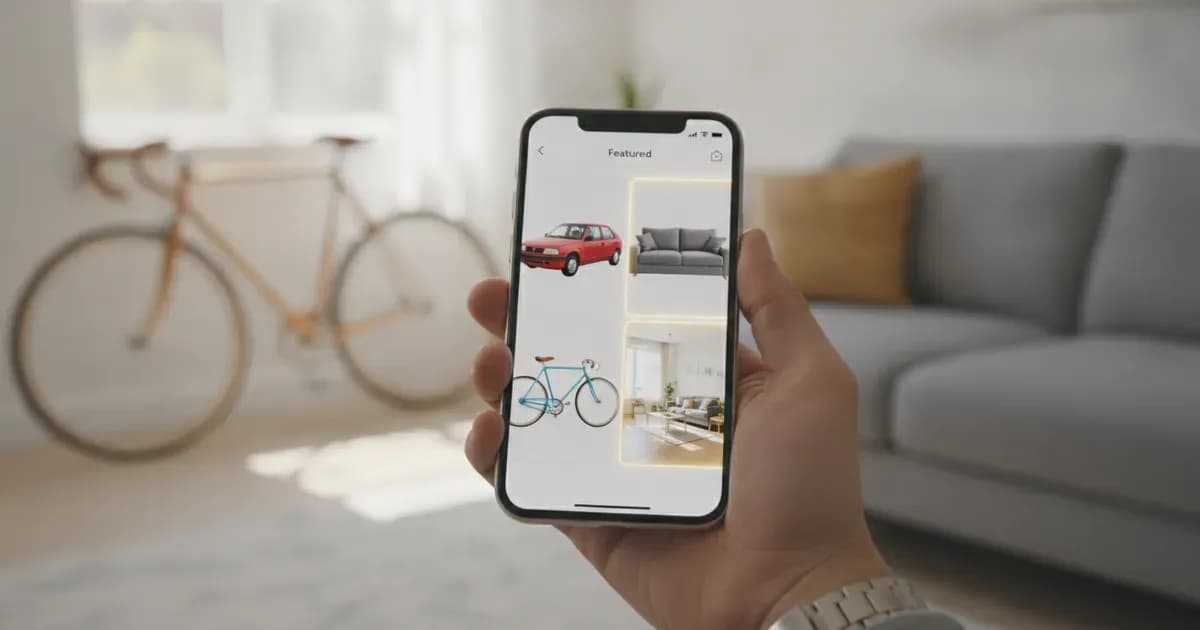
The e-commerce innovation of “Try Before You Buy” (TBYB) lets you boldly test your choices before making a purchase. This innovative strategy is revolutionizing our online purchasing experience and easing collective worries about product fit and quality.
Shoppers already expect it: 82% of shoppers say free returns are a major consideration when they buy, up from 76% a year earlier, according to NRF and Happy Returns. The great demand for TBYB is redefining customer enjoyment and involvement as well.
Combining TBYB with e-commerce loyalty rewards programs enhances loyalty and strengthens closer customer relations, optimizing these benefits. Find out TBYB’s transforming power and see if it suits your online store.
Knowledge of Try Before You Buy
If you are new to this strategy, then you need to know what try before you buy eCommerce means.
What Is Try Before You Buy and How Does It Work?
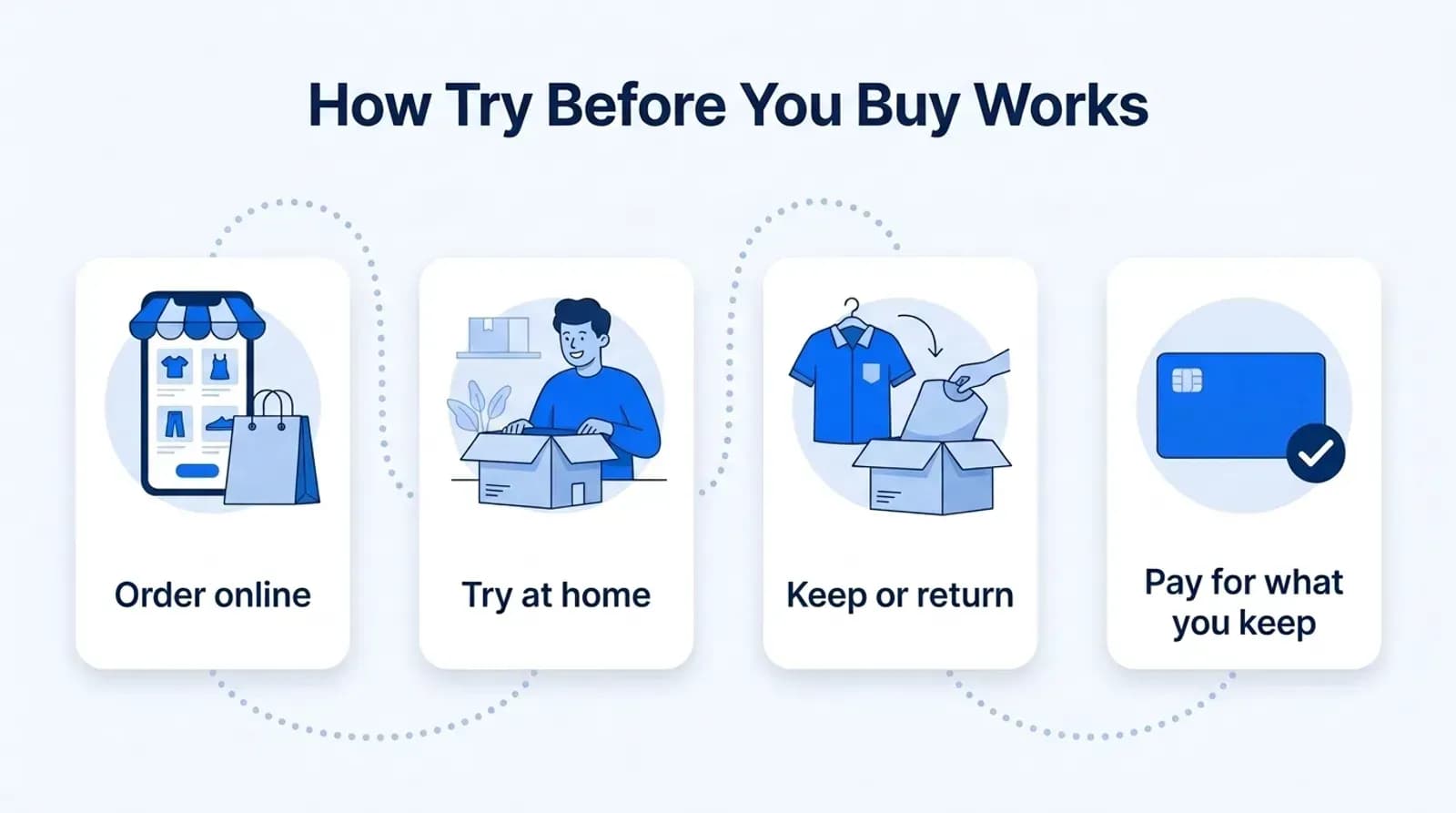
Reducing the uncertainty of online buying, “Try Before You Buy” enables consumers to test items before committing to a purchase. While companies enjoy higher conversion rates and customer loyalty, consumers gain from preventing buyer’s regret and guaranteeing satisfaction. Furthermore useful for improved inventory and marketing plans are Try before you buy ecommerce models.
Clarifying the Idea and Variations
TBYB models range in size to fit various products. The most common varieties of TBYB are listed below for your understanding.
Virtual Try-On
Use augmented reality (AR) to enable consumers to virtually test goods like makeup or clothes. It draws tech-savvy consumers and lowers the actual returns process.
Physical try-on via home delivery and return
Online shoppers try on products they purchase at home without paying upfront; they also return unwanted items. This concept raises satisfaction and ecommerce conversion rates while reflecting in-store shopping.
Free trials
Common for subscriptions, letting clients use services for free momentarily before they buy. Higher rates of subscription and retention follow from this.
Value of Effortless Returns
Effective return policies call for prepaid labels, clear directions, and quick refunds. Easy returns help to lessen perceived risks; this promotes more trials and increases general sales.
All things considered, TBYB models improve customer trust and satisfaction while increasing sales and loyalty, hence strengthening their value in e-commerce.
Mechanics of Try Before You Buy Ecommerce Program
To guarantee a flawless and fulfilling shopping experience, Try Before You Buy ecommerce programs’ operating mechanics call for meticulous coordination between inventory management, logistics, and customer support. This strategy greatly increases consumer confidence and happiness by letting consumers test products at home before deciding what to buy.
From Handling Returns to Shipping Policies
Logistics Issues abound
Important in TBYB initiatives are control of reverse logistics and shipping costs. Freight expenses cover both the possible return freight and the first delivery. Companies have to budget for these charges in their pricing policies if they are to minimize them.
Maintaining profitability and customer happiness depends on excellent reverse logistics, and handling returns quickly and affordably. This covers sometimes difficult and resource-intensive procedures for receiving, checking, and replenishing returned goods.
Potential Solutions
Offering prepaid mailing labels is one good way to help consumers participate in the TBYB program free from concern about return shipping charges and simplify their return procedure.
Extended return windows are another way to give consumers more time to make informed decisions on their online purchases, so boosting their faith in the brand and maybe driving sales. These techniques not only enhance the client experience but also raise the possibility of long-term retention.
Guidelines for Perfect Returns
Clear return policies help to avoid misunderstanding and discontent by making sure consumers know how to quickly return things. Fast refunds upon item return help to develop customer satisfaction and confidence, so promoting recurring business.
Automated return management solutions also help the company and the client by simplifying the procedure, therefore lowering manual mistakes and accelerating handling times. Also, make sure you have a reliable ecommerce payment gateway integrated into your business that will support the process.
Arranging the Ideal Trial Period
Managing Inventory Levels
Maintaining ideal inventory levels is essential for the TBYB program’s success. Companies must closely check their stocks to prevent overstocking, which ties up capital, or stockouts, which can cause lost sales possibilities.
Real-time inventory updates will enable companies to better control their inventory, therefore guaranteeing the appropriate level of product availability for TBYB consumers without jeopardizing general inventory health.
Alternatives for Payment Processing
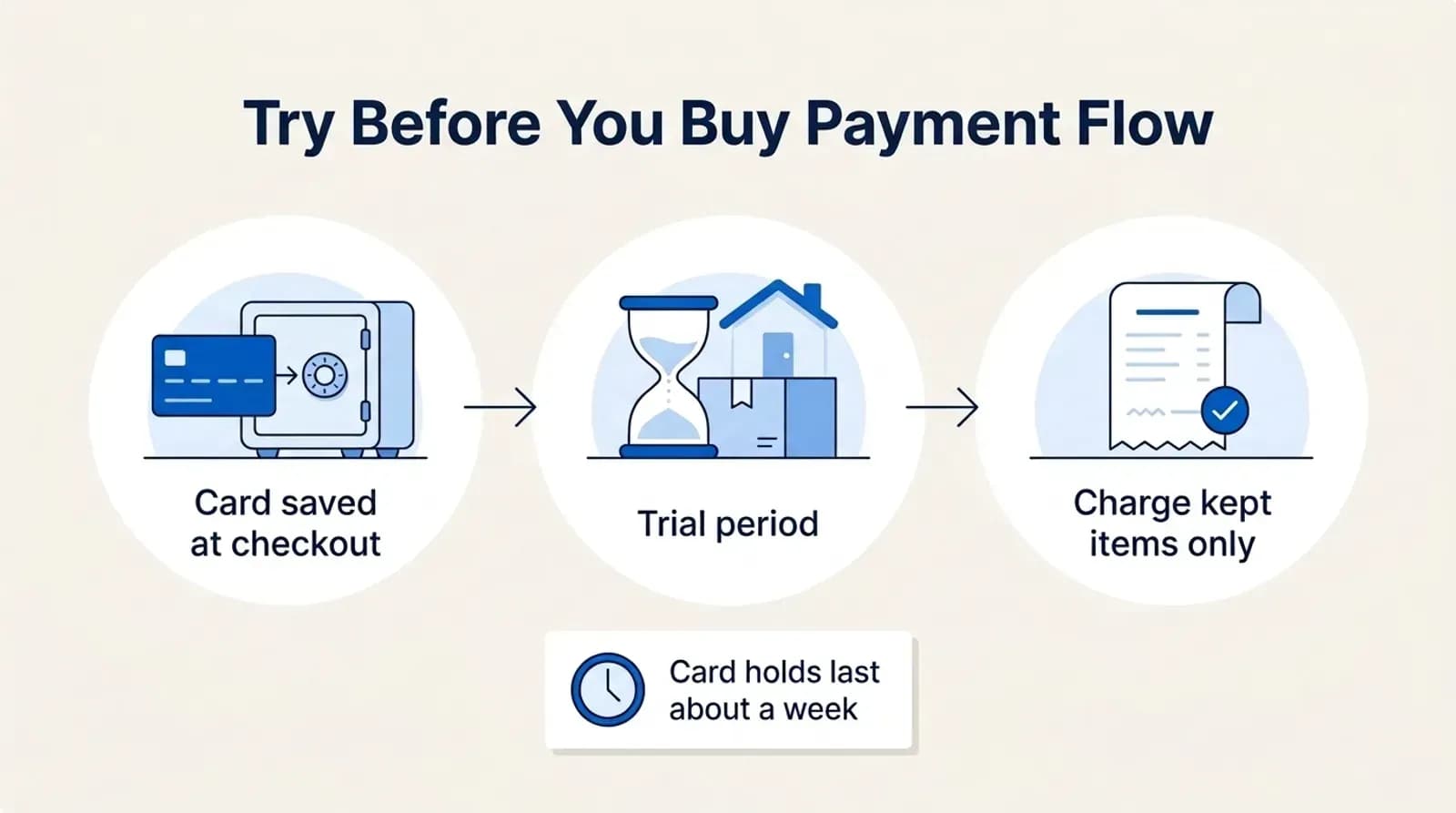
Pre-authorization places a hold on the shopper’s card without charging it. A card hold usually lasts only about seven days, so it suits short trials. For longer trials, save the payment method at checkout and charge it at the end of the trial.
Under a deposit model, where a small fee is paid first, shipping expenses can be covered and non-returned item risk is lowered.
Charging at the end of the trial means consumers only pay for the things they choose to keep, therefore strengthening confidence and improving the shopping experience.
Payment Options You Can Use Today
You do not always have to build this from scratch. Shopify supports try before you buy as a purchase option, taking payment later from the card saved at checkout. Pay-later providers offer a lighter route: Klarna’s Pay in 30 days lets shoppers pay up to 30 days after shipping, only for what they keep.
Optimal Trial Period
Finding the proper length for the trial period before purchasing is vital. It should be short enough to guarantee effective inventory turnover yet lengthy enough to let consumers test the products. Juggling this period calls for examining consumer comments and buying trends.
This data allows companies to modify trial durations to maximize the experience, therefore ensuring consumer friendliness while yet preserving operational effectiveness.
These all-encompassing plans guarantee that TBYB programs are operationally effective, reasonably priced, and quite enticing to consumers, so promoting greater satisfaction, loyalty, and sales.
Positive Benefits of TBYB for Online Retail
The Try Before You Buy Ecommerce model provides great advantages that improve the user experience, enable personalizing, and provide major financial gains for companies. Try before you buy ecommerce is changing the scene as follows.
Improving Consumer Contentment and Experience
TBYB lowers the risk connected with online buying, therefore improving the customer experience. Consumers can evaluate goods in their surroundings to be sure they satisfy their needs before making a purchase.
Higher customer satisfaction results from this risk-free strategy building brand confidence and trust. Customers who feel safe about their purchases are more likely to promote the brand to others and return for further purchases, therefore promoting long-term loyalty and good word of mouth.
Optimal Personalization
TBYB lets one have a quite customized purchasing experience. Businesses can learn a great deal about consumer preferences and behavior by letting consumers test items before making purchases.
This information allows one to better target marketing initiatives, make more precise product recommendations, and enhance general client contacts. Customized experiences help consumers feel appreciated and understood, therefore differentiating a brand in a saturated market and promoting return business.
Financial Benefits for Companies Operating Online
TBYB can cause lower returns and higher sales for companies as well. Purchases and retention of things they have had the opportunity to test by customers help to lower the rate of returns. Furthermore, happy consumers often make more purchases, therefore raising general sales.
The good experience also increases brand awareness and reputation, therefore facilitating the attraction of fresh business. Although TBYB comes with expenses, the possibility for more customer lifetime value and brand loyalty usually exceeds these expenses.
Emphasizing Ecommerce Innovators: Success Case Studies
Many ecommerce business owners from other sectors have effectively embraced the new Try Before You Buy ecommerce trend. These case studies show how TBYB has changed customer experiences and turned around their companies.
Warby Parker: Virtual Try On
With its virtual try-on tool, which lets consumers use augmented reality (AR) to view how various frames look on their faces, Warby Parker transformed the eyeglasses business.
This function helps to lower the uncertainty of online eyewear purchases. Warby Parker also ran a free Home Try-On program with five frames sent to your door, but that program has now come to an end; shoppers try frames with the virtual try-on or in its stores instead.
Amazon Prime Try Before You Buy: Clothing
Prime members could use Amazon’s Prime Wardrobe, later renamed Prime Try Before You Buy, to choose several clothes, try them on at home, and only pay for what they kept. It solved the typical problem of fit and style questions while online clothing shopping.
Amazon ended the service on 31 January 2025, after about seven years, saying shoppers now rely on AI tools such as virtual try-on and personalized size recommendations. It is a useful reminder that physical try-on is costly to run at scale.
Gemist: Jewelry
For bespoke jewelry, Gemist let clients try on replica rings at home before ordering. For high-value products especially, this helped them feel sure of their selection. Gemist has since moved to selling its design software to jewelers.
Stitch Fix: Individualized Style
Customized styling services offered by Stitch Fix let consumers get a well-chosen box of clothes items chosen depending on their tastes and comments. Consumers try the items at home, keep what they like and return the rest, and the styling fee is credited toward anything they keep.
This customized method not only improves the buying experience but also provides useful information on consumer preferences, thereby enabling even more personalizing in the next orders. In fiscal 2026, Stitch Fix grew revenue 6.4% to $1.35 billion, even though its active clients fell 1.4% to about 2.28 million.
Beauty Names: Skincare and Makeup
Sephora and Glossier are among the beauty companies that let consumers test products before making a purchase. Sephora’s in-store samples and Glossier You fragrance Discovery Kit, free with larger orders, let consumers see how well items fit their tastes and skin types.
This strategy lowers the possibility of returns and discontent, thus strengthening consumer confidence in the brands.
Casper: Mattresses
For their mattresses, Casper provides a 100-night trial so consumers may spend more time sleeping on the product before opting to keep it; returns open after the first 30 nights. This kind of generous trial term solves the major investment and personal inclination required in purchasing a mattress.
Since Casper’s TBYB approach eliminates the anxiety of making a costly error, it has been quite helpful in establishing consumer confidence.
These case studies show how well the TBYB model works in many different sectors, proving its ability to raise consumer pleasure, boost sales, and create closer brand loyalty.
Cons of Try Before You Buy
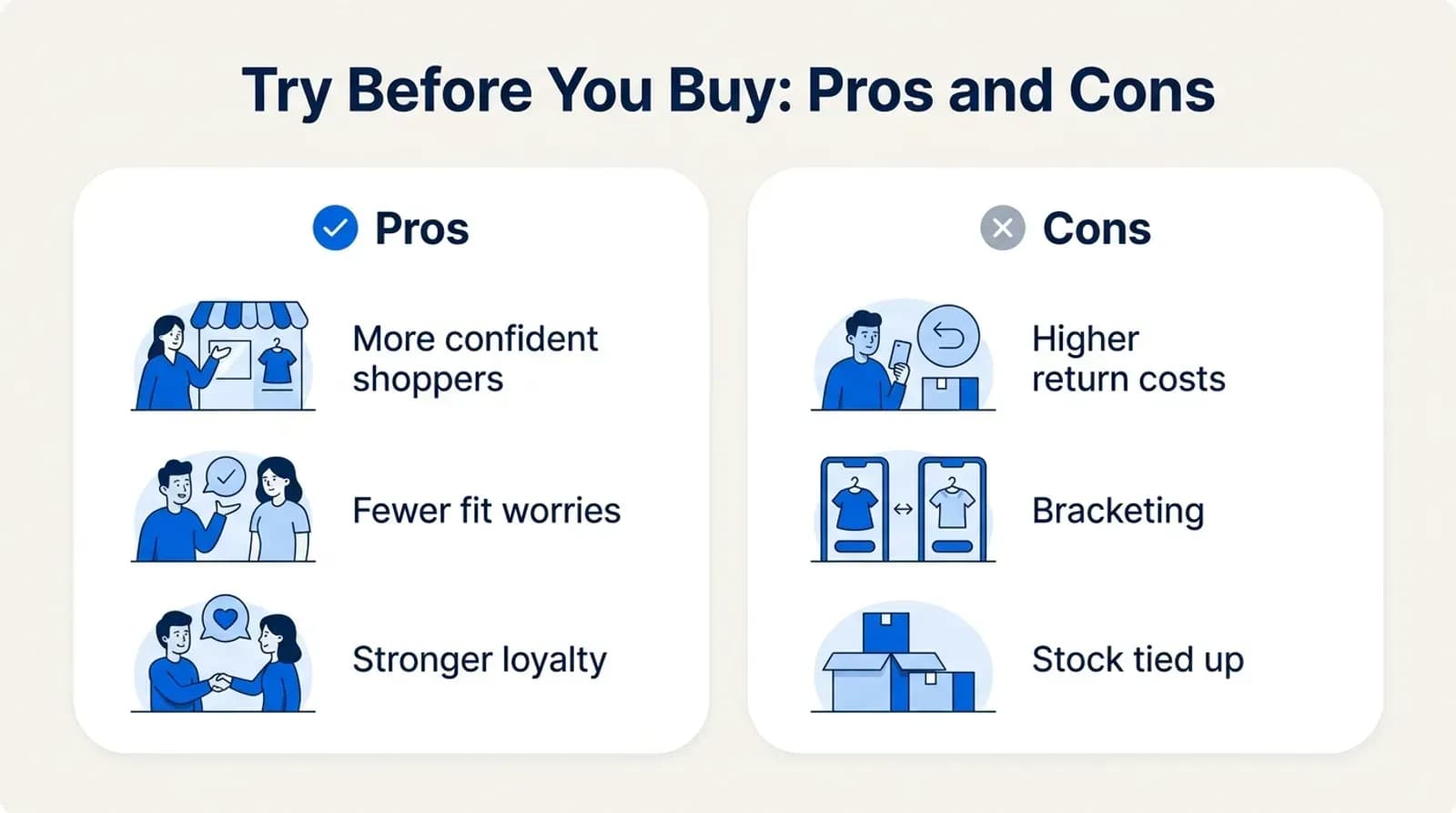
TBYB is not free of risk. Before you launch a program, weigh these downsides:
- Bracketing: shoppers order several sizes or colors and send most of them back.
- Return costs: every trial box carries shipping both ways, plus checking and restocking.
- Fraud: NRF estimates that 9% of all returns are fraudulent.
- Stock tied up: items out on trial cannot be sold to anyone else.
- Payment risk: a card hold expires after about a week, so longer trials need a saved card or a deposit.
Making Try Before You Buy Sustainable
Using the Try Before You Buy ecommerce trend presents difficulties, especially in terms of shipping offers, logistics, and return cost management. Here’s how companies could get above these challenges to create TBYB sustainability.
Juggling Retail Profits Against Higher Return Costs
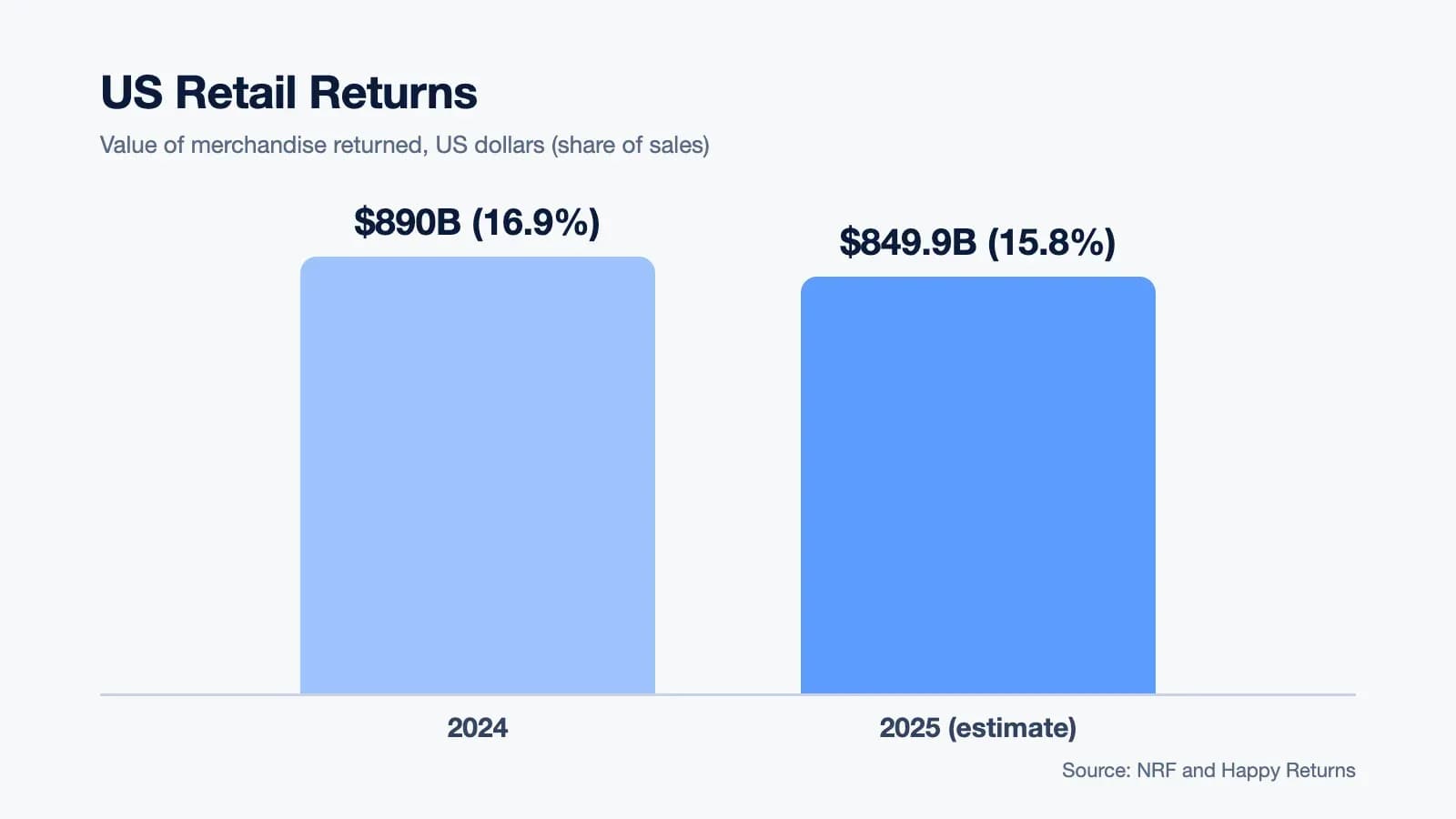
Returns are a big bill for retailers: US shoppers were expected to return $849.9 billion of merchandise in 2025, 15.8% of sales, and 19.3% of online sales. That is why cost control matters so much for TBYB.
The sustainability of TBYB projects depends on better control of increasing return costs. Implementing restocking fees for returned goods is one smart way to assist cover the processing expenses. Many retailers now charge for mail returns while keeping store returns free; Zara, for example, deducts $4.95 from the refund for a drop-off return.
Companies can also restrict the choices accessible for TBYB by only providing high-demand or high-margin goods, therefore guaranteeing revenue. Using improved product descriptions and photos, examining return data can also help to spot trends and lower the frequency of returns, therefore establishing appropriate client expectations.
Novelties in Returns Management and Logistics
Support of TBYB initiatives depends on improvements in return handling and logistics. By using automatic return labels and real-time tracking, among other aspects, automation in the return process helps to drastically save the time and expenses involved in handling returns.
Using regional warehouses and return centers, the return procedure can be expedited and shipping costs lower. Moreover, using simpler to handle and carry smart packaging solutions would help to simplify returns’ logistics. Investing in these ideas helps companies to make their TBYB programs more affordable and successful.
Negotiating the Complications of Free Shipping
Given the extra expenses, providing free shipping in TBYB programs can be difficult. To qualify for free shipment, one approach is to specify a minimum purchase quantity, therefore ensuring that the order value justifies the shipping costs.
As part of a loyalty program, companies can also provide free shipping, therefore motivating repeat business and raising customer lifetime value. Another way to control expenses is by working with logistics companies to bargain for better bulk shipment rates.
Through careful balancing of these elements, companies can provide free shipping without compromising their profit margins.
The Development of Try Before You Buy Ecommerce Companies
The “Try Before You Buy ecommerce trend” is set for major expansion as the ecommerce scene changes. Let’s investigate the future trends, the part that developing technology will play, and the growing need for customization that will define TBYB’s course.
Trends Changing Online Shopping’s Future
Driven by customer demand for risk-free buying, TBYB usage is projected to rise in many different sectors. Technological developments will improve these encounters, hence increasing the frequency of TBYB.
Already, many leading eCommerce merchants have implemented frictionless checkout and exclusive customer support for eCommerce. Furthermore, as companies try to strike a balance between convenience and environmental responsibility, sustainability techniques in packaging and return logistics will become increasingly important.
How AR and Artificial Intelligence Improve Shopping Experiences
Artificial intelligence (AI) and augmented reality (AR) are already part of TBYB. Google rolled out AI virtual try-on for clothes across US Search and Shopping in 2025, and it now works with just a selfie. AI can also examine consumer preferences to create better product recommendations, which lowers return rates and makes shopping more engaging.
The Increasing Need for Customization and Its Results
TBYB programs will have to change as consumers search for more personalized purchasing experiences. This increasing need for eCommerce personalization will force companies to make more efficient use of consumer data so that TBYB products satisfy particular preferences and expectations. Reduced return rates and more client loyalty are the outcomes.
Try Before You Buy Program for Online Retailers
Starting a “try before you buy” program will improve customer experience and increase revenue, therefore transforming your ecommerce company. To implement the try-before-you-buy model, this guidance addresses basic processes for goal definition, product selection, and the use of successful marketing tactics.
Setting Objectives and Choosing Correct Products
This is the initial stage, which comes with several steps to consider.
Clearly describe your objectives.
Set certain objectives, including higher customer happiness, more sales, or lower return rates. Well-defined goals will direct your approach and define success.
Choose appropriate products.
Products like clothes, accessories, high-value things, and digital tools are the ones consumers are reluctant to acquire without first trying. Pay close attention to things where fit, feel, or utility are crucial.
Execute market analysis
Investigating consumer preferences and purchase patterns will help TBYB choose the most exciting products. Get insights with competitor analysis, focus groups, and questionnaires.
Evaluate feasibility
Analyze the logistical and financial viability of presenting try before you buy ecommerce trend for a few chosen items online. Think about elements including inventory control, return rates, and delivery expenses.
Pilot Program
Start with a pilot program for a small product range, testing the process, compiling information, and making changes before a mass release.
Strategic Marketing Plans for Program Beginning
Promoting your brand is very crucial to gaining a competitive advantage. Here are some tips to stay ahead of your competitors:
Make Buzz
Create buzz using email marketing, social media, and influencer relationships. To inspire confidence, highlight client quotes and unboxing videos.
Educational Materials
Create material stressing the try before you buy ecommerce program’s convenience and risk-free character, therefore clarifying how it operates. Tell clients via FAQs, videos, and blog entries.
Strategic advertising
Reach possible consumers using focused ads on search engines and social media. Pay special attention to consumers who have expressed interest in like goods.
Coupons for promotions
To inspire involvement, provide first-time users with free delivery or discounts, therefore acting as limited-time incentives. Reward systems for returning consumers can also come from loyalty initiatives.
Consumer Involvement
Provide a more customized buying experience. You can create a quiz to interact with consumers. Also try other interactive materials like live demos, polls, and more tailored to customer’s preferences.
Review notes and comments
Invite patrons to post reviews and share their social media experiences. Good comments help to establish a reputation and draw in fresh business. On the other hand, keeping up with every incoming comment can be challenging, and slow replies often make audiences feel ignored. Setting up quick replies helps you respond on time and keep engagement strong even when your team is busy.
Cross-promotion
For cross-promotion to appeal to a larger audience, team up with complementary businesses. Collaborative marketing projects help to improve credibility and visibility.
Collaborations between influencers
Work with influencers to cover a larger audience. Influencers can highlight the try before you buy ecommerce process and offer their followers real quotes that speak to them.
Using these techniques will help a TBYB program to be launched and maintained successfully to improve customer experience and stimulate sales.
Customer Feedback, Tracking, and Logistics
The success of TBYB projects depends critically on effective tracking systems and logistics. Simplified logistics guarantee on-time delivery and hassle-free returns, hence improving customer satisfaction.
Strong tracking systems give consumers openness so they may instantly check their orders and returns, thereby strengthening trust. Customer comments enable one to pinpoint areas needing work, streamline procedures, and customize products to more suit consumer demands.
Integration of constant input guarantees that the TBYB program develops in line with consumer expectations, therefore fostering long-term success.
Loyalty and Customer Satisfaction
Using a “Try Before You Buy ecommerce trend” will greatly affect consumer loyalty and happiness, so benefiting businesses over the long run. These features are thoroughly examined here.
Client Happiness
- Reducing Perceived Risk: Customers are more inclined to buy when they know they can return the goods should it not live up to their expectations, hence implementing a Try Before You Buy model can dramatically increase customer satisfaction.
- Convenience: Giving consumers access to test items at home guarantees they can make confident purchase decisions in relaxed surroundings.
- Better Fit and Preference: This is particularly crucial in sectors like furniture and fashion where the appearance and fit of the product define everything.
Customer loyalty
Customer loyalty can be easily gained by brands by a try before you buy ecommerce model.
- Using building trust in its products and dedication to client pleasure, a Try before you buy ecommerce model promotes customer loyalty.
- Strengthening relationships: Stronger client ties result from try before you buy ecommerce models’ flexibility and tailored experiences.
- Contented consumers are more likely to return for their next purchases and tell others about the brand.
Long-term Advantages for Online Retailers
The long-term advantages for online retail business owners are:
- Loyal consumers who regularly buy over time help the business to generate more money.
- A try before you buy ecommerce model distinguishes a brand from rivals so drawing more consumers.
- Data from try before you buy ecommerce programs offers valuable insights into consumer preferences, therefore supporting marketing plans and product development.
- Loyal consumers become brand champions, therefore improving the reach and reputation of the brand through good reviews and word of mouth.
Crafting the Future: Try Before You Buy Ecommerce Innovations
Beyond fashion and eyeglasses, the TBYB model is finding application in home décor, technology, and cosmetics. The customer experience will be improved even further by innovations such as virtual try-ons and AI-driven recommendations.
Refining these services depends on customer comments, which also guarantee that they satisfy changing demands and tastes.
Success Stories
- Blackcart offers a TBYB solution for online stores so that customers may test products at home without paying upfront or having a hold placed on their card.
Services like this let a store add TBYB without building every part itself, though a custom build gives you full control over trial rules, payments and returns.
What Next for Try Before You Buy E-commerce?
E-commerce companies have to be nimble, using user comments and new technologies to improve the shopping experience and keep a competitive edge.
Emerging Technologies and Trends
Several developing trends and technologies will help define Try Before You Buy e-commerce going forward. By letting consumers virtually try on clothes, accessories, and even house décor items before making a purchase, virtual and augmented reality (VR/AR) are transforming the shopping experience.
Immersion shopping experiences made possible by these technologies allow consumers to see goods in their surroundings, therefore improving satisfaction and lowering returns.
Personalizing the TBYB experience will rely critically on artificial intelligence (AI) and machine learning. While machine learning may assist in forecasting demand and more effectively managing inventory, lowering costs, and improving product availability, artificial intelligence can examine consumer behavior and preferences to provide highly tailored recommendations.
Another major emphasis will be sustainability since businesses using environmentally friendly return policies help to reduce the effect of TBYB models on the surroundings. Including green items into the TBYB model will draw environmentally sensitive consumers, therefore separating companies in a cutthroat market.
Real-time feedback made possible by improved customer feedback systems will let companies react fast depending on consumer comments. By helping businesses to better their product offers and grasp consumer preferences, advanced data analytics will assist them to guarantee that they satisfy changing consumer wants.
Staying Ahead of the Curve
E-commerce companies should embrace innovative technologies such as VR/AR and AI to improve the buying experience if they are to keep ahead in the changing TBYB scene. The priority should be client happiness via flawless, tailored shopping experiences.
Modern customers will relate to implementing sustainability projects including environmentally friendly return policies and providing sustainable products.
Understanding consumer behavior and always improving the TBYB model depends on using customer data through sophisticated analytics. Creative alliances between digital firms and other innovators can provide access to the most recent tools and data, therefore enabling businesses to remain front and foremost in their sector.
E-commerce companies may guarantee they remain competitive and satisfy the changing needs of consumers in the TBYB industry by keeping current with these trends and using cutting-edge technologies.
Conclusion
Should your online retailer run a “Try Before You Buy” program? Get connected with Appkodes, a team offering ecommerce app development services, to build an ecommerce app with try before you buy designed around your products, trial rules and payments.
We design and build every app new for its client, with a costed plan at a fixed price before work starts, and most first releases go live in about 30 days. Get in touch with Appkodes to plan your program.
Common questions
What is try before you buy in ecommerce?
It lets shoppers receive products, try them at home and pay only for what they keep. The rest is sent back within a set trial period.
How does payment work for try before you buy?
Most stores save the shopper’s card at checkout and charge it at the end of the trial. A card hold lasts only about a week, so it suits short trials.
Which products suit try before you buy?
Items where fit, feel or look matter most, such as clothing, shoes, eyewear, jewelry, beauty products and mattresses.
What are the downsides of try before you buy?
Higher return and shipping costs, bracketing, return fraud and stock tied up during trials. Amazon and Warby Parker both ended their home try-on programs in 2025.
Can I add try before you buy to my own ecommerce app?
Yes. Appkodes builds custom ecommerce apps with trial rules, saved-card payments and returns built in, with a costed plan at a fixed price before work starts.

Arun Andiselvam
LinkedInI am a startup veteran who has built five brands. I sold the first, an SEO tool, for a six figure exit, and now lead Appkodes, building custom mobile and web apps for founders and businesses. I bootstrapped every one of them from day one.