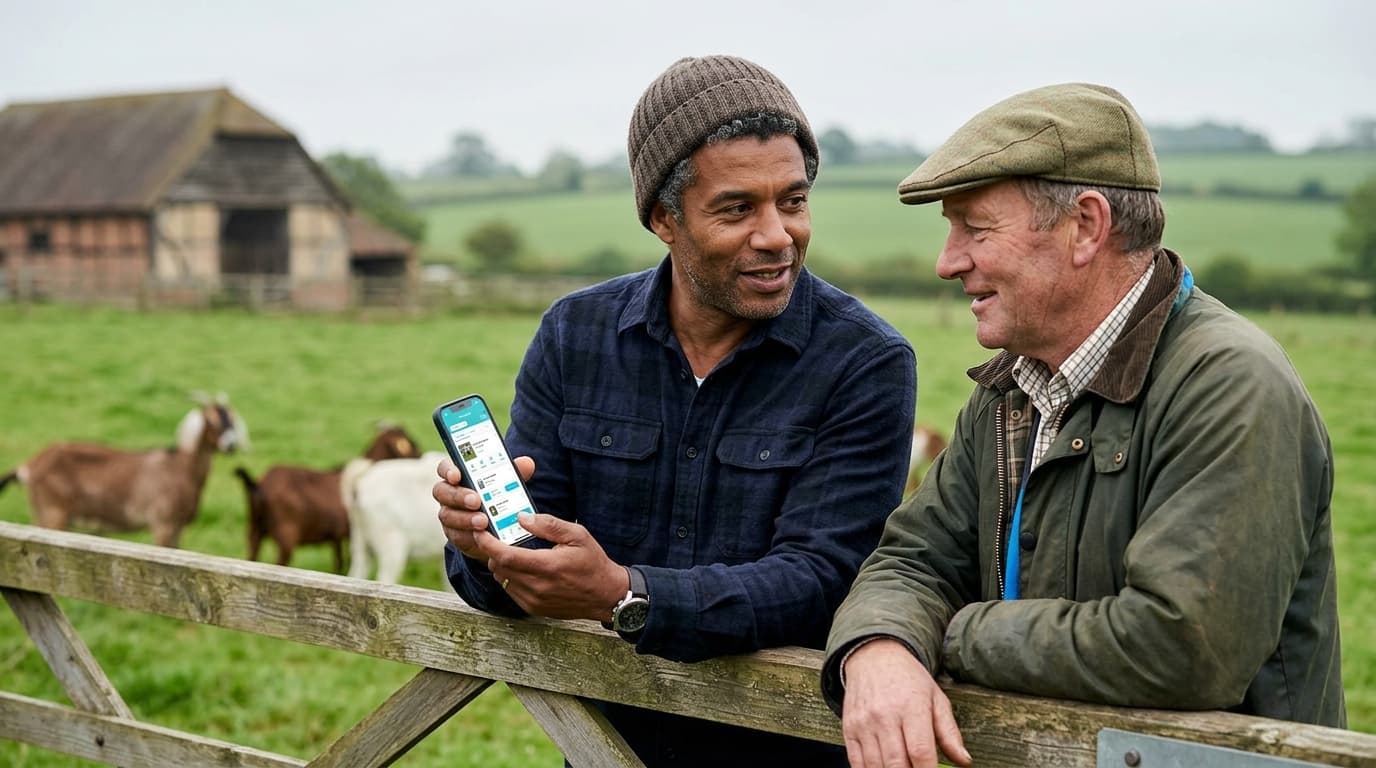
Build the listing, the search, and the message thread first. Everything else, breeding records, milk logs, side-by-side comparison, ratings, comes after you have proof that buyers and sellers will actually meet inside your app. Most animal livestock marketplace app development projects fail because they tried to be a herd management system, a classifieds site, and a dairy advisory service on day one. Successful animal livestock marketplace app development works when you pick the one transaction that matters and make it effortless, then add the record-keeping tools that keep farmers coming back between sales.
Patchy rural connectivity, farmers who already track everything in three notebooks and a spreadsheet, and the slow, unglamorous work of getting a first hundred real listings on the platform, these are the things nobody warns you about when they tell you to just scope a first release you can afford.
What a Livestock Marketplace App Actually Needs to Do
Strip away the wishlist and an animal marketplace is doing four jobs. A seller has to describe an animal well enough that a stranger will drive to see it. A buyer has to find that animal among hundreds of others. The two have to talk without handing over phone numbers to the entire internet. Both have to come away with a reason to trust the next transaction.
Everything in your feature list should earn its place against those four jobs. A listing needs photos and video, because nobody buys a buffalo from a thumbnail. It needs breed, age, price, location, and a free-text description. For dairy animals it needs milk yield, lactation number, and calving history, the numbers that decide the sale. A listing missing them gets skipped. For breeding stock it needs lineage, because a breeder paying a premium is paying for the pedigree, not the animal in front of them.
Search is where most builds go soft. Filtering by animal type and location is table stakes. Sort by newest, because stale listings kill trust faster than anything else.
Then comparison. It mirrors how buyers already think at a cattle market, where they walk between two pens and weigh one against the other. Build that into the app and you have replicated the part of the physical market people trust.
And messaging. In-app chat, not exposed phone numbers. Both sides get a record of what was promised about the animal's health and age, which matters more than you would think when a deal goes wrong.
Scoping an MVP You Can Actually Launch
Build a simple, almost brochure-style app that shows your own stock clearly, with search, comparison, and a way to contact you. Prove people want to browse animals on a phone.
That sequencing saves a fortune. A two-sided marketplace needs seller onboarding, listing moderation, and dispute handling before it works at all. A one-sided catalog needs none of that, and it tells you within weeks whether your audience will use an app or will keep calling the local broker.
Launch on both Android and iOS from the start, since splitting your early, small user base across two releases only slows down the feedback you need.
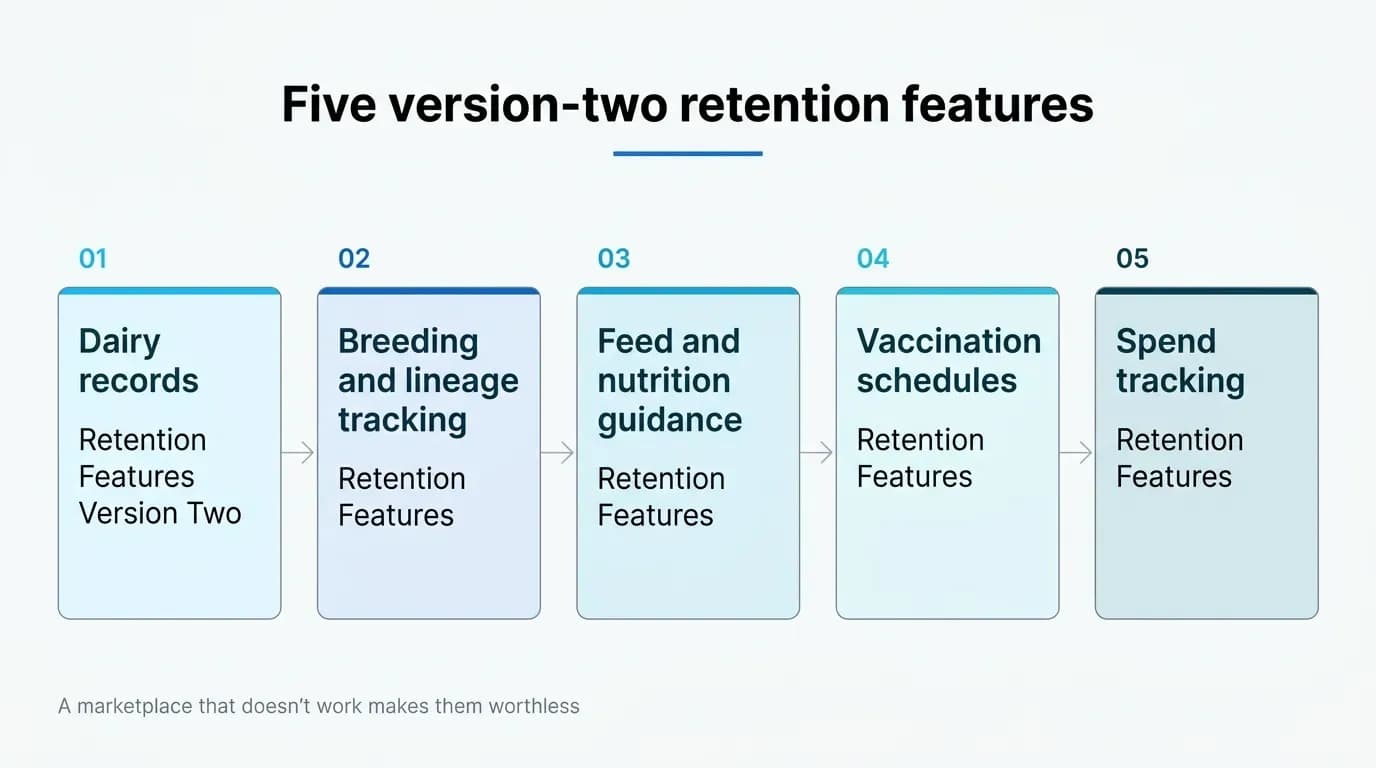
What goes in version two, with a straight face: dairy records, breeding and lineage tracking, feed and nutrition guidance, vaccination schedules, and spend tracking. These are the retention features. They are worth building, we will get to why, but they do not prove the marketplace works. A marketplace that doesn't work makes them worthless.
Moving Farmers Off Spreadsheets and Notebooks
The thing to understand about your users is that they are not starting from zero. Most farmers already keep breeding records, milk logs, and health notes scattered across a paper notebook, a phone's notes app, and a spreadsheet someone's kid set up years ago.
That fragmentation is both your opportunity and your obstacle. The opening is obvious: a single place that pulls all of it together is genuinely valuable. The obstacle is migration, since nobody is retyping four years of breeding records into a mobile form on a Tuesday evening.
So design for migration, not for a clean start. Most important, make partial data acceptable. An app that refuses to save an animal because the sire ID is missing will be deleted within a week. Let records sit incomplete and nudge gently toward filling them in.
Breeding, Lineage, and the Records That Keep Users Coming Back
A marketplace alone has a brutal retention problem. Someone buys a cow and disappears for two years. The record-keeping side is what turns a once-a-season app into a daily one, which is why the two belong together.
Breeding and lineage tracking is the feature farmers ask for. It is also the one generic classifieds platforms never have. Insemination dates, service records, pregnancy confirmation, expected and actual calving dates, and calf outcomes all attach to the animal.
That last link is the design insight worth building around. The lineage record and the listing should be the same data. That is a flywheel, and it is what a straight classifieds app cannot copy.
Alongside it, build spend and income tracking. Farmers want to see feed costs, veterinary bills, and income set against individual animals and against the farm as a whole. It does not need to be accounting software. It needs to answer one question: is this animal making me money? Put that next to the health and production records and you have something a farmer opens without being prompted.
Offline Functionality and Syncing for Remote Areas
This is the requirement that quietly sinks livestock apps built by teams who have never left a city. Cattle sheds, grazing land, and remote holdings have unreliable data coverage. If your app needs a live connection to record a milking or look up an animal, it will be abandoned.
Build offline-first. The user should never see a spinner for an action that only touches their own data. Three details decide whether this feels solid or flaky.
Marketplace browsing is different, because search results come from the server and need a connection. A listing feed that loads on a weak signal will out-convert a sharper one that doesn't.
Integrating With Existing Farm Management Systems
Larger farms, cooperatives, and organized breeders are rarely running on nothing. Your app either plays with these systems or competes with all of them at once and loses.
The pragmatic order of integrations is identification first, production second, money third. Supporting the official or cooperative animal ID as a first-class field, searchable, printable, part of the listing, costs almost nothing and makes your app the place farmers look things up. Exporting financial data in a format their accountant accepts stops the spend tracking from being busywork.
For a first release, honest advice: build clean import and export before you build live integrations.
If your marketplace will eventually span veterinary services, feed suppliers, or transport, the same logic applies. Model them as distinct listing categories on shared infrastructure rather than separate products.
Compliance, Data Security, and Animal Welfare Rules
Trading live animals is regulated, and the rules differ by country and often by state or province.
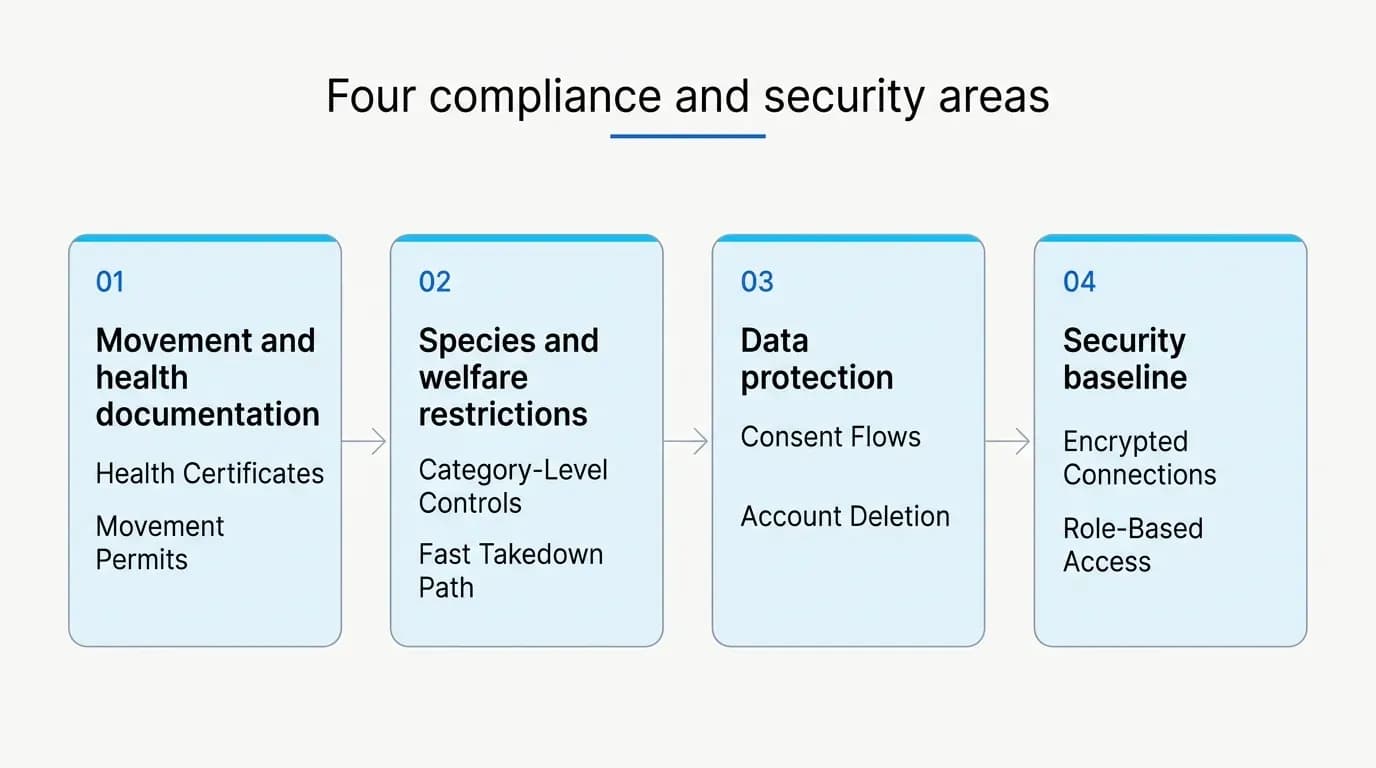
Movement and health documentation matter here. Many jurisdictions require health certificates, movement permits, or testing records when animals change hands or cross boundaries. Design listings and transactions so documents can be attached, stored, and shown to both parties. Even where it isn't required, buyers value it.
Species and welfare restrictions apply too. Certain animals, certain trades, and certain descriptions are restricted or banned in various markets. Your admin panel needs category-level controls, keyword flags, and a fast takedown path, plus a clear seller agreement that puts legal responsibility where it belongs. Content moderation on an animal marketplace is not optional. It is the difference between a trusted platform and one that gets delisted from the app stores.
Data protection rounds this out. You are holding names, locations, phone numbers, and messages. Where GDPR or similar regimes apply, you need consent flows, a data export path, and account deletion that actually deletes.
The security baseline is plain and non-negotiable: encrypted connections, hashed credentials, and role-based access in the admin panel. Add rate-limited messaging and audit logs on anything that touches a listing or a payment.
Cloud vs. On-Premise, and the Price Tag for Running It
For a marketplace, this question has one sensible answer: cloud. A two-sided platform needs to be reachable by anyone, scale with listing volume, push notifications, and serve media to thousands of devices. Running that on your own hardware means buying for peak capacity you might never hit and employing someone to keep it alive.
On-premise or private hosting comes up for a different scenario, a single large dairy or a cooperative that wants herd data to stay inside its own infrastructure for policy reasons. If that is your buyer, the answer is a hybrid. Build a cloud marketplace that anyone can browse, with an option for enterprise clients to host the herd management side themselves and sync a subset of data for listings. Do not build that in version one. Build the cloud product, and design it so the herd module can be split out if a serious client asks.
On running costs, the honest shape of it: media storage and bandwidth are the line items that grow with success, because high-resolution animal photos and video are heavy. Compress and resize on upload, serve through a CDN, and cap video length. Push notifications, chat infrastructure, and search indexing add steady but modest costs. The surprise is usually moderation and support, which are people costs, not server costs.
Making the ROI Case to Farmers and to Yourself
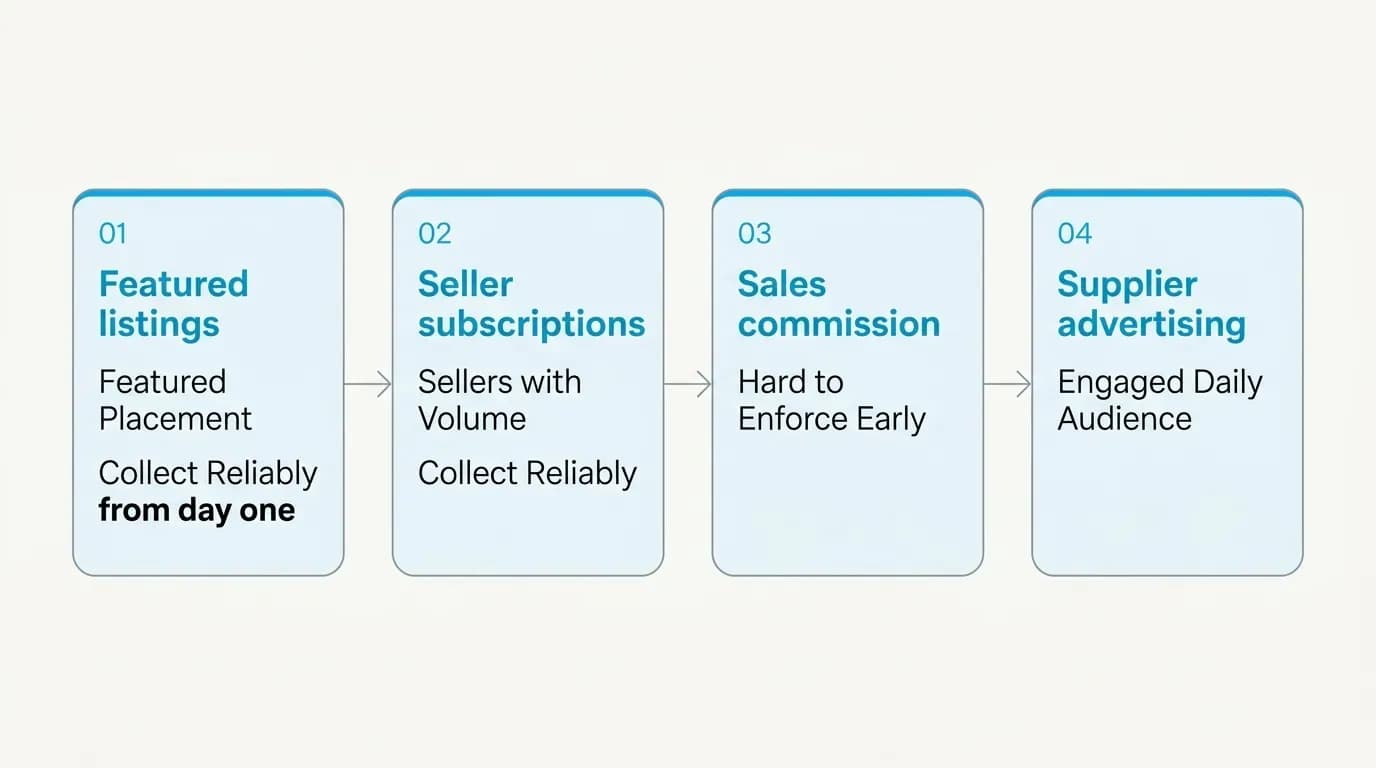
Two ROI conversations matter. The first is yours. Marketplaces monetize through listing fees or featured placement, through subscriptions for sellers with volume, or through commission on completed sales. In livestock, commission is hard to enforce early because deals get finished in person and in cash. Featured listings and seller subscriptions collect reliably from day one. Supplier advertising becomes worthwhile once you have an engaged daily audience, which is exactly what the record-keeping features give you.
The second conversation is the farmer's, and it is the one that drives adoption. A farmer does not buy software, they buy a better decision. Frame the value concretely: fewer wasted trips to see animals that were misdescribed, a wider pool of buyers than the local market, and breeding choices made from actual records instead of memory. Put those outcomes in the app's own onboarding, a short summary after the first month showing what they logged, what it's worth, and what they can see now that they couldn't before.
Price accordingly. Free browsing and free basic records, paid for selling visibility and advanced tools, is the structure that works in most agricultural markets. Charging farmers for record-keeping before they trust the app is how you end up with a polished product nobody opens.
Adoption, Training, and Support in the Real World
Seed the supply side manually. Go to the markets, the dairy cooperatives, and the breeder associations, and list animals yourself on behalf of sellers if you have to. An empty marketplace converts nobody, and the first hundred quality listings are worth more than any ad spend. This is also where the brochure-first approach pays off, since if you have your own stock, you start with inventory on day one.
Design for a user who might not be comfortable with apps. Onboarding should be three screens, not ten. The ability to add an animal with a photo and three fields, and fill in the rest later, is an adoption feature as much as a data-model decision.
Plan for support you can afford, and recruit a handful of visible early adopters.
Getting Your Build Started
Scope tight, launch, learn, then expand. Listings, search, comparison, chat, ratings, admin. Records and dairy tools in the next release, payments after that. Offline-first from the beginning, because you cannot retrofit it. Migration paths from spreadsheets from the beginning, because that is where your users' data lives.
If you want a scoped quote for a livestock marketplace app development project, bring us your feature list and we will tell you what belongs in release one, what belongs in release two, and what the first version costs before we start. You can see how we approach mobile app development across sectors, or browse our app development guides if you are still shaping the idea.
Common questions
What features should I prioritize when building a livestock marketplace app?
Start with listing, search, and messaging as your core features, then add record-keeping tools only after proving that buyers and sellers will actually meet in your app. Everything else like breeding records, milk logs, and ratings should come after you have proof the marketplace works, since most animal marketplace projects fail by trying to be too many things at once.
How do I get farmers to use a record-keeping app when they already keep records in notebooks?
Design for migration, not for a clean start, by making partial data acceptable and allowing records to sit incomplete while nudging users gently to fill them in. An app that refuses to save an animal with missing information will be deleted quickly, so let farmers import incomplete data gradually rather than requiring them to retype years of records.
What offline functionality do livestock apps need for rural areas?
Build offline-first so users never see a loading spinner for actions that only touch their own data, since cattle sheds and remote holdings have unreliable data coverage. The app should allow farmers to record milkings and look up animals without a live connection, though marketplace browsing will need a connection since search results come from the server.
How should I handle compliance and animal welfare regulations in a livestock marketplace?
Design listings so health certificates, movement permits, and testing records can be attached and stored, as many jurisdictions require these documents when animals change hands. Build category-level controls and keyword flags in your admin panel to enforce species and welfare restrictions, plus a clear seller agreement that puts legal responsibility where it belongs.
What's the best way to seed a livestock marketplace with listings at launch?
Go to markets, dairy cooperatives, and breeder associations and list animals yourself on behalf of sellers if necessary, since an empty marketplace converts nobody and the first hundred quality listings are worth more than any advertising spending.

Arun Andiselvam
LinkedInI am a startup veteran who has built five brands. I sold the first, an SEO tool, for a six figure exit, and now lead Appkodes, building custom mobile and web apps for founders and businesses. I bootstrapped every one of them from day one.