
As a serial entrepreneur, I’ve built three software-as-a-service products and worked on many more software projects. Along the journey, I’ve learned a lot about why software MVPs fail, through both successes and my share of startup failure. One big venture didn’t work out for me. Yet my other products are in use by customers in several countries today.
Building a startup, especially around subscription-based products is not always centred around delivering a clear value proposition, there’s much more at stake. You don’t need me to remind you often that a minimum viable product is about offering the minimal features needed to attract early adopters and gather early feedback. Even many startups that follow this principle closely can fail due to several other factors.
That is the point of this entire article on MVP failure, in which I’m sharing insights from my journey as a startup founder into the less obvious reasons why MVPs fail—lessons learned from real-world experience.
1. Misunderstanding the Minimum Viable Product Concept
Many first-time entrepreneurs are aware that the basic idea of MVP is to launch a product with just enough features and functionality to gauge user expectations. That’s a solid start! But do you know where it gets tricky? In the way you present your MVP. Yes! How you present it matters as much as the key features it has. So, a reality check is needed.
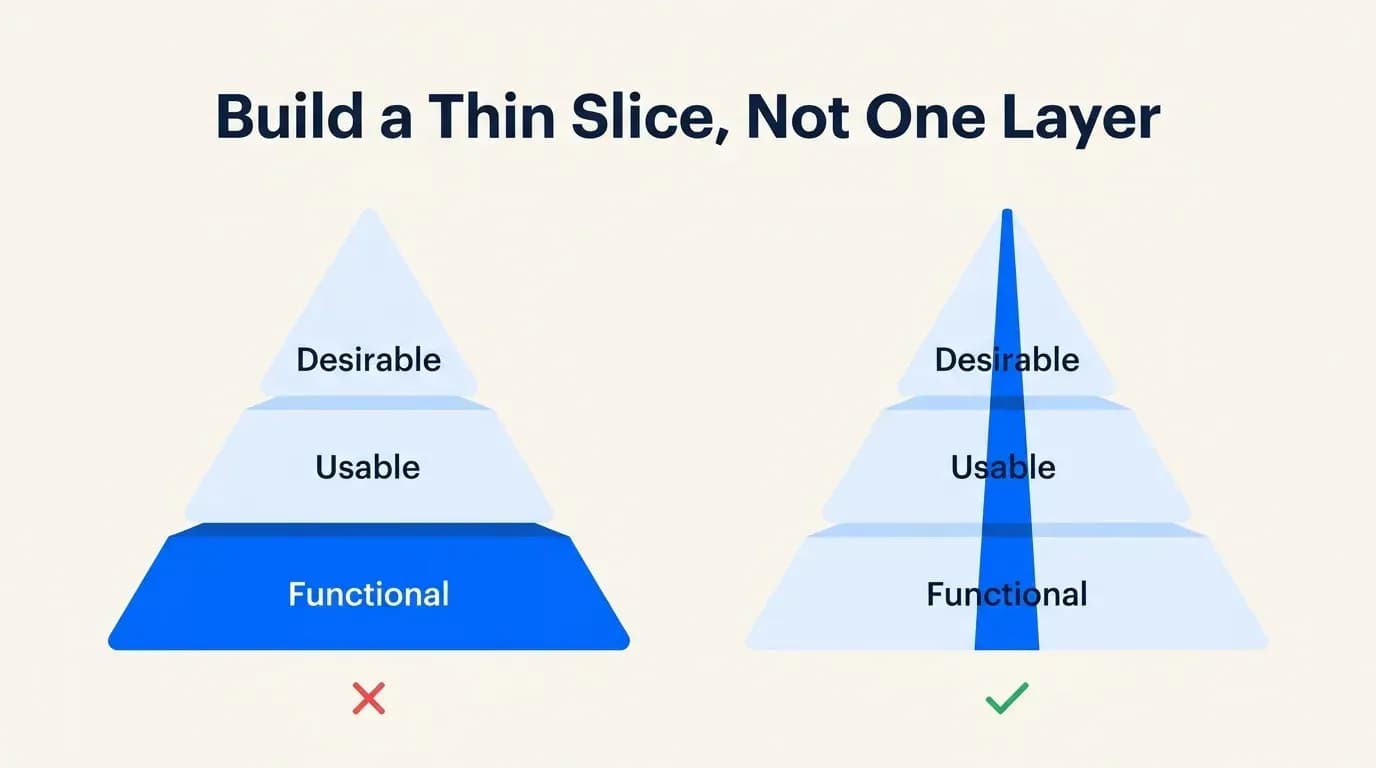
Get to know the Common Pitfalls
Understanding their target market is what first-generation entrepreneurs often struggle with. Your belief in a groundbreaking idea is completely different from reality. This means you are living in a bubble if you think you have a perfect solution without any idea of your target audience. And, your product fails to meet user expectations.
The Importance of Early User Feedback
Never overlook the chance to engage with your early users. Every successful product on the market today got there only after being tested and evaluated by real users. Engaging with your audience early on is crucial.
So touch base with early users who are eager for solutions—they’re not after magical innovations that might only exist in your mind. They demand practical, real-world solutions to their problems. And, that’s why you need to craft an MVP first.
No one could have put it better than Eric Ries, the author of The Lean Startup: “An MVP is the version of a new product which allows a team to collect the maximum amount of validated learning about potential customers with the least effort.” Therefore all you need to do is repeat the following four steps.
Step 1: Carry out immersive research and then define your MVP with essential features
Step 2: Collect valuable early user feedback by presenting it to your target audience.
Step 3: Enhance your MVP to meet the goal by consistently iterating based on their inputs.
Step 4: Your MVP is done only when it resonates with your audience. So, till then keep repeating the process.
Only when you look at MVP as a dynamic tool for learning and adapting instead of a standalone product, does your app idea get validated. And, that clearly shows signs of setting the stage for MVP’s success. Along with this, you need to learn about building an MVP on a budget.
2. Being Overconfident
Founders at times ignore the market realities. Sometimes they are overconfident enough to feel that their app idea or business idea is revolutionary and will make a big impact in the market. They just either underestimate the competition or overlook them.
They aren’t fully involved in market research and if the results of the research are not favorable, they still want to try building what they want. I am not telling them to give it up, but you should know what market research says and why your idea is not resonating with your target users.
The MVP development cycle starts with the core features and ends with what your early customers want. That does not mean deviating from your vision; it means making sure your vision is in line with what your early customers want.
3. Not Being Focused: The Dangers of Losing Sight
When you’re a founder with a brilliant idea—you will be driven by passion, and you would have also built a talented in-house development team. You may be someone who has experienced success in the past, and with all of this, you may strongly believe your new product is a game-changer. Despite all this, you may still find yourself losing focus. Do you know how that happens? Let’s break it down!
The Sunk Cost Trap
This is true! Suddenly you’ll realize being caught up in your development’s investment. You may find every extra addon to be essential as you are already pouring in time. But that’s exactly your sunk cost trap: focusing on sunk costs can cloud your judgment.
The trap may make you overlook much-needed aspects like, “What needs to be built, for whom, and to solve what problem?” you might find yourself lost and opting for too many features like cool animation or a stunning flow assuming without any base that the users will love it. But that’s not the way with Minimum Viable Product (MVP). You need a calculated approach to achieve the required insights with MVP. Here is a simple car analogy to relate with. Let’s be practical. When you’re on the way to an important errand but unfortunately get a flat tire, all you desperately need is a lift. In such a situation will you keep a reliable vehicle with four wheels and an engine to move forward or demand to board a Ferrari or a Tesla? Handle your MVP the same way, aim at only providing a solution.
The reason behind the MVP journey is to gather feedback. This feedback helps you with validating your app idea. Throughout your development journey, you have to stay rooted with your plan and also keep in mind the honest needs of your users.
As business strategist Michael Porter put it, “The essence of strategy is choosing what not to do.” So, it’s clear that you cannot deliver a clear value proposition your users can relate to without focus.
4. Ignoring the Numbers
Now, let’s talk about numbers. In the MVP development process, it’s important to collect data from early market research and user feedback. It’s tempting to rely solely on positive feedback from a handful of early users. When your 50 enthusiastic supporters regard your product to be fantastic and your market research tells a different story? Then, that’s a red flag!
When you find your positive feedback out of line with the broad numbers that means you need to rework a few aspects. Reassess your research and make sure that you are achieving accurate statistics reflecting a wider audience.
Remember, You can’t stick to the opinions of early users’ positive feedback. To avoid falling into this trap, create an environment that gives you honest feedback and you must keep gathering insights that align with your market research statistics.
This is what market validation is about. Above all, it’s important to find out whether your solution has a viable market.
5. Poor Budget Planning: A Key Reason Why Software MVPs Fails
There are many ways to build an MVP on a budget, but if you realize midway that your budget falls short, it will cost you a lot of time and money. Understanding the software development process will give you a clear idea of how much money you need to get your initial version.
To understand the budget plan of MVP development it’s better to keep it in two phases. As the initial development happens from scratch the budget should be high for the initial version. And, the iteration process shall be the second phase.
Collecting and narrowing down the users’ feedback into an actionable product roadmap for the development team is the second phase, where you cannot predict the exact budget. Keep your budget planning open when you are in the second phase. A CB Insights study found that 38% of failed startups ran out of cash or failed to raise new capital. Securing adequate funding is crucial for reaching product-market fit.
6. Building for Yourself, Not the Target Audience
It’s easy for founders to get caught up on their vision instead of solving a unique problem. Successful MVPs are built with a deep understanding of the user’s clear expectations and not what you like to build.
Sometimes well-established companies may build solutions where they don’t like how the existing product in the market solves the same problems. I’ve read many stories on software having been built for personal purposes and then later launched for everyone. In such cases, you are only trying to enhance something that’s already existing. So, for such business developments, this is fine.
When it comes to business idea where it involves market research and customer interaction, you need to focus only on what the user needs until you deliver a fully-fledged product. CB Insights lists “no market need” as one of the top reasons startups fail, cited in 35% of cases. Founders often prioritize their ideas over actual user pain points.
7. Poor Marketing & User Acquisition
This issue starts when startup founders fail to spot the right audience. While evaluating their million-dollar ideas, they need to ensure that it’s coming from the right group of audiences. For example, if you are creating a collaborative tool for the development team, your right target audiences are project managers and CTOs, not the founders.
From landing page content to blogs, founders often market to the wrong audience, resulting in either no user base or feedback that doesn’t help. How can you expect to onboard the wrong audience, to understand your product? Doing so you’ll end up disappointed.
You know what Seth Godin believes? “Marketing is no longer about the stuff that you make, but about the stories you tell” Even the best MVP needs effective marketing and user acquisition strategies.
So, remember to devise your marketing strategy focusing on your target audience’s needs. The development process of your MVP should fill the gap that your product market fit has.
8. Perfectionism
Though the word sounds positive, Perfectionism can be harmful when it comes to building your MVP. You are not building a full fledged product. The prime need of MVPs is to validate their assumptions, get feedback, and iterate them quickly with just what customers want. And this is what many founders fail to understand.
When perfectionism plays a major role, it leads to failure in many ways. Focusing much on the details will get the launch delayed. And, in turn, your early customers will lose their confidence. Also, this can prevent founders from testing the real core features assumptions. This way leads to the founder arriving at a final product that nobody wants and wasting resources and time.
More perfectionism can consume excessive development time, and cost and may affect team morale. This leaves very little space for user feedback and significant changes in the market.
And, here it’s ideal to think about the advice of Reid Hoffman, co-founder of LinkedIn “If you are not embarrassed by the first version of your finished product, you’ve launched too late.” Striving for perfection may lead to prolonging your launch and hinder learning opportunities.
9. Failing to Iterate
A core principle of the Lean Startup methodology is continuously improving the MVP. In simple words, iteration is the heartbeat of any successful MVP. Now, you would have learned that founders should not fail to actively seek and implement feedback from users and the market. Missing feedback means losing all crucial information and insights that can guide their product development process and increase growth.
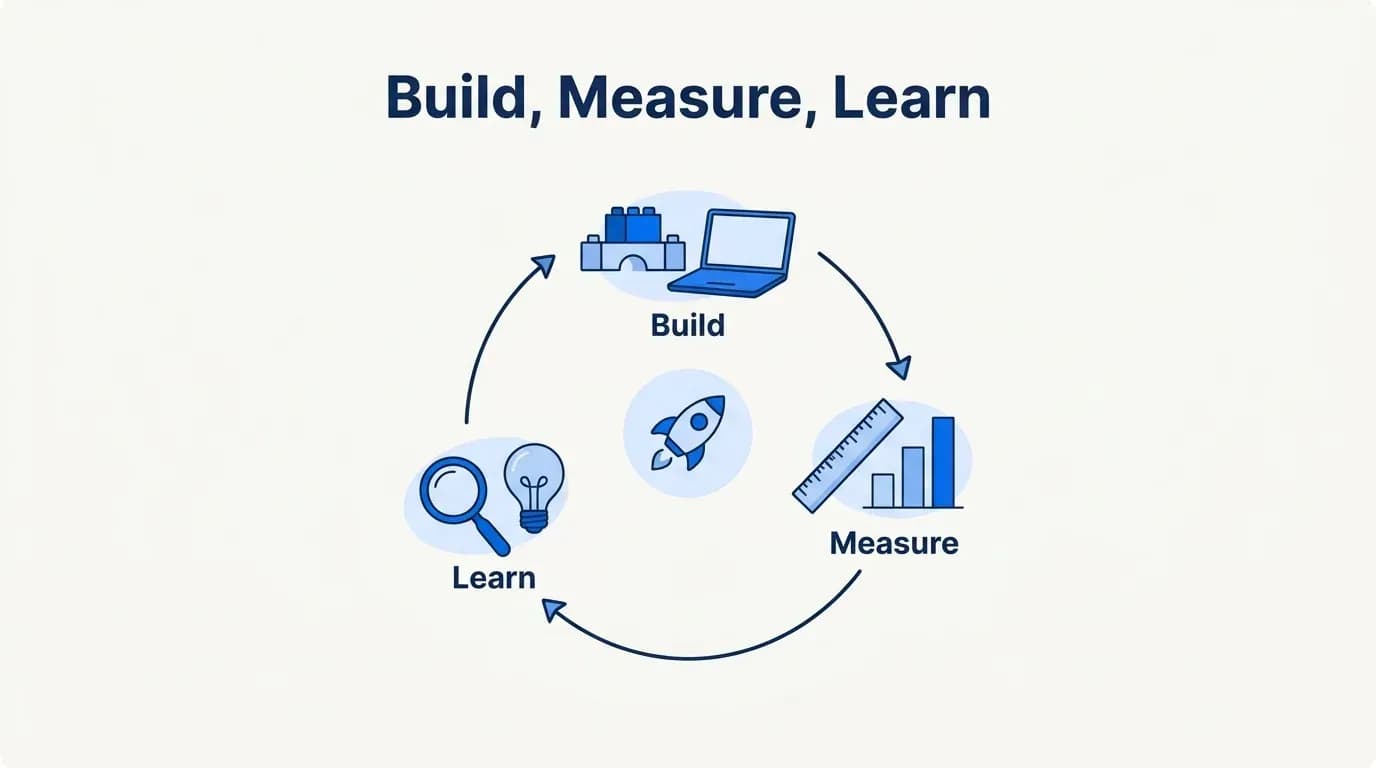
The early users are the real gold mine, failing to dig them well you’ll end up losing the game. If your progress does not show with your early user’s feedback, they may lose interest and seek alternatives.
And the worst case scenario is, by ignoring their input, you risk losing them to your competitors. The article by now must have made you take an informed decision after understanding what the “Build-Measure-Learn” cycle in Lean Startup stresses, MVPs should evolve based on feedback and market data.
10. Giving Up Too Soon
Building a successful MVP and achieving product-market fit can rarely be quick or easy. In addition to a few dollars, the process demands perseverance, resilience, and a willingness to learn from setbacks. Giving up too soon, often due to discouragement or impatience, can prematurely end an MVP’s journey before it has a chance to truly succeed.
Hope the need to have an MVP has convinced you enough. And the reality of having a successful MVP is all about staying in the loop and rolling with the punches. All you have to do to hit the set spot of product-market fit is to keep your spirits high and pave the way for growth. Just keep the momentum going. Worried about bumps in the road derail your journey?
Talk to the team at Appkodes. With our MVP software development experience, we help you build the version that tests your idea, then iterate on what users tell you. A custom MVP from Appkodes starts from $8,000, with a costed plan at a fixed price before work starts, and most first releases go live in about 30 days. Let’s talk.
Common questions
Why do software MVPs fail?
Most fail because founders misunderstand the MVP, ignore market research or the numbers, lose focus, plan the budget poorly, build for themselves, market to the wrong audience, chase perfection, stop iterating, or give up too soon.
What is the main purpose of an MVP?
To learn. As Eric Ries puts it, an MVP lets a team collect the maximum amount of validated learning about customers with the least effort.
How do I avoid MVP failure?
Define the essential features from real research, test with early users, measure honestly against wider data, keep the budget open for iteration, and repeat the build-measure-learn cycle until the product resonates.
Why do startups fail according to CB Insights?
Running out of cash or failing to raise capital (38%) and no market need (35%) are among the top reasons in CB Insights’ research on failed startups.
How much does it cost to build an MVP?
It depends on the features. A custom MVP from Appkodes starts from $8,000, with a fixed-price plan, and most first releases go live in about 30 days.

Arun Andiselvam
LinkedInI am a startup veteran who has built five brands. I sold the first, an SEO tool, for a six figure exit, and now lead Appkodes, building custom mobile and web apps for founders and businesses. I bootstrapped every one of them from day one.