How Smart Apps Handle Real-World Disruptions
When people use smart apps, they naturally expect them to work seamlessly, without issues.
This is because (most) people won’t think about how the application works, how it receives the data points it needs to work in the first place, and which factors can affect how the app functions (e.g., weather, outages, traffic, etc.).
When an app stops working perfectly, there’s no feedback because that’s what’s expected. However, when the app doesn’t, then users can quickly get frustrated, which ultimately leads to lost trust.
That’s why it’s SO important to create resilient software and place safeguards for when real-world disruptions do happen. This way, the app feels reliable, which really matters to users. If you’re thinking, I have an app idea, where do I start? Start by writing down your idea, who it’s for, and what problem it solves before building it.
What Counts as a Real-World Disruption?
When an app malfunctions due to issues related to code, you get a bug. Developers can analyze these bugs and fix them in updates/patch fixes.
But even if the code is flawless, issues can still persist. This has to do with the input data that the software received in order to operate. Here are the three most common examples:
- Traffic – For instance, a rideshare app may set inaccurate ETAs or may not account for road closures in real-time (even delays may cause inconveniences).
- Weather – Sudden heavy rain may cause delivery delays or full-blown cancellations.
- Resource outages – This doesn’t necessarily have to be due to an electrical outage. Software often uses third-party apps or APIs to operate accurately/effectively. If there’s an issue with any of these, your app will malfunction.
While none of these reasons is the fault of the business that created the app, the users won’t care. Not because they’re inconsiderate, but because they don’t know. From their perspective, the application doesn’t work – they don’t know WHY it doesn’t work. They just know the app isn’t doing what it’s supposed to do.
Naturally, frustration follows. Especially if the user heavily relies on that particular app.
How Apps Can Anticipate Disruptions and Adapt
Because users don’t differentiate bad app design and real-world disruptions, which developers have no control over, it’s extremely important to build the app with that in mind. Software that relies on third-party data must be built to be resilient.
One way to build resiliency is anticipation and adaptation in real-time.
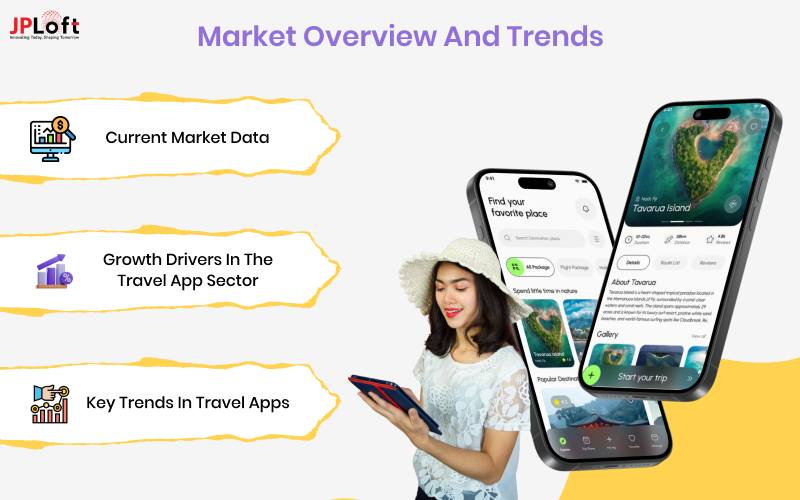
For instance, an application that relies on weather data (e.g., delivery, travel, rideshare, etc.) can use a reliable and powerful weather forecast API, because these will provide location-based predictions, which will enable the app to adjust ETAs accurately, it’ll be able to recommend safer/quicker routes, plus it will proactively alert app users of any potential delays.
Source: https://www.jploft.com/
This way, if the delay happens, the user is already prepared, but if it doesn’t, the user is even more satisfied. Win-win. Here are a few more strategies that can be leveraged to make apps more resilient/reliable:
Dynamic systems
Schedules and/or availability are updated instantly. For example, A food delivery app can apply cron-driven inventory sync jobs with a NoSQL store (e.g., DynamoDB) so that it shows sold-out menu items across all user sessions in real-time.
Real-time alerts
Keep users updated/informed. For example, A wallet/finance/banking app can use real-time monitoring hooks connected to its event-stream processor so that it can detect any API latency spikes and proactively send in-app alerts before the transaction times out.
Fallback Workflows
Offer alternatives when the primary service is unavailable. For example, A streaming platform can use multi-CDN failover via health-check load balancers with automatic rerouting. This way, if any one CDN edge experiences downtime, the stream platform’s player instantly switches to the backup endpoint (the user doesn’t notice anything).
Practical Strategies
Here are a few strategies often used by devs to create disruption-ready apps:
- Context-aware notifications
- Transparent messaging
- Integrations
- Automation
Consistent communication and usability form the foundation of positive user experiences. – Nielsen Norman Group, ‘UX Basics Study Guide’
Branding and marketing help direct how users perceive/trust an app (from the start and in the long run. That’s why it’s critical for businesses to align their brand with their product as soon as possible.
Combined with reliable external data, these practices help apps earn user trust during unpredictable situations, thereby reducing frustration and boosting reliability.
Predictive Analytics Counters Disruptions
Almost no one likes (unwanted) surprises. Especially so when they’re hungry and waiting for their food to be delivered, or when they’re late and their ride still hasn’t shown up. Most people can imagine themselves in similar frustrating situations.
An app that is reactive is often too late to the party. What modern apps need is predictability. Complex, smart algorithms (AI- and ML-powered) can be trained and data fed to create very accurate predictions in real-time. And software that doesn’t implement these features will be left behind by apps that do. Here’s an example:
REACTIVE suggestion
A rideshare app sends a notification, “Traffic on Main Street is blocked due to peak traffic hours; your ETA will be 12 minutes longer”.
A food delivery app warns you, “Due to heavy rain, some ingredients are delayed; your order might take a bit longer.”
PREDICTIVE suggestion
A rideshare app sends a notification, “Traffic on Main Street is building, take this route instead,” based on both yesterday’s rush and today’s weather.
A food delivery app warns you as soon as you choose your desired dish, “Are you sure you want this order? Due to heavy rain, some ingredients are delayed; your order might take a bit longer.”.
By providing you with an opt-out before you complete the order, you’re able to change your order. But even if you still want to commit, you at least won’t get a surprise because now you know what to expect if you stick with your choice.
It’s like you getting shot in the leg due to a slippery, icy surface on the pathway, and an app tells you, “Hey, you broke your leg. You should go to the hospital.” And then you’re all in pain thinking, “Gee, thanks, Sherlock!”.
A smart predictive app will locate you, take current and historical weather data, and the current time of day to assess the chance of ice being formed on the pathway, and will promptly warn you before you suffer an injury, giving you sort of a way out.
It’s really about making users feel in control.
Design for Emotional Resilience
As already mentioned, any delays, glitches, unexpected changes, errors, etc., will cause frustration.
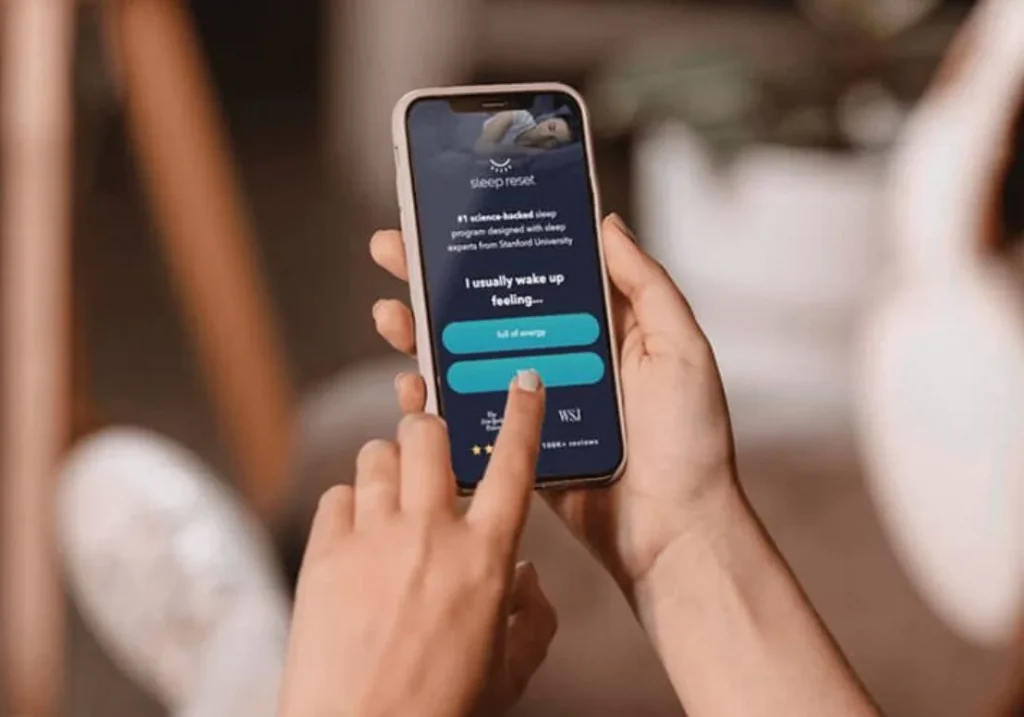
Developers who build apps with that human psychology in mind will program in a little nudge to calm the user (e.g., friendly message, humor, playful animation, etc.) to transform annoyance into patience.
Source: https://www.sleepfoundation.org/
It’s easier not to have your day ruined if there’s someone in your corner offering a supportive touch.
Imagine being SUPER hungry and your food still hasn’t arrived. Naturally, you’re annoyed and cranky, but the app reassures you with a notification:
“Oops! The delivery driver took the wrong turn and got lost in the mountains. After being rescued, your food is finally being delivered. ETA 5 minutes.”
Instead of:
“Your delivery is late. ETA +5 minutes.”
Sure, both will send the same message, but the first one will at least relieve some of the tension and perhaps discourage the user from leaving a bad review or complaining later – a much more effective approach than to coldly dismiss any accountability and leave the user to deal with their emotions.
Stress-Testing for Real-World Complexity
Before your app ever meets users, it needs to survive chaos. Stress-testing is like putting your app through a “storm drill,” seeing how it handles sudden surges, multiple problems at once, or weird user behavior. For example:
- Sudden spikes in traffic: Can your app handle 10x the usual orders without crashing?
- Multiple disruptions at once: How does it respond if an API slows down while traffic is bad?
- Unexpected user actions: Will it break if someone tries an unusual flow or input?
- Recovery drills: If something fails, can it bounce back smoothly without losing progress?
The goal is simple: make sure your app feels reliable and calm, even when everything else is messy. Users notice and they trust apps that can handle the unexpected.
Which Type of Business Benefits Most?
While every app can gain from being prepared for disruptions, some types of businesses feel the effects more directly.
On-demand services – Food delivery and rideshare platforms are highly dependent on timing, which also means that any unexpected traffic/weather conditions can cause disruptions that can only be swiftly solved by making real-time adjustments.
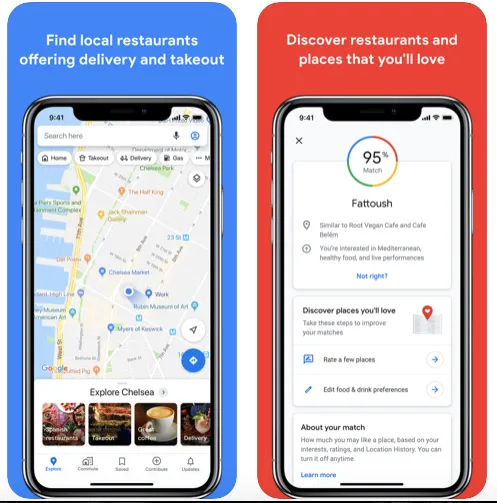
Travel/booking apps – Both booking and travel are highly affected by any real-world disruptions, such as flight delays, rideshare unavailability, road closures, increased/peak traffic hours, sudden changes in weather, etc. Flight delays, sudden storms, or changing local conditions can all affect bookings.
To manage such challenges efficiently, developers often integrate a comprehensive travel-API integration combining an API for flight status and schedules, hotel inventory & booking APIs, and transport/car-rental APIs to access live updates on delays, cancellations, real-time availability and booking options, ensuring travelers receive timely alerts and accurate itineraries.
Source: https://medium.com/
Food tech apps – Food choice and availability are highly dependent on supply, demand, and environmental factors (weather, crop conditions, etc.).
By integrating AI, ML, VR, and data analytics, these apps enable personalized nutrition, automated grocery lists for shopping, integrated food shopping/delivery services, recipe recommendations based on available ingredients, etc.
AgTech apps – Agriculture is sensitive to biotic (e.g., pests, pathogens, etc.) and abiotic (e.g., weather, water, soil, etc.) factors, meaning it greatly benefits from highly precise data points to optimize irrigation and crop monitoring.
This is made possible by integrating components such as IoT sensors, UAVs/drones, satellite imagery, AI and ML, machinery automation, Geo-mapping, big data analytics, decision-support systems, edge computing, etc., into these apps.
Any business in these (or similar) industries, regardless of whether it’s a startup or seasoned, can only increase its service quality and customer satisfaction level by adding reactive/adaptive mechanisms to its software products.
For instance, developers who are updating their knowledge on how to create a food delivery app will (or at least should) learn about these strategies and incorporate them into their architecture as core background-running features.
Only this way will the final application be considered dependable by the end user.
Conclusion
Even though there is no ‘perfect’ app, nor can real-world disruptions be completely avoided, what’s important is that we need to build apps in such a way that minimizes those disruptions.
If we don’t, the UX will dramatically fall off, which will in turn quickly snowball into an avalanche of bad user reviews, lower engagement levels, app abandonment, and lower rankings.
These factors, if left unchecked, can quickly cause irreversible damage to a whole brand.
Just think about how, in this age of the internet and social media, an app can quickly become popular, seemingly out of nowhere. But even faster, it can fade into irrelevance.
Appkodes helps you build apps that don’t just go viral, they stay relevant. With smart design and scalable technology, your app can grow stronger with every user interaction.


Thangamanikandan Bharathan
Starting as an iOS developer and moving up to lead a mobile team at a startup, I've expanded my expertise into Project Management, DevOps and eventually becoming a COO & Chief Service Officer in the IT sector. As a CSO, I excel in team leadership, technical advice, and managing complex business functions, focusing on combining technology and operations to drive growth. I'm keen to connect for collaborations or to exchange insights in the tech world!