Best MVP Strategy and Revenue Models for Medicine Doorstep Delivery Apps and Services

You’ve seen the stats: The Global Online Pharmacy Market is set to grow from USD 184.22 billion in 2024 to an expected USD 217.40 billion by 2031, and India alone is expected to leap from $30 billion in exports in FY25 to a domestic market of around $130 billion by 2030. On the surface, it looks like a goldmine.
But here’s the catch: most startups fail before they even scale. Why? Because the medicine delivery business is definitely not like selling shoes or groceries.
Picture this: a patient waits all day for a prescription. The offline pharmacy is overwhelmed. Delivery is late. The pills don’t match the prescription. A complaint lands because of that, and suddenly, you feel like your “innovative platform” is like chaos in motion.
Unlike other industries, errors here aren’t minor; they can jeopardize patient lives and invite regulatory scrutiny. Skip testing the core workflows first, and you’re gambling millions on assumptions:
Will pharmacies actually follow your system?
Will patients reorder?
Can deliveries happen on time across multiple zones?
Every misstep is amplified, and every flaw becomes a threat not just to growth, but to credibility. This is where a Minimum Viable Product becomes your secret weapon. A medicine delivery MVP isn’t about fancy features, flashy apps, or marketing blitzes but about proving the one thing that really matters:
Can your system reliably deliver the right medicine to the right patient, at the right time, while keeping pharmacies, healthcare providers, and regulators satisfied?
Start small, learn fast, and validate the essentials. Ignore this, and your big idea could collapse under its own weight before you even reach the first thousand users.
Curious how some startups like PillPack turned a tiny MVP into a multi-million-dollar platform acquired by Amazon?
In this guide, we explore the best MVP strategy and revenue models for medicine doorstep delivery apps and services, covering every step of the medicine delivery MVP development process that actually works.
Defining the Right MVP Scope (What to Build vs What to Skip)
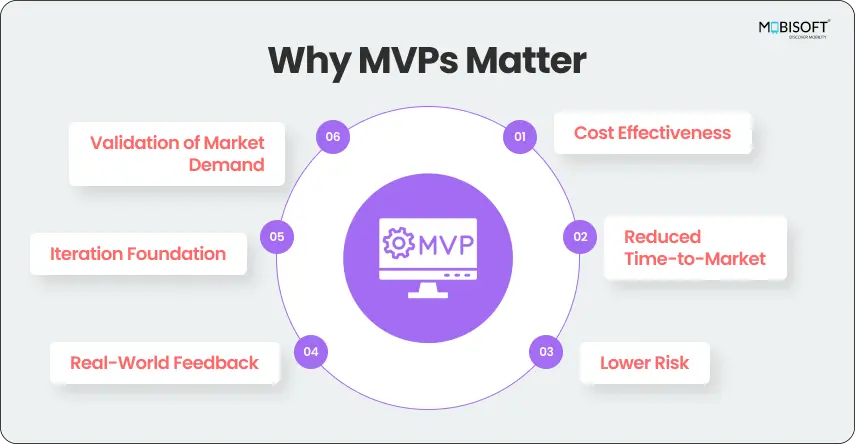
Defining the right MVP scope is crucial when building a medicine delivery platform. This pharmacy industry does not reward feature-heavy launches. Instead, success comes from solving a few critical problems extremely well while staying compliant with healthcare regulations like HIPAA.
A well-scoped MVP helps founders validate real-world operations without introducing unnecessary technical complexity.
Source: https://mobisoftinfotech.com/
Core Problems to Solve in the MVP
#1 Prescription Upload and Verification
Prescription handling is the foundation of any medicine delivery platform. The MVP must allow users to upload prescriptions easily. At this stage, the goal is to make sure every prescription is checked reliably and safely.
Simple, clear validation rules such as verifying dosage, cross-checking against patient records, and confirming prescriber credentials are enough to keep the system safe while proving the MVP’s reliability.
#2 Medicine Availability Check
Availability accuracy directly impacts customer trust. An MVP should confirm whether a medicine is in stock at the partnered pharmacy before an order is placed. Even a simple availability confirmation system helps reduce order cancellations, delivery delays, and user frustration.
This feature validates whether online pharmacy partnerships and inventory coordination are operationally viable.
#3 Order Placement and Delivery Tracking
Once a prescription is approved and a medicine is available, the order journey must be smooth and transparent. The MVP should support a simple checkout experience and provide clear order status updates until delivery. Visibility into the delivery process reassures users, especially when ordering essential or time-sensitive medications.
Features to Include in the MVP
#4 User-Branded App or Web Ordering (basic)
The user-facing interface should focus on usability rather than advanced design. Customers should be able to search for medicines, e-prescriptions, place orders, and track delivery status without confusion. At the MVP stage, reliability and clarity matter far more than personalization or visual polish.
#5 Pharmacist Verification Dashboard
Pharmacists need a dedicated space to review prescriptions, confirm availability, and approve orders efficiently. This dashboard acts as the compliance layer of the platform, ensuring that medical and legal checks happen before any medicine is dispatched. A simple, fast workflow is more valuable than complex features at this stage.
#6 Admin Order Management Panel
An admin panel is essential for monitoring operations during the MVP phase. It allows the team to track all orders, manage pharmacy partners, handle failed deliveries, and resolve issues in real time. This visibility helps founders identify bottlenecks and operational risks early.
Features to Exclude from the MVP
#7 Loyalty Programs
Loyalty systems are designed to improve retention, not validate demand. During the MVP phase, the priority is to confirm that users trust the service provider and complete orders successfully. Adding rewards for every successful order or referral rewards too early can help fix trust issues.
#8 AI-based Recommendations
AI-driven features require stable user behavior patterns and quality data to be effective. In an early-stage MVP, data is limited, and workflows are still evolving. Manual decision-making is often more accurate and easier to control at this stage.
#9 Multi-city Expansion Logic
Supporting multiple cities introduces complexity in regulations, logistics, and digital pharmacy operations. An MVP should focus on proving the model in a single city or zone before attempting to scale geographically. This approach reduces risk and provides clearer insights for future expansion.
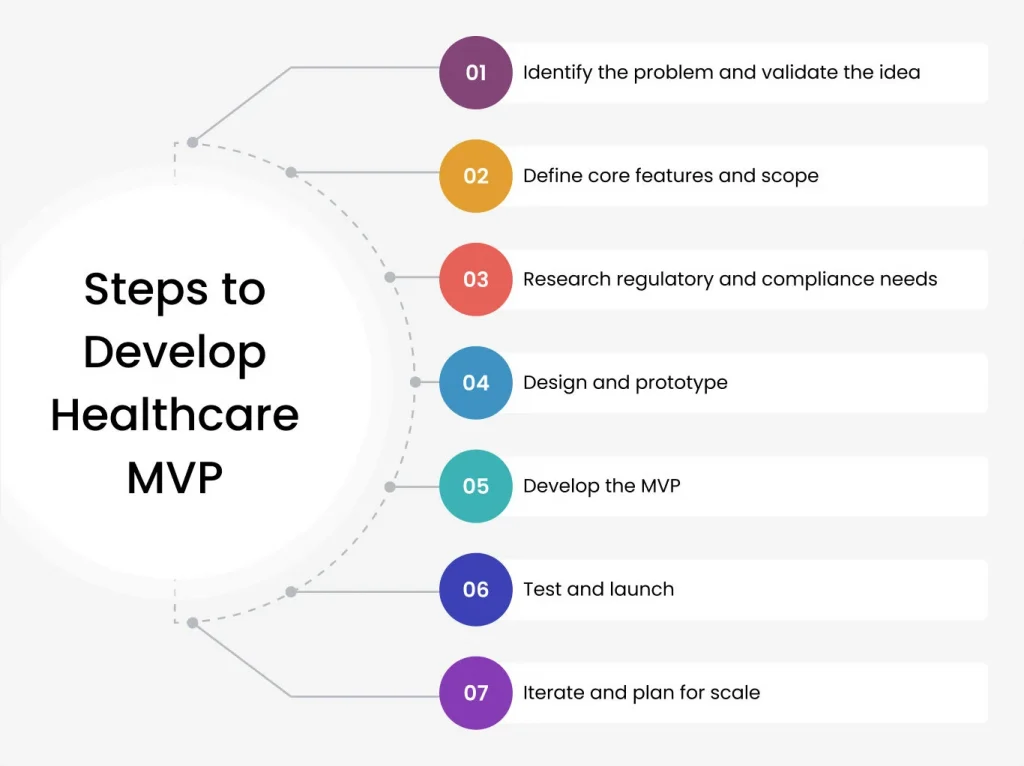
30-Day MVP Execution Timeline
Once the MVP scope is finalized, the next 30 days focus on execution. Following the best MVP strategy and revenue models for medicine doorstep delivery apps and services, this 30-day rollout ensures data encryption is implemented, customers can reliably engage with pharmacies, medication refill reminders drive retention, and multiple payment options streamline checkout.
Each week serves a clear purpose, with every feature designed to solve real operational needs.
Source: https://www.spaceotechnologies.com/
Week 1: System Architecture & Compliance Setup
The first week is dedicated to preparation. The technical team defines how different users, customers, pharmacists, delivery partners, and admins access the system. Prescription handling rules, data permissions, and audit visibility are configured to meet healthcare compliance requirements.
Basic security measures such as role-based access and encrypted data storage are also set up, so sensitive information is protected before real data enters the system.
Week 2: Core Workflow Implementation
In week two, the main user flows are built and connected. This includes prescription upload, pharmacist review, order approval, and order placement. A simple admin interface is added to monitor orders and resolve issues.
The goal is to ensure that a prescription can move smoothly from upload to approval to order creation without manual intervention or confusion.
Week 3: Pharmacy & Delivery Integration
Week three focuses on connecting real partners to the platform. Pharmacy accounts are onboarded, availability updates are tested, and delivery workflows are activated.
Notifications, order status updates, and dashboards are refined based on how pharmacies and delivery partners actually operate. Early feedback is used to fix delays, missing information, or handoff issues quickly.
Week 4: Controlled Launch & Stabilization
In the final week, the MVP is launched in a limited environment. Orders are closely monitored, delivery status updates are tracked, and support issues are handled as they arise.
Small improvements, such as clearer status messages or smoother approval steps, are released quickly. By the end of this phase, the MVP is stable, functional, and ready to support data-driven decisions for scaling.
Managing Digital Prescription Availability, Substitutions, and Secure Storage
Medicines are not always fully available. Stock shortages and brand-specific issues are common, and a medicine delivery MVP must handle these scenarios without disrupting patient care.
Approved substitution workflows allow pharmacists to suggest appropriate alternatives while staying compliant and avoiding confusion for patients. When designed carefully, these processes help maintain continuity of care even when inventory is inconsistent.
At the same time, digital prescriptions and related patient data must be stored securely, even at the MVP stage. This does not require heavy enterprise infrastructure upfront.
Lightweight, encrypted storage solutions can protect sensitive information while remaining cost-effective and manageable.
The goal is to balance security with operational simplicity, ensuring regulatory expectations, audit requirements, and patient trust are met without overcomplicating early-stage systems.
Revenue and Pricing Strategies for Your Medicine Delivery MVP
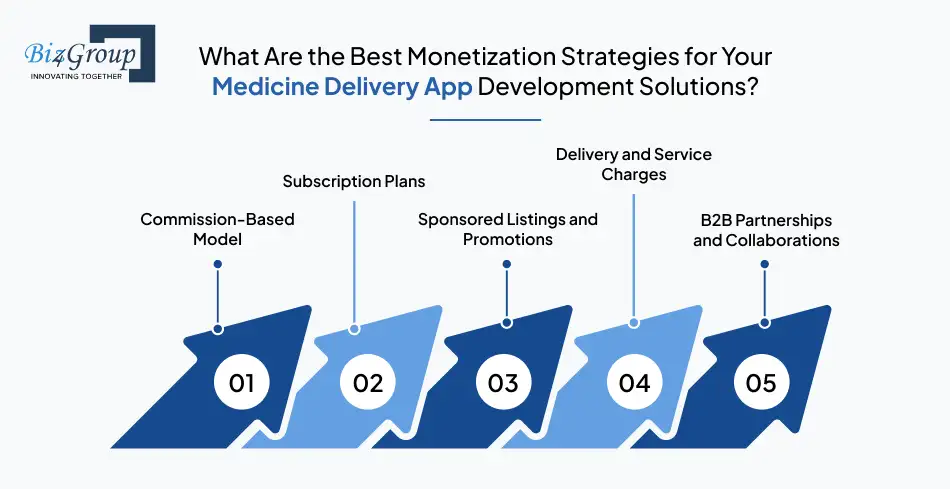
Monetization should be simple, transparent, and focused on validation. Along with the best MVP strategy and revenue models for medicine doorstep delivery apps and services, the goal is not to maximize profits but to understand whether users are willing to pay and whether operations can sustain basic delivery.
1. Per-Order Delivery Fee
Start with a flat fee per order (e.g., $3–$7 depending on distance). This covers last-mile logistics, gives immediate visibility into delivery costs, and is easy for users to understand. Consider offering free delivery above a minimum order threshold (e.g., $25–$30) to encourage consolidated purchases and reduce per-order costs.
2. Pharmacy Commission (Marketplace Model)
If your platform operates as a marketplace, earn a commission (8%–15%) on every successfully fulfilled order by partner pharmacies. This model scales with order volume without requiring inventory management.
3. Medicine Margin (Inventory-Led Model)
For platforms that manage their own stock, revenue comes from margins on medicines sold (typically 10%–20%, depending on type and regulations). Tight control over procurement, storage, and fulfillment is crucial for profitability.
4. Subscriptions for Regular Users
Offer simple monthly subscriptions ($9–$15/month) for users who order medicines regularly. Benefits can include recurring deliveries, discounted or free delivery, or curated medicine kits. This builds predictable revenue and encourages loyalty without complicating the user experience.
5. Express or Priority Delivery Options
Some users value speed over price. Offer optional same-day or express delivery for an additional fee ($5–$10) and track adoption to understand price sensitivity and identify high-value segments.
6. Late-Hour or After-Hours Service Fee
Orders placed during nights or weekends often cost more to fulfill. Adding a small surcharge helps balance operational costs and ensures fair compensation for delivery partners.
7. Bundled Prescriptions for Efficiency
The group frequently ordered medicines into ready-to-go bundles (e.g., vitamins, chronic medication kits). Bundles simplify ordering, increase average order value, and improve fulfillment efficiency.
8. Avoid Heavy Discounts Early
Deep discounts can attract one-time, price-sensitive users and mask operational issues. Focus on reliability, accuracy, and transparency; these create trust and long-term loyalty.
9. Continuous Monitoring and Adjustment
Use the first 30 days to review order patterns, cancellations, and user feedback. Adjust delivery fees, subscription options, and premium services in small increments based on real data. Pricing at this stage is a learning tool to guide a scalable, trust-driven strategy.
Source: https://www.biz4group.com/
Pro Tip: Treat pricing as a way to validate user behavior and operational readiness. Simple, transparent models will help you build a loyal customer base while collecting insights to scale sustainably.
Unit Economics to Track from Day One
Unit economics tell you whether each order is helping or hurting the business. Tracking these numbers early prevents hidden losses and keeps scaling decisions grounded in reality.
a. Cost Per Order
Start by calculating the full cost of a single order. This includes delivery payouts, pharmacy handling costs, customer support time, and any operational overhead tied directly to fulfillment.
Knowing this number helps you spot inefficiencies quickly such as high delivery costs in certain areas or repeated manual intervention in orders.
Track the cost per order daily and compare it across locations and delivery slots.
b. Gross Margin Per Order
Gross margin shows how much money is left after fulfilling orders. Subtract pharmacy payouts, delivery costs, and payment fees from the revenue earned on that order.
If margins are thin or negative, it signals a need to adjust pricing, commissions, or delivery strategy before volume increases.
Review margins weekly and flag orders that consistently lose money.
c. Pharmacy Payout vs Platform Revenue
Comparing what the platform earns versus what is paid to pharmacy partners reveals whether partnerships are sustainable.
If pharmacy payouts consume most of the revenue, growth will only increase losses.
Monitor average commission per order and renegotiate terms if margins tighten.
d. Break-Even Signals
Break-even does not mean profitability; it means the model is structurally sound. Even at low order volumes, you should see costs stabilizing and margins improving with small optimizations.
Identify how many orders per day are needed to cover fixed costs and track how close you are to that number.
Why This Matters in the MVP Phase
Strong unit economics allow you to scale with confidence. Weak unit economics force painful corrections later.
By tracking these metrics from the outset, founders, pharmacy chains, and delivery operators can optimize operations, adjust pricing, and grow sustainably without risking financial instability.
Metrics That Decide MVP Success or Failure
At the peak of the COVID-19 pandemic, a delayed medicine order wasn’t an inconvenience; it was a crisis. Delivery personnel were racing against time, while users tracked deliveries on their phones, refreshing screens.
In moments like these, an MVP is judged ruthlessly. Not by pitch decks or projections, but by hard metrics that expose trust, reliability, and execution.
1. Orders Per Day Per locality
This metric shows whether there is a real rising demand for your service in each area. For pharmacy owners and delivery operators, it highlights which localities are generating consistent volume and which may need additional marketing or operational support. For founders, it helps identify high-potential zones for expansion and validates early assumptions about customer adoption.
2. Repeat Purchase Rate
A high repeat purchase rate indicates that customers trust your platform, feel confident in prescription handling, and are satisfied with delivery reliability. For pharmacy partners, this reflects effective fulfillment and pharmacist workflows, while founders can use it to gauge product-market fit and loyalty, especially among chronic or recurring users.
3. Prescription Rejection Rate
Tracking how many prescriptions are rejected or flagged for errors helps pinpoint issues in prescription capture, pharmacist verification, or inventory availability. Pharmacy owners can use this data to improve verification processes, while founders can identify UX or operational bottlenecks that prevent successful orders.
4. Delivery TAT (turnaround time)
The time it takes from order placement to doorstep delivery is a key operational KPI. Monitoring delivery TAT ensures that logistics are efficient, partner pharmacies are processing orders on time, and delivery partners meet customer expectations. Consistently high TAT can signal the need for additional delivery capacity or workflow adjustments.
5. Support Tickets Per 100 Orders
This metric shows how many issues customers encounter relative to the volume of orders. It captures gaps in the user experience, prescription handling, and last-mile delivery operations. Pharmacy operators and platform founders can use this information to improve SOPs, train staff, or refine the MVP before scaling.
Source: https://graffersid.com/
Post-MVP Revenue Strategies for Medicine Delivery Apps
Once your MVP is validated, the focus shifts from proving the concept to unlocking sustainable revenue streams that can fuel the growth of your medicine delivery app development.
One of the most reliable strategies is chronic care and refill-based subscriptions think monthly deliveries for patients on long-term medications. Not only does this ensure predictable revenue, but it also builds patient loyalty, turning occasional users into repeat customers.
Next, explore B2B opportunities with clinics and hospitals. By fulfilling prescriptions on behalf of healthcare professionals, your platform earns consistent revenue while strengthening trust and partnerships.
Similarly, corporate and insurance companies can open up high-volume channels by integrating medicine delivery into employee wellness programs or insurance benefits.
As the platform matures, consider private-label medicines or high-margin SKUs but only when operational scale and reliable demand are in place. Done right, these products can significantly boost profitability without compromising patient trust.
This approach transforms your validated MVP into a profitable and resilient medicine delivery platform, the kind that can grow confidently like 1mg or other leading healthcare players.
Why Appkodes Helps MVPs Win in Healthcare
Creating a successful medicine delivery platform isn’t just about building an app; it’s about following the best MVP strategy and revenue models for medicine doorstep delivery apps and services to design a system that operates reliably in the complex and unpredictable pharmaceutical industry.
Many startups struggle because they approach healthcare like a standard digital product, underestimating real-world challenges such as inventory fluctuations and time-critical deliveries.
Appkodes, a leading startup mobile app development company, approaches MVPs as living systems, not just software. As an experienced company, we build medicine delivery platforms that adapt to daily realities like sudden stock changes, urgent patient requests, and multi-step verification.
Core capabilities such as end-to-end encryption, a robust admin panel, and secure payment gateways are integrated from the start to ensure safety and control.
Beyond launch, every MVP is designed with resilience in mind. Features like multiple payment choices, proof of delivery, GPS tracking, and app referral rewards help platforms improve and encourage organic growth.
Built using scalable technologies such as React Native development, these systems allow startups to validate ideas quickly and expand without rebuilding the core architecture.
With Appkodes, an MVP is a timely delivery ecosystem tailored for your business. Gain a future-ready platform designed to grow alongside real operational demands.

Arun Andiselvam
Founder of AppKodes. As a serial entrepreneur, I have successfully established five brands over the past 12 years. After creating a successful rank tracker for SEO agencies, I am currently dedicated to developing the world's first SEO Project Management software.