The Importance of Cybersecurity as a Selling Point for Apps
Think about the last time you opened a mobile banking app, ordered food through a delivery app, or logged into a health portal. Without hesitation, you handed over sensitive information, your financial records, health details, or location data, and trusted the app to keep it safe. But here’s the question: are apps keeping up with the rising expectations of user trust?
The reality is brutal. According to IBM’s 2024 Cost of a Data Breach Report, the global average cost of a data breach is $4.45 million, and the healthcare sector is nearly double that. This marks the importance of cybersecurity as a selling point for apps.
Meanwhile, 75% of consumers will stop using an app if they don’t feel their data is secure (PwC Digital Trust Insights). These numbers tell us one thing: cybersecurity is no longer a back-end concern; it’s a front-end feature that influences user choice and brand loyalty.
The frequency and sophistication of cyber attacks have increased dramatically, partly driven by AI-powered attacks that can adapt faster than traditional defences.
Today’s users are more educated and more cautious than ever before and are looking for apps that make security visible — whether through transparent privacy policies, multi-factor authentication, or end-to-end encryption.
For developers and companies, this is a challenge and an opportunity. Strong security isn’t just about avoiding breaches; it’s now a key factor in brand reputation, user retention, and competitive differentiation. Gartner predicts that by 2026, 80% of users will choose an app based on its trust and security features.
So the question is: is your app an afterthought or a selling point that wins user loyalty?
Cyber Threats
According to recent global reports, the cost and impact of data breaches continue to climb annually. Even in 2021, an FBI report showed that cyberattacks cost the United States $6.9 billion that year alone (per Revelo). Software system vulnerabilities accounted for most of these losses.
In 2024, several high-profile breaches exposed the records of millions of people. In November 2023, the Australian Cyber Threat Report documented a rising trend of large-scale attacks, affecting critical infrastructure as well as consumer-facing businesses.
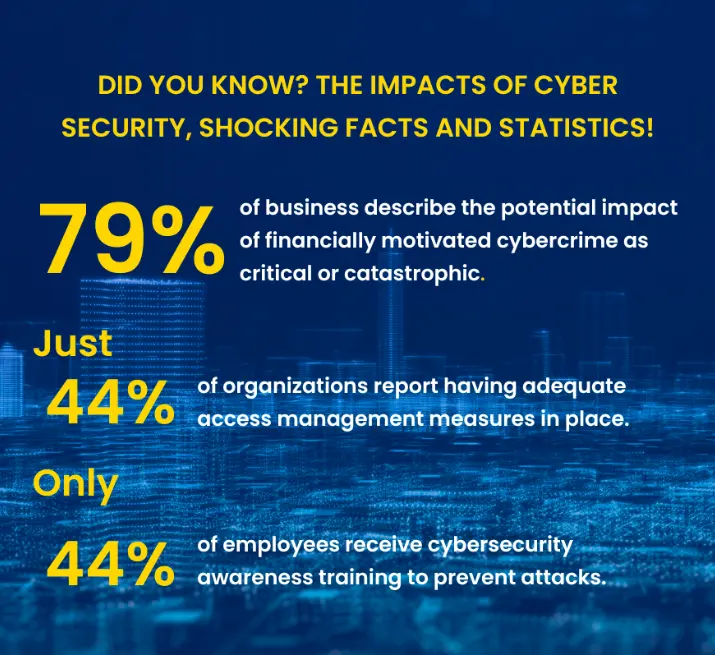
The fallout of a breach can be severe: loss of user confidence, damaging headlines, regulatory investigations, and financial penalties. Organizations can spend years and millions of dollars rebuilding credibility and customer bases after a major incident. And the reputational damage may be lasting: a report from Total Retail showed that 66% of users have uninstalled apps over data concerns.
Source: https://www.theknowledgeacademy.com/
User Expectations and Market Demands
Where once users might have taken security for granted, now they expect transparency, safeguards, and proper incident response if something does go wrong.
Mobile and web app reviews increasingly mention security features (or lack thereof) as deciding factors for downloads. This means security isn’t just a back-office development goal, but vital to user acquisition and retention. In Appdome’s 2024 consumer survey on user expectations of mobile security, around 69% of respondents “expressed a willingness” to cancel their accounts and delete apps that didn’t effectively protect their data.
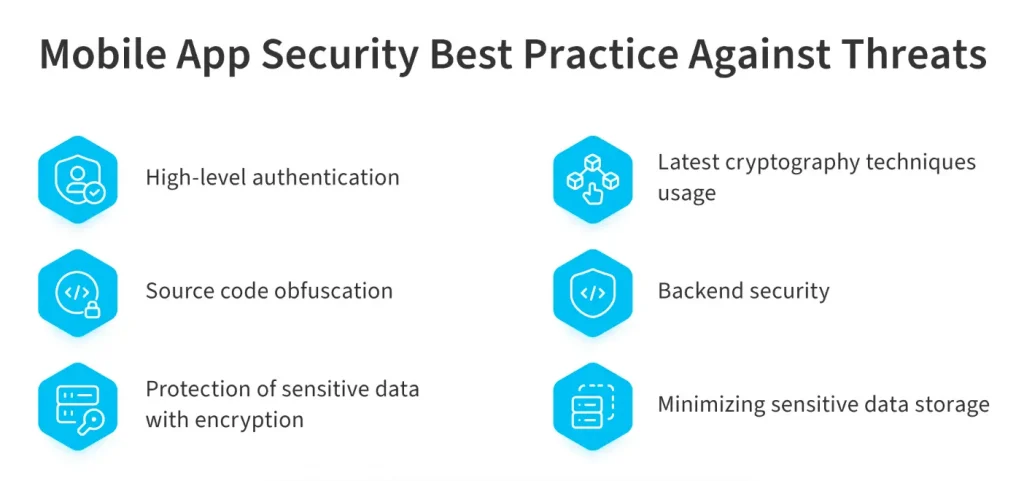
Cybersecurity Best Practices for App Development
Developers, product managers, and company leadership must align on proactive measures throughout the software lifecycle. Here are six best practices:
1. End-to-End Encryption
Encryption converts sensitive data into unreadable formats unless properly authorized. Strong end-to-end encryption ensures data is shielded both in transit (over networks) and at rest (in storage). This is critical for apps handling any form of PII (personally identifiable information), payment information, or user-generated content.
2. Regular Security Audits and Penetration Testing
Routine audits, both internal and third-party, can detect and patch vulnerabilities before they’re exploited. Effective audits include:
- Manual and automated code reviews.
- Simulated attacks (penetration tests) to find weaknesses.
- Security scanning for open-source components and APIs.
- Frequent updates and patch management to deal with emerging threats.
3. Authentication and Access Controls
Adopting multi-factor authentication (MFA) is a baseline requirement. Other measures include:
- Minimizing privileges – users should only access data or features relevant to their needs.
- Regularly expiring sessions and tokens.
- Securing API endpoints with strong authentication.
- Biometric authentication options (fingerprint, facial recognition).
4. Secure Storage and Transmission of Data
Never store sensitive information or credentials in plain text, configuration files, or easily accessible device databases. Use secure vaults and key management systems for app secrets and encryption keys. Implement HTTPS/TLS for all app communications.
5. User Education
Educating users about security features (such as how to enable 2FA, recognize phishing attempts, or update passwords) allows them to take a more active role in their protection.
More users are becoming privacy-conscious and wanting to regain control over their digital footprint. Data breaches don’t only occur when hackers access users’ data directly from apps – they also happen when data brokers collect, store, and trade personal information without active consent.
Data removal tools, such as Incogni by Surfshark, automate the process of contacting hundreds of data brokers and requesting the deletion of personal information. This reduces risks tied to identity theft, spam, and unwanted exposure.
6. Transparent Communication in the Event of Breach
If a breach occurs, immediate and direct communication is important. Companies should clearly describe what happened, what was affected, the steps users should take to protect themselves, and a timeline for resolution.
Then there should be ongoing updates during the investigation. Transparency helps meet legal obligations, mitigates reputational damage, and reaffirms user trust.
Source: https://nix-united.com/
Case Study #1: Change Healthcare Data Breach
In February 2024, Change Healthcare (one of the largest healthcare technology companies in the US) suffered the largest healthcare data breach of the year. Attackers (affiliates of the BlackCat/ALPHV ransomware group) exploited compromised credentials for a Citrix portal, which lacked multifactor authentication.
Ransomware encrypted critical files, and the attackers exfiltrated the protected health information (PHI) of around 190 million people, accounting for 69% of all breached health records that year.
This incident not only exposed vulnerabilities in cybersecurity protocols but also highlighted the risks tied to healthcare data integration, where vast amounts of sensitive patient information are centralized across interconnected systems.
Response
Change Healthcare’s response was to shut down affected systems, notify authorities, and issue mass notifications to affected people months later.
- The breach caused huge disruption, with pharmacies and healthcare providers unable to process insurance claims and some patients unable to fill prescriptions unless paying out of pocket.
- There were investigations from lawmakers, questioning both the lack of basic security controls (like multifactor authentication) and the systemic risks of industry consolidation.
Authentication, timely patches, and transparent incident response are crucial. The delayed notification and unpreparedness only made the operational and reputational damage worse.
Case Study #2: LoanDepot Data Breach
In February 2024, LoanDepot (the mortgage lender and financial services provider) experienced a major data breach when hackers accessed and exfiltrated sensitive data belonging to almost 17 million customers. The information included names, Social Security numbers, financial account data, and contact details. The breach severely disrupted operations for weeks, leaving customers unable to access online accounts or make payments.
Response
- LoanDepot initiated emergency protocols, worked with cybersecurity experts, and notified customers and regulators.
- They offered customers free identity theft and credit monitoring services.
- The company also pledged to reinforce internal security architectures and better protect data.
Key remediation steps included comprehensive security audits, regular penetration testing, rapid communication with users, and system-wide upgrades – all best practices for finance or banking app providers.
The Business Case for Cybersecurity: Competitive Advantage
In saturated markets, app security is a differentiator. Cyber security consultants play a crucial role in ensuring apps are perceived as “secure by design,” making them more likely to win skeptical users. This is especially important when trust is paramount, such as in banking, health, and shopping apps.
Regulatory Compliance
Modern regulations (GDPR, HIPAA, PCI DSS, CCPA, and local cybersecurity laws) necessitate proper technical and procedural safeguards. Non-compliance can result in fines, bans, and expensive audits. Following standards provides a third-party signal to users that a business takes protection seriously.
Financial and Operational Impact
A single breach can cost millions through response, legal claims, lost users, and remediation. Investing in prevention is far cheaper than recovery. Cybersecurity is an investment in continuity and profitability.
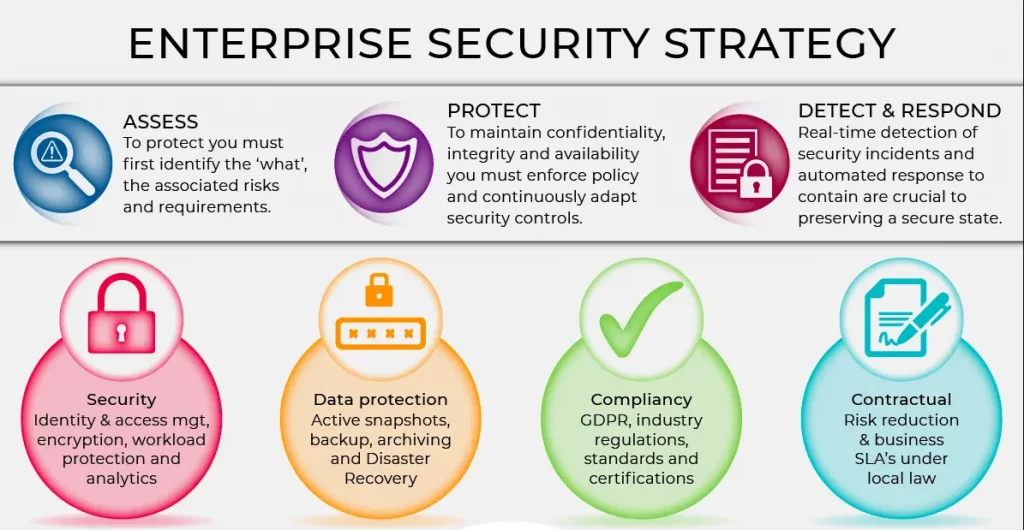
Cybersecurity Throughout the App Lifecycle
The most effective cybersecurity strategies are baked in from the earliest design phases – security by design. This includes:
- Assessing threat models and data flows before coding.
- Using DevSecOps: integrating security into Continuous Integration/Continuous Deployment (CI/CD) pipelines.
- Keeping dependencies, libraries, and tools updated.
- Regularly train development teams on new attack vectors and secure coding practices.
- Monitoring app usage and system logs for anomalies after release.
Modern low-code/no-code development platforms include security modules that automate many routine checks, making security accessible to smaller development teams.
Source: https://deltalogix.blog/
Communicating Security to Users and Stakeholders
Transparency and clarity in security posture are just as important as technical controls. Utilizing a CRM for security companies helps centralize client communications, security updates, and compliance documentation in a single system. This includes:
- Clearly written privacy policies.
- User-facing security dashboards or “safety centers” where users can manage alerts, permissions, and account security.
- Public commitments to ongoing audits and vulnerability disclosures.
- Certifications or compliance badges (ISO, SOC2, GDPR-compliance, etc.) visible in app stores and on websites.
Takeaway
The trends indicate that cybersecurity will continue to increase in importance in the coming years, particularly with the rise of IoT and health apps that expand the sensitive data footprint.
At the same time, AI-driven attacks are becoming more sophisticated, and consumers are demanding stronger privacy protections. In this environment, apps that position cybersecurity as a core selling point are far more likely to build trust and long-term loyalty.
This is where working with professional AI app development services can make a difference. Experienced teams can help founders integrate advanced security measures, such as encrypted data storage and AI-driven threat detection, directly into the product architecture.
That way, your SaaS not only delivers innovation but also wins user confidence by making security a foundational promise.

Thangamanikandan Bharathan
Starting as an iOS developer and moving up to lead a mobile team at a startup, I've expanded my expertise into Project Management, DevOps and eventually becoming a COO & Chief Service Officer in the IT sector. As a CSO, I excel in team leadership, technical advice, and managing complex business functions, focusing on combining technology and operations to drive growth. I'm keen to connect for collaborations or to exchange insights in the tech world!