Is Innovation Essential for Strategic Decisions?

Strategic decisions without innovation are just expensive ways to lose slowly. Every company talks about innovation driving strategy, but most treat it like a garnish on a plate or a nice to have, not essential. Meanwhile, their “strategic” plans are just incremental tweaks to failing models.
Real strategic innovation requires managing your innovation portfolio like an investment fund, not a suggestion box. We’re talking about systematic approaches to identifying and deploying new capabilities that actually change competitive dynamics.
The Strategy Graveyard
Blockbuster had a strategy. So did Kodak, Borders, and Toys”R” Us. They made strategic decisions based on protecting existing revenue, not creating new value. They optimized what they had instead of building what they’d need.
Every quarterly earnings call, they explained why innovation was too risky. Then Netflix, digital cameras, and Amazon explained why not innovating was fatal.
The average lifespan of S&P 500 companies dropped from 61 years in 1958 to 18 years today. That’s not natural selection. That’s companies making strategic decisions without innovation components. They’re strategically planning their own funerals.
Innovation Isn’t R&D
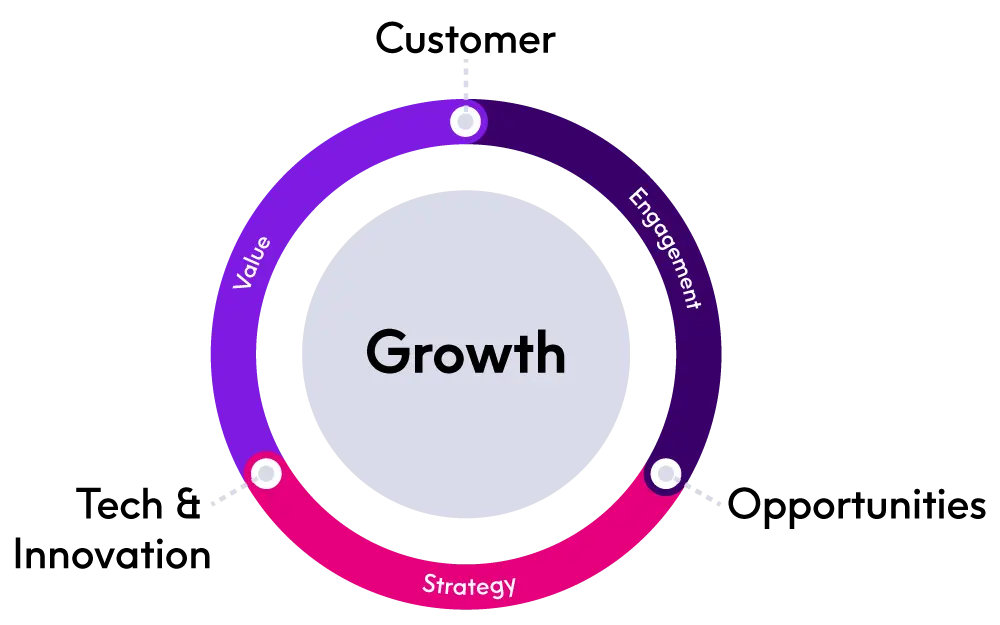
Most executives think innovation means R&D budget increases. Innovation is value creation. You can invent forever without innovating once. Xerox PARC invented the future, then watched Apple and Microsoft innovate with their inventions. The difference? Strategic integration.
Source: https://www.precisely.com/
Real innovation strategy means connecting new capabilities to business models. Uber didn’t invent GPS, smartphones, or payment processing. They innovated by combining existing technologies into new value propositions. Their strategic decision was to see transportation as a software problem. The innovation was execution, not invention.
The Portfolio Problem
Companies treat innovation like lottery tickets. Throw money at random projects, hope something hits. That’s gambling, not strategy. Strategic innovation requires portfolio thinking with different risk levels, time horizons, and monetization strategies. Like any investment portfolio, diversification matters.
Core innovations improve existing business. Adjacent innovations expand into related markets. Transformational innovations create new markets. Most companies put 90% into core, 10% into adjacent, and nothing into transformational.
Then wonder why disruption surprises them. McKinsey’s data shows optimal allocation is 70-20-10. The companies following this outperform their peers by 10-20%.
Making Quick Decisions
Strategic decisions used to have five-year horizons. Now they have five-month windows. Innovation cycles accelerated from decades to quarters. Waiting for perfect information guarantees missing opportunities. Strategic innovation means making decisions with incomplete data but complete frameworks.
Amazon’s “Day 1” mentality isn’t motivational nonsense. It’s recognition that strategic decisions require startup speed at enterprise scale. They make more strategic bets in a quarter than most companies make in a decade. Most fail. The ones that succeed pay for all failures plus massive returns.
A Practical Framework
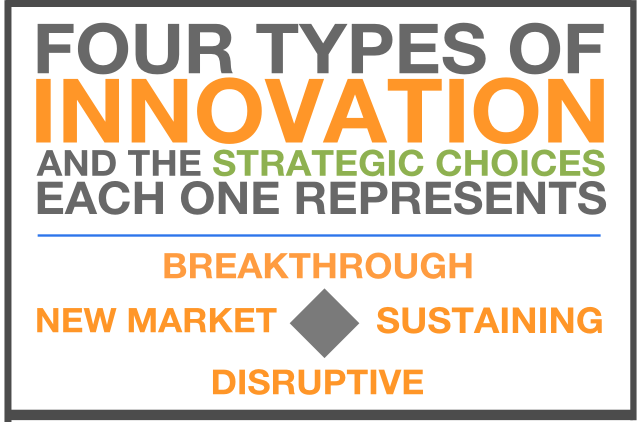
Innovation can feel abstract, but companies can apply a simple, actionable framework to make it concrete. Think in terms of Core-Adjacent-Transformational:
- Core: Improve and protect your existing business. Consider what small changes could increase value for your current customers.
- Adjacent: Expand into related markets or offerings. Think about the capabilities or assets you could leverage to create new revenue streams.
- Transformational: Create new markets or business models.
Going back to the abstract for just a second, try to build an innovation mindset. In practical terms, this could mean asking each day: “Why are we doing this task this specific way? Is there a better way?”
Source: https://www.ignitionframework.com/
Embrace calculated risk. Try to treat failures as learning opportunities, rather than with shame. Look outside your industry for inspiration, as breakthrough ideas might come from unrelated spaces. Then try to iterate quickly: prototype, test, refine, repeat.
Here’s a checklist any entrepreneur or business can use:
- Does this decision open new opportunities?
- Does it balance short-term returns with long-term potential?
- Have we explored adjacent or transformational alternatives?
- Can we test quickly and scale?
- Are we allocating resources proportionally across Core, Adjacent, and Transformational bets? (Some companies use the 70-20-10 rule, with 70% of their effort and ideas dedicated to core innovation.)
Using such a framework doesn’t guarantee every strategic decision succeeds, but it makes sure innovation isn’t an afterthought.
Innovation is Essential
Innovation without strategy is chaos. The integration point is where value lives. But most companies separate innovation labs from strategy teams. Different buildings, different budgets, different scorecards. No wonder nothing connects.
Strategic decisions must have innovation components baked in, not bolted on. Every market entry should include innovation pathways. Every competitive response should consider innovative alternatives.
Every resource allocation should factor in innovation potential. Otherwise, you’re just rearranging deck chairs on the Titanic, strategically. Companies that unify these functions by partnering with solution builders like Appkodes create a tighter loop between strategy, execution, and innovation impact.

Thangamanikandan Bharathan
Starting as an iOS developer and moving up to lead a mobile team at a startup, I've expanded my expertise into Project Management, DevOps and eventually becoming a COO & Chief Service Officer in the IT sector. As a CSO, I excel in team leadership, technical advice, and managing complex business functions, focusing on combining technology and operations to drive growth. I'm keen to connect for collaborations or to exchange insights in the tech world!