Why Product Page Optimization Matters More Than Backlinks in E-commerce SEO
For years, e-commerce SEO followed a familiar rule. Build links, more links, and rankings will follow. That rule still works, to a point. But it misses something far more immediate. The place where buying decisions actually happen. Product pages. If search brings people to your store, product pages decide whether they stay, trust you, and buy.
The Real Value Behind Product Pages
The product page is the closest thing to a sales conversation you have online. When a shopper lands on a product page, they are already invested. What they need next is clarity. Proof. Reassurance. To instill that on your product pages, you can hire the best SEO company for e-commerce. Or just use a platform that supports structured content, clear layouts, and consistent data.
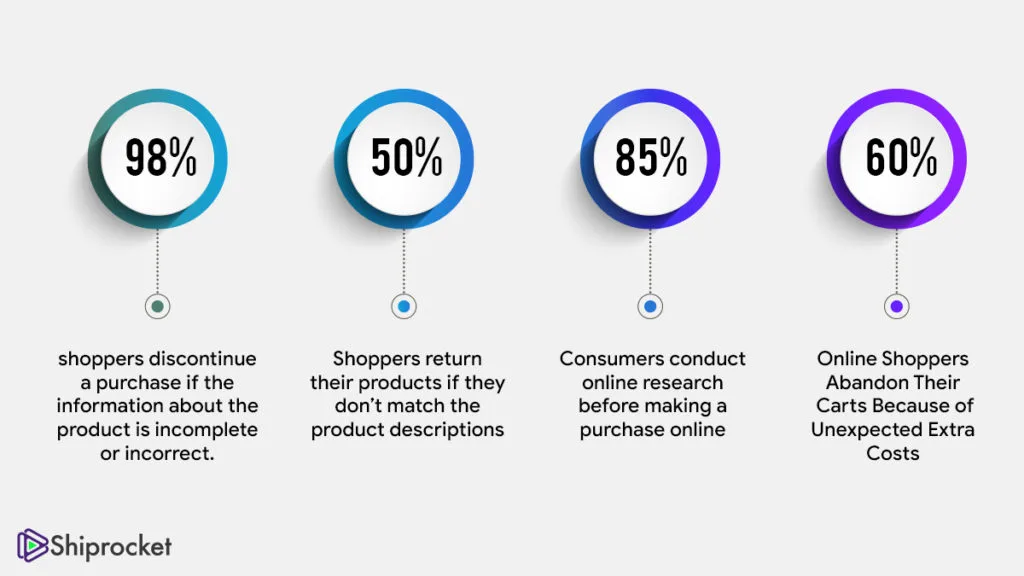
Stores that focus on improving product pages often see faster results than those chasing backlinks alone. In many audits, simple fixes like clearer titles, structured specs, and better images lead to double-digit lifts in conversion rates within weeks. No new links required.
That kind of impact is hard to ignore.
Source: https://www.shiprocket.in/
Where SEO and UX Actually Meet
Search engines reward if your product page eases the decision-making process. Meanwhile, shoppers reward pages where buying is super smooth.
You don’t realize but these goals often overlap. Well-optimized product pages tend to share a few traits:
- Clear product titles that match how people search
- Fast load times and mobile-friendly layouts
- Structured information instead of long paragraphs
- Images that show use, scale, and detail
When these basics are missing, visitors leave. Even if the page ranks well. Backlinks cannot fix confusion.
Keywords are Signals, Not Decoration
Keywords still matter. But not as filler.
Strong product pages use keywords the way buyers use language. In titles, specifications, and feature lists.
For example, a laptop page that repeats “best laptop” five times is less helpful than one that clearly answers questions about battery life, weight, processor type, and use cases. Search engines pick up on that difference because users do.
This is where structured product content matters. Platforms like Appkodes, which help teams standardized titles, attributes, ephemeral content and descriptions across thousands of products, make this process scalable. It becomes less about guessing and more about consistency.
Content That Removes Doubts Converts Better
Good product content does not persuade by hype. It persuades by removing doubt. That means:
- Explaining what the product does and who it is for
- Showing dimensions, materials, and real use scenarios
- Including comparison points when alternatives exist
Shoppers rarely abandon carts because of backlinks. They leave because they’re unsure.
When product pages answer questions before they are asked, conversion rates rise. Many stores see measurable improvements simply by adding clearer FAQs, comparison tables, or use-case imagery. As per a study, adding FAQs on product pages alone can uplift your conversion rate by 12.51%.
Internal Linking Builds Confidence and Context
Internal links are as important for people as they are for SEO crawlers.
When a product page links to compatible accessories, alternatives, or upgrades, it guides decision-making. It also increases average order value (AOV) without pushing harder sales copy.
From a search perspective, internal links help distribute authority across your catalog. From a user perspective, they prevent dead ends. Both matter.
Source: https://www.optimonk.com/
Backlinks Matter but Aren’t Everything
External links still signal credibility. They help search engines understand trust and relevance. But links work best when they point to pages worth trusting.
A product page with thin content, slow performance, or unclear messaging will underperform even with strong backlinks. Meanwhile, a well-built product page often ranks and converts better with fewer links.
This is why many modern e-commerce teams shift focus. They invest first in product page foundations, then amplify them with external signals. As part of this strategy, a link building agency can help secure high-quality backlinks that enhance authority and drive more qualified traffic to optimized product pages.
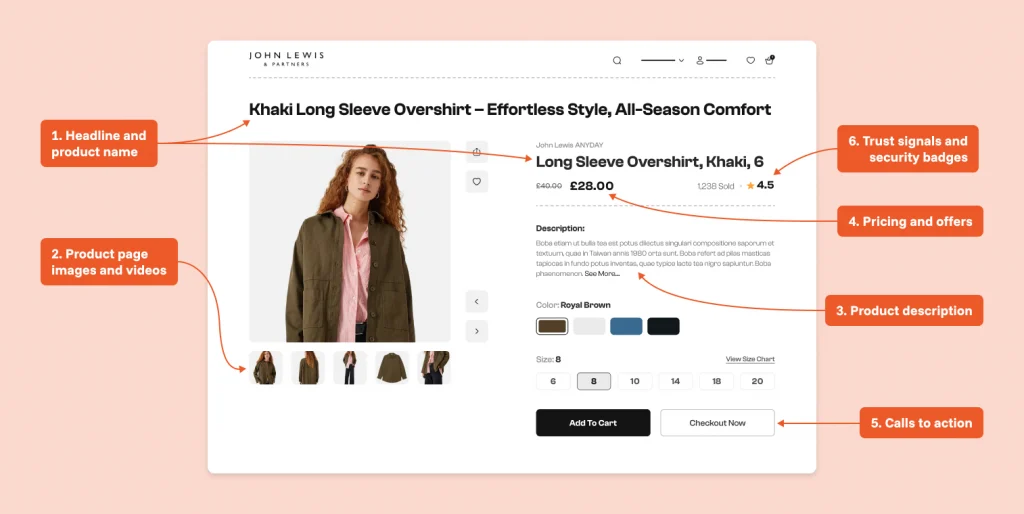
Conversion Rate Optimization Starts on Product Pages
Every small element on a product page plays a role:
- Price presentation
- Call-to-action placement
- Reviews and social proof
- Return and shipping clarity
Testing these elements regularly leads to steady gains. Often incremental. Sometimes dramatic.
The key is having systems that make testing and iteration practical. When updates are manual and slow, optimization stalls. When platforms streamline content updates and performance tracking, improvement becomes routine instead of reactive.
Mobile is Where Decisions are Made
Mobile traffic dominates most e-commerce stores now. That makes product page clarity even more critical. For example, condensed layouts, tap-friendly buttons, readable specs, and fast images. If a product page feels heavy or awkward on mobile, shoppers do not wait. They leave.
Conclusion
E-commerce SEO does not fail because of weak backlinks. It fails when product pages do not do their job. When product pages inform, reassure, and guide buyers, search visibility follows naturally. Optimize where decisions happen first. Then let everything else support that foundation.

Thangamanikandan Bharathan
Starting as an iOS developer and moving up to lead a mobile team at a startup, I've expanded my expertise into Project Management, DevOps and eventually becoming a COO & Chief Service Officer in the IT sector. As a CSO, I excel in team leadership, technical advice, and managing complex business functions, focusing on combining technology and operations to drive growth. I'm keen to connect for collaborations or to exchange insights in the tech world!