Can Agentic AI in Ecommerce Be the Secret Growth Engine for Merchants?

Have you ever thought about what it would be like if shopping decisions happened before your customers even realized it?
That future is coming fast. Amazon’s “Buy for Me” beta shows how AI can predict what people need, search the web, and complete purchases on its own. For merchants, this means machines are starting to understand customers even better than we do.
What does this mean for your business? It’s more than just faster sales. AI is changing the whole shopping journey. Search, research, and checkout can now happen all at once. This challenges traditional marketing and SEO.
Ecommerce brands might lose some control over how customers find their products, while shoppers enjoy very personalized, almost magical experiences. And how about B2B businesses?
The change is happening there too. Startups like Fresho in Melbourne are using agentic AI in ecommerce to automate orders, track inventory in real time, and reduce waste. Teams don’t have to manage every detail manually because AI works 24/7.
Even big companies like Amazon can’t ignore this if they want to stay competitive.
Can businesses still rely on slow, manual processes? Not really. AI predicts demand, avoids mistakes, and makes decisions instantly. Merchants who use it can stay ahead, while those who wait risk falling behind.
In the end, the real question isn’t if AI will change internet shopping, it’s how quickly it will decide what your customers buy, when they buy it, and how your business can keep up. This blog will guide you on how AI can be your strong partner, helping you survive in the ecommerce industry. Before that, know what it means for you.
What Agentic Commerce Means for Merchants
AI agents take care of time-consuming tasks like updating inventory, processing orders, and suggesting products, letting merchants focus on growth and building stronger customer relationships.
Beyond operational help, AI delivers actionable insights on demand, pricing, and promotions, enabling autonomous decisions and efficient scaling. All of this happens quietly in the background, giving businesses the freedom to innovate without getting bogged down in routine work. But have you ever thought why now?
Why Now is the Perfect Time for Merchants to Adopt Agentic AI
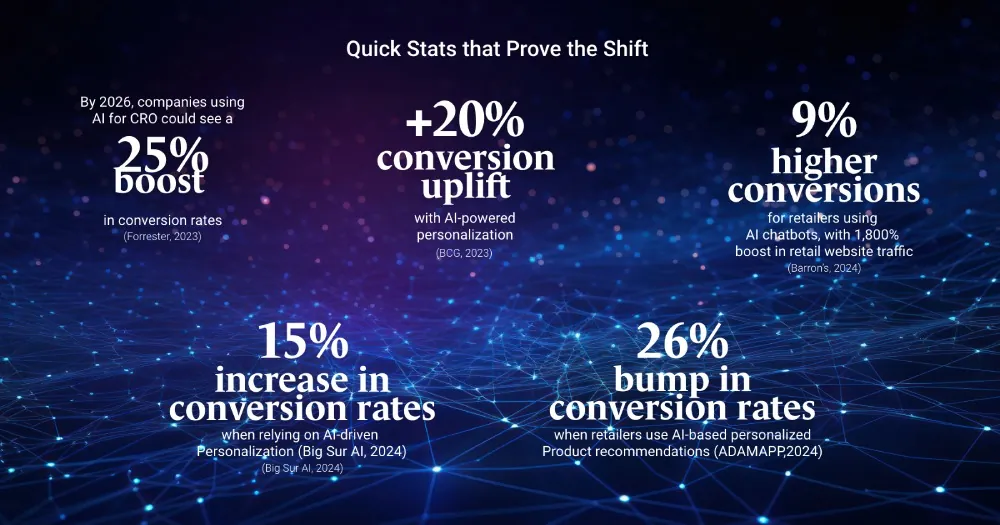
The agentic AI market is booming, and merchants who act now can gain a significant edge. In 2025, the market reached USD 46.74 billion and is projected to hit USD 175.11 billion by 2030, growing at a 30.2% CAGR. These numbers show that AI-driven commerce is no longer a future concept; it’s happening now.
Source: https://fulcrumdigital.com/
Several factors make this the ideal time for merchants:
Autonomous AI Agents are Ready for Business
Modern agentic AI in ecommerce can solve complex tasks like dynamic pricing, inventory, and supply-chain management, and personalized customer engagement with minimal human intervention. This allows merchants to operate smarter and faster.
Rising Costs Demand Efficiency
Increasing labor costs and pressures to reduce the cost-to-serve are forcing merchants to find automation solutions that maintain margins while improving customer experience.
Technological Readiness
Advances in GPUs and cloud infrastructure have made deploying AI easier and more affordable than ever. Major providers like Microsoft Azure and Google Cloud offer financial and technical support for AI implementation.
Proven Real-World Success
Retail giants are already seeing measurable benefits. Walmart uses an autonomous engine to reduce waste and spoilage, while Target’s Store Companion chatbot speeds up employee onboarding. These examples show that AI adoption drives tangible results.
For merchants, the combination of market growth, technological readiness, and proven success stories makes now the perfect moment to embrace agentic AI. Early adopters can streamline operations, reduce costs, and deliver highly personalized experiences that set them apart from competitors. It’s all possible if you choose the right business model.
What are Business-to-Agent Models and Why They Matter in Agentic Commerce
Agentic AI in ecommerce gives merchants several ways to automate operations and improve customer experiences. Here’s a simple guide to choosing the right approach:
If you want AI to handle bulk purchasing automatically, go with Business-to-Agent (B2A).
Make your product catalog available to AI platforms so agents can discover, compare, and buy products on behalf of clients. For example, wholesale suppliers can let AI reorder essential inventory for corporate customers without manual intervention.
If you want to provide personalized shopping experiences directly to your customers, go with Agent-to-Consumer (A2C).
Deploy your own AI assistants on your website or app to recommend products, answer questions, and help complete purchases. Online boutiques, for instance, can suggest outfits based on previous orders, increasing upsells and boosting satisfaction.
Source: https://www.sellerscommerce.com/
If you want seamless operations across systems and supply chains, go with Agent-to-Agent (A2A).
Let generative AI agents communicate and transact across your business systems automatically. For example, a food distributor can have AI interact with restaurant procurement systems to manage bulk orders, ensuring stock and delivery schedules are always optimized.
By picking the right model for your business goals, you can automate repetitive tasks, increase efficiency, and deliver highly personalized experiences putting your business ahead in the AI-driven commerce landscape. For that, adopting a strategy is a must.
How You Can Adopt and Succeed with Agentic AI
Success no longer depends only on what you sell but on how intelligently your business interacts, adapts, and delivers. Whether you’re selling directly to consumers or managing wholesale operations, Agentic AI can transform how you handle pricing, inventory, and customer engagement.
But here’s the reality: even if you’re excited to adopt AI, you might not know where to start, what to automate, or where you’ll struggle most. Many merchants jump in too quickly, only to face integration errors, inconsistent massive datasets, or AI tools that don’t align with their goals.
That’s where your development team makes the difference. They help you spot weak points before they become costly, identify which artificial intelligence systems fit your workflows, and build a foundation that ensures your automation is reliable, secure, and scalable.
With the right developers guiding your AI adoption, you’re not just using new technology; you’re appointing the right AI for the right task, turning innovation into measurable business growth.
1. Identify High-Impact Areas
Before diving into new technologies or process changes, take time to identify where improvements will deliver the most meaningful results. Every business has unique strengths and bottlenecks, but the following areas often present high potential for transformation:
Workflow Optimization
Map out how tasks flow across teams and departments. Identify repetitive steps, communication gaps, or approval delays that slow down productivity. Streamlining workflows can reduce manual effort and free up time for strategic initiatives.
Customer Experience Alignment
Review every touchpoint in the customer journey from discovery to post-sale support. Pinpoint where customers drop off or encounter friction. Small improvements in experience often lead to big gains in satisfaction and retention.
Data Utilization
Many organizations collect data but fail to convert it into actionable insights. Assess which datasets are underused and explore ways to connect, analyze, and visualize them for smarter decision-making.
Starting small in these areas helps prove value early, and having a development team ensures that your initial experiments are technically solid, scalable, and reliable.
2. Choose the Right AI Strategy
Merchants can approach AI in two ways by collaborating with existing platforms or by developing their own AI-powered systems.
Work with Third-Party AI Agents
Third-party agents are the fastest way to join the AI ecosystem. Platforms like Faire, Shopify, or Amazon already support AI-driven recommendations and auto-reordering features. Developers help by integrating your product data and ensuring AI-generated insights are accurately captured.
Prepare structured product data with rich descriptions, guides, and visuals.
Maintain clean, accurate inventory and encourage customer reviews.
Track AI-generated orders and insights regularly to ensure alignment with sales goals.
Example: An office furniture supplier optimized catalog data for Faire’s AI algorithms, while their developers built dashboards to track AI-driven reorders, saving hours of manual coordination.
Build Merchant-Owned AI Agents
For brands that want more control and deeper personalization, developing an in-house AI assistant can be a game-changer. Developers design, train, and deploy these systems, ensuring they learn effectively from sales data and customer interactions.
Use customer transaction and browsing data to power personalized recommendations.
Offer intelligent support that mirrors a human sales associate.
Example: A skincare merchant built an AI shopping assistant that remembers past purchases and skin concerns. Developers ensured the AI integrated securely with customer accounts and order histories, helping boost repeat purchases and satisfaction.
3. Build Strong Operational Foundations
AI performs best when supported by clean, organized data sources and efficient logistics. Developers are critical here, designing centralized data platforms, integrating multiple sales channels, and automating workflows.
Create a centralized AI/data platform to unify analytics, orders, and product catalog.
Keep product data consistent across all sales channels.
Ensure fast, reliable fulfillment, as AI-driven orders often increase demand predictability.
Continuously monitor AI interactions to gather insights on customer preferences and performance patterns.
Example: A wholesale distributor integrated AI dashboards into daily operations with the help of developers, forecasting restocking needs and optimizing delivery routes — cutting delays and reducing holding costs.
4. Start Small, Test, and Scale
AI doesn’t need to transform your entire business overnight. Developers help by setting up controlled test environments, monitoring results, and adjusting automation rules before scaling.
Begin with a focused pilot, such as a single product category or specific customer segment.
Measure results in sales growth, operational efficiency, or engagement rates.
Refine live data quality and automation rules based on findings.
Gradually expand AI integration across more areas of your business once proven successful.
This phased approach minimizes risk while building internal confidence and technical readiness with developers, ensuring that scaling doesn’t break your systems.
5. Train Your Team to Work Alongside AI
Even powerful agentic AI in ecommerce requires human interaction and judgment. Developers support your team by designing dashboards, alerts, and reporting tools that make AI behavior transparent and actionable.
Conduct short workshops on AI basics and dashboard usage.
Encourage employees to spot anomalies or gaps in customer feedback.
Treat AI as a co-worker, automating routine tasks while people focus on creative and strategic decisions. Discover how it is changing business operations.
How Agentic AI is Revolutionizing Business Operations
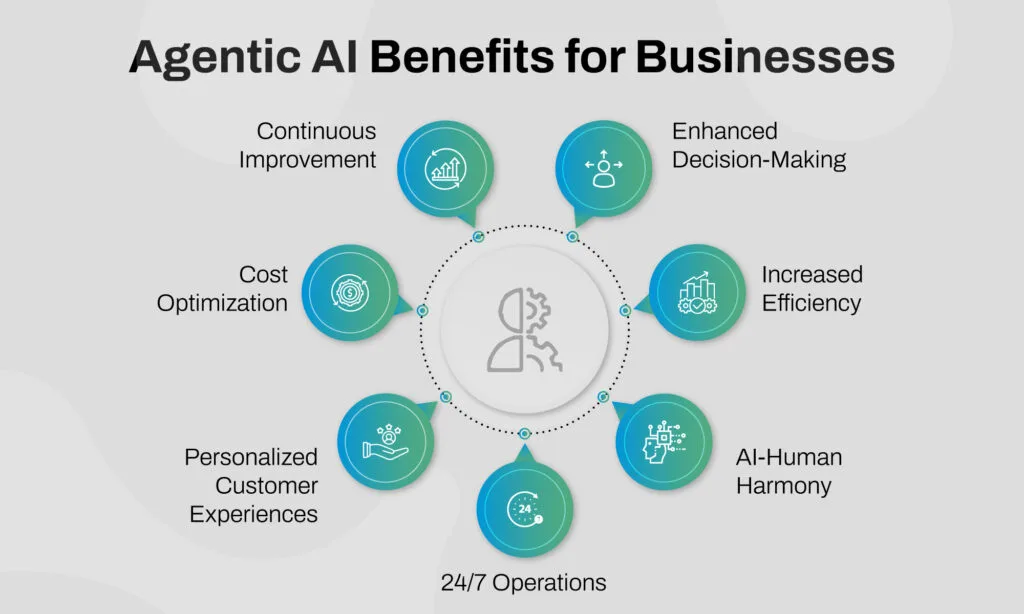
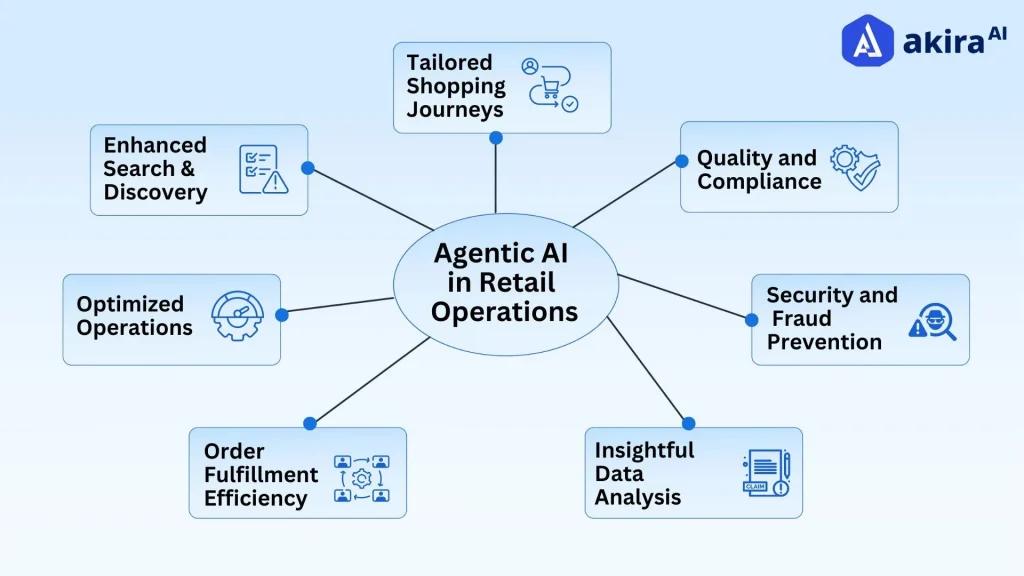
Agentic AI in ecommerce isn’t just streamlining sales; it’s transforming the way merchants run their entire business. Here’s how AI is making a difference across operations:
1. Dynamic Pricing Optimization
AI adjusts prices and promotions in real time based on trends, competitor activity, and customer behavior, helping merchants maximize revenue.
2. Automated Inventory Management
Food distributors and retailers can predict orders accurately, reducing shortages, minimizing waste, and ensuring stock meets demand.
3. Visual Search and Smart Assistants
Furniture and apparel stores can suggest products based on customer photos or queries, making shopping more intuitive and personalized.
4. Fraud Detection and Risk Management
AI monitors orders for unusual or high-risk activity, keeping wholesale suppliers and eCommerce merchants secure.
Source: https://exotel.com/
5. Warehouse Automation and Robotics
Apparel, electronics, and general merchandise merchants can reduce labor costs and improve fulfillment accuracy through intelligent automation.
6. Marketing and Customer Engagement Automation
Gourmet food suppliers, boutique shops, and other merchants can send hyper-personalized promotions, seasonal offers, and reminders to boost repeat purchases and engagement.
AI-Driven Product Discovery: The New Frontier for Online Merchants
AI is changing not just shopping but how your products are discovered. In the U.S., AI-driven ad spending is expected to reach $26 billion by 2029, showing that merchants who ignore AI risk losing visibility.
Simply listing products online isn’t enough anymore. To stay competitive, your catalogs must be AI-friendly so intelligent agents can find, recommend, and even purchase your items automatically.
Here’s how merchants are leveraging agentic AI in ecommerce today:
Etsy Sellers: Boutique shops are using ChatGPT’s Instant Checkout integration, letting customers discover and purchase products directly through AI-powered chat. This boosts visibility and simplifies the buying experience for shoppers.
Merchants: AI-driven product recommendations within chat interfaces allow customers to browse and buy products without leaving the platform. This improves discoverability and increases conversions.
B2B Suppliers (Faire, Alibaba): Listing catalogs in AI-optimized formats enables automatic reorders. AI agents can recommend your products consistently to buyers, ensuring repeat orders and stronger business relationships.
Why This Matters for You
Your products appear in AI-driven recommendations, increasing chances of sales.
Automated visibility reduces reliance on manual marketing campaigns.
Early adoption positions your business ahead of competitors in an increasingly automated marketplace.
Optimizing for AI visibility isn’t just a trend; it’s becoming essential for any merchant seeking to grow sales, retain repeat customers, and stay relevant. It is also crucial to safeguard sensitive information.
Evidence and Chargeback Defense in an AI-Driven World
In today’s world, where AI agents are starting to buy on behalf of customers, the old ways of proving a valid transaction just don’t cut it anymore. IP addresses and browser fingerprints once worked as digital footprints, but they don’t tell the full story when the “buyer” is an intelligent system acting automatically.
Merchants now need deeper, context-rich evidence to protect their businesses from disputes and chargebacks. That means tracking which AI agent made the purchase, when it happened, and how it unfolded every step from browsing to payment should be documented.
Details like product SKUs, prices, delivery timelines, and related account behavior (such as login history or payment activity) all help form a transparent record of the transaction.
But building and maintaining this level of traceability isn’t something merchants can handle alone; it takes a capable development team. Developers can design secure data pipelines, automate transaction logging, and integrate fraud intelligence APIs that make dispute defense seamless.
Modern solutions like Justt can play a role, but it’s your development team that ensures these systems connect smoothly with your platform, maintain compliance, and keep transaction data audit-ready.
In the age of AI-driven commerce, transparent, developer-built safeguards aren’t just helpful; they’re essential for protecting your brand, reputation, and revenue. How to get ready for today’s tech era?
Preparing Your Business for AI-Driven Market Changes
As AI becomes the silent engine of commerce, merchants face three paths:
#1 Merchant-Controlled Ecosystem
Take full control. Build and manage your own AI systems so pricing, inventory, and customer interactions remain entirely in your hands.
Large retailers like Amazon or Target can fully oversee recommendations, purchases, and engagement, protecting brand value while investing in robust AI infrastructure.
#2 Collaborative Ecosystem
Share the intelligence. Integrating with AI agents via secure APIs allows them to discover and transact with your products while you maintain control over pricing, branding, and visibility.
For example, a mid-sized boutique could let smart agents recommend items to shoppers while keeping the final say on promotions and brand presentation.
Source: https://www.akira.ai/
#3 Decentralized Commerce
Let AI drive the experience. In this model, AI agents autonomously handle discovery, comparison, and checkout. Merchants primarily compete on price, speed, and reliability.
Small suppliers may rely on multiple AI agents to manage bulk orders automatically, but those who don’t integrate risk losing visibility and sales.
Fraud and Risk in Agentic Commerce
Have you ever wondered what happens when AI takes the wheel in commerce? Transactions now happen faster than ever, often without any human input. But with speed comes risk.
When AI agents start placing orders automatically, merchants face challenges they can’t handle solo. A compromised account might let an AI make unauthorized purchases. Inventory could vanish faster than tracking systems can respond.
Prices might shift unintentionally due to algorithmic errors. These are not issues that traditional AI fraud tools can fix; they demand technical expertise.
Even well-meaning AI can cause operational trouble. A small system glitch might duplicate orders, or customers could forget they scheduled a purchase.
These aren’t classic fraud cases, yet they lead to chargebacks, confusion, and unnecessary costs. Early data volume even shows AI-driven orders are more likely to trigger disputes than traditional transactions.
That’s why a skilled development team becomes your strongest defense. They can build fraud detection systems that work in real time, create monitoring tools that identify unusual activity, and design safeguards that maintain trust while letting AI handle the heavy lifting.
Because in agentic commerce, speed is thrilling but control is critical. And only the right development team can help you keep both. What will be the business future with AI?
The Future of Agentic AI for Merchants
The agentic AI market is growing fast and is expected to reach $46.5 billion by 2032. This shows how important AI is becoming in retail and eCommerce. Many new trends are shaping this growth and helping merchants work smarter and serve customers better.
Conversational Commerce strategy is one major trend. AI agents can now talk with customers through chat or voice, helping them find products, compare options, and complete purchases easily.
Prescriptive AI takes automation further. It doesn’t just recommend products—it predicts what customers might want next, manages operations, and makes quick decisions to improve sales and efficiency.
AI Supply Chain Agents are also changing how logistics work. They can forecast demand, manage stock, and even change delivery plans automatically. This helps merchants cut costs and avoid running out of popular items.
AR-Assisted Previews make online shopping more real. Customers can see how products look in their homes or on themselves before buying, which builds confidence and makes handling returns.
The best part is that even small and medium-sized businesses (SMBs) can now use these tools. With low-code and no-code AI platforms, they don’t need big budgets or technical teams to start using advanced AI.
For merchants, the message is clear: agentic AI is becoming essential. Adopting it early can give you a big advantage, helping you run your business more efficiently, attract more customers, and offer a personalized shopping experience that stands out.
Partnering with Appkodes for Agentic AI Success
For merchants ready to tap into the power of agentic AI, working with the right technology partner makes all the difference.
Appkodes, a leading startup mobile app development company, offers specialized AI-powered commerce solutions that help businesses transform the way they sell, connect, and grow. From building custom merchant-owned AI assistants to integrating with leading third-party platforms, Appkodes AI development services are effective.
With Appkodes, businesses can function independently in the era of agentic commerce, where AI-driven agents interact, transact, and evolve on behalf of brands and customers.
Launch AI agents quickly: Our low-code and no-code solutions let you deploy powerful agentic AI systems fast, cutting development time, reducing costs, and helping you adapt to dynamic conditions in real time.
Boost product visibility: Ensure your products shine across AI-powered marketplaces like ChatGPT, Perplexity, Shopify, and Faire. With Appkodes, your listings automatically adjust to changes in demand, competition, and trends, remaining relevant and discoverable at all times.
Automate business interactions: Through A2A (Agent-to-Agent) connectivity, Appkodes lets your AI seamlessly manage supplier coordination, client procurement, and logistics. These systems process vast amounts of data, making real-time decisions while remaining undetectable by agents from competitors.
Stay compliant and secure: Our platform supports GDPR-compliant workflows, protecting your customers’ information while addressing ethical concerns around transparency, privacy, and AI accountability.
Deliver better customer experiences: From personal shopping agents that understand preferences to smart virtual assistants that communicate naturally, Appkodes leverages processing natural language to enhance engagement and conversion. The result? Stronger customer loyalty and deeper brand trust.
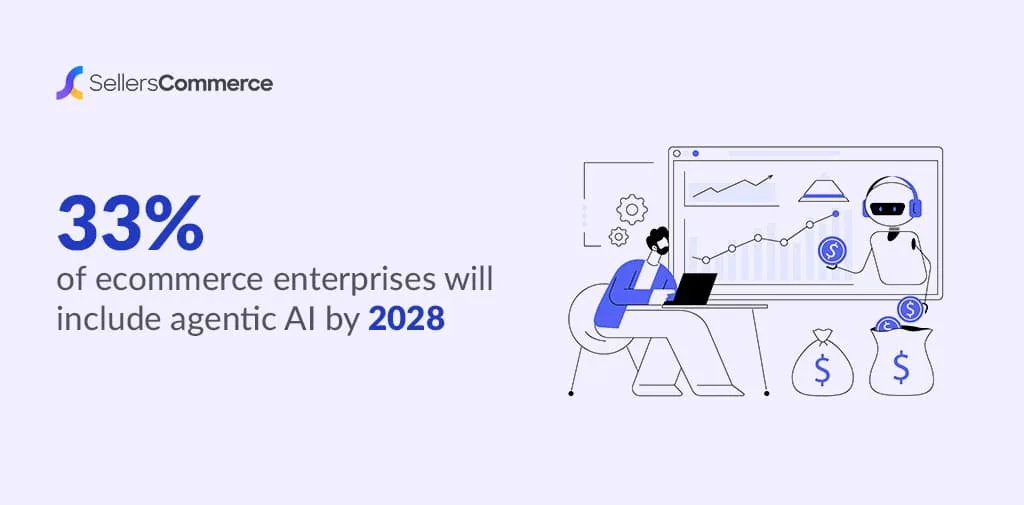
By 2028, agentic AI in ecommerce will redefine how commerce operates, and Appkodes helps you stay ahead of that curve. Whether you’re a B2C boutique, B2B supply network, or marketplace, our intelligent solutions empower your brand to function independently, scale efficiently, and thrive in an AI-first economy.

Arun Andiselvam
Founder of AppKodes. As a serial entrepreneur, I have successfully established five brands over the past 12 years. After creating a successful rank tracker for SEO agencies, I am currently dedicated to developing the world's first SEO Project Management software.