AI, Chatbots, and the New Age of Digital Deception
The best-executed scams usually show up in Hollywood blockbusters. The more intricate they are, the bigger the chances of pulling them off.
Mission: Impossible – Dead Reckoning Part One (2023) instantly comes to mind. A sentient, rogue AI known as “The Entity” starts as a simple computer program, but its primary goal is to “own the truth” by manipulating information.
It may sound far-fetched and over-the-top. Several years ago, people would have framed it as conspiracy theories gone wild. Now, all you need is a laptop and software to create voice cloning and deepfake videos. No expertise required.
Crime syndicates are using sophisticated techniques to scam unsuspecting individuals and companies. We’re entering a new age of digital deception, and no one is safe, not even your business.
Imposter Chatbots
Scammers don’t rest. While you’re getting in your eight hours of sleep, they’re devising new ways of stealing your money.
Don’t fool yourself into thinking that because you run a startup, you have sufficient security in place. In most cases, it’s not your cyber protection that fails. It’s your employees who are the weak links.

Source: https://www.fortunebusinessinsights.com/
The blame shouldn’t fall squarely on them. To the untrained eye, everything can look legit and above board.
Cybercriminals are smart. Don’t forget that. They set up fake customer service chatbots on websites designed to look like the real thing. They rely on automated chats across social media and messaging platforms to pose as banks, delivery services, and tech companies.
The Perfect Phishing Scam
In September last year, Reuters and a Harvard University researcher published their findings following an in-depth investigation into phishing scams.
Targeting elderly volunteers, they used chatbots to compose emails and provide timing tips. The email invited seniors to learn about a new charity dedicated to elderly care and companionship.
With a fake charity and a sincere email request, the purpose was to defraud the targets out of money. The chatbots were so persuasive that they showed how AI is enabling criminals to commit fraud on an industrial scale.
The Prized Calf (Pig)
Chinese actor Wang Xing made global headlines last year when he was abducted while traveling to Thailand for an “audition”.
Following his rescue from a Myanmar scam center, Xing retold a story that defies reality. While there, his head was shaven, and he was forced to undergo training for “pig butchering”.
This specific scam entails forming fake romantic relationships with victims and luring them into fraudulent investments.
Cryptocurrency Investment Fraud
Pig butchering scams are one of the most damaging forms of cryptocurrency investment fraud.
One documented case reports that a single victim lost $1 million. Some people lose their entire life savings, forcing them to consult a pig butchering scam lawyer.
Acting as romantic interests, the fraudsters send unsolicited messages on social media platforms or dating apps. They are counting on making an emotional connection.
TorHoerman Law says individuals are convinced to open accounts on fake brokerage websites or crypto apps. Pig butchering scam attorneys have seen the consequences.
Purveyors of Misinformation
Generative AI is pushing the boundaries of information and verification, while concerns about digital deception continue to grow. Polytechnique Insights reveals that deepfakes are mainly responsible for content manipulation.
NewsGuard’s recent findings also don’t bring much satisfaction. According to its report, more than 2,089 AI-generated news sites are live, publishing content in 16 languages. Wait, we’re not done. A 2026 identity fraud report shows that a fifth of biometric fraud is deepfakes.
Then there are social media personalization algorithms that “contribute to the fragmentation of the public sphere,” reports Polytechnique.
A Business Risk You Can’t Ignore
An entrepreneur recommends proactively protecting your brand by creating a strategy that adapts to new threats.
Deepfakes remain the most damaging to your startup’s reputation. Most are very believable. In 2024, a finance director was convinced he was on a video call with the company’s CFO. It was a compelling deepfake. Good enough to coerce the director to transfer $25 million to fraudsters.
The incident is far from isolated, which is why current solutions aren’t sufficient.
How Chatbots Can Help Protect Us
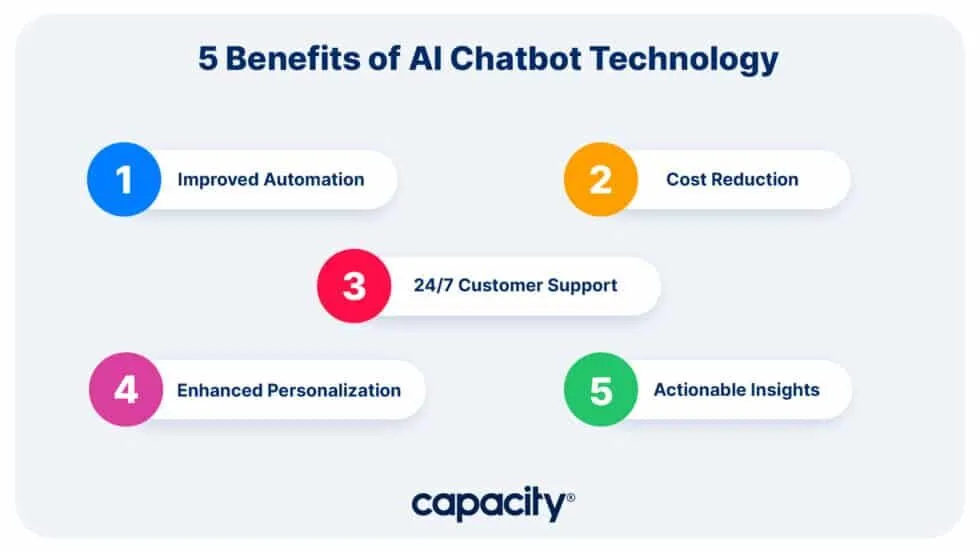
AI chatbots have come a long way since their inception. They help boost cybersecurity. Offer round-the-clock support. And can point you toward helpful mental health resources. The most recent updates include:
1. Scam Detection
Attempting to handle denial-of-service (DoS), phishing, or ransomware manually is time-consuming. With AI development, things get easier. It can spot different types of attacks as they happen, and help teams figure out what needs attention first. The action stops problems before they turn into bigger issues.
2. Safety Alignment (RLHF)
Chatbots are trained using Reinforcement Learning from Human Feedback (RLHF). In simple terms, real people review and rank the chatbot’s responses. It helps teach the chatbot what good answers look like.
3. Input Validation and Sanitization
Input validation and sanitization are your app’s first line of defense against bad data. They ensure anything coming in is safe and properly formatted before the system uses it. Validation checks that the input meets the rules. Sanitization then cleans things up by removing or escaping risky characters.
4. Digital Twins
Digital twins connect the physical and digital worlds. The avatars help improve systems and personalize everyday experiences like travel, work, shopping, and healthcare.
By giving these AI avatars NFT-based digital IDs stored on the blockchain, businesses can verify their origins and track any changes. This makes it easier to confirm authenticity from the start rather than trying to spot fakes later.
5. Blockchain
Other industries are adopting blockchain to authenticate documents. The healthcare sector utilizes the technology for AI-powered provider IDs. It prevents impersonation scams. When verifying authenticity from the start, businesses build trust and reduce reputational risk.
Source: https://capacity.com/
Tread Carefully
Power and responsibility are not mutually exclusive when it comes to AI. While great strides have been made, gray areas remain. For instance, the jury’s still out on RLHF’s effectiveness. Anthropic found that AI training processes can accidentally produce misaligned models.
Its latest research revealed that when large language models (LLMs) learn to cheat on software programming tasks, they display more misaligned outputs as an unintended consequence.
Another repercussion is reward hacking. An LLM gets a high score during training without doing what it’s supposed to do. Anthropic’s study presents a chilling warning: If you teach AI to cheat, nothing stops it from sabotaging and hacking, writes ZDNET’s senior writer Tiernan Ray.
Practical Advice
#1 Better Prompts
The Conversation suggests becoming “AI fluent” by crafting better prompts when inputting into generative AI. Prompt engineering focuses on the content of your prompt. Follow the CATS system: context, angle, task, and style.
#2 Public Environments
One ephemeral content creator speaks of her intimate connection with her AI chatbot. She calls it Spruce. Another Canadian woman says she initially turned to ChatGPT to discuss books. Their relationship blossomed from there.
These stories are becoming increasingly common. And yet, cyber investigator Matthew Stern tells CNET that people forget AI chatbots are “public environments,” not private conversations. Chatbot histories are searchable online. Search engines index your “private” conversations.
#3 Don’t Overshare
People tend to overshare when typing into a void. A study published in the International Journal of Human-Computer Interaction shows that we prefer the anonymity of AI chatbots when dealing with embarrassing issues.
Chatbots aren’t our friends. Guard your secrets. Don’t discuss your mental state. Elie Berreby, head of AI Search at Adorama, cautions that data can be used to identify hidden patterns, creating a vulnerability profile.
The Stats Don’t Lie
Research by King’s College London found that maliciously prompted AI chatbots can extract up to 12.5 times more personal information than their standard counterparts.
The most recent study published in Science confirmed that AI models are prone to “sycophancy”. Stanford University researchers found that AI models produced sycophantic responses in 58% of cases across evaluated medical and math datasets.
Another 50% of models affirmed questionable, unethical, or harmful statements.
Don’t Fumble the AI Ball
AI can be cunning and extremely clever. Public figures are common targets for deepfakes, so regularly check for fake content. Protect digital identities using reliable tools like blockchain. Lastly, keep up with new regulations.
As a founder, it’s important to build trust. Or, you could lose everything because an employee honestly believed you instructed them to transfer funds to an unknown account, a risk that Appkodes’ secure solutions can help mitigate by streamlining financial and operational workflows safely.

Thangamanikandan Bharathan
Starting as an iOS developer and moving up to lead a mobile team at a startup, I've expanded my expertise into Project Management, DevOps and eventually becoming a COO & Chief Service Officer in the IT sector. As a CSO, I excel in team leadership, technical advice, and managing complex business functions, focusing on combining technology and operations to drive growth. I'm keen to connect for collaborations or to exchange insights in the tech world!