How AI Agent Tools are Reshaping Automation and Decision-Making
Automation is no longer the “should we?” conversation. Most teams have already automated something: emails, lead routing, reporting, invoicing, and handoffs between tools. The real question now is: can our automation think with us, not just run on rails?
That is where AI agent tools are starting to change the game. Instead of following a rigid script, they can read context, choose a next step, take action, and adapt when reality does not match the flowchart. Done well, this doesn’t just speed up tasks; it reduces decision fatigue and helps teams act faster with better consistency.
What are AI Agent Tools?
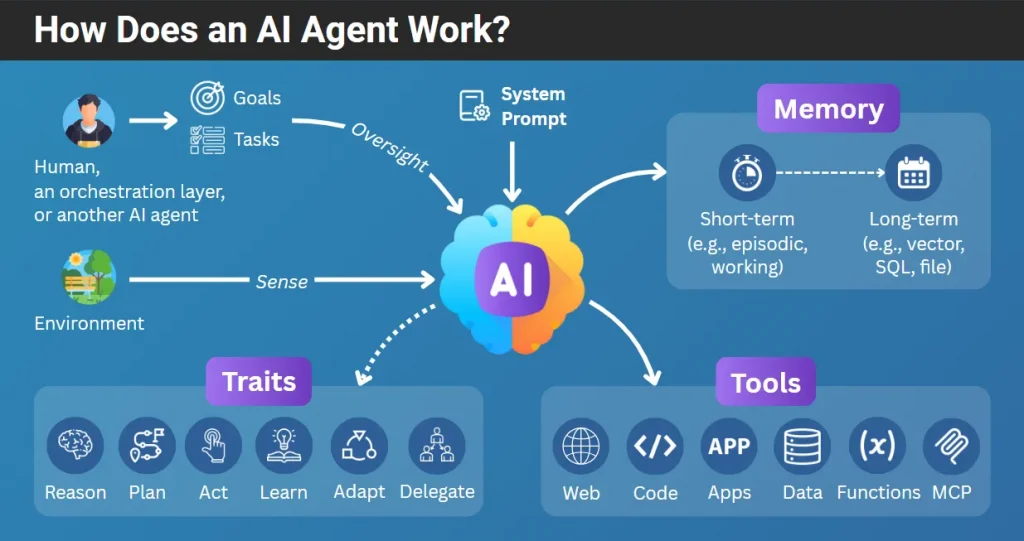
AI agent tools are platforms or systems designed to run goal-oriented work with a level of autonomy. Gartner describes AI agents as autonomous or semiautonomous software entities that can perceive, decide, and act to achieve goals.
Simply put: you give the system an objective (or a set of rules and boundaries), and it helps figure out how to get there, often across multiple steps, tools, and touchpoints. This is also why AI agents feel different from classic “automation.” They are not limited to a single workflow path.
Source: https://www.productcompass.pm/
The Building Blocks Behind AI Agents
Most AI agents share a few core capabilities, even if different vendors label them differently:
1) Perception and Context Gathering
Agents take in signals from many places: CRM records, chat logs, email threads, web forms, behavioral data, tickets, and dashboards. The aim is simple: don’t treat each request like it’s happening in a vacuum.
2) Reasoning and Decision Logic
After interpreting inputs, the agent weighs options and selects an action aligned with the goal, resolves an issue, qualifies a lead, reduces churn risk, speeds up approvals, and so on.
3) Execution (The “Do Something” Layer)
This is what separates AI agent tools from analytics. Agents can update records, send messages, create tasks, trigger workflows, and escalate to a human when needed, rather than stopping at “here’s an insight.”
4) Learning and Improvement
Good AI agents get sharper over time as they see more examples and patterns, reducing repetitive work and handling edge cases more gracefully.
How AI Agents Differ from Traditional Automation
Traditional automation shines when the world is predictable: “If form is submitted → assign lead → send email.” It is reliable, fast, and easy to audit.
But businesses rarely stay predictable for long. The moment you introduce messy reality, unclear customer intent, missing data, exceptions, mixed languages, and overlapping responsibilities, rule-based systems become fragile. Someone has to keep patching workflows, adding new branches, and maintaining logic that keeps growing.
AI agents approach the same problem differently. Instead of pre-mapping every scenario, they interpret what’s happening right now, then choose a response that fits the situation. The outcome is usually:
- fewer broken flows,
- fewer “manual fix” moments,
- faster adaptation when conditions change,
- and smoother handoffs between systems.
Why AI Agent Tools are Changing Decision-Making
For a long time, decision-making followed a cycle:
collect data → build reports → review → decide → act.
That cycle still exists, but it is too slow for many modern teams. Markets move quickly, customer expectations shift instantly, and small issues can scale fast.
AI agent tools compress this cycle by analyzing signals continuously and pushing decisions closer to the moment action is needed. McKinsey has written about “agentic” operating models where real-time insight and faster decision loops become a practical advantage, especially in functions like finance and planning.
This also changes how leaders spend their energy. Instead of drowning in dashboards, they can focus on direction and judgment, while agents handle the constant monitoring and routine choices.
Another major shift: organizations are starting to treat AI agents like “digital workers” with roles, accountability, and performance metrics, because outcomes matter more than novelty.
Key Capabilities That Make AI Agent Tools Valuable
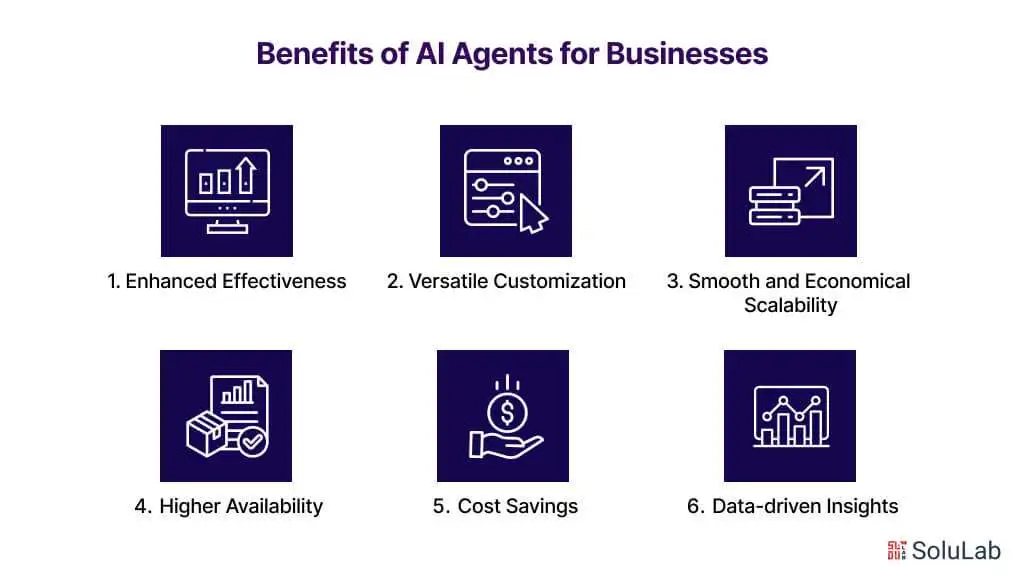
What makes AI agent tools genuinely useful is not one feature; it is the combination:
Autonomous Task Execution
Agents can handle multi-step work: capturing leads, enriching data, assigning ownership, scheduling follow-ups, and keeping records clean, without someone babysitting the workflow.
Context Aware-Responses
Instead of replying the same way to everyone, agents can consider history, intent, urgency, and sentiment, making automation feel less robotic and more relevant.
Continuous Learning
Classic automation becomes outdated unless you update it manually. AI agents can adjust as they encounter new patterns and changing conditions.
Multi-System Integration
Most businesses run on a patchwork: CRM, email, chat, helpdesk, spreadsheets, marketing tools, and billing tools. Agents help these systems behave more like one coordinated workflow.
Natural Language Usability
A practical benefit: teams can often “talk” to the system. This lowers the barrier to adoption and reduces dependency on technical staff for everyday changes.
Source: https://www.solulab.com/
The Real Impact: Operations That Think Faster
When AI tools are implemented thoughtfully, the change feels less like a flashy transformation and more like a steady relief:
- fewer bottlenecks,
- fewer missed follow-ups,
- fewer handoffs that break,
- and fewer decisions are delayed because “we need one more report.”
In other words, the biggest benefit is not only efficiency, but also momentum. With tools built on platforms like Appkodes, teams move with more consistency because the system is helping them notice what matters and act sooner.

Thangamanikandan Bharathan
Starting as an iOS developer and moving up to lead a mobile team at a startup, I've expanded my expertise into Project Management, DevOps and eventually becoming a COO & Chief Service Officer in the IT sector. As a CSO, I excel in team leadership, technical advice, and managing complex business functions, focusing on combining technology and operations to drive growth. I'm keen to connect for collaborations or to exchange insights in the tech world!