How to Build MVP for Your Fintech with Adalo and Xano

You have an idea. Not just any idea, a financial app that could genuinely change how people manage their money. And yet, excitement quickly gives way to uncertainty. Where do you even start? How do you turn scribbles in a notebook into something real?
Every choice feels huge: which features to build first, how flows should work, how to ensure security, and build trust. You want to move fast, but the wrong move could cost months or worse, your real users’ confidence, before you’ve even launched.
When the early users arrive, the abstract becomes concrete. Will the system hold up? Will people feel safe sharing their money with a product that’s still learning? Growth feels thrilling and terrifying all at once. Every transaction, every click, every interaction tests not just your product, but your instincts.
Creating an MVP is more than just technical; it’s personal for your fintech. Speed alone won’t save you. The founders who succeed are the ones who learn faster than they build. They test early, iterate constantly, and listen harder than they code. Each user reaction is a compass; every tweak is a lesson.
And the world around you is changing fast. Nine out of ten tech professionals already lean on intelligent tools to work smarter, and in a few years, over a billion people will do the same. The question isn’t whether you can keep up, it’s whether you can harness it to your advantage.
Every decision, every small feature, every security choice shapes the story of your product. It’s the difference between something people ignore and something they rely on. Prioritize wisely. Validate relentlessly.
Build mvp design with empathy. Treat your MVP not as a prototype, but as a promise to your users, to yourself, and to the idea that got you out of bed at 3 a.m., scribbling on scraps of paper.
It’s hard. It’s exhilarating. And it’s possible. Each experiment, each course correction, each feedback loop brings you closer to a product that doesn’t just work but matters.
Developing a FinTech MVP isn’t just about code or timelines. It’s about courage, curiosity, and care.
Build MVP for Your Fintech: From Concept to Live Product
In a world where ride options refresh by the minute and ecosystems like the San Francisco Bay Area reveal how quickly ideas begin to blur, the real challenge is standing out in markets with plenty of overlap. Global MVP Development grew to USD 288 million in 2024 and is projected to hit USD 541 million by 2031.
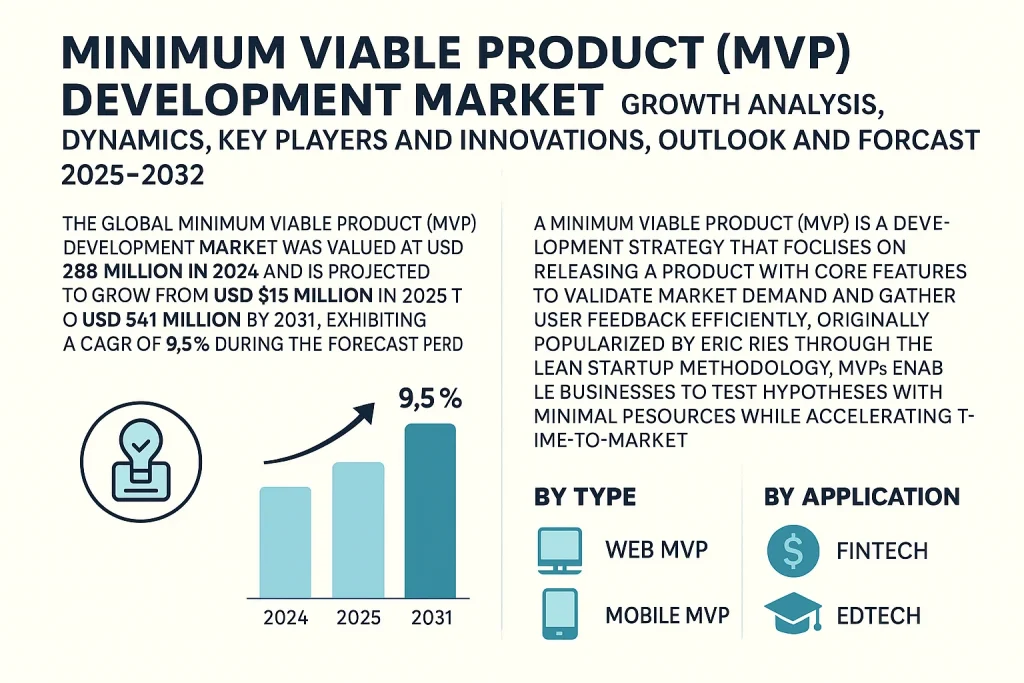
Source: https://www.intelmarketresearch.com/
Reports from CB Insights echo the same truth: only the teams that lock onto product-market fit early survive the noise. That’s why developing your FinTech MVP demands a grounded framework that sharpens your position.
Understand Your Users and the Problem
Before start a fintech company, pause, plan to build MVP, start customer research, and identify your target audience.
Are they young professionals managing multiple subscriptions and payments?
Small business owners struggling to manage cash flow?
Freelancers tracking every invoice and expense?
Identifying your initial user segment is crucial because it defines what problems your MVP should solve first and sets the stage for every design and feature decision.
Next, dive into their urgent financial pain points.
What frustrates them most about handling money today? Slow transactions? Hidden fees? Confusing budgeting tools? Late payment notifications?
The sharper your understanding of these frustrations, the more your MVP can feel like a lifeline rather than just another app.
Then, define what success looks like from their perspective.
Is it instant payments? Better visibility of cash flow? Automated savings or alerts that actually help them stay on track?
Every feature you design, every workflow you build, should aim to deliver this outcome. The moment your users feel their problem is truly understood and addressed, you’ve earned their trust.
Understanding your users protects you from wasting time on features no one cares about. Each insight becomes a foundation for user-centric design, compliance planning, and scalable architecture.
By starting with this clarity, you ensure that your FinTech MVP is relevant and ready to address real financial needs from day one.
What Core Features will Make Your MVP Feel Real to Users?
At the heart of your FinTech MVP lies the wallet. It’s not just a feature, it’s the lifeblood of your product. Every dollar added, stored, sent, or spent flows through this layer. If it doesn’t feel solid, nothing else matters.
Start here, and make it reliable, intuitive, and reassuring.
Think about the journeys your users will take. Adding money should be effortless. Sending or transferring funds should feel immediate and secure.
Spending and withdrawing should never leave them guessing if their money is safe. Each flow should answer unspoken questions:
“Did it work?” “Is my money really here?” Your MVP’s credibility is built one seamless interaction at a time.
Once the foundation is steady, you can layer in enhancements. Insights that reveal spending patterns. Rewards that nudge users to engage more. Basic credit or investment options that extend value without overwhelming the experience. These core value propositions are opportunities that deepen trust and connection, but only after the core flows are flawless.
The lesson for founders is simple:
Build MVP with the heart first, then the body. Your wallet is the proof that your product works, your flows are the proof that users can trust it, and optional unlocks are the proof that you’re thinking beyond the basics. Get this right, and every future feature rests on a foundation that feels effortless and meaningful.
Architecting Your FinTech MVP: Frontend, Backend, and Integrations
Building a FinTech MVP is like constructing a bridge over a turbulent river. Every piece the screens users see, the logic running invisibly, the external connections to banks and payment gateways must align perfectly.
A small flaw can cause the whole structure to collapse. Users are impatient, cautious, and quick to leave if the experience isn’t seamless.
To succeed, your architecture should focus on three essential layers: Frontend, Backend, and Integrations. Each layer has its own challenges, and understanding where users get stuck can help you design smarter solutions.
Frontend: Designing the Interface Users Trust
The frontend of a FinTech product is more than just a screen layout; it’s the user’s first handshake with your brand. It’s where trust is either won in seconds or lost forever. A poorly designed interface can make users hesitate before their first transaction; a clear, responsive one makes every interaction feel effortless and secure.
When building this layer, Adalo becomes a powerful ally for founders and small teams. Adalo has 1 million users building 1 million apps and processes 20 million daily data requests. More than 2,000 websites use it, and over 2 million end users rely on Adalo apps.
It allows you to transform interface ideas into interactive screens without needing to code. Using Adalo’s visual builder, you can quickly move from wireframes to functional prototypes, letting real users experience your product before it ever connects to a backend.
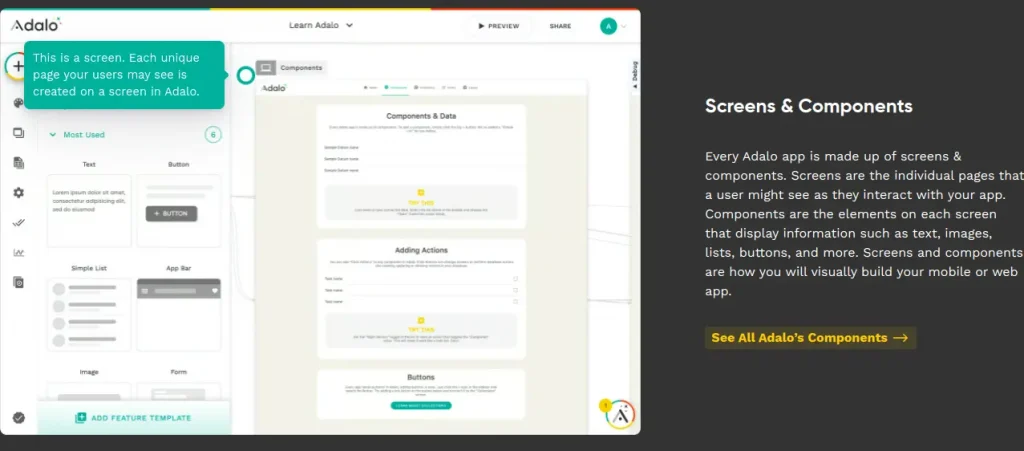
Structuring Your FinTech Frontend in Adalo
Every FinTech app revolves around a few key journeys: onboarding, adding or transferring money, viewing balances, and tracking transactions. These journeys should feel continuous, predictable, and transparent. In Adalo, that structure begins with creating your essential screens:
Onboarding and Login: Collect only the must-have details: name, email, phone number. Keep the form short and frictionless.
Dashboard: The wallet overview where users check balances, recent transactions, and access core actions like Add Money or Send Money.
Transaction Screens: Dedicated spaces for adding, sending, and withdrawing funds. Each action should include confirmation prompts and instant visual feedback.
Transaction History: A transparent log of every movement organized clearly, color-coded for inflows and outflows, and easy to navigate.
Think of the navigation flow like a story — Sign Up → Wallet Overview → Action → Confirmation → Review. If any step feels uncertain or hidden, users may drop off.
Designing for Clarity and Confidence
Financial apps carry an emotional weight. Every button and message must communicate safety. In Adalo, simplicity is a design advantage you can maintain consistency through fonts, colors, and layout without diving into code.
- Use clear labels — avoid abbreviations and jargon.
- Highlight the primary action — one call-to-action per screen.
- Provide feedback instantly — show visual cues like checkmarks, success toasts, or updated balances.
- Handle errors gracefully — replace technical messages with plain, guiding language (“Transaction failed. Please try again.”).
A minimalist design not only looks professional but also improves user trust. Financial interfaces overloaded with icons or animations tend to feel risky or confusing.
Integrating Logic Behind the UI
While Adalo handles the visual layer, it also lets you embed logic validations, conditions, and confirmations. For example:
- You can restrict transactions above a certain limit until verification is complete.
- You can trigger success pop-ups or redirect flows once a payment completes.
- You can store temporary transaction data in Adalo’s collections before syncing it with your backend (like Xano).
These small details make the prototype feel like a real financial system, even before backend integration.
Building Trust Through Visual and Interactive Cues
FinTech users depend on reassurance. Subtle design elements, balance refresh animations, security icons, or transaction confirmations carry more psychological weight than most features.
In Adalo, you can build these cues visually:
- Confirmation modals before sending or withdrawing funds.
- Subtle color transitions when balances update.
- Notifications or banners for successful actions.
Each interaction should reinforce that the app is stable and reliable. If a user ever wonders, “Did that work?”, the interface has already failed its first trust test.
From Prototype to Production
Once your Adalo UI feels consistent and natural, connect it to your backend APIs. This is where tools like Xano come in, turning your visual flows into real transactions, data, and analytics. The goal is to keep the frontend unchanged while powering it with actual logic underneath.
The best FinTech interfaces don’t just look clean; they behave consistently under real conditions. With Adalo, you can design, test, and iterate on that experience visually before ever touching code, saving both time and development cost.
Backend: The Invisible Engine
While the frontend earns a user’s trust, the backend proves it. This is the silent machinery that keeps every balance accurate, every transaction consistent, and every update instant.
When building your backend with Xano, you’re not just creating an API; you’re designing the invisible financial engine that powers your app’s entire credibility. Xano allows you to define logic, store and secure data, connect external APIs, and automate workflows, all without writing extensive server-side code.
Understanding the Role of Your Backend
Think of the backend as the command center. When a user sends money through your Adalo interface, that action doesn’t just “happen”; it travels through the backend, which performs dozens of invisible checks before confirming success.
It verifies account balances, updates ledgers, triggers notifications, and rolls back if anything fails mid-transaction. This invisible orchestration is what makes a fintech app feel dependable and real.
Common Backend Challenges
Every fintech system eventually faces similar challenges:
- Inconsistent balances: Transactions update one wallet but not the other.
- Partial payments: Network errors interrupt transfers halfway.
- Slow responses: Users wait too long for confirmation, assuming the transaction failed.
The right backend architecture prevents these issues by ensuring each operation either completes fully or doesn’t execute at all.
Building a Reliable Backend with Xano
A strong fintech backend depends on five pillars — business logic, database structure, API orchestration, error handling, and auditing. Xano lets you implement all five visually and programmatically, bridging simplicity with scalability.
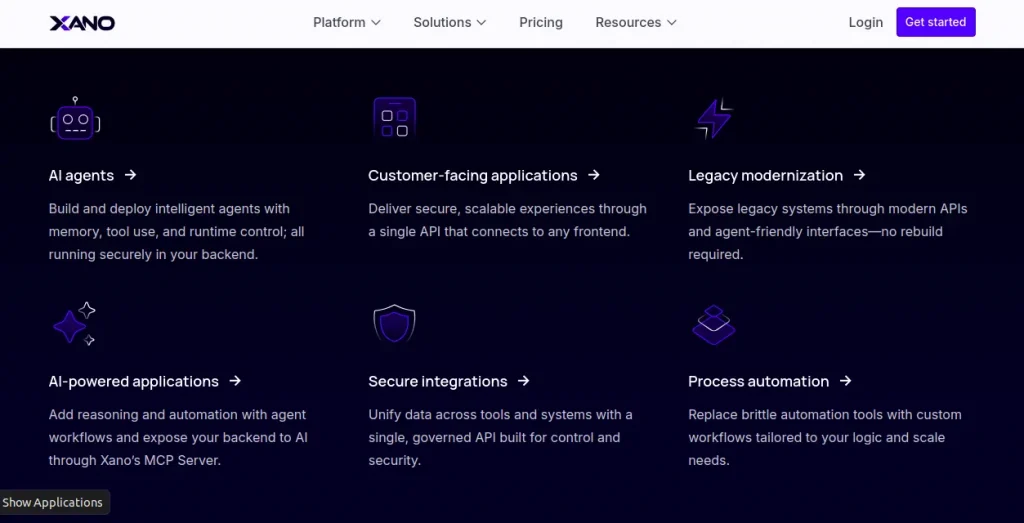
1. Business Logic: The Rules That Drive Trust
Your backend logic defines how money moves — who can send, how much, and under what conditions. In Xano, you can create “functions” to handle:
- Wallet debits and credits
- Spending limits and transaction validation
- Duplicate transaction prevention
- Reward points or cashback calculations
For example, when a user initiates a transfer, Xano validates their balance, deducts the amount, updates the recipient’s wallet, records the transaction, and sends a success response — all within one automated workflow.
2. Database Management: Structuring Financial Data
Behind every smooth user experience is a precise database schema.
In Xano, you can define structured tables (collections) for:
- Users: Authentication, KYC status, permissions.
- Wallets: Balances, currency, linked accounts.
- Transactions: Amount, timestamp, sender, receiver, and status.
- Audit Logs: Internal records for compliance and error tracking.
Each table must be interconnected. This structure ensures that if an auditor or regulator checks your records, every balance can be traced back to a verified transaction.
3. API Orchestration: The Connective Tissue
Your backend acts as the bridge between your Adalo frontend and external financial systems. In Xano, each API endpoint you create serves a specific purpose — proof of concept example:
- /send_money connects Adalo’s “Send” button to your wallet logic.
- /add_money integrates with a payment gateway to update wallet balances.
- /get_transactions fetches logs for the user’s transaction history.
Xano lets you define input/output schemas, validation rules, and authentication tokens — ensuring every API call is secure, predictable, and fast.
4. Error Handling and Rollbacks: Keeping the System Honest
In finance, failure handling is just as important as success. If a user sends ₹1,000 and the connection drops mid-way, the backend must automatically detect that incomplete state and roll back the operation.
In Xano, you can define conditional logic and fail-safes:
- If a credit entry doesn’t complete, the debit is reversed.
- If a gateway times out, a retry sequence is triggered.
- If the API logic fails, a notification alerts admins instantly.
These invisible protections prevent confusion, complaints, and mistrust.
5. Ledger & Auditing: The Foundation of Financial Accuracy
Fintech runs on one timeless rule — every debit must have a corresponding credit. This is what your double-entry ledger enforces.
In Xano, you can create a ledger table where each transaction generates two entries: one debit, one credit. Automated audit functions compare these records with wallet balances to detect mismatches. Add periodic reconciliation workflows that run nightly, ensuring data integrity and compliance readiness.
External Integrations: Connecting Your MVP to the Financial World
Your FinTech MVP doesn’t live in isolation.
Behind every balance update, payment, or identity check lies a network of banks, payment gateways, and verification providers working silently in the background.
These external integrations are where your app meets the real financial world and where user trust can be won or lost within seconds.
When integrations run smoothly, users hardly notice them. But when something breaks, a payment fails, or a KYC check times out, confidence erodes instantly. That’s why building this layer requires both a technical team and thoughtful design.
Understanding the Integration Layer
- Adalo → collects user input and triggers requests.
- Xano → receives the request, processes business logic, and calls external services.
- Gateway / Bank API → executes the transaction and returns the status.
Common Friction Points
Payment Failures Without Clarity
Users often see a generic “Transaction failed” with no context. This usually happens when the backend times out, the payment gateway returns an ambiguous code, or the client-side never receives a proper response.
Your dev team implements full error-capture pipelines, mapping every gateway error code to a clear, human-readable message. They also add transaction monitoring, retry logic, and graceful fallbacks, ensuring users always know why a payment failed and what to do next.
Confusing KYC Rejections
“Verification error” kills onboarding. Most users don’t know if the issue is lighting, document blur, mismatched details, or an expired ID.
They integrate smarter KYC flows—step indicators, auto-detection for poor image quality, document re-upload options, and plain-language explanations. This reduces abandonment and gives users confidence during verification.
Delayed Transactions Due to Slow External APIs
Even a 5–7 second delay in balance updates feels like money has vanished. External banking APIs often cause this lag.
Engineers set up asynchronous workers, webhooks, and queued processing so slow tasks run in the background. Meanwhile, users see instant UI states like “Processing…”, reducing frustration and preventing duplicate transactions.
Best Practices for Seamless Integrations
1. Payments: Building a Reliable Money Flow
Payments are the heartbeat of any FinTech MVP. Adding funds, sending money, or withdrawing to the bank must feel instant and accurate — and that reliability comes from how well the development team orchestrates the backend and gateway integrations.
A skilled team helps you select and configure the right payment gateway (Stripe, Razorpay, PayPal) based on region, compliance, and licensing. They wire up Xano and Adalo so that once Xano confirms a payment, the UI reflects it immediately with real-time balance refreshes.
They also implement quite safeguards users don’t see — automatic retries when the network blips, idempotent endpoints to prevent double-charging, and clear, human-friendly error messages instead of generic failures.
2. KYC & Identity Verification: Trust Starts Here
KYC is more than a checkbox; it’s the first layer of trust and regulatory protection. A development team ensures your KYC flow is both compliant and user-friendly, without overwhelming users at the MVP stage.
They design phased onboarding starting with essentials (name, email, phone, ID number) and expanding later to full verification like document scans, facial matching, and address proofs. They also create clear communication paths so every rejection includes a reason and a next step.
A competent team integrates KYC providers such as Onfido, Sumsub, or IDfy securely and asynchronously, ensuring the app never feels stuck.
3. Ledger & Auditing: The Trust Backbone
Every ₹10 top-up or ₹10,000 transfer must be traceable, balanced, and tamper-proof. This requires a development team that understands financial-grade engineering.
They implement a double-entry ledger, ensuring every debit has a matching credit, preventing phantom balances or mismatched accounts. They build real-time workflows so Xano logs entries as they happen and pushes updates to Adalo instantly.
Beyond this, teams set up automated reconciliation scripts, fraud detection alerts, and anomaly monitoring, catching issues before they become losses. They also maintain immutable audit logs, which protect the business in disputes, reviews, and compliance checks.
How to Validate Your FinTech MVP Before Launch
Building your FinTech MVP software development is a huge milestone, but before you introduce it to real users and real money, it must earn something even more valuable than traction: trust. This is where testing and validation come in.
Your product may look perfect in theory, but the financial world leaves no room for uncertainty. Every transaction, every identity check, every API call must behave exactly as intended. Testing is how you bridge the gap between what works on paper and what works in reality.
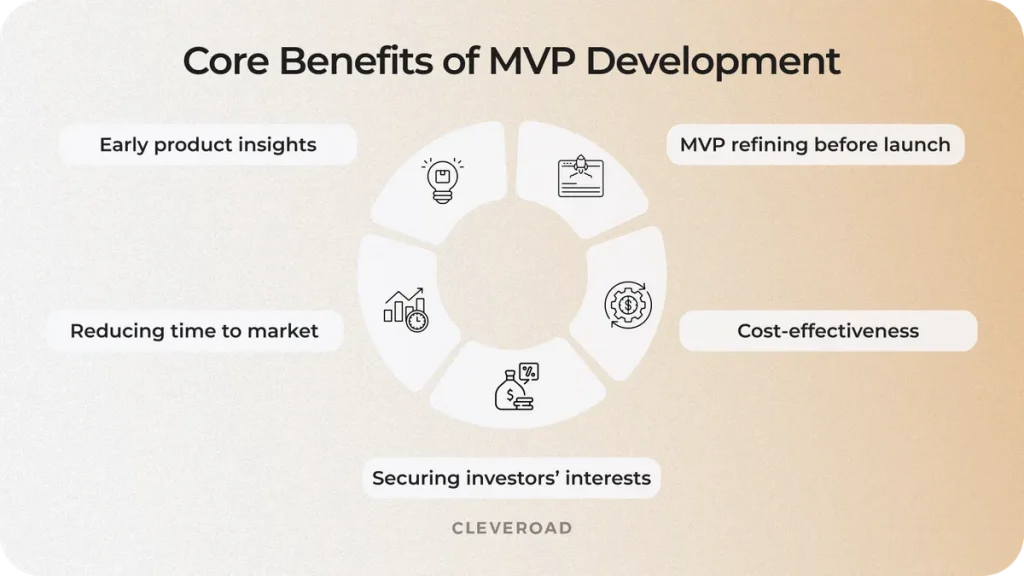
This stage is a credibility checkpoint. It protects your users, your brand, and your future. By systematically validating your app’s flows, logic, and integrations, and ensure that the MVP development process can handle real-world pressure.
Source: https://www.cleveroad.com/
This includes confirming that core features behave consistently, edge cases are properly managed, and every interaction aligns with the expectations of your ideal customer profile. When this checkpoint is done right, your MVP performs reliably in all environments.
For founders using Adalo and Xano, validation is where your prototype transforms into a trustworthy financial product. It’s your opportunity to simulate real usage, refine the user experience, detect weaknesses, and strengthen your security posture all before launch day.
- Test your product safely in sandbox environments before moving to live payments.
- Validate every flow from onboarding to wallet transactions for accuracy and consistency.
- Involve real beta users to uncover friction points you can’t see from the dashboard.
- Run essential security, compliance, and performance checks that protect both users and your brand.
Launching an MVP fast doesn’t matter, but launching right does. Every bug fixed, every error message improved, and every test passed becomes part of your users’ first impression of safety.
How to Confidently Launch Your FinTech MVP
You’ve built, tested, and validated your FinTech MVP app development. Now comes the defining moment: launching it into the real world.
But launching a FinTech product isn’t just about hitting “publish.” It’s about orchestrating a controlled rollout that balances excitement with safety, growth with compliance, and speed with stability.
Unlike other startups, a FinTech launch involves real users, real data, and often real money. One small misstep can shake confidence, while a thoughtful rollout can build lasting credibility and organic growth.
This stage is where you stop building and start learning from live users.
Plan a soft launch or private beta: Start with a small group of trusted users like friends, early adopters, or niche communities to monitor behavior and feedback in a low-risk environment.
Track performance in real time: Use analytics tools to watch transaction flow, user engagement, and app stability from the first live minute.
Establish trust touchpoints: Communicate clearly about security, transaction limits, and customer support. Users should feel guided, not guessing.
Gather feedback loops: Collect structured, valuable insights from beta testers about what worked, what confused them, and where they hesitated. Use this data to refine your flows and fix friction before scaling.
Scale gradually: Once you’ve resolved critical bugs and confirmed stable performance, expand access region by region or feature by feature, ensuring every layer (frontend, backend, and integrations) scales smoothly.
Build communication readiness: Prepare FAQs, onboarding guides, and in-app tooltips. Transparency builds credibility faster than features do.
Your MVP’s launch is definitely not the finish line, but the building of a long-term relationship between your users and your vision.
A FinTech product that launches responsibly sends a message:
“We don’t just move fast… we move safely.”
When done right, a steady, user-focused rollout sets the stage for organic growth, regulatory confidence, and investor trust.
How to Refine, Grow, and Scale Your FinTech MVP the Smart Way
You may think launching your fintech MVP is the end, but I say it’s not; this is where your learning journey continues. The moment your first users interact with your product, you enter a new phase: real-world optimization.
This stage separates products that fade after launch from those that evolve into trusted financial platforms. Remember, your early users are your most valuable feedback engine.
Every click, every hesitation, and every support ticket is a clue to what works and what doesn’t. Growth now depends not just on adding features, but on refining systems and improving retention.
1. Listen Deeply: Turning Feedback into Product Roadmaps
Start by analyzing real user behavior.
- Use in-app analytics (like Mixpanel or Adalo Analytics) to see where users drop off.
- Tag support requests in categories — onboarding, payments, verification — to identify recurring friction points.
- Host short user interviews or surveys asking, “What almost stopped you from using this app?”
Translate these insights into your next sprint goals. Each update should solve a real user frustration, not just add shiny features.
Create a “User Pulse Board,” a shared document where your team lists every major feedback theme, priority score, and action taken. Transparency keeps improvements user-centered.
2. Optimize Your Backend for Growth
As usage scales, your backend (especially on Xano) will face new demands: more transactions, higher API loads, and stricter compliance expectations.
Here’s how to future-proof it:
- Enable caching and pagination in API calls to handle larger datasets smoothly.
- Set up automated reconciliation between wallet balances and ledgers to prevent data mismatches.
- Introduce versioned APIs so that when you upgrade logic or endpoints, older app versions continue working safely.
- Monitor response times; anything above 2 seconds in financial flows feels broken to users.
These invisible optimizations make your MVP product development feel enterprise-ready long before it becomes one.
3. Build Retention Loops to Keep Users Coming Back
A core value proposition starts with lean startup methodologies: you first identify and address a problem, then build a solution that delivers real value from day one.
Your go-to-market strategy should communicate this focus with precision. And in FinTech, growth isn’t driven by acquisition, it’s driven by retention. Once users trust you with their money, consistency and clarity become the strongest levers for long-term engagement.
Practical retention tactics include:
- Personalized insights: Use analytics from Xano to generate spending summaries or reminders in Adalo.
- Referral programs: Reward users for bringing in friends, but ensure transaction integrity and fraud checks.
- Gamified milestones: Simple badges or achievements for completing transactions or maintaining savings streaks build habit loops.
- Email & push automation: Send contextual updates, “You saved ₹500 this week!” or “Your wallet just hit a new balance milestone.”
Each loop reinforces the idea that your product is active, evolving, and watching out for the user’s best interest.
4. Plan for Feature Expansion
Once your core wallet and transaction systems are stable, consider expanding horizontally into:
- Credit: Small short-term lending options or BNPL integrations.
- Investments: Simple recurring deposit features or mutual fund links.
- AI-based coaching: Predictive analytics that suggest financial actions (e.g., “You’re spending more than usual on subscriptions this month”).
But scale with purpose, never rush to add features faster than your infrastructure or compliance can handle. Each new module should go through the same validation process as your core MVP methodology.
5. Strengthen Trust and Compliance
With growth comes scrutiny from users, investors, and regulators.
Ensure your systems remain transparent and audit-ready by implementing clear audit logs for every transaction in Xano, securing data with encryption both in storage and transit, and staying compliant with region-specific standards like PCI DSS, GDPR, or RBI data localization rules.
Communicate openly with users about maintenance or delays. Transparency turns uncertainty into confidence, the most valuable currency in FinTech.
6. Measure What Matters
Post-launch, your metrics become your map. Focus on KPIs that reflect real progress, such as transaction success rate (ideally above 99%), 30-day active user retention, average transaction time, and support resolution speed. Faster responses build loyalty.
Use dashboards in Xano or connect external tools like Google Data Studio to visualize trends. Making decisions based on live data is what separates resilient startups from reactive ones.
Partner with Appkodes
Appkodes, a leading startup mobile app development company, helps businesses understand the market landscape they’re entering by guiding them through structured competitor analysis and helping define an accurate ideal customer profile.
Appkodes also supports businesses in planning and managing their development costs. This includes clarifying no code MVP development costs, mapping initial development costs, and identifying where reduced costs are achievable without compromising technical quality.
Whether the goal is to build mvp, or to launch a mobile app or a cross-platform experience, the focus remains on helping teams build a minimum viable version that is financially and strategically sound.
Beyond planning, our team assists businesses in shaping the right execution framework. This involves selecting the appropriate tech stack for MVP, organizing clean software development for MVP, and refining design visuals and user interface design.
With a priority on delivering the core features that users need from the moment they’ve installed the app, we ensure businesses begin with a strong, user-aligned foundation.
Ready to build MVP with clarity, confidence, and speed? Connect with our team today and start shaping your product the right way.

Arun Andiselvam
Founder of AppKodes. As a serial entrepreneur, I have successfully established five brands over the past 12 years. After creating a successful rank tracker for SEO agencies, I am currently dedicated to developing the world's first SEO Project Management software.