How to Develop Inventory Management Software for Mobile Phone Reselling Shop
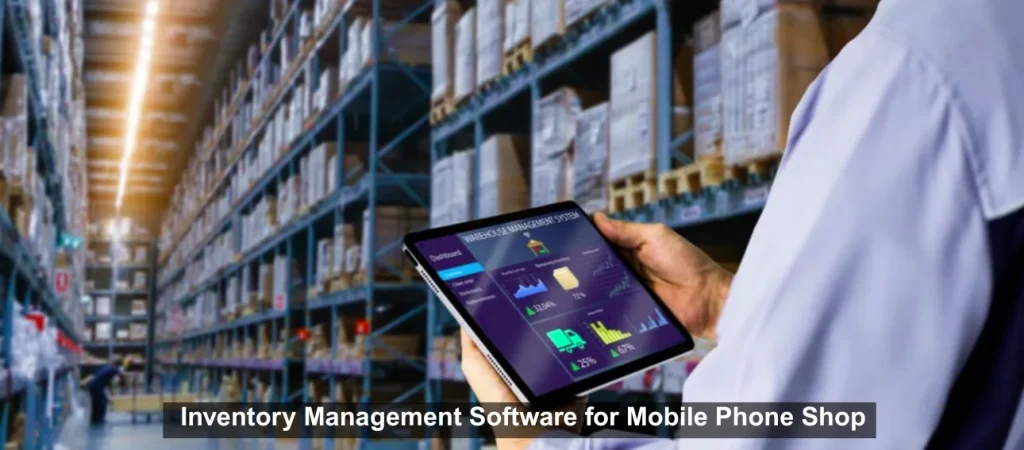
Did you know that mobile phone resellers who manage inventory efficiently can protect up to 20% of their revenue that would otherwise be lost to mistakes?
A single misplaced accessory or overlooked warranty doesn’t just cause losses; it also slows down sales and reduces customer trust. Now, imagine the opposite: a system that keeps track of every model, storage variant, and unique IMEI in real time. Instead of chasing errors, shop owners can focus on growth, faster transactions, and better service.
This shift has grown alongside the mobile industry itself. In the 90s, phones were bulky, expensive, and limited to a small audience, making inventory processes simple. By the 2000s, mobile phones became smarter, affordable, and widely accessible.
That evolution sparked the smartphone revolution and, with it, a booming reselling market where upgrades, trade-ins, and refurbished devices drive nonstop movement.
What once could be handled with pen and paper is now an opportunity to scale with technology. It’s no surprise that 85% of global companies use integrated mobile-based systems, with the adoption of mobile inventory solutions increasing by 43% in recent years.
For mobile phone resellers, smart inventory management isn’t just about avoiding mistakes; it’s about unlocking efficiency, competitiveness, and long-term growth of your warehouse management.
Today, whether you run a single mobile shop or manage a chain of stores dealing in refurbished and used cell phones, having a dedicated mobile shop management system software is essential. A purpose-built cell phone inventory management software helps resellers track every device at the IMEI level, manage grading for refurbished phones, and streamline day-to-day operations.
For wholesalers handling bulk volumes, inventory management for cell phone wholesale ensures that no device slips through the cracks and every transaction is accounted for in real time.
In this guide, we’ll explore how to develop inventory management software for mobile phone reselling shop. Before that, let’s begin by knowing what inventory management software is.
What is Inventory Management Software for Mobile Phone Reselling Shop?
Inventory management software for mobile phone resellers is a specialized digital system designed to track, organize, and manage stock with accuracy. It records every detail of a device, including model, storage variant, and IMEI number, while keeping updates in real time.
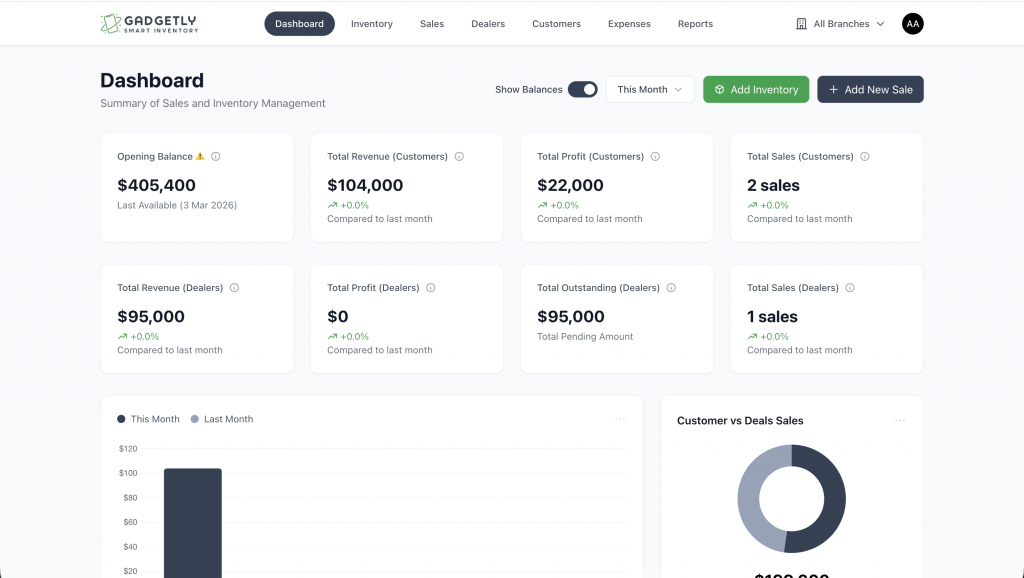
Unlike manual data entry methods, such as Google Sheets, it centralizes all inventory data, making it easier to monitor stock availability, reduce errors, and maintain full control over safety stock flow. Next, get to know the development process.
In the context of used and refurbished devices, this type of software functions as an ERP software for refurbished cell phones IMEI inventory, giving shop owners the ability to log each device’s unique identifier, track its refurbishment status, and manage the complete lifecycle from procurement to sale.
A robust mobile phone inventory software also supports IMEI tracking inventory management software capabilities, ensuring that every phone in your inventory of mobile phones is fully traceable and compliant with industry standards.
A Step-by-Step Development Process
The very first step in developing an inventory management mobile app is recognizing that mobile phone reselling is unlike any other retail business.
Step 1: Understand the Unique Needs
Unlike general retail, where goods are often mass-produced and identical, mobile resellers handle devices with unique identifiers such as IMEIs, multiple storage variants, accessories, and varying warranty periods.
On top of that, the frequent trade-ins and refurbished sales add another layer of complexity. Understanding these unique needs ensures that the system is not just another generic inventory tool, but one designed to solve the real problems resellers face daily.
For businesses dealing specifically in refurbished and used devices, the software must function as a comprehensive ERP software for used cell phones refurbishment inventory IMEI. This means the system should support mobile device grading solutions inventory management integration, allowing resellers to classify devices based on cosmetic and functional condition.
Additionally, cell phone diagnostic tools integration with inventory systems ensures that every device is tested and graded before being added to the sellable stock.
Step 2: Discovery Phase
Once the needs are clear, the next step is inventory planning, how the software will actually work. This stage involves mapping out the reseller’s workflow from receiving shipments to logging IMEIs to tracking sales and trade-ins.
Using no-code tools, wireframes can be created to show what the screens and dashboards might look like.
These wireframes act as a visual guide for stakeholders, allowing them to give feedback early on and make adjustments before any actual development begins. This reduces risk and speeds up the development process.
During discovery, it is also important to define how the system will handle IMEI level inventory management software for refurbished phones.
Mapping out the workflow for ERP software for used cell phone refurbishment inventory imei tracking from device intake through testing, grading, repair, and final listing helps create a system that mirrors real-world operations.
This phase should also account for how the mobile shop stock management software will sync data across procurement, sales, and accounting modules.
Step 3. UX/UI Design
A mobile reseller needs to find, update, and verify stock details within seconds. That’s why a well-designed interface is crucial.
At this stage, the focus is on building a user-friendly dashboard with features like drag-and-drop navigation, advanced search filters, barcode scanner or QR codes scanning, and quick action buttons for tasks such as “add new device” or “check warranty.”
The design should minimize manual effort while making inventory tasks faster and more accurate, especially for employees who may not be very tech-savvy.
The interface of a phone shop management system should be designed so that even non-technical staff can navigate IMEI lookups, refurbishment status checks, and stock transfers with ease.
A well-designed mobile shop management system provides quick-access panels for ERP software for refurbished cell phones inventory management IMEI, making daily operations like device intake, grading, and customer lookup feel seamless.
Step 4: MVP Development
Instead of developing everything at once, the smarter approach is to start with an MVP.
This is a simplified version of the software that includes the most important features: IMEI-based device tracking, stock monitoring, low-stock alerts, and warranty/repair logs. Using pre-built no-code modules makes it possible to assemble this MVP quickly, test it in real business environments, and gather feedback.
From there, advanced features like predictive stock analytics or marketplace integrations can be added later.
For resellers focused on the refurbished market, the MVP should prioritize features that support ERP software for refurbished cell phones inventory IMEI tracking and basic device grading workflows.
Starting with core inventory management app development ensures you validate the most critical features first, such as IMEI-level tracking and refurbishment status updates, before investing in advanced modules like analytics or marketplace integrations.
Step 5: Quality Assurance and Testing
No inventory system can afford errors; a single miscalculation could mean a missing phone or thousands of rupees/dollars in lost sales. This stage involves rigorous testing, where developers simulate real-life scenarios such as bulk uploads of new stock, sales with trade-ins, or warranty expiration alerts.
Automations are checked to ensure they trigger correctly (e.g., when stock levels hit a set threshold), and custom integrations are tested to make sure data flows smoothly across all connected systems. The goal is to catch and fix any issues before the software is rolled out to staff.
Step 6: Deployment and Integration
Finally, the system is deployed into the reseller’s actual workflow. But deployment isn’t just about “turning it on.” It also includes integrating the software with existing tools, such as POS systems, eCommerce platforms, or online marketplaces like Amazon or Flipkart (if the reseller sells online).
No-code integration platforms make this much simpler, allowing for automated data syncing across systems. This ensures that the reseller always has an accurate view of what’s in stock, whether selling in-store or online.
At deployment, the ERP for used cell phones refurbishment inventory IMEI module should integrate tightly with your existing POS and accounting tools. A mobile store management software that connects with third-party marketplaces, diagnostic tools, and payment gateways creates a unified ecosystem.
This is where ERP solutions for used cell phone refurbishment inventory IMEI tracking deliver the most value, by ensuring that device-level data flows automatically across every touchpoint in your business.
Step 7: Scaling, Updates, and Post-Launch Support
The journey doesn’t end once the software is deployed; in fact, that’s where the real value begins. Mobile reselling businesses evolve quickly, with new phone models launching every month, changing customer demands, and the possibility of expanding into numerous stores or multiple channels. That’s why the software must be designed for scalability and flexibility.
Post-launch support should include the ability to modify workflows as business needs change, add new modules such as warranty tracking or analytics dashboards, and expand integrations to cover eCommerce marketplaces or payment systems.
Regular updates and continuous support ensure the system doesn’t have outdated software, but to stay aligned with the fast-moving mobile market, you should have these features.
As your business grows, the software should scale into a full-featured ERP software for used cell phone refurbishment inventory management IMEI. Inventory management software development is not a one-time activity but a continuous process.
Post-launch, adding modules for inventory management mobile app development services, advanced reporting, and multi-warehouse support ensures your mobile inventory management system evolves alongside your business.
Must-Have Key Features Everyone Should Know
When it comes to developing efficient inventory management software for a mobile phone reselling shop, certain features are non-negotiable. These are the tools that transform a basic system into a reliable business engine. Here’s what your software must include:
1. Real-Time Stock Management
Every reseller deals with multiple brands, models, and storage variants, each tied to a unique IMEI. Real-time tracking ensures you always know exactly what’s in stock, what’s been sold, and what needs replenishing, preventing costly errors and missed sales opportunities.
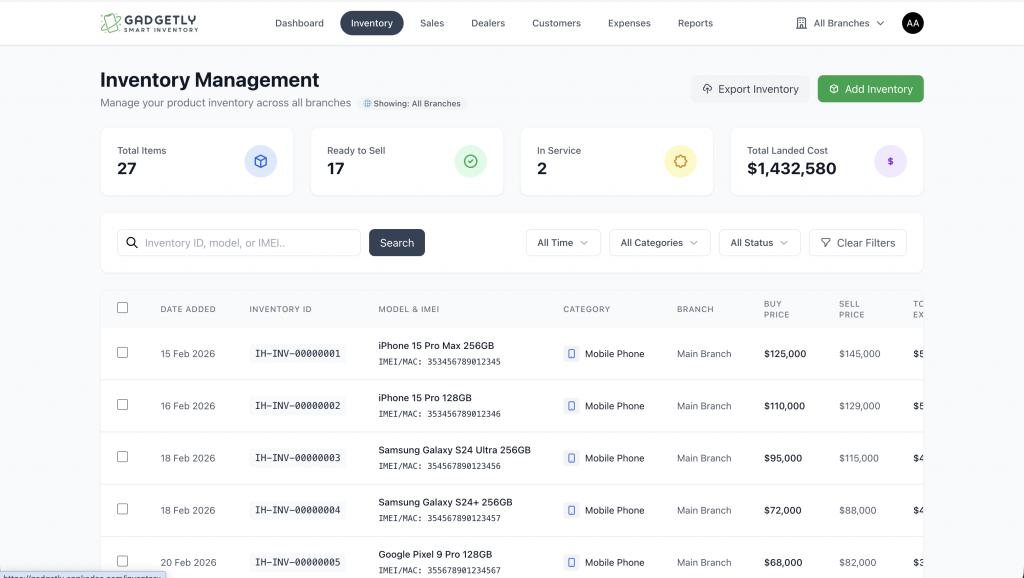
A mobile based inventory management system with real-time capabilities is the backbone of any mobile shop inventory management software. It ensures that your mobile inventory software reflects accurate stock levels across every location, whether you’re operating from a single shop or managing inventory of mobile phones across multiple outlets.
2. Barcode & QR Code Scanner
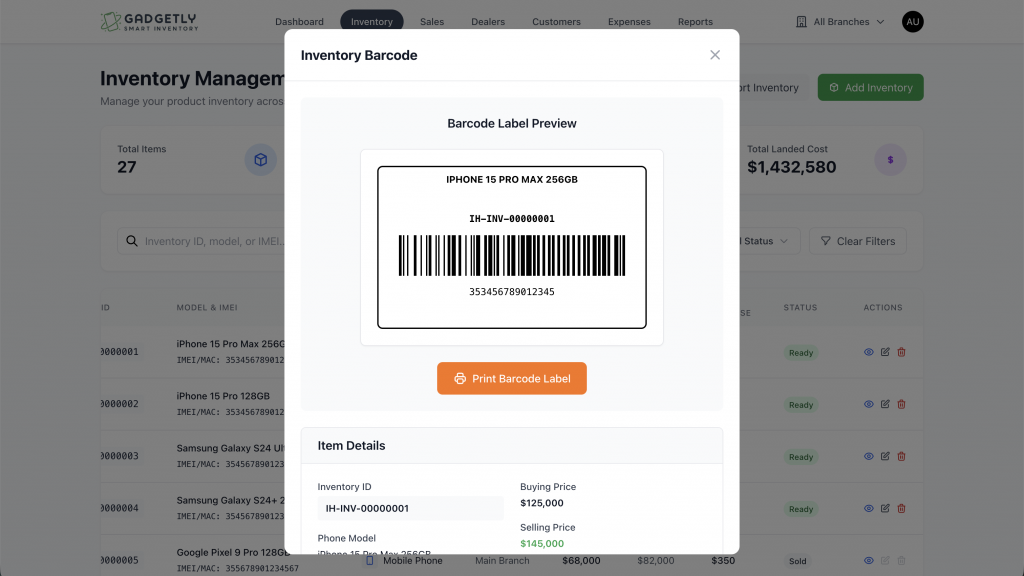
Manually entering phone details is slow and prone to mistakes. With barcode or QR code scanning and branded labels created with an AI logo maker, effective inventory updates can be done instantly using mobile devices, making the process faster, more accurate, and less dependent on manual labor.
3. Sales & Purchase Order Management
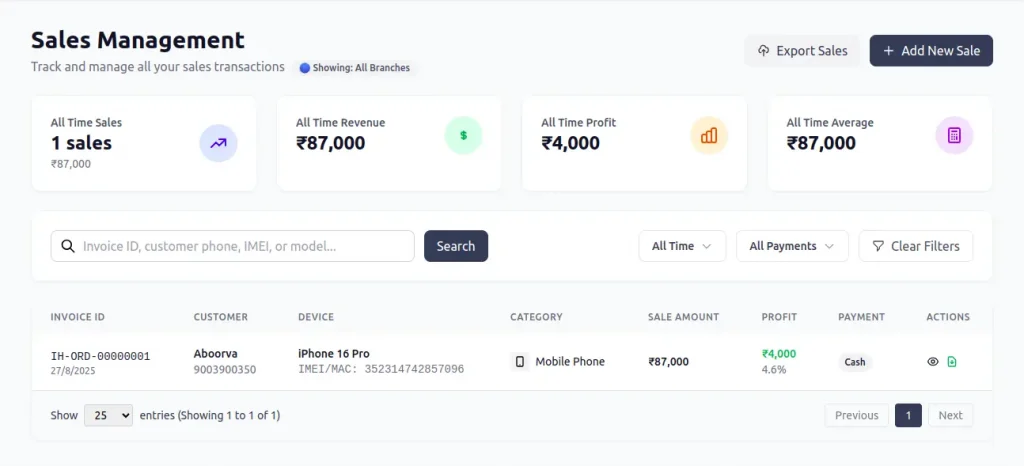
A smart system should automatically update stock levels the moment a sale or purchase orders is recorded. Instead of juggling spreadsheets or manually adjusting numbers, the software takes care of it, ensuring smooth, error-free order management without custom coding.
4. IMEI & Warranty Tracking
For mobile resellers, IMEI tracking is critical. This feature allows you to log each device’s unique identifier and link it to its warranty details. Automated alerts for warranty expirations prevent disputes, enhance customer trust with cus, and ensure accurate record-keeping.
This feature is the core of any ERP software for refurbished cell phones IMEI inventory management system. With IMEI tracking inventory management software, every device’s journey, from sourcing and refurbishment to sale is fully documented. For resellers dealing in used phones, ERP software for used cell phones refurbished inventory IMEI provides complete traceability that builds customer confidence and simplifies compliance.
5. Reporting & Analytics Dashboard
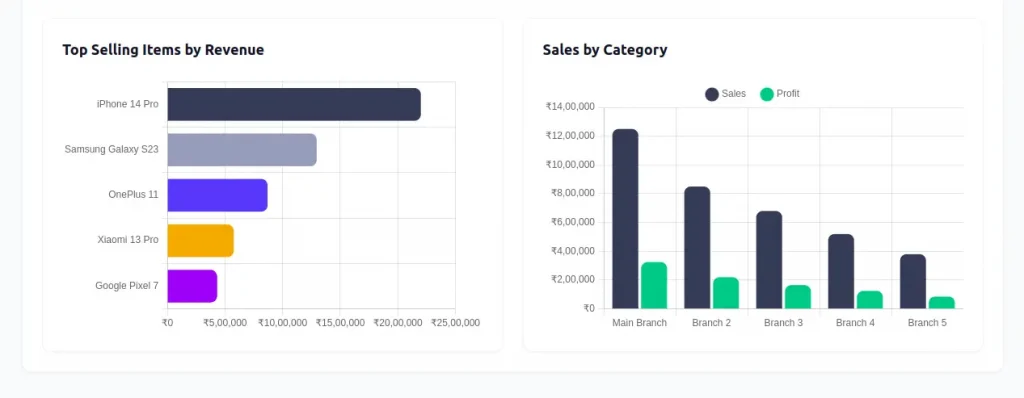
Data is power. An embedded analytics dashboard gives resellers visibility into sales trends, stock movement, and profit margins. With drag-and-drop customization, even non-technical users can create meaningful reports that guide smarter business decisions.
6. Low-Stock Alerts & Notifications
Running out of popular models or accessories can lead to lost revenue. Automated low-stock alerts notify you in advance so you can restock before shortages impact sales. This small feature can have a big effect on customer satisfaction and profitability.
7. Multi-User Access & Roles
In growing shops, different staff members handle different tasks. Multi-user access with role-based permissions ensures that employees see and manage only the parts of the system relevant to them. This protects sensitive data while improving operational efficiency.
8. Cloud Synchronization & Offline Mode
A modern inventory system must work seamlessly across devices. Cloud synchronization ensures that every update is reflected in real time, whether on desktop, tablet, or mobile. At the same time, offline mode allows work to continue without interruption, syncing changes once the connection is restored. Wanna know how to make your inventory software a powerful one? Here are some extra features.
Additional Features That Make Mobile Reseller Inventory Software Powerful
Beyond the must-have core functions, modern inventory management software often includes advanced features that give mobile phone resellers an extra edge. These tools aren’t just about keeping track of stock; they’re about making business operations smoother, faster, and more profitable.
#1. Multi-Location Sync
If you run more than one store, keeping inventory consistent across locations can be a nightmare. Multi-location sync solves this by automatically updating stock levels across all outlets in real time. Whether a device is sold in Store A or returned in Store B, the system ensures that every location reflects the latest numbers.
#2. Integrated Product Photos
With hundreds of models and variants to manage, confusion is inevitable without a visual reference. Integrated product photos allow staff to upload images of each device, making it easier to identify items quickly and reducing mistakes during sales or restocking.
#3. POS & eCommerce Integration
Many resellers sell both offline and online, and switching between systems can create errors. By integrating directly with POS systems and eCommerce platforms through no-code connectors, inventory updates happen automatically across all sales channels. This ensures accuracy, saves time, and prevents overselling.
#4. Kitting & Bundling
Resellers often run promotions that combine a phone with accessories like cases, chargers, or earphones. Kitting and bundling features let you create these packages easily within the system, track them as a single item, and still manage the individual stock components in the background.
#5. Custom Barcode Printing
Not all products arrive with barcodes that match your internal system. Custom barcode printing allows resellers to generate unique labels for devices, accessories, or bundles directly from the software no coding required. This makes scanning, tracking, and sales much more streamlined.
These additional features collectively transform your software from a basic tracker into a comprehensive mobile shop management software. When combined with ERP software for refurbished cell phones or used mobile phones inventory IMEI capabilities, features like multi-location sync, POS integration, and custom barcode printing create a powerful phone inventory system that handles the unique demands of the reseller market.
Now you know about inventory software, now it’s time to know how it benefits you.
How Does This Software Benefit Mobile Phone Reselling Shops?
Modern inventory management software for mobile phone reselling shop does more than track stock; it empowers resellers to run their business smarter, faster, and more profitably. Here’s how:
1. Enhanced Product Traceability
With unique identifiers like IMEIs, each phone can be tracked from the moment it arrives in the store until it’s sold or returned. This level of traceability reduces errors, prevents losses, and ensures that every device is accounted for, giving shop owners confidence in their advanced inventory management system.
2. Efficient Staff Management
Multi-user access and role-based permissions allow shop owners to assign tasks and control who can view or modify inventory. This not only protects sensitive data but also ensures that employees can work efficiently without confusion or overlap.
3. Automated Returns and Warranty Processing
Handling returns and warranty claims manually can be time-consuming and prone to mistakes. Inventory management software automates these processes, linking each device to its warranty details and generating alerts for expiration dates. This streamlines customer service and strengthens trust.
4. Customizable Alerts for Promotions and Expiry
Software can send automated notifications for low stock, warranty expirations, or promotional campaigns. This ensures that no opportunity is missed, whether it’s restocking a best-selling model or alerting staff to a limited-time sale.
5. Data-Driven Insights for Marketing Strategies
Built-in reporting and analytics dashboards provide insights into sales trends, popular models, and customer preferences. Resellers can utilize this data to make informed purchasing decisions, optimize their inventory pricing, and develop targeted marketing strategies, transforming raw inventory app data into actionable business intelligence, but they also need to address the challenges.
Beyond these core benefits, a well-built mobile device inventory management system serves as the foundation for scaling your reseller business.
How can I track inventory and manage sales efficiently using a mobile app designed for retailers? The answer lies in investing in inventory management software development that is tailored to your specific workflow.
A mobile app for inventory management gives shop owners the flexibility to monitor stock, process sales, and view analytics from anywhere, turning the phone inventory into a competitive advantage.
For resellers in the wholesale segment, the reseller market demands precision, and inventory management resellers depend on systems that deliver real-time accuracy across every SKU and IMEI.
Top Inventory Management Pain Points for Mobile Phone Resellers
Running a mobile phone shop has become more difficult after the pandemic. Supply is not always steady, customer demand changes fast, and competition is tough. Modern inventory management software has become a must-have.
How Can I Keep Track of Multiple Models, Colors, and Storage Variants?
After the pandemic, phone supplies can be unpredictable, and demand can change quickly. Keeping track of many models and variants manually is hard. Premium inventory software automatically tracks all models, colors, and storage options in real time. This helps resellers see what is in stock and act fast when certain phones are selling out.
How Can I Avoid Mistakes with IMEIs, Serial Numbers, and Warranty Tracking?
Customers expect accurate information, and mistakes with IMEIs or warranties can cause complaints and lost trust. Modern inventory software automatically monitors IMEIs and warranty dates, performs serial number traceability, and sends alerts for any problems. This makes tracking error-free and helps resellers give fast, reliable service even during busy periods.
This is exactly where ERP software for used cell phone refurbishment inventory IMEI tracking proves its value. By automating IMEI validation and linking each device to its refurbishment history, the software eliminates manual errors.
IMEI level inventory management software for refurbished phones ensures that every serial number is verified, every warranty is logged, and every device’s condition is documented from intake to sale.
How Can I Update Sales and Purchase Records Efficiently?
Demand can change quickly after the pandemic, and slow record-keeping can cause wrong stock counts or missed sales. Inventory software updates stock automatically after every sale or purchase. This gives real-time inventory-related data so resellers can make decisions quickly and avoid mistakes.
How Can I Gain Insights for Smarter Buying and Marketing Decisions?
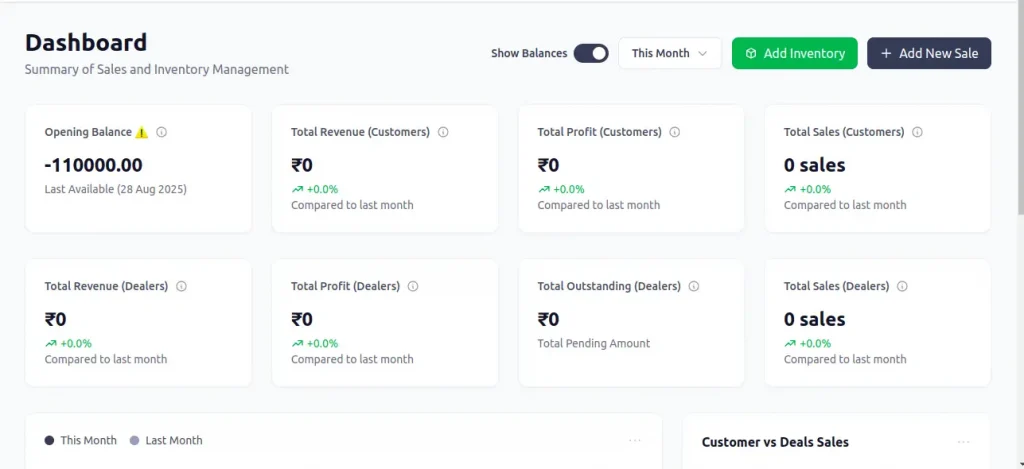
Customer preferences now change fast, and old reports can lead to too much or too little stock. Premium inventory software provides dashboards and analytics that show which phones are selling well. Resellers can use this information to buy the right products and run better promotions.
How Can I Prevent Stock Mismanagement and Lost Revenue?
Popular phones can sell out in hours, while others may sit unsold. Low-stock alerts, automated restocking, and syncing across locations help keep accurate stock counts at the right level. Premium software allows resellers to act quickly, prevent losses, and make more profit.
Preventing stock mismanagement starts with choosing the right inventory management software for cell phone store.
A dedicated mobile shopping software that combines inventory counting software development with automated alerts and multi-location sync ensures that popular devices are always available and slow-moving stock is flagged early.
This is where ERP for used cell phones refurbishment IMEI inventory features make a measurable difference in revenue protection and operational efficiency.
Mini-Case Scenario
Ravi runs a small mobile phone shop. After the pandemic, he noticed that some popular phone models sold out in a day, while others stayed on the shelf for weeks. Manually tracking stock and warranties became confusing, and he sometimes gave wrong information to customers, losing their trust.
After he started using premium inventory management software for mobile phone reselling shop, everything changed. The software tracked all his models, colors, and storage options in real time. It sent alerts for low stock and warranty expirations, updated sales instantly, and showed him which phones were selling fast.
Now, Ravi can restock popular phones quickly, avoid mistakes, and give customers reliable information. His shop runs smoothly, and he earns more without extra stress.
Ravi is happy with how smoothly his shop runs now, but he also worries about data safety. His inventory has sensitive details like customer information, purchase history, and supplier payments.
If this data is lost or stolen, it could harm his business and reputation. That’s why he needs a system that not only manages stock but also protects every piece of information.
How Does Mobile Reseller Inventory Software Ensure Security and Data Protection?
When running a mobile phone reselling shop, inventory data and customer information are extremely sensitive. Losing control over this data can result in financial loss, damage to customer trust, or even legal complications.
Modern inventory management software ensures that all sensitive information is stored securely using encryption, so even if data is intercepted, it cannot be read or misused, keeping both business and customer data automatically record safely.
Not every employee needs access to all information, and inventory software addresses this with role-based permissions.
Shop owners can control who can view or modify critical data sources, ensuring that only authorized personnel can make changes to stock records, financial information, or customer details. This prevents internal errors and protects the business from potential misuse of sensitive data.
Additionally, inventory software is designed to comply with local and international data protection regulations. This ensures that businesses handle customer data responsibly, maintain trust, and reduce the risk of breaches or legal penalties.
By combining secure storage, controlled access, and regulatory compliance, mobile resellers can focus on operations without worrying about data security. The next question might be how to customize and scale.
How Can Inventory Software Be Customized and Scaled for Growing Mobile Shops?
As mobile phone reselling businesses grow, their complex inventory systems need to grow with them. Modern inventory management software development offers flexibility and scalability so shops can expand without overhauling their entire system. Here’s how:
1. Tailorable Workflows and Dashboards
Every shop has unique processes for receiving stock, selling devices, managing trade-ins, and handling warranties. Inventory software allows you to customize inventory flows and dashboards to match your business needs, ensuring that the system works the way you work, not the other way around.
2. Support for Multi-Location and Product Expansion
Growing shops often expand to multiple outlets or add new product categories. Modern systems support multi-location synchronization, keeping product stock updated across all stores automatically. They also allow easy addition of new models, accessories, or bundles without disrupting existing inventory operations.
3. Scalable Solutions Without Coding
The best inventory software is built to scale without requiring complex programming. Adding new features, users, or integrations can be done quickly through a user-friendly interface, making it possible for shops to adapt to growth without relying on technical teams or costly custom development. Read on to know inventory costs.
Scalability also means the software should evolve into a full ERP software for refurbished cell phones inventory IMEI as your business grows. Whether you need to add ERP software for used cell phones refurbishment inventory IMEI tracking modules, expand to new locations, or integrate with additional sales channels, the system should accommodate growth without requiring a complete rebuild.
This flexibility is what separates a basic mobile shop management system from a truly scalable mobile inventory management system.
Estimated Server and Hosting Costs for Mobile Reseller Inventory Software
When planning to implement inventory management software, understanding costs is essential. Cloud-based solutions provide scalability, affordability, so your system grows with your business. Here’s a breakdown of typical inventory costs
| Component | Description | Estimated Cost (per month) |
| Cloud Hosting | Platforms like AWS, Google Cloud, Azure | Varies depending on usage |
| Database Hosting | Managed databases for inventory and customer data | $5 – $20 |
| Backend/API Hosting | Handles application logic, user requests, and transactions | $20 – $100 |
| Recommended Starting Cost | Combined estimated monthly cost for a small-to-medium shop | $50 – $150 |
Future-Proof Your Mobile Inventory Software with Emerging Trends
The mobile phone reselling market is always changing, and inventory management platforms need to change with it. Using new technologies can make your system smarter, faster, and more useful. Here’s how future trends are shaping inventory solutions:
New tools help with the valuation of inventory, so you always know the exact value of the stock you have. With accurate inventory tracking across different phone models and sales points, you can avoid mistakes and make better business choices.
Some resellers prefer to develop a custom system or build an inventory management platform designed just for their business.
This gives them more flexibility and room to grow. At the same time, AI and automation are starting to disrupt inventory management by reducing the need for human intervention, saving time, and cutting down on manual work.
By using these trends, mobile phone resellers can keep up with the market and turn inventory management into a strong advantage for growth.
1. Artificial Intelligence and Machine Learning for Demand Forecasting
Artificial Intelligence and Machine Learning can analyze past sales data and market trends to predict which models or accessories will be in high demand. This helps resellers stock the right products, reduce overstocking, and maximize profitability.
2. IoT Integration for Real-Time Tracking
Internet of Things (IoT) devices can track inventory movement in real time, from warehouse to store shelves. By integrating IoT with inventory software, resellers gain instant visibility into optimal stock levels and locations, reducing losses and costly delays.
3. Predictive Analytics for Smarter Procurement
Predictive analytics goes beyond demand forecasting. It can suggest optimal reorder quantities, detect seasonal trends, and even flag slow-moving items. This ensures that stock procurement decisions are data-driven, efficient, and cost-effective.
4. Automation in Inventory Handling
Automation reduces manual effort and human error. Tasks like updating stock after sales, generating low-stock alerts, and processing warranty claims can all be automated, freeing staff to focus on customer service and business growth.
Looking ahead, the convergence of AI, IoT, and ERP software for refurbished cell phones inventory management IMEI will define the next generation of inventory solutions. Inventory management mobile app development services will increasingly incorporate predictive analytics and automated grading into mobile app for inventory management platforms.
As the reseller market matures, mobile device grading solutions inventory management integration and cell phone diagnostic tools integration with inventory systems will become standard features rather than add-ons, empowering resellers to operate with enterprise-level precision at a fraction of the cost.
Make Inventory Management Your Business Strength with Appkodes
Managing inventory efficiently is no longer optional for mobile phone resellers; it’s a critical factor that drives growth, profits, and customer satisfaction.
From tracking multiple models, IMEIs, and warranties to managing stock levels, sales across channels and locations, the right system turns a complex challenge into a smooth, manageable process.
Appkodes, a leading startup mobile app development company, offers a complete solution designed specifically for mobile resellers.
With real-time stock updates, accurate tracking, multi-location sync, automated alerts, and clear analytics, your business gets full control of inventory without coding or manual work.
The software works with accounting tools to make financial reporting easy and keep every sale and stock record in line.
Our inventory solution gives speed and accuracy in operations, better inventory counts, and access to past data for smart planning. With inventory optimization and higher turnover, you cut extra stock, avoid shortages, and lower downtime in sales.
Whether you need a complete ERP software for refurbished cell phones IMEI inventory, a mobile shop management system software for your retail chain, or inventory management app development for a custom solution, Appkodes delivers end-to-end inventory management software development tailored to the unique demands of the cell phone reselling industry.
From mobile shop inventory management software to enterprise-grade ERP for used cell phones refurbishment inventory IMEI, our team builds solutions that scale with your ambitions.
Start today and turn inventory management into a smart advantage in the market.

Arun Andiselvam
Founder of AppKodes. As a serial entrepreneur, I have successfully established five brands over the past 12 years. After creating a successful rank tracker for SEO agencies, I am currently dedicated to developing the world's first SEO Project Management software.