The Rise of Open-Source Billing Infrastructure: How SaaS Business Achieve Real-Time Revenue Management

Mobility defines the current Software-as-a-Service (SaaS) landscape. In this field, consumer expectations change overnight, pricing models change every three months, and product revisions take place in sprints. The billing system is frequently seen in this setting as a back-office requirement, a plumbing problem that should be resolved and then ignored.
But for SaaS executives who have successfully negotiated the challenging transition from startup to scale-up, billing is more than simply infrastructure, because it is the company’s fundamental nervous system. It determines how fast you can introduce a new pricing tier, how precisely you can predict income, and how you can express value to your clients.
Traditional billing frameworks start to display signs of weakness as businesses grow. Spreadsheets and simple payment processors are unable to handle the level of complexity introduced by the transition from straightforward, seat-based subscriptions to hybrid usage-based models.
The discussion topics at this point change from how companies collect payments to how they leverage their billing system to elevate performance. The need for real-time billing and the growth of open-source schemes are two strongly relevant trends that increasingly hold the key to the solution.
The adoption of a flexible, cutting-edge solution like UniBee open-source billing is now a strategic step to retake control, guarantee data sovereignty, and unlock agility for forward-thinking SaaS business owners, rather than merely a cost-saving technique.
Billing Challenges
Every SaaS business hits a “red line” in its growth journey. Manual processes that require strict, out-of-the-box billing solutions can hit the spot. Invoices can be tweaked in spreadsheets, and exceptions can be handled on a case-by-case basis. But as volume increases, the math changes.
The complexity increases exponentially rather than linearly with the number of customers. Every business contract, mid-cycle update, and new pricing model adds a layer of unpredictability that legacy systems find difficult to handle. Data reconciliation takes up more time for finance teams than data analysis.
Engineering sprints devoted to billing logic hold product teams’ go-to-market timeframes hostage. There are three crucial ways that this operational drag appears.
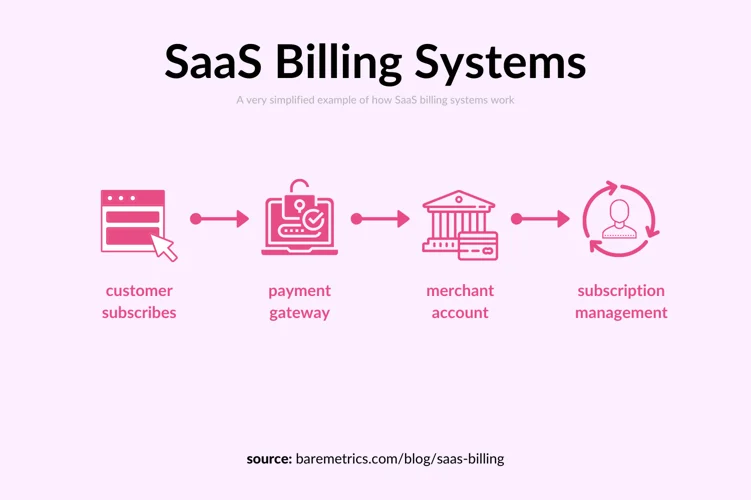
First, when data is stored in separate silos between a spreadsheet, the payment gateway, and the CRM, visibility is lost, and leadership is unable to make choices in real time.
Second, the runway and investment capacity will be directly impacted by slow cash flow, which will cause billing cycles to be delayed and human invoice checks to push receivables further out.
Source: https://baremetrics.com/
Third, the relationship is irreversibly damaged when a client disputes a charge and the support staff takes days to reconstruct usage logs.
These problems frequently have the same underlying cause, that the billing system was created for a simpler era. Businesses require a system built for the complexity of contemporary SaaS in order to improve performance.
The Standard Performance of Real-Time Billing
The shift toward usage-based pricing has accelerated dramatically, driven largely by the AI boom. AI features function less like static software modules and more like micro-products, each with volatile unit economics.
A single API call for a chat completion costs fractions of a cent, while an image generation request can cost dollars. In this model, billing lag is not just an inconvenience because it is a business risk.
Without near real-time aggregation and rating, companies face “bill shock”. For example, a customer might wake up to a $50,000 invoice for AI usage they incurred a week ago, with no visibility into how that number materialized.
Conversely, the finance team might set a $10,000 spending cap for a new customer, only to discover five days later that the customer blew through it on day two, effectively extending unvetted credit.
This is resolved by real-time charging, which transforms product utilization into an instant business signal. Proactive expense restrictions, real-time usage notifications, and dynamic billing that accurately represent consumer activity are all made possible by it.
This degree of transparency is now a competitive requirement rather than a desirable option. Businesses that put a high priority on billing transparency report higher retention rates because clients believe the fees are reasonable. In order to avoid disagreements and foster customer loyalty, a lot of SaaS companies are now offering itemized invoices with real-time usage tracking.
Real-time billing is a major architectural barrier, though. Millions of events must be processed by the system, deduplication must be done to guarantee accuracy, and data must be aggregated instantly without causing database bottlenecks. Legacy, closed-source technologies that handle billing as a batch process rather than a live data stream are rarely this level of sophistication.
The Open-Source Advantage
Given the complexity of modern billing, why are companies increasingly turning to open-source solutions? The answer lies in the fundamental nature of billing as infrastructure. Just as developers shifted from proprietary databases to open-source alternatives for flexibility and control, the billing stack is undergoing the same transformation.
Closed, proprietary billing systems often present a hidden trap. In the early stages, they are easy to wire up via APIs. But as the business grows, the billing logic spreads across the stack, hardcoded in the backend, configured in the vendor’s portal, and duplicated in the CRM.
The company becomes locked into a vendor’s roadmap. When the vendor raises prices, hides features behind higher tiers, or fails to support a new pricing model (like hybrid prepaid-postpaid credits), the business has no recourse. Migration becomes a massive, risky project.
Open-source billing inverts this dynamic. It treats the billing engine as code that the company owns. This provides three distinct strategic advantages:
- Auditability and Trust: With the source code open, engineering teams can inspect exactly how metering, aggregation, and rating logic work. There is no “black box”. This is crucial for financial compliance and for debugging customer disputes.
- Limitless Customization: A SaaS company is a unique framework in and of itself. Its billing flows frequently have to be as well. Unlike a one-size-fits-all SaaS billing tool, open-source enables developers to expand the platform, create unique integrations, and customize the user interface to meet the unique UX requirements of the brand.
- Data Sovereignty and Privacy: Through self-hosting an open-source solution, businesses ensure that sensitive customer payment and usage data never leaves their scheme. This is increasingly vital for enterprises with strict security postures and for compliance with regulations.
This is where open-source billing solutions enter the conversation. With an open-source model, it will allow businesses to build a billing stack that is transparent and adaptable, ensuring that the billing system evolves with the company rather than holding it back.
How Open-Source Architecture Enables Real-Time Performance
Real-time billing has high technical requirements. Since each event represents money, a modern engine must manage high-velocity event ingestion, guarantee perfect accuracy, and do it with predictable latency. Because they enable developers to see into the stack and tailor it to their particular workload, open-source platforms are in a unique position to address these issues.
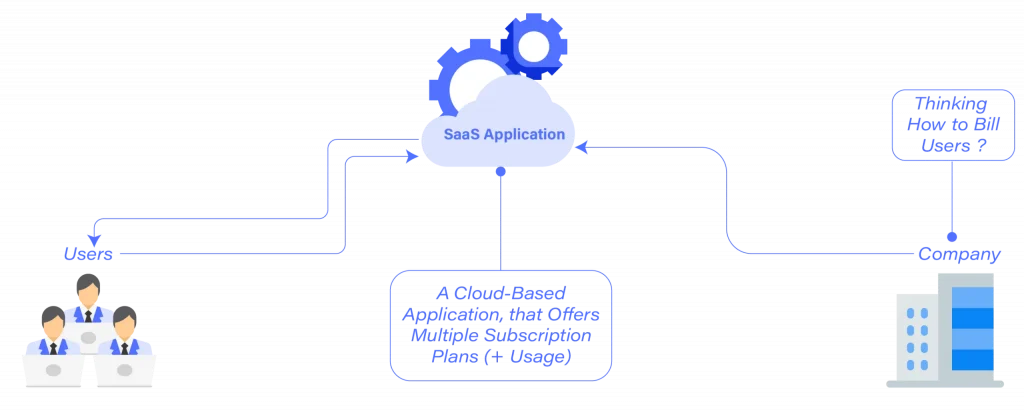
For example, deduplication is a significant issue with usage-based invoicing. Major damage occurs when a system unintentionally processes the identical API call twice as a result of a retry, billing the customer twice. Although they can manage uniqueness effectively, transactional databases are unable to handle millions of writes per second.
Source: https://earnbill.com/
Columnar databases suffer from the stringent uniqueness requirements needed for invoicing, but they scale well for writes. Whether using composite main keys or lightweight deduplication layers, an open-source platform enables teams to comprehend precisely how the ingestion pipeline manages this tension, guaranteeing that speed does not sacrifice accuracy.
Furthermore, open-source billing systems are great at managing the messy aspects of real-world data, including events that arrive late. The billing system must accurately assign those events to the appropriate billing period if a customer’s upstream systems replay past consumption after becoming offline for six hours.
For late-arriving events, open-source platforms can provide customizable grace periods that guarantee invoices are accurate without the need for manual revisions. By leveraging an open-source environment, companies are not just renting a tool, as they are investing in a deep understanding of their revenue operations.
Elevating Performance Through Strategic Billing
When a SaaS business elevates its billing system from a transactional tool to a strategic asset, the impact is felt across the entire organization.
- Product teams gain the freedom to experiment with pricing. They can introduce usage-based components, test new packaging, or launch promotional metered events without waiting for a lengthy engineering overhaul of the billing code. Billing becomes an enabler of monetization innovation.
- Finance teams move from reconciliation to analysis. With a centralized, real-time source of truth, they can forecast cash flow with greater accuracy, manage dunning processes automatically, and close the books faster. The friction of manual data entry disappears.
- Customer success teams are empowered by transparency. They can offer customers self-service portals to monitor usage, set budget alerts, and view detailed billing breakdowns. This proactive approach reduces support tickets and builds the trust necessary for long-term retention and expansion.
The data support this holistic improvement. Companies that move away from DIY, fragmented billing systems toward integrated, automated platforms report significant reductions in invoice disputes while freeing up finance teams in parallel to focus on strategic planning.
Conclusion
Customer needs for transparency will grow, pricing methods will continue to diversify, and business will only pick up speed. A restrictive or redundant billing system is a liability in this setting. Leaders must see their billing infrastructure as nimble, scalable, and transparent as they do their main product if they are to genuinely improve performance.
A compelling route ahead is provided by the convergence of real-time processing requirements and the adaptability of open-source software. Platforms like Appkodes offer SaaS businesses the flexibility to implement open-source billing solutions that meet these demands.
Businesses are not only resolving the current invoicing issues through the adoption of an open-source billing platform, but they are also securing their revenue processes.
By adjusting to new markets and opportunities without being constrained by vendor lock-in or technological debt, they are making sure that their billing system evolves with them. Building your revenue engine on a base that you can see, manage, and innovate upon is the obvious decision in the current SaaS era.

Thangamanikandan Bharathan
Starting as an iOS developer and moving up to lead a mobile team at a startup, I've expanded my expertise into Project Management, DevOps and eventually becoming a COO & Chief Service Officer in the IT sector. As a CSO, I excel in team leadership, technical advice, and managing complex business functions, focusing on combining technology and operations to drive growth. I'm keen to connect for collaborations or to exchange insights in the tech world!