Why Over-Reliance on AI Can Be a Costly Mistake for Startups
Startups everywhere are falling in love with AI. And why not? AI capabilities can do what humans can’t: analyze mountains of data in seconds, predict trends, and even handle thousands of customer interactions through artificial intelligence chatbots. It’s fast, it’s efficient, and it feels like the future.
But here’s the rub: when startups rely heavily on AI, they can start to forget something crucial the human judgment, intuition, and creativity that machines simply can’t replicate.
AI is brilliant at patterns, but it lacks essential cognitive abilities. It can’t empathize, weigh ethical dilemmas, or sense the nuances of a frustrated customer’s tone.
And that blind spot poses a risk of serious missteps, miscommunication, poor decision-making, or even harm to a brand’s reputation. The efficiency feels good in the short term, but without a human lens, the hidden costs start piling up.
Take Air Canada, for example. Over-reliance on AI chatbots during flight disruptions left travelers frustrated, confused, and angry. Customer calls flooded in, and the airline faced both PR challenges and operational headaches.
Even smaller startups like LimeChat, which rely heavily on AI for customer service, have discovered that AI can negatively impact user experience if humans aren’t in the loop. The lesson is clear: automation alone isn’t enough.
The truth is, artificial intelligence capabilities are powerful but only when they work hand-in-hand with humans. Startups that find the sweet spot can enjoy faster processes, smarter insights, and better scalability, all while keeping their brand authentic and their team’s creativity alive.
Ignore that balance, and what seemed like an advantage can quickly become a costly mistake
Why AI Alone isn’t Enough for Building Software?
A lot of founders think AI tools can run everything on their own, from writing code to automating workflows. The idea of “build fast, save money” sounds amazing. But the reality? It’s not that simple. AI is great at handling repetitive tasks or drafting solutions. But it can’t do it all. It struggles to:
- Understand the full picture of complex business logic
- Spot rare or unusual errors
- Keep up with constantly changing markets or regulations
Take this example: In 2023, developers around the world used GitHub Copilot to generate millions of lines of code. Sounds impressive, right?
But a closer look by Stripe and Shopify showed that 15–20% of that AI-generated code had small bugs or security issues. Human developers were still essential to review, test, and fix it, not exactly the “hands-off” shortcut some expected.
Or look at Tesla’s Autopilot. AI helps create new driving features, but engineers are always watching, testing, and fine-tuning. When humans step back too much, mistakes happen sometimes with serious consequences.
Source: https://www.usemotion.com/
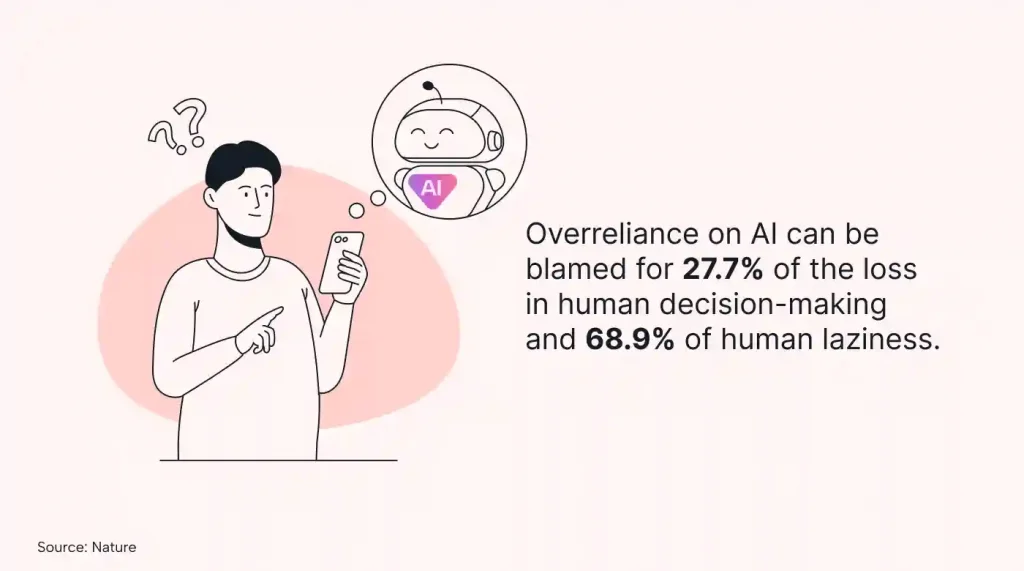
The takeaway? AI is an amazing helper, not a replacement. It works best when humans guide it, check it, and bring the judgment and creativity only people can offer.
How Over-Automation Drives Up Costs You Can’t Ignore
Over-reliance on AI can feel like a shortcut for founders: replacing developers with AI promises immediate cost savings. In practice, it often creates unexpected financial and operational burdens.
1. Excessive Tool Spending
According to Gartner (2024), 92% companies plan to use AI-powered software.
Startups frequently adopt multiple AI platforms simultaneously, from code suggestions and workflow automations to analytics and customer service bots. Each platform charges independently, and overlapping functionalities often mean paying twice for the same capability.
2. Integration Challenges
AI tools rarely connect seamlessly out of the box. Without developers to manage APIs and maintain data flows, systems become fragmented, causing lost information, inconsistent reporting, and operational inefficiencies.
For instance, a U.S. e-commerce startup faced duplicate shipments and inventory mismatches after automating order processing with separate AI tools.
3. Recurring Third-Party Costs
When AI outputs fail, startups often turn to freelancers or vendors for fixes. These recurring interventions can quickly erode any perceived savings. A survey reports that AI-first startups regularly spend $5K–$15K per month on external support for minor corrections.
4. Quality and Compliance Gaps
AI-generated workflows, code, or documents may miss context, edge cases, or regulatory requirements. Tesla, for example, relies on engineers to review every AI prototype in Autopilot development. Without human oversight, startups risk bugs, security vulnerabilities, and non-compliance often invisible until they become critical.
Real-World Example
A European fintech startup attempted to fully replace its development team with AI. Within six months, recurring integration and security issues forced them to hire multiple consultants. The monthly cost of external support exceeded their original developer payroll, demonstrating that “AI alone” is rarely cost-effective.
The Cost of Solo AI vs Optimized AI: A Scenario Walkthrough
Imagine a logistics startup eager to cut costs and accelerate development. The founders decide to rely entirely on AI. At first glance, it seems like a smart move. No full-time developers, no large payroll. But the reality tells a different story:
AI Subscriptions: $5,000 per month for multiple platforms, code generation, workflow automation, analytics, most features underutilized.
Workflow Maintenance: 15 hours per week spent by operations staff correcting AI errors, re-running automated routing, and troubleshooting integrations.
Security & Compliance: $20,000 annually spent on emergency fixes after AI misconfigurations exposed sensitive data.
By the end of the year, these hidden costs add up to over $125,000, far from the “cost-saving” promise.
Now, let’s look at a smarter approach. The startup hires a small, skilled 3-person developer team to oversee AI operations.
Optimized Subscriptions: Developers configure and integrate tools properly, cutting unnecessary subscriptions by 40%.
Proactive Workflow Management: Errors are caught early and automated fixes are implemented, reducing manual intervention from 15 hours/week to 5 hours/week.
Security and Compliance: Preventive checks eliminate most risks, lowering emergency fixes from $20,000 to $5,000 annually.
With this optimized approach, the startup not only saves over $80,000 annually but also gains:
Faster, more reliable product delivery
Reduced innovation debt and better-quality outputs
Greater operational control and scalability
AI alone may appear cheap, but hidden costs in subscriptions, maintenance, and security accumulate quickly. Combining AI with a lean, skilled team turns technology into a true force multiplier, reducing costs, improving output quality, and enabling sustainable growth.
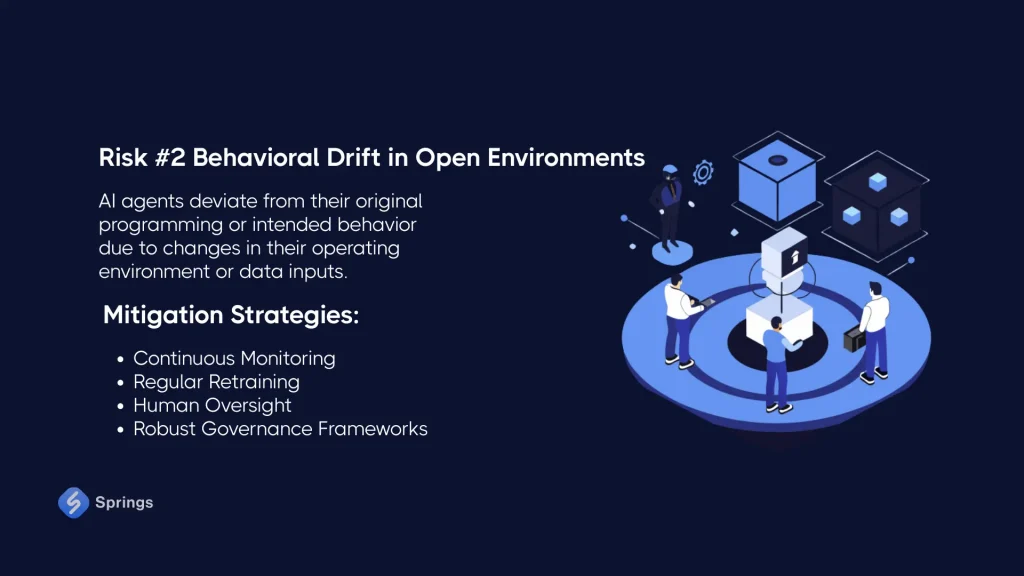
What Happens When Work Culture Shifts from Cohesion to Transactional?
A startup’s energy comes from the little things, casual conversations, brainstorming over coffee, and the trust that grows when people solve problems together. But when AI starts handling core development tasks, these subtle human connections begin to change, often quietly, before founders even realize it.
#1 Psychological Climate
Reduced sense of purpose: Developers may feel their creativity and judgment are undervalued, leading to a lack of personal investment in projects.
Increased stress and uncertainty: Continuous monitoring or correction of AI outputs can create frustration, especially when errors are frequent but not predictable.
Emotional disengagement: When team members feel that AI is “doing their job,” they may stop taking ownership of outcomes.
#2 Social Environment
Less spontaneous collaboration: Informal hallway conversations, brainstorming sessions, and peer problem-solving decrease because AI handles many routine or decision-making tasks.
Erosion of trust and camaraderie: Developers may start seeing each other as competitors against AI efficiency, or fear that their contributions are being judged against automated outputs.
Fragmented communication: Teams interacting more with AI than with each other lose the rhythm of human feedback cycles, which weakens alignment and cohesion.
Source: https://springsapps.com/
#3 Team Energy and Inner Dynamics
Innovation fatigue: Over-reliance on AI can cultivate a mindset of “letting the tool handle it,” which reduces curiosity and the willingness to experiment.
Knowledge hoarding: Experienced developers may withhold insights because mentoring feels redundant or unappreciated when AI is doing much of the work.
Internal disengagement: Junior team members may feel disconnected, relying solely on AI for solutions, missing mentorship, and losing a sense of belonging in the team.
#4 Physical and Remote Work Atmosphere
Even in remote work environments—where teams collaborate without physical offices—AI reliance can affect how team members interact:
Fewer collaborative video calls or brainstorming sessions.
More asynchronous, transactional communication (e.g., “AI generated this, review it”).
Reduced team rituals, celebrations, and spontaneous check-ins, which are key for psychological safety.
Founder Perspective
The atmosphere in a startup isn’t just a “nice to have”; it’s what keeps people motivated, creative, and sticking around. But when teams rely too much on automation, it can quietly create a risk of harm, eroding the human connections that make a startup resilient and aligned.
Founders who focus on leveraging AI responsibly can turn this around. AI isn’t meant to replace people; it’s meant to support them. When used thoughtfully, it brings potential benefits like faster workflows and smarter insights, while still leaving room for real human interaction.
This balance opens the door to possible advantages that go beyond efficiency: stronger collaboration, more engagement, and a team culture that actually thrives.
The result? Possible positive outcomes that help your startup grow sustainably while keeping its human heart intact.
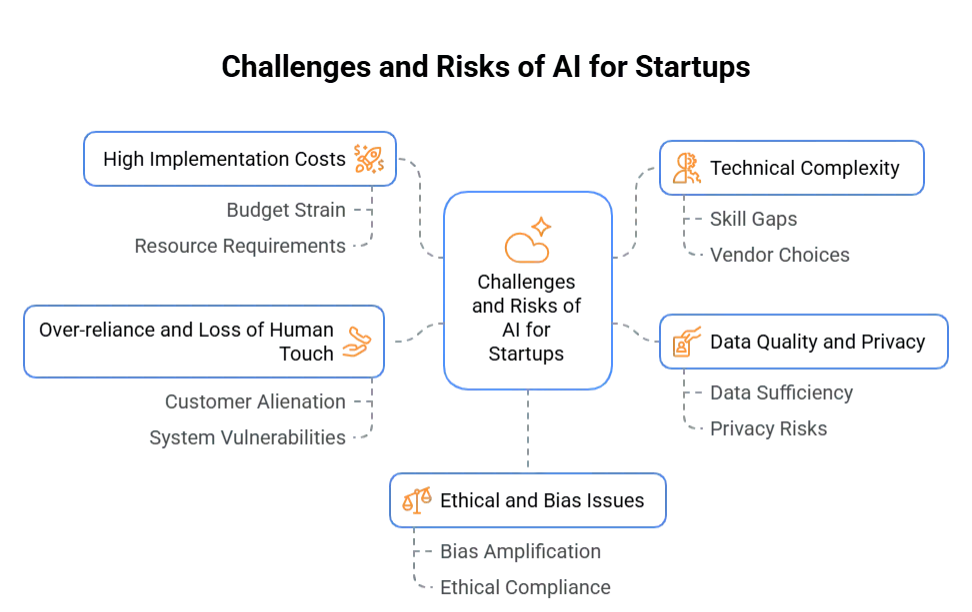
Why AI Dependency Could Be Riskier Than You Think
AI tools are undeniably powerful, but overreliance on AI technologies can quietly create vulnerabilities that put a startup’s growth at risk. When founders rely extensively on AI, particularly conversational AI systems, it’s easy to chase quick efficiency or cost savings while overlooking bigger strategic threats.
The challenges AI has introduced, from vendor lock-in and unexpected service outages to limited flexibility, prompt alarm among decision-makers.
1. Vendor Lock-In
When a startup builds critical operations around a single AI provider, it becomes dependent on that vendor for key processes.
Migration to alternative platforms can be costly and technically complex, often requiring months of work to move data, retrain models, or reconfigure workflows.
Example: A logistics startup relied entirely on one AI platform for route optimization. When the vendor updated pricing and restricted certain API functions, the startup faced operational delays and had no ready alternative, stalling deliveries and frustrating clients.
Impact on founders: Reduced control over critical operations, diminished bargaining power, and slower response to market changes.
2. Reduced Agility and Strategic Control
Over-dependence on AI platforms can limit a startup’s ability to pivot quickly. Critical decisions become constrained by the capabilities, update cycles, or policies of third-party providers.
Founders may find themselves reacting to vendor changes rather than proactively shaping their own strategy.
Example: A subscription-based SaaS startup relied entirely on a single AI platform for user analytics. When the platform changed its API and reporting metrics, the startup could not track customer behavior accurately, delaying marketing decisions and product improvements, a risk that highlights the importance of robust AI SaaS development.
Impact on founders: Slower responses to market changes, missed opportunities, and reduced ability to implement innovative features independently.
Source: https://kanerika.com/
3. Sudden Tool Deprecations or Outages
AI platforms may shut down features, discontinue products, or suffer service outages without warning.
Startups that treat these tools as the backbone of operations risk operational paralysis.
Example: A fintech startup automated transaction validation entirely via a third-party AI. When the service went offline for maintenance, transaction processing stalled for hours, leading to customer complaints, lost revenue, and reputational damage.
Impact on founders: Lost control over critical processes, increased customer churn, and emergency firefighting that diverts focus from growth.
4. Limited Flexibility and Customization
Pre-built AI platforms are often designed for general use, not for the unique business logic of every startup.
Over-dependence can restrict innovation, prevent process customization, and force workarounds that reduce efficiency.
Example: A subscription-based e-commerce startup attempted to use an AI recommendation engine. The platform only allowed standard recommendation templates, so the startup could not create personalized suggestions for niche customer segments, limiting conversion potential.
Impact on founders: Reduced ability to differentiate products, slower innovation cycles, and potential loss of market advantage.
5. Competitive Vulnerability
Over-reliance on third-party AI tools can expose startups to competitive risks. Competitors with more balanced AI-human strategies may innovate faster, customize offerings, and pivot more effectively.
Founders who depend solely on AI risk losing differentiation because off-the-shelf tools are available to everyone.
Example: Two early-stage fintech startups used AI for fraud detection. The one with a lean developer team customized algorithms to adapt to emerging fraud patterns, gaining a market advantage. The AI-only startup could not adjust quickly, falling behind.
Impact on founders: Reduced market agility, slower innovation cycles, and weaker competitive positioning.
How Can AI Outputs Expose Your Business to Regulatory Risks?
AI can accelerate workflows, automate decision-making, and generate insights — but it also introduces regulatory and compliance risks that founders cannot afford to ignore. Unlike human oversight, AI does not inherently understand local laws, privacy regulations, or industry standards. Mistakes are often amplified, not contained.
Over time, reduced critical thinking within teams and an increasing reliance on AI conversation systems can blur the line between human insight and automated output. While these systems help streamline communication and boost productivity, depending on them too much can lead to blind trust in AI-generated results.
1. Privacy and Data Protection Risks
AI platforms process large volumes of sensitive data, including customer, financial, or health information.
If outputs inadvertently violate regulations like GDPR (EU) or HIPAA (US), startups may face hefty fines, legal actions, or reputational damage.
Example: An AI-driven marketing tool used customer data incorrectly, triggering a GDPR investigation and resulting in fines that exceeded the cost of the automation itself.
2. Industry-Specific Compliance Gaps
Financial, healthcare, or fintech startups often rely on AI for decision-making or reporting.
AI outputs may misinterpret regulatory rules, generate incorrect reports, or overlook critical edge cases.
Example: A fintech startup used AI for loan approvals. Without human review, some approvals violated lending laws, creating legal exposure and risking regulatory penalties.
3. Amplified Consequences
AI can generate hundreds of outputs per hour. A single misconfiguration or misunderstanding can scale errors quickly, multiplying legal and financial risk.
Unlike manual processes, where mistakes are isolated, AI errors are systemic and harder to trace without proper monitoring.
Founder Takeaways
Human oversight is mandatory: Always have a compliance-aware team reviewing AI outputs.
Document AI workflows: Maintain clear records of how AI decisions are made to demonstrate accountability.
Audit AI tools regularly: Ensure AI platforms comply with regulations and update processes as laws evolve.
Integrate regulatory checkpoints: Automate compliance validation where possible, but don’t rely solely on AI.
How Does AI Overuse Disrupt Marketing Performance?
AI has made it easier for businesses to create content, run campaigns, and understand customers faster. But AI over-dependence can hurt more than help too much automation risks losing the human touch.
Generative AI is powerful, but without real human input, it can miss what truly connects with people. To get the expected benefits, balance AI’s speed with human creativity and judgment.
1. Generic or Misaligned Messaging
AI often generates content based on patterns and data trends, but it lacks human intuition and brand understanding.
Over-reliance on ai can result in messages that feel impersonal, tone-deaf, or off-brand.
Example: A startup used AI to generate social media posts for a product launch. The posts were grammatically perfect but lacked brand voice, leading to lower engagement and confused audiences.
2. Misinterpreting Customer Insights
AI analyzes data and predicts trends, but it cannot fully understand nuanced customer behavior or sentiment.
Decisions based solely on AI insights may misalign campaigns with real customer needs.
Example: An e-commerce startup relied entirely on AI for email campaigns. The AI misread seasonal trends, sending irrelevant product recommendations, which increased unsubscribes.
Source: https://yellow.ai/
3. Over-Automation Reduces Creativity
Marketing thrives on creativity, experimentation, and emotional connection.
When AI handles all content generation, human marketers may stop innovating or testing bold ideas, leading to stagnant campaigns.
Impact: Reduced brand differentiation and declining engagement over time.
4. Amplified Mistakes
AI errors in marketing, such as wrong product information, mis-targeted ads, or offensive phrasing, spread faster because of automation.
Example: A social media AI posted a campaign using an outdated promotional offer, which went viral for the wrong reasons, damaging the brand image.
Partner with Appkodes
AI can do amazing things; it can speed up workflows, handle repetitive tasks, and give insights faster than any human could. But over-reliance on AI can quietly chip away at the very abilities that make your team strong.
When startups rely extensively on AI, core cognitive functions like strategic thinking, problem-solving, and creativity can take a back seat, making it harder to grow and sharpen critical cognitive skills.
That’s where Appkodes, a leading startup mobile app development company, comes in. Our approach isn’t about replacing people with AI; it’s about working alongside them. By leveraging AI development services thoughtfully, Appkodes helps teams stay productive and scalable while keeping the essential cognitive capabilities intact.
This means AI becomes a tool that amplifies human potential instead of diminishing it, helping your business make smarter decisions, innovate faster, and grow sustainably.
Even more importantly, partnering with Appkodes lets your team focus on what truly matters. By handling the repetitive, time-consuming tasks, AI frees up humans to do the work that requires insight, creativity, and connection, areas where technology simply can’t replace us.
This balance preserves essential cognitive processes and ensures your startup remains adaptable, innovative, and ready for anything the future throws its way.

Arun Andiselvam
Founder of AppKodes. As a serial entrepreneur, I have successfully established five brands over the past 12 years. After creating a successful rank tracker for SEO agencies, I am currently dedicated to developing the world's first SEO Project Management software.