What is an AI Robo-Advisor and How Can Fintech Startups Use It?

Over the last two years, something unexpected has been shaking up wealth management, something even seasoned economists didn’t fully see coming. Investors around the world are quietly shifting billions into platforms that don’t speak, don’t meet clients in offices, and don’t wear suits.
And yet, these silent platforms are beating traditional advisors in cost, speed, and trust. The numbers tell the story: The global robo-advisory market was worth USD 8.39 billion in 2024 and is expected to reach USD 69.32 billion by 2032. Rare growth like this is unheard of in an industry as old and slow-moving as wealth management.
Even more intriguing is who’s driving this change. Gen Z professionals with their first paychecks, millennial parents planning for their children, and mid-career earners seeking stability aren’t asking, “Which mutual fund should I pick?”
They’re asking, “Why can’t an app optimize all of this for me?” In fact, a 2025 study found 41% of young investors trust AI more than humans for long-term investing. It’s not rebellion but practicality.
This shift didn’t happen by accident. Market volatility over the past 18 months has made manual investing feel almost impossible. People want systems that don’t sleep, don’t panic, and don’t make decisions on emotion.
With fintech apps becoming default personal finance companions, robo-advisors now fit naturally into the ecosystem, translating complex financial decisions into goal-driven journeys.
Suddenly, investing feels less like decoding a foreign language and more like navigating with Google Maps. And here’s where founders find the magic: users aren’t flocking to AI for novelty, they’re flocking to solutions that solve frustrations traditional finance has ignored for decades.
They want clarity, transparency, automation, and control. That’s why fintech founders integrating intelligent robo-advisory features are pulling ahead. The question is no longer, “Should we build AI into our product?” The question is, “How long can a fintech startup compete without it?”
What is an AI Robo-Advisor?
An AI robo-advisor is an automated online investment platform that uses artificial intelligence to create and manage a personalized portfolio. It simplifies investing through automated investment portfolios, automatic rebalancing, and portfolio customization, all with minimal human intervention.
With a low minimum investment, transparent advisory fees, built-in financial planning tools, and optional access to a certified financial planner, an AI robo-advisor offers an affordable, professional, and user-friendly way to grow wealth.
Core Technologies Behind AI Robo Advisors
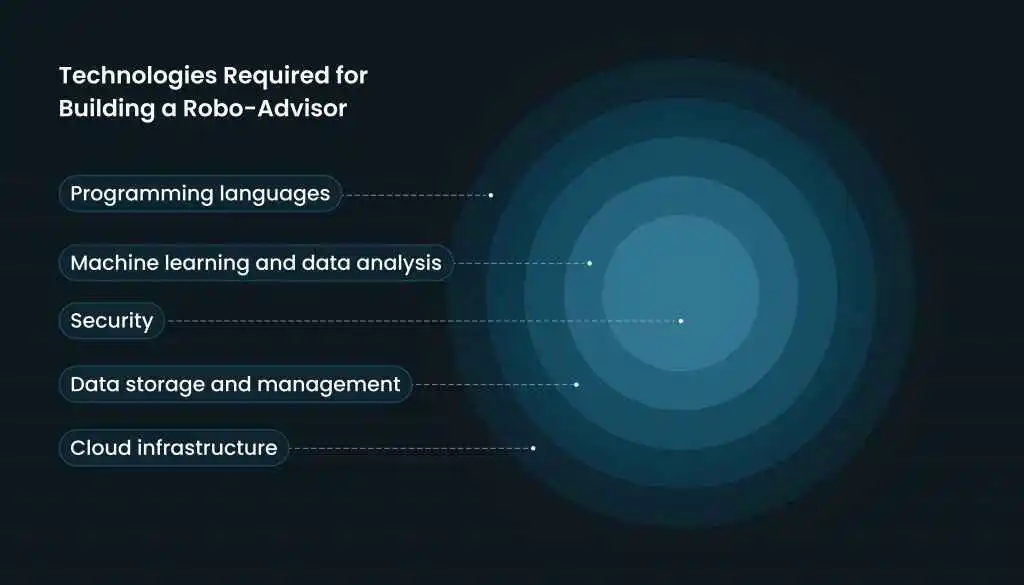
Having these core technologies helps your AI robo advisor work smoothly and give users smart, reliable guidance
1. Artificial Intelligence & Machine Learning
AI and machine learning sit at the heart of every robo-advisor portfolio, constantly studying user behavior, financial goals, risk comfort, and market patterns to deliver tailored investment decisions.
Instead of relying on static questionnaires, these models adapt over time, spotting changes in user habits, predicting potential risks, and optimizing portfolio allocation, asset mix, and investment allocation automatically.
By powering automated investment portfolios on digital investment platforms, this technology transforms a basic investment tool into a living system that evolves with every interaction.
2. Big Data Analytics
Robo advisors rely on big data to turn vast amounts of market and user information into meaningful insights. This capability supports portfolio customization and strengthens portfolio management, enabling fintech startups to offer a smarter online investment platform.
By leveraging analytics, the system identifies trends early, anticipates user needs, and delivers personalized recommendations, helping your platform stand out in a competitive market without overwhelming users.
3. Algorithmic Trading
Once the AI determines what needs to be done, algorithmic trading handles the execution. This technology ensures trades, automatic rebalancing, and adjustments to robo portfolios and automated investment portfolios happen instantly and precisely, without emotional bias or human delay.
It responds to market volatility in real time, executes at optimal prices, and keeps portfolios aligned with each user’s strategy around the clock. For founders, algorithmic trading is the backbone of reliability, giving your robo-advisor that “self-driving” feel and an experience where users trust their investments are always being managed proactively and intelligently.
Source: https://wesoftyou.com/
4. Open Banking & API Integrations
A modern robo-advisor becomes powerful only when it’s connected, and open banking APIs make this possible. By securely linking bank accounts, investment accounts, credit products, and financial planning tools, the system gains a complete view of each user’s financial life.
This connectivity also allows seamless access to human advisors and certified financial planners when needed, enabling smoother onboarding, faster verification, automated data syncing, and more personalized investment advice.
For founders, APIs turn your robo-advisor from a standalone feature into a full financial ecosystem, one that grows more valuable with every integration.
5. Cloud-Native Architecture
Behind every scalable robo-advisor is a robust cloud-native infrastructure that supports automated investment portfolios and robo portfolios while handling data-heavy AI workloads and peak trading demand without breaking.
These cloud systems enable fintech startups to scale quickly, deploy product updates smoothly, and maintain enterprise-grade security, all with low human intervention.
For founders, this architecture is essential: it ensures the platform remains fast, secure, and reliable even during usage spikes or unpredictable market conditions.
6. Blockchain & Smart Contracts
While not essential for every fintech startup, blockchain introduces an extra layer of transparency, security, and asset innovation.
Smart contracts automate transactions and advisor fee workflows, ensuring processes run exactly as intended without manual intervention. Tokenized assets allow users to diversify into digital instruments, and immutable ledgers strengthen trust with clear audit trails.
For founders targeting the next generation of investors, blockchain becomes a strategic advantage, positioning your robo-advisor at the forefront of trust-driven, future-ready wealth management.
Why Founders & Fintech Companies are Betting on AI Robo-Advisors
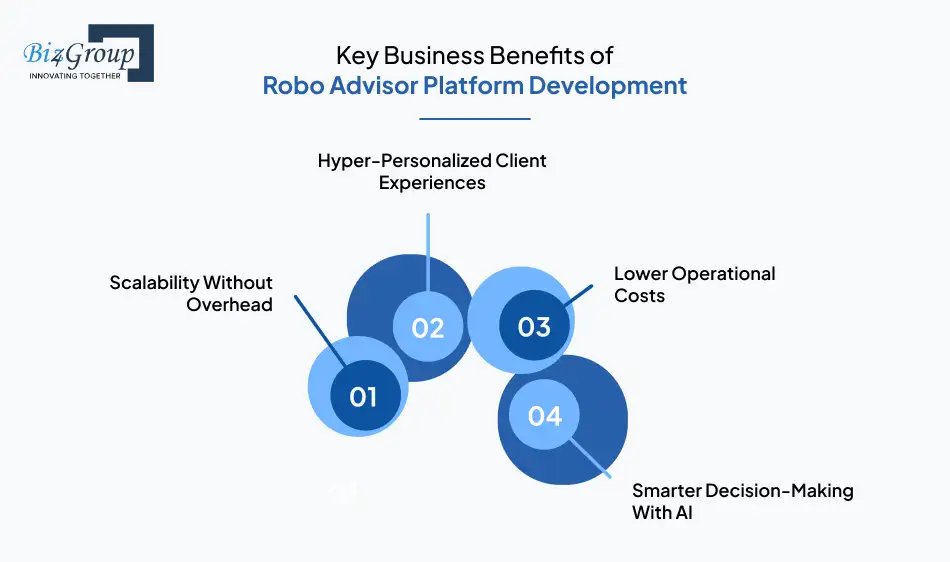
AI-powered robo-advisors don’t just improve the user experience; they transform the way fintech startups operate. Its advantages go beyond the obvious automation; they touch growth as well as retention.
1. Higher Customer Retention with Automated Planning
Users stick around when their money feels like it’s actively working for them. Robo-advisors continuously monitor investments, adjust portfolios, and track goals. The result? Customers see progress without lifting a finger, building trust and loyalty that lasts far longer than a flashy onboarding experience.
2. Lower Operational Costs with Minimal Human Intervention
Hiring armies of financial advisors is expensive and not scalable. AI handles repetitive, complex tasks automatically: portfolio rebalancing, risk assessment, and even responding to common queries. This reduces overhead dramatically while still delivering high-quality advice, letting startups invest more in innovation rather than manpower.
3. Scalable Wealth Management for Millions of Users
Unlike traditional advisory models, robo-advisors scale effortlessly. Whether you have a hundred users or a million, the system manages portfolios, monitors markets, and generates insights simultaneously. For fintech founders, this is the ultimate leverage. Growth doesn’t require a linear increase in staff or infrastructure.
4. Regulatory-Friendly Because of Traceable Decisions
Every recommendation and portfolio adjustment is logged and traceable. This transparency makes compliance easier and protects your company in highly regulated markets. For founders, it’s peace of mind: the AI is smart, but it’s also auditable and accountable.
5. Better User Engagement Through Personalized Insights
AI doesn’t just automate, it personalizes. Users receive insights tailored to their goals, behaviors, and risk appetite. Instead of generic alerts, they get meaningful nudges: progress reports, market updates, or suggestions aligned with their financial journey. This kind of engagement keeps your product top-of-mind and turns users into advocates.
Source: https://www.biz4group.com/
What Your Users Truly Care About
Understanding what drives user behavior is key to building loyalty and engagement. Users don’t just want a platform; they want confidence, clarity, and results that make their financial journey easier.
1. Simple and Transparent Investment Explanations
Users want to know why their money is invested a certain way. Clear, jargon-free explanations of asset allocation, risk exposure, and expected outcomes build trust. When users understand the logic behind decisions, they feel in control even when AI is handling the heavy lifting.
2. Instant Portfolio Updates and Notifications
In today’s fast-moving markets, waiting isn’t an option. Users expect real-time portfolio updates, alerts on market changes, and automatic rebalancing. Timely notifications help users feel informed and reassured, without overwhelming them with unnecessary noise.
3. Safety of Money and Data Security Guarantees
Financial data is deeply personal. Users want strong encryption, regulatory compliance, and robust security measures. Demonstrating a commitment to safeguarding both money and information builds confidence and positions your platform as trustworthy in a market where trust is everything.
4. Trust in the Algorithms & Human Oversight
Even the smartest AI raises questions. Users value transparency in algorithmic decisions and appreciate human oversight for unusual situations. Showing how AI recommendations are made and when humans intervene reinforces trust and reduces anxiety about automated investing.
5. Achieving Financial Goals Faster and with Less Stress
Ultimately, users measure success by progress toward their goals. Platforms that simplify complex decisions, offer personalized guidance, and continuously adapt strategies help users reach milestones faster and with less stress, creating lasting engagement and loyalty.
How Integrating AI Robo-Advisors Sets You Apart From Other Fintechs
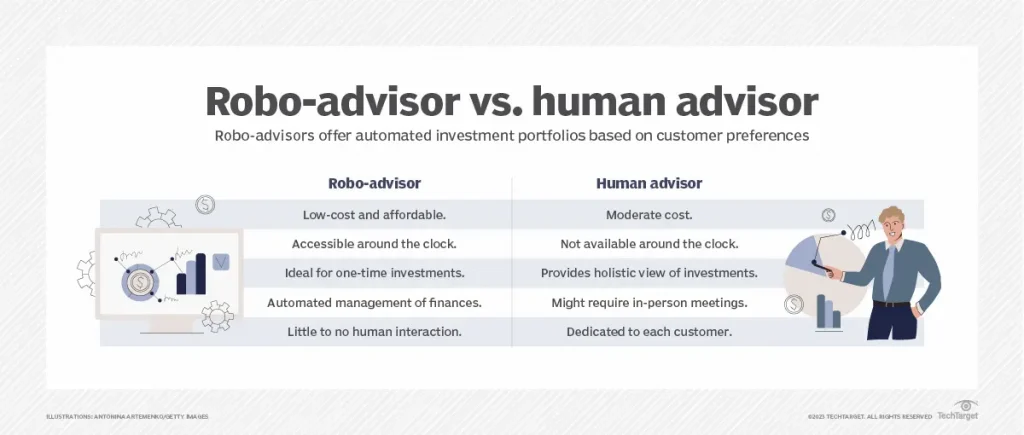
In a crowded fintech landscape, many apps look alike: basic portfolio tracking, simple analytics, or generic investment suggestions. AI-powered robo-advisors, however, create differentiation not through features alone but through intelligence and user-centric design.
#1 Advanced Hyper-Personalization vs. Generic Investing Apps
Generic investing apps offer standard portfolios, often based on static risk categories. AI-powered robo-advisors go deeper: they analyze user goals, spending habits, risk tolerance, and even behavioral patterns to deliver hyper-personalized strategies.
For example, two users with similar income might receive entirely different asset allocations based on age, savings goals, and short-term liquidity needs. This level of personalization drives higher engagement and satisfaction because users feel the platform truly “understands” them.
#2 Automated Tax Optimization & Risk Hedging Models
AI robo-advisors don’t just allocate assets; they optimize portfolios for efficiency. Automated tax-loss harvesting, strategic asset placement, and real-time risk hedging ensure users’ returns are maximized while minimizing liabilities.
For founders, this is a competitive advantage: you’re offering a level of sophistication that’s difficult to replicate without advanced AI and deep analytics.
Source: https://www.techtarget.com/
#3 AI Explainability Showing WHY an Investment was Suggested
Transparency builds trust. Explainable AI (XAI) allows users to see why a particular asset was selected or why rebalancing occurred, providing context in plain language. This feature is critical in overcoming skepticism about automated investing, particularly for new users or high-net-worth individuals who expect clarity and accountability.
#4 Multi-Device Experience (Web + App + APIs)
Investors live across multiple digital touchpoints, mobile apps, desktops, tablets, and increasingly via API integrations with other financial tools.
Offering a seamless multi-device experience ensures users can track portfolios, receive alerts, and act on insights wherever they are. It also supports ecosystem integration, allowing fintechs to partner with other platforms, expand reach, and increase engagement
Compliance and Regulation Checklist for Startups Offering Robo-Advisors
Building a robo-advisory platform is exciting, but in fintech, compliance isn’t optional. Here’s a practical checklist for founders to ensure your startup stays legally sound while delivering value to users:
- Understand Regional Regulations
Before you launch, know the rules in your target markets: SEBI (India), FCA (UK), and SEC (US). This includes licenses, registration requirements, and operational limits.
- Risk Suitability & Advisory Disclosures
Match investment advice to each user’s profile. Provide clear, simple explanations of risks, potential returns, and any conflicts of interest to build trust.
- Maintain Audit Trails & Logs
Every recommendation, portfolio adjustment, and user action should be automatically logged. This protects your startup, ensures accountability, and keeps you audit-ready.
- Follow Data Privacy Laws
Comply with GDPR, India’s DPDP Act, or other local regulations. Secure user data with encryption, manage consent effectively, and provide deletion options.
- Anti-Money Laundering (AML) Compliance
Verify user identities with robust KYC processes. Monitor transactions for suspicious activity and report as required to regulators.
Following this checklist ensures your fintech startup builds trust, stays compliant, and creates a solid foundation for scalable growth in the competitive robo-advisory space.
Real-World Examples of AI-Powered Robo-Advisors
Seeing theory in action is always more inspiring, especially for founders. Here’s a look at some of the most credible AI-driven robo-advisors today and what makes them stand out:
#1 Vanguard Digital Advisor
Vanguard’s Digital Advisor is a strong example of how digital investment platforms and online investment platforms can leverage automation with human guidance. The system uses automated investment portfolios built primarily from low-cost Vanguard ETFs, giving investors seamless Vanguard ETF access while keeping the portfolio diversified and aligned with long-term goals.
The AI engine manages portfolio construction, automated rebalancing, and risk adjustments. But whenever investors need deeper clarity or reassurance, human advisors step in, creating a hybrid model that balances efficiency with personal oversight.
Many users appreciate that they can invest in Vanguard through a tech-driven platform without losing the comfort of human judgment. It’s a blend of speed and empathy, automation and expertise.
Founder Insight: Vanguard proves that AI doesn’t replace humans—it enhances them. For fintech startups building digital investment platforms, hybrid robo-advisor models can reduce advisor workload, improve user trust, and offer scalable automated investment portfolios backed by human support when needed.
#2 Acorns & Robinhood
Acorns and Robinhood show how robo-advisory principles can be applied beyond traditional investing.
Acorns turns everyday spending into an investment habit. By rounding up each purchase and investing the spare change, it introduces users, especially first-time investors, to wealth creation in a frictionless way. The AI fine-tunes strategies, nudges users when needed, and keeps the experience simple.
Robinhood, on the other hand, uses AI to deliver real-time insights and behavioral guidance. Users receive alerts, educational prompts, and risk warnings that help them make smarter decisions. The platform blends simplicity with intelligence in a way that keeps users engaged daily.
Founder Insight: These platforms prove that micro-interactions can drive macro-engagement. Small nudges, roundups, and real-time insights build habits, improve financial literacy, and create long-term loyalty.
Future Trends in AI-Powered Wealth Management
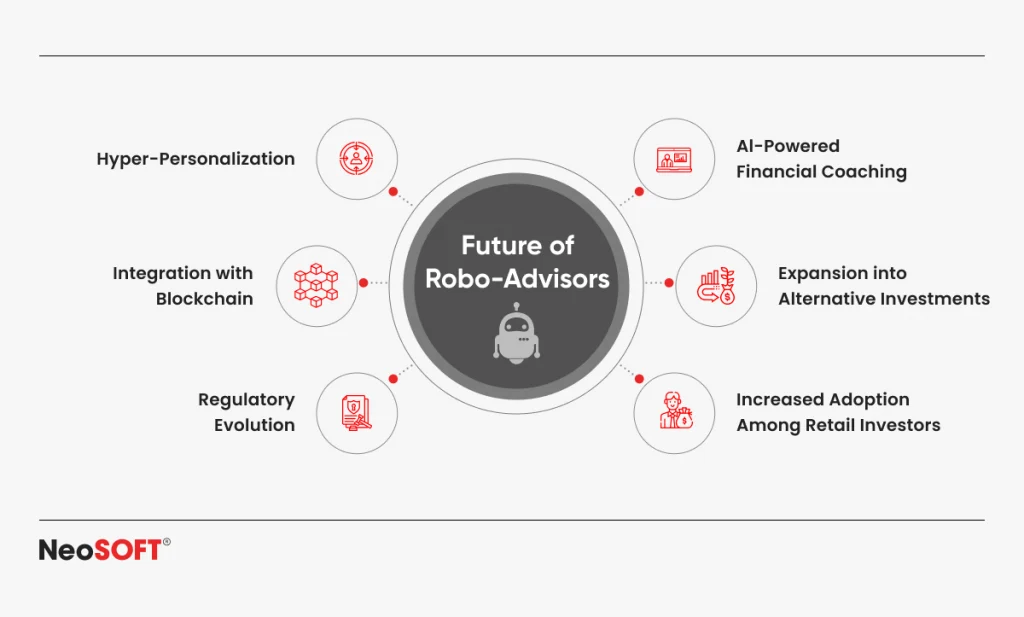
The world of wealth management is evolving faster than ever, and AI is at the center of this transformation. Here are some trends everyone should know
1. Hyper-Personalized Portfolios
The next generation of robo-advisors won’t just recommend available investments; they’ll adapt to users in real time. Every spending pattern, financial habit, and life milestone will inform a portfolio type that feels uniquely personal. It’s the closest thing to a human advisor, except the intelligence operating underneath is entirely AI-driven.
2. Generative AI & Predictive Life Planning
Robo-advisors are evolving from money managers into life planners. With generative AI, platforms will anticipate major life events and proactively suggest financial adjustments. Instead of reacting to change, users will stay ahead of it with predictive, goal-focused guidance.
3. Voice & Conversational AI
Investment conversations are moving beyond screens. Voice-enabled robo-advisors will let users check performance, ask questions, and receive instant financial insights simply by speaking, making wealth management feel as natural as chatting with an advisor.
Source: https://www.neosofttech.com/
4. Hybrid Advisory Models
The future isn’t a battle between AI and humans, it’s a collaboration. Hybrid models will blend automated intelligence with human expertise, where AI handles the heavy lifting and human advisors support complex or emotional decisions. It’s efficient, scalable, and deeply reassuring for users.
5. Integration with DeFi & Tokenized Assets
As blockchain and tokenized assets become mainstream, robo-advisors will expand beyond traditional ETFs and bonds. Users will seamlessly invest in digital assets, DeFi portfolios, and tokenized real-world investments, all with the same security, compliance, and transparency they expect today.
Why Appkodes?
Partnering with Appkodes, a leading startup mobile app development company, gives fintech founders the power to turn AI-driven wealth management into a real, scalable product that users actually trust.
With our expertise, you can offer intelligent robo-advisor portfolios and fully automated portfolios that adapt to each investor’s financial circumstances, preferred asset mix, and overall financial accounts.
Your platform can seamlessly guide users through diversified options, whether they’re investing in index funds, ETFs, socially responsible investing, or exploring alternative investments, and back it with smart portfolio customization and transparent investment performance tracking.
Appkodes AI development services help you integrate advanced features like automated tax strategy planning, real-time capital gains insights, and efficient tax-loss harvesting for users with taxable accounts, elevating your app into a complete financial planning and investment hub supported by powerful financial planning tools like a built-in debt calculator.
And when automation isn’t enough, we help you embed seamless access to human advisors and certified financial planners, striking the perfect balance between intelligent automation and human reassurance.
With Appkodes, you don’t just build an online investing tool; you build a next-generation digital investment platform that users trust, return to, and rely on for long-term financial growth.

Arun Andiselvam
Founder of AppKodes. As a serial entrepreneur, I have successfully established five brands over the past 12 years. After creating a successful rank tracker for SEO agencies, I am currently dedicated to developing the world's first SEO Project Management software.