How AI-Powered Procurement Platforms are Transforming Construction Supply Chains
Before a single beam is lifted or a foundation is poured, the fate of every construction project is shaped elsewhere in the supply chain management. Procurement sits at the heart of that chain, quietly driving efficiency, timing, and trust.
Yet for years, this critical process has been fragmented: disconnected systems, manual approval processes, and countless decisions made without visibility.
The result is costly delays and budget blowouts — UK construction projects, for instance, run an average of 46% over budget, according to PBC Today. And globally, procurement professionals spend nearly a third of their time managing manual workflows, Ivalua’s research shows.
Now, imagine if your business could replace that chaos with clarity. AI-powered procurement platforms, rooted in the principles of Procurement 5.0, are making that possible. They use intelligent automation to read invoices and engineering drawings, predict demand, track suppliers, and even mitigate risks before they happen.
OCR and large language models (LLMs) can now extract specifications directly from documents and feed them into systems automatically, a true game-changer. Combined with e-Procurement systems, these platforms create a seamless, data-driven supply chain.
For construction companies, this shift is more than just technology adoption; it’s a strategic advantage. AI turns procurement from a reactive back-office task into a proactive, insight-driven engine, where decisions happen at the speed of demand and supplier risks are caught before they impact projects.
The construction sites of tomorrow won’t just be defined by their structures, but by the intelligence powering their supply chains.
This transformation is already taking shape through AI-powered procurement platforms. The real question isn’t whether your business will adopt AI-powered procurement — it’s how long you can afford to wait.
How AI-Powered Procurement Platforms Work for Your Construction Supply Chains
If you manage construction projects, you already know how much depends on timing, transparency, and trust. Every delay in sourcing, every missed shipment, every overlooked clause can ripple through your entire project.
AI-powered procurement platforms are designed to prevent exactly that, turning complex supply chains into connected, intelligent ecosystems that work for you, not against you.
It starts with intelligent sourcing. Instead of juggling calls, quotes, and spreadsheets, AI algorithms instantly connect you with the most reliable suppliers matching based on cost, proximity, quality, and performance history.
You get faster sourcing decisions and stronger supplier partnerships built on data, not guesswork.
Next comes predictive demand forecasting. AI models analyze your project pipeline, historical data, and even external market conditions to predict material needs before they arise. That means no last-minute scrambles or costly overstocking, just precision in supply chain planning and purchasing.
Through smart contract management, natural language processing (NLP) helps your team automatically review and interpret contracts. Risky clauses are flagged early, compliance is monitored continuously, and renewals are tracked without manual oversight, keeping your projects on the right side of regulation.
Autonomous procurement workflows take the daily grind off your plate. AI agents can now manage approvals, orders, follow-ups, and supplier communication around the clock, ensuring momentum never stalls even when your team isn’t online.
Finally, inventory and logistics optimization give you real-time visibility across multiple sites. AI monitors material movement, triggers replenishments automatically, and identifies potential delivery delays before they cause disruptions. It’s like having a digital control tower for your entire supply chain.
AI Technologies Behind Construction Procurement Platforms
Modern construction procurement platforms are no longer just digital tools; they’re intelligent systems powered by multiple layers of AI, each built to tackle a unique challenge across the procurement lifecycle management. From forecasting demand to automating contracts, these technologies are redefining how projects are sourced, managed, and delivered.
At the foundation lies Machine Learning (ML), the predictive engine that drives precision. By analyzing years of project data, supplier performance records, and market fluctuations, ML forecasts material requirements, detects potential cost risks, and predicts delivery delays before they occur. The more data it processes, the smarter it becomes, helping project teams anticipate disruption rather than react to it.
Next comes Natural Language Processing (NLP), which brings comprehension to the mountain of documentation every project generates. Construction contracts, supplier agreements, and compliance reports can stretch for hundreds of pages. NLP reads, interprets, and highlights key clauses automatically, ensuring nothing critical is missed and every stakeholder stays aligned.
Supporting this intelligence is Robotic Process Automation (RPA), the dependable workhorse behind the scenes. RPA takes on repetitive, time-consuming tasks such as purchase order creation, invoice matching, and data entry. It works with consistency and accuracy, freeing procurement teams from manual bottlenecks that often slow progress.
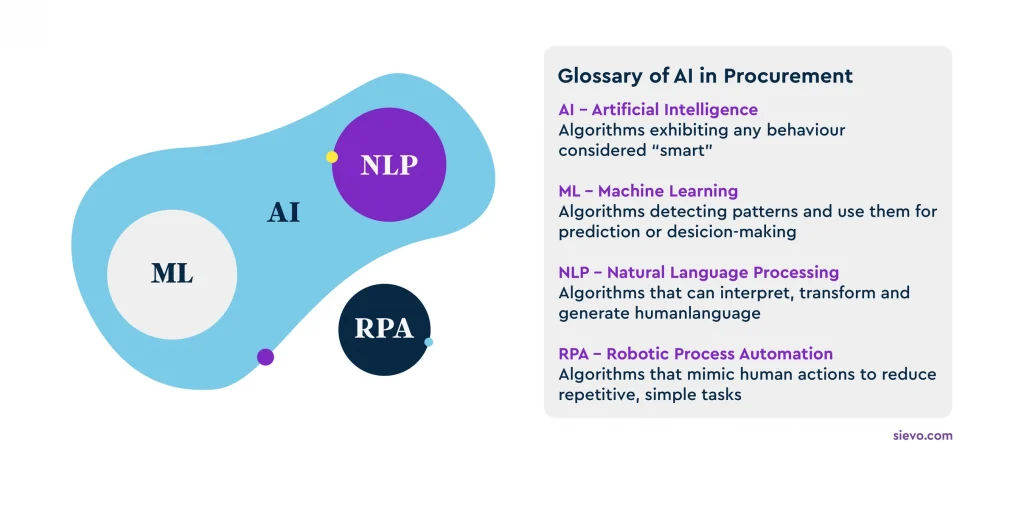
Source: https://sievo.com/
Generative AI (GenAI) adds a creative layer to the mix. It can instantly draft RFPs, supplier briefs, or contract templates in your company’s tone and format, transforming administrative tasks into effortless, on-demand workflows. For firms managing multiple projects at once, GenAI acts like a digital content partner that never stops writing or learning.
Finally, Agentic AI takes automation to an entirely new level. These autonomous AI agents continuously monitor supplier activity, track material availability, flag potential risks, and can even execute approved procurement actions independently. Think of them as intelligent coordinators ensuring every element of your supply chain moves in sync and on schedule.
How E-Procurement Challenges Differ from AI-Powered Procurement
For years, e-procurement was the answer to endless paperwork, digitizing purchase orders, invoices, and approvals.
AI could save the construction industry an estimated $1.6 trillion by 2030. But what the industry needs now isn’t just automation — it’s intelligence. That’s where AI-powered procurement platforms start to redefine how projects are planned, sourced, and delivered.
Take supplier visibility, for instance.
Construction firms often juggle hundreds of suppliers, yet have little sense of who’s performing well or which vendor might cause the next bottleneck. AI changes that by connecting scattered data across systems, turning it into a live, 360-degree view of every supplier. Risks surface before they turn into disruptions. Opportunities emerge before competitors spot them.
Then there’s the chronic issue of budgets.
Cost overruns have almost become a norm, with UK projects exceeding budgets by nearly 46%. Alongside AI-driven visibility, many organizations also require experienced operational turnaround leadership to stabilize execution, supplier coordination, and project delivery. AI tools bring a level of foresight that e-procurement never could. They predict demand, flag price fluctuations, and simulate scenarios to prevent expensive surprises before they happen.
Decision-making, too, looks completely different.
While e-procurement trapped data in forms and PDFs, AI can read invoices, contracts, and even engineering drawings using OCR and large language models (LLMs). With thoughtful LLM development, teams get instant insights instead of searching for information, the kind that speed up approvals, supplier negotiations, and site operations.
And when it comes to compliance, AI becomes your silent auditor.
Sustainability laws, modern slavery regulations, and carbon tracking all demand more documentation than ever before. AI platforms automatically track certifications, monitor supplier ethics, and generate audit-ready reports. What once took hours of manual work now happens in seconds.
Finally, there’s the human element. Procurement professionals spend nearly a third of their time on automating repetitive tasks, checking numbers, updating sheets, and chasing confirmations. AI steps in as the extra pair of hands, automating the mundane and elevating human expertise where it matters most: strategy, negotiation, and relationships.
e-procurement digitized the process; AI-powered procurement platforms humanize it again. It gives construction businesses the clarity, agility, and confidence they need to move from reacting to anticipating, from managing to mastering their supply chains.
The Real Impact of AI-Powered Procurement From Teams to the Bottom Line
We’re entering a new era of procurement, one powered by AI and shaped by human insight. Modern AI capabilities allow organizations to balance AI and machine intelligence with purposeful human intervention, creating a platform that streamlines every layer of intake management and supplier relationships.
1. Smarter Cost Control
Forget endless spreadsheets and reactive budgeting. AI platforms continuously analyze spend data across projects to uncover duplicate payments, inflated prices, and better supplier options instantly. For businesses working with tight margins, these actionable insights directly translate into stronger profits and predictable budgets.
2. Proactive Risk Management
Instead of discovering supplier problems when it’s too late, AI helps you anticipate them. It scans global market data, financial signals, and even industry news to flag risks early. That means fewer last-minute disruptions, steadier cash flow, and more reliable delivery timelines.
3. Built-In Sustainability and Compliance
Sustainability no longer has to mean extra admin. AI automatically tracks supplier certifications, carbon footprints, and compliance metrics, ensuring you stay aligned with evolving regulations like the CSDDD. For procurement leaders, that means less paperwork and more progress toward ESG goals.
4. Real-Time Collaboration Across Projects
Construction rarely runs on one site alone. AI-powered platforms unify data from suppliers, site managers, and finance teams in real time, giving everyone a single, accurate source of truth. The result? Faster communication, clearer accountability, and fewer costly misunderstandings.
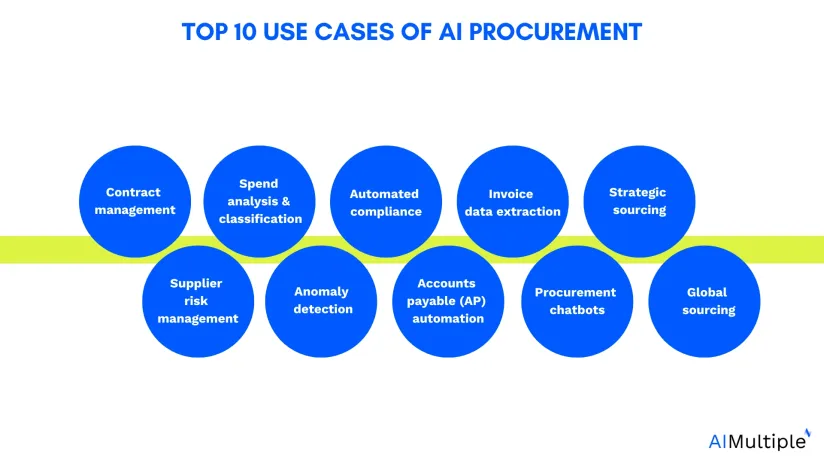
Source: https://research.aimultiple.com/
5. People Empowered, Not Replaced
AI handles the repetitive work of purchase orders, data entry, and invoice matching, so your team can focus on the human side of procurement. Negotiating better deals, strengthening supplier relationships, and driving strategy now take center stage.
6. Procurement Efficiency That Scales
Whether you’re running a few projects or managing a global portfolio, AI grows with you. It standardizes procurement across locations, shortens cycle times, and simplifies supplier management, creating a scalable foundation for future expansion.
7. Continuous Business Intelligence
Unlike traditional software, AI systems keep learning. They adapt to your company’s purchasing patterns, project timelines, and supplier performance, becoming smarter with every transaction. Over time, that actionable intelligence turns procurement into a true competitive edge.
Future Trends in Construction Procurement Platforms
Procurement in construction is no longer just about buying materials; it’s becoming a nerve center of intelligence, automation, and sustainability. The next decade will redefine how projects are planned, sourced, and delivered. Here’s a glimpse into what’s next:
1. Integration with Digital Twins
Imagine procurement that can “see” the project in real time. By integrating with digital twins, AI platforms will model material needs and site progress, dynamically adjusting orders the moment plans change. It’s the bridge between blueprint and reality, ensuring no time or resource goes to waste.
2. Blockchain for Supply Chain Transparency
Trust will soon be built on code, not paperwork. Blockchain will record every transaction and contract securely, creating an unbreakable audit trail. For construction leaders, that means fewer disputes, instant verification, and a new era of accountability.
3. Real-Time ESG and Sustainability Metrics
Sustainability isn’t just a compliance assurance box; it’s a competitive edge. AI-driven platforms will continuously monitor supplier emissions, ethical practices, and sustainability metrics, allowing companies to make greener choices without slowing down procurement.
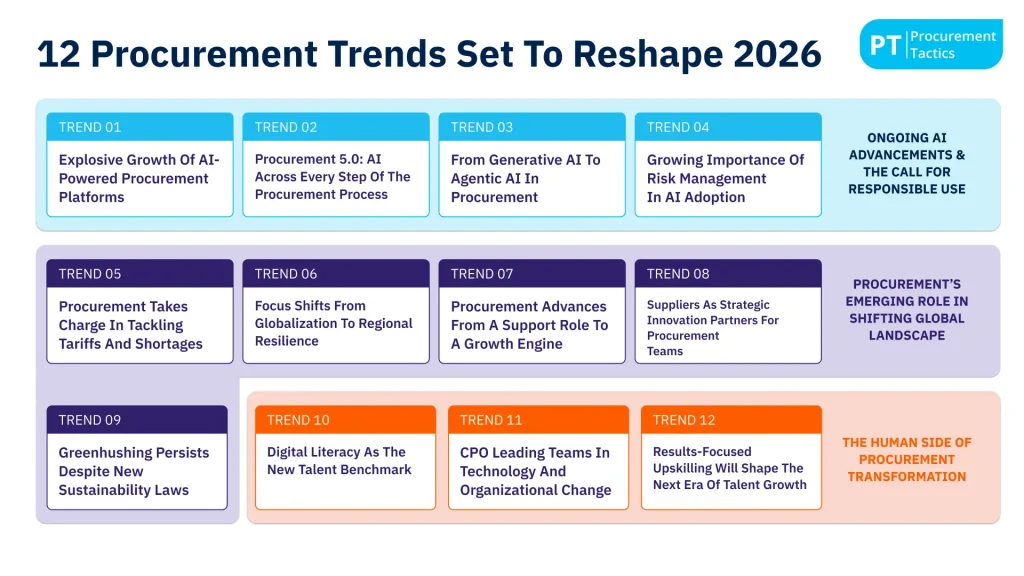
Source: https://procurementtactics.com/
4. Predictive Analytics for Smarter Decisions
The guesswork is gone. Predictive advanced analytics will anticipate demand, monitor supplier health, and flag risks long before they disrupt a project. With data-driven foresight, companies can plan, purchase, and deliver with precision.
5. IoT-Integrated Supply Chains
The Internet of Things will make every element of construction, from materials in transit to equipment usage, visible in real time. Connected sensors will feed data directly into procurement systems, enabling faster decisions and a more resilient supply chain network.
6. Autonomous Sourcing Agents
Procurement will soon be able to run itself. Autonomous AI agents will execute sourcing events, compare bids, negotiate terms, and even place orders, all within defined business rules. Human oversight remains, but the heavy lifting? That’s AI’s job.
7. Continuous AI-Driven Supplier Collaboration
Quarterly reviews will feel outdated. AI will foster ongoing supplier dialogue, offering real-time performance insights and instant feedback loops. Stronger partnerships will replace transactional relationships, creating ecosystems that grow smarter together.
AI-driven procurement can deliver up to 30% speed and efficiency gains, reduce value leakage by 3–12%, and boost category savings by up to 20%. Those who embrace AI now won’t just build faster; they’ll build smarter, greener, and more profitably than ever before.
Real-World Examples & Case Studies
Not long ago, procurement teams spent hours buried in spreadsheets, juggling multiple systems, and chasing approvals across departments. Every supply chain disruption felt like a storm no one saw coming.
Then came AI not as a replacement, but as a quiet partner that listens, learns, and simplifies. Today, business users open a user-friendly interface where insights appear before questions are even asked.
Contracts, vendors, and performance data come together in one place, turning chaos into clarity. AI doesn’t just automate procurement management; it brings real business reality into focus, helping people make faster, data-driven decisions and collaborate with confidence.
1. UK Construction Leaders: From Manual to Predictive Procurement
Several UK-based contractors have begun integrating AI-driven procurement platforms to manage supplier relationships and project sourcing. The results are clear:
- 50% faster processing times for purchase orders and approvals
- Reduced data-entry errors through automation and OCR-powered document handling
- Improved supplier visibility, helping teams anticipate delays and optimize material flow
These firms report smoother coordination across departments, with procurement, finance, and site management now working from one real-time dashboard.
2. Dow’s Smart Sourcing Transformation
Global chemical giant Dow implemented AI-driven sourcing solutions to streamline vendor selection and risk assessment. Using predictive analysis, the company cut supplier evaluation time by 40% and reduced sourcing costs by 15%. Their success demonstrates how applications of AI can scale across complex, high-volume supply chains, lessons that construction firms can readily apply.
3. Zycus: Automating the Procurement Ecosystem
Procurement software pioneer Zycus uses AI-powered automation to enhance contract management and spend analysis. Companies leveraging Zycus’ platforms have reported:
- Up to 70% reduction in manual procurement work
- Near-zero invoice discrepancies
- Faster compliance reporting, crucial for meeting ESG and regulatory standards
When the procurement team at a leading construction firm began missing project deadlines due to slow approvals and unpredictable supplier costs, their finance leaders knew something had to change. They turned to AI-powered procurement analytics not just as a tool, but as a way to rethink how decisions were made.
Soon, category managers could analyze datasets that once took weeks to review. The system began identifying patterns and structures in both procurement and supplier data, revealing insights no spreadsheet ever could. With advanced analytics capabilities, the team could predict risks, spot cost-saving opportunities, and improve supplier performance with remarkable precision.
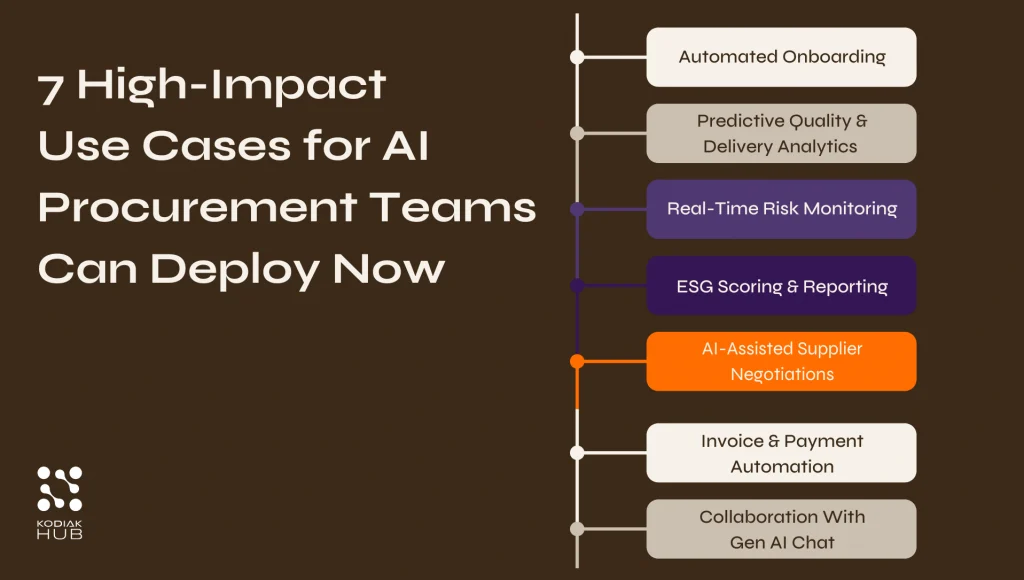
Source: https://www.kodiakhub.com/
Across industries, the story is the same: when AI is applied to procurement, organizations gain speed, accuracy, transparency, and measurable cost savings. For this construction firm, it meant something even bigger: on-time projects, stronger supplier relationships, and healthier profit margins.
Partnering with Appkodes: Turning Procurement Vision into Business Reality
At Appkodes, we believe every construction business is unique with its own challenges, workflows, and goals. That’s why we start by listening. We take the time to understand how your management and procurement processes really work, the bottlenecks, supplier selection issues, and daily frustrations that slow projects down.
As a leading startup mobile app development company, this deep understanding allows us to design AI-powered procurement solutions that don’t just automate tasks but solve real problems and uncover new opportunities.
We work closely with your teams to assess supplier performance, gain visibility into suppliers, and evaluate supplier financial health. Our AI development services help analyze patterns and surface insights more efficiently, and even assess supplier financial health to ensure long-term stability.
Whether it’s optimizing sourcing workflows from sourcing to contract, managing complex agreements through intelligent contract management, or unlocking insights with smart contract analysis, our solutions are built to optimize supplier collaboration and strengthen trust across your supply chain.
Using advanced AI technologies like Machine Learning, Natural Language Processing, and human language understanding, we create systems that evolve with your business — empowering procurement teams to predict risks, streamline decisions, and act with confidence.
These tools not only automate but also avoid poor AI integration and enhance human judgment, supporting procurement professionals with data they can rely on.
We don’t just deliver technology, we deliver transformation. At Appkodes, we help you reimagine procurement as a strategic advantage: smarter, faster, and more resilient. Together, we turn your supply chain into a connected ecosystem built for the future of intelligent, human-centered procurement.

Arun Andiselvam
Founder of AppKodes. As a serial entrepreneur, I have successfully established five brands over the past 12 years. After creating a successful rank tracker for SEO agencies, I am currently dedicated to developing the world's first SEO Project Management software.