What Makes the Best Event Management Software for Food Vendors?
Every weekend, thousands of food vendors set up at festivals, farmers’ markets, and pop-up events, hoping for a smooth, profitable day. But behind the scenes, many are still juggling orders, payments, and inventory using tools that were never really built for the pace of live events. And when things get busy, even small gaps turn into real losses, missed orders, wrong stock estimates, or delays in settling payments that only become obvious after the event is over.
What’s rarely talked about is this: most vendors don’t stop returning to an event because the crowd wasn’t good or the food didn’t sell. It’s usually because the experience behind the stall felt chaotic, permits are not clear, updates are missed, and peak-hour pressure leaves no room for mistakes. At a busy festival, a vendor might have only a few seconds to take an order, process a payment, and move on to the next customer. In that kind of environment, generic systems often fall short.
As the global event industry continues to grow steadily at around 6.8% CAGR from 2025 to 2031, the real difference between vendors isn’t just what they serve; it’s how smoothly they can operate when everything is moving fast. That’s where event management software comes in, not just as a digital tool, but as something that quietly keeps the entire event experience from falling apart.
So the real question becomes: what actually makes the best event management software for food vendors?
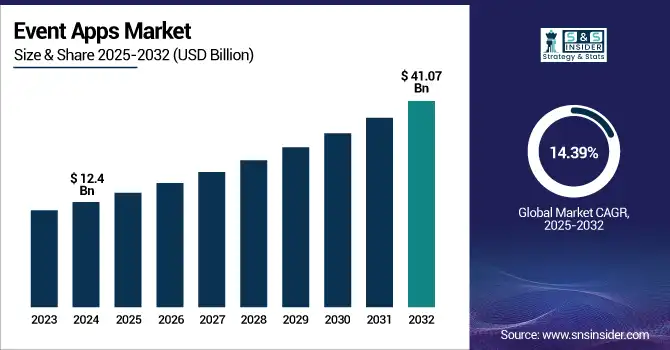
Source: https://www.snsinsider.com/
What is Event Management Software for Food Vendors?
Event management software for food vendors is a tool designed to help food businesses organize and manage everything involved in participating in events. From applying for festivals and scheduling staff to tracking inventory and monitoring sales, it brings all event-related activities into one place. Food vendors use it to save time, reduce operational mistakes, and run events more efficiently.
Who Benefits Most?
Food Trucks
Food truck business operators frequently move between festivals, markets, and private events. The best event management software helps keep schedules, permits, and event details organized in one place.
Festival Food Vendors
Large festivals involve applications, approvals, deadlines, and compliance requirements. A centralized system helps vendors stay organized and avoid missing important tasks.
Farmers Market Vendors
Many farmers’ market vendors participate in multiple weekly and seasonal events. Event management software simplifies scheduling, event tracking, and inventory planning.
Catering Businesses
Catering companies manage different clients, menus, and event requirements for every booking. Organized event data helps reduce errors and improve coordination.
Multi-Location Food Businesses
Businesses operating multiple trucks, stalls, or kiosks need visibility across teams, inventory, and events. Centralized management makes operations easier to monitor and control.
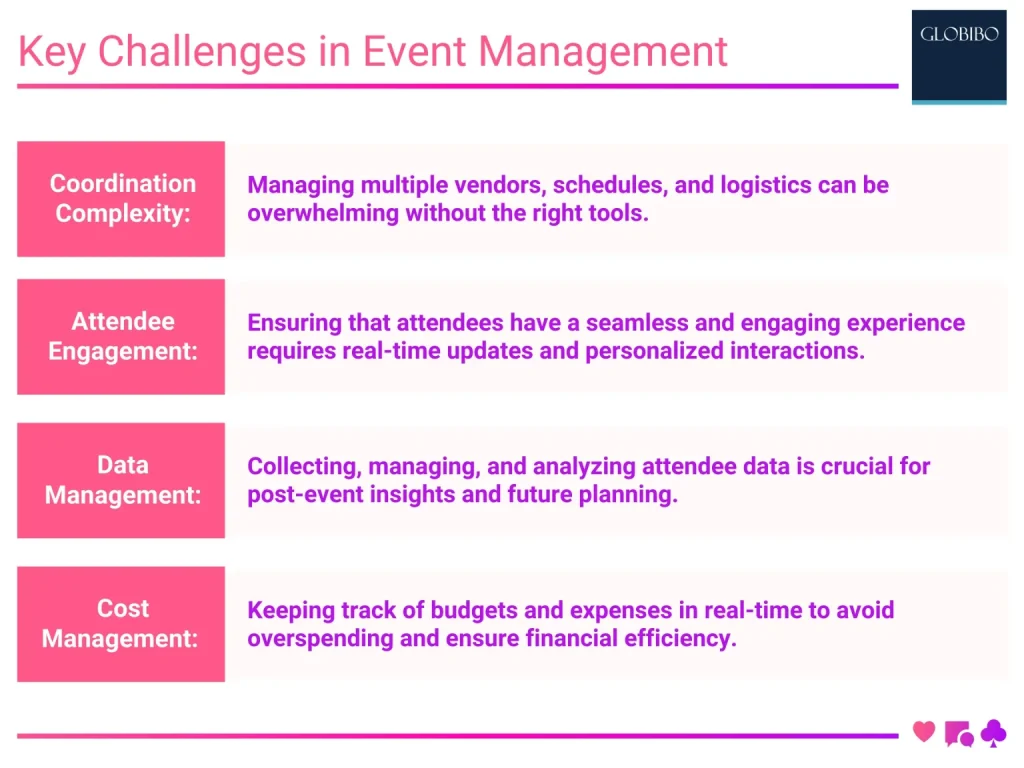
Why Event Management is Challenging for Growing Food Vendors
As food vendors expand, success is no longer about cooking more; it’s about identifying which events will actually bring strong returns before committing time, effort, and resources.
A lot of vendors eventually realize that not every festival, market, or food truck event is a good deal. Some promise huge crowds, charge heavy vendor fees, and still leave you barely breaking even. That uncertainty is what makes event management one of the hardest parts of running a food business.
1. Unreliable Attendance Estimates
One of the biggest complaints you’ll hear from food truck owners is that the crowd numbers don’t always match reality. Event organizers might say “we’re expecting thousands,” but when you actually get there, the footfall can be way lower. Vendors plan everything based on those numbers, stock, staff, prep, even travel, and then end up stuck with leftovers, extra costs, and lower-than-expected sales.
2. High Vendor Fees with Uncertain Returns
Most events don’t come cheap. You’re usually paying upfront fees, sometimes even revenue sharing on top of that. The tricky part is you’re committing all of this before you even know if the event will perform well. Even if sales look decent, once you add travel, staff, food costs, and commissions, the actual profit can shrink fast. That’s why some vendors slowly start shifting toward catering jobs where returns feel more predictable.
3. Overcrowded Vendor Lineups
Another common frustration too many vendors in one place. Sometimes events pack in so many food stalls, or too many selling the same kind of food, that everyone ends up fighting for the same customers. Even if the crowd is good, the sales get split so much that it doesn’t really help anyone.
4. Poor Communication from Organizers
This one causes more stress than people expect. Vendors often deal with missing details, last-minute updates, or unclear instructions about setup, parking, electricity, or timing. And in some cases, responses from organizers just don’t come on time, even after weeks of follow-ups. That kind of uncertainty makes planning really frustrating.
5. Logistical Problems on Event Day
Even when the event is big and busy, things can still go wrong on the ground. Bad parking, tight loading areas, unclear stall placement, or missing power connections can slow everything down. And when you’re trying to serve customers fast, these small issues directly affect your sales.
6. Knowing Which Events are Actually Worth Repeating
This is where most growing vendors struggle the most. You go to so many events that after a while, it all starts blending together. Some feel good, some feel average, but when it’s time to decide next season’s calendar, it’s hard to clearly remember what actually made money and what didn’t.
Most vendors end up relying on memory or total sales numbers. But without breaking down each event properly, it’s easy to keep repeating events that don’t really bring strong returns, while missing out on better ones.
When Should a Food Vendor Upgrade to Dedicated Event Management Software?
Most food vendors don’t switch because things are “messy.” They switch when they start noticing that their business is growing, but their system isn’t keeping up with it anymore. It usually shows up in very specific ways.
1. When You Stop Taking Last-minute Opportunities
At some point, opportunities don’t come with enough time to think; they come fast. A vendor might get a last-minute slot at a high-traffic event or a cancellation opening. If hesitation is replacing quick yeses, it’s rarely just busyness. It’s usually a signal that your way of working has outgrown its current pace.
2. When You Rely too Much on One Person to “Remember Everything”
In many small food businesses, one person becomes the memory bank, usually the owner.
They remember which organizer prefers what, which events had issues, what worked last season, and what didn’t. The moment things depend on one person’s memory instead of a shared system, the business becomes fragile as it grows.
3. When Repeated Work Feels Identical Instead of Improved
Healthy growth means each event gets easier over time. But if every new event still feels like you’re repeating the same setup from scratch, same confusion, same preparation effort, same back-and-forth, it means your business isn’t learning from experience in a structured way. That’s usually when scaling starts to stall.
Source: https://globibo.blog/
4. When Opportunities are Judged Only By “Feel”
A lot of vendors still decide based on instinct, “this event feels good,” or “this one looks busy.” That works early on. But when choices increase, instinct alone stops being enough. If decisions aren’t backed by any consistent way of comparing past outcomes, you start relying more on guesswork than pattern recognition.
5. When Planning Stops Matching Reality
As vendors grow, they often realize that what they planned for the season and what actually happens don’t line up anymore. Not because they planned badly, but because the number of moving parts has increased beyond what informal planning can handle. That mismatch is usually the point where structure becomes necessary.
8 Best Event Management Software Solutions for Food Vendors
1. Appkodes
Founded in 2008 and headquartered in Madurai, Tamil Nadu, India, Appkodes, development Company focuses on building custom web and mobile application solutions. It began with ready-made business products and clone scripts, and over time has grown into a full-scale development company working on SaaS platforms, enterprise applications, marketplace systems, blockchain solutions, and other tailored software products.
With over a decade of experience and a global client base, Appkodes is driven by a simple goal to help businesses launch and scale digital products faster and more efficiently. In the event management space, our strength lies in flexibility and customization, enabling organizers to build systems for vendor management, registrations, payments, and end-to-end event operations that fit their exact business needs instead of relying on rigid, one-size-fits-all software.
2. Eventeny
Founded in 2018 by Aly Hussaini and Nausheen Punjani, Eventeny is headquartered in Peachtree Corners, Georgia, United States. It was built after the founders personally faced the challenges of event planning and wanted a more complete, all-in-one solution for organizers.
Unlike general event software, Eventeny is designed with a strong focus on vendor-driven events. It provides tools for vendor applications, exhibitor and booth management, interactive maps, ticketing, sponsorships, volunteer coordination, contracts, and payments. This makes it especially useful for food festivals, farmers markets, community fairs, and other events where managing multiple vendors is a core requirement.
3. Bizzabo
Founded in 2011 and headquartered in New York City, Bizzabo has positioned itself as a leading event experience platform for enterprises, associations, and large organizations. It offers an Event Experience Operating System designed to bring everything into one place—from registrations and attendee engagement to networking, onsite experiences, analytics, and hybrid event management.
Bizzabo is especially strong when it comes to large-scale conferences, expos, and professional gatherings where engagement and data insights matter as much as logistics. For food industry trade shows, culinary conferences, and major food expos, it provides advanced tools for event marketing, networking, and performance analytics, going well beyond basic event management features.
4. Eventbrite
Founded in 2006 in San Francisco, California, Eventbrite is one of the most widely recognized event technology platforms globally. It was created by Kevin Hartz, Julia Hartz, and Renaud Visage with the goal of making it easy for anyone to create, promote, and manage events, along with handling registrations and ticket sales.
Over time, Eventbrite has become a popular choice for local events, festivals, workshops, food fairs, and community gatherings, mainly because of its simple interface and strong event discovery reach. While it isn’t specifically built for vendor management, its core strengths in ticketing, registration, and event promotion make it a practical option for organizers who want a straightforward and widely used platform.
5. Whova
Founded in 2013 and headquartered in San Diego, California, Whova is an event technology platform focused on improving attendee engagement and networking. It is best known for its event mobile app, agenda management, attendee communication, exhibitor listings, and interactive networking features.
Whova is designed to keep participants engaged before, during, and after events through tools like discussion boards, messaging, announcements, and community features. For food industry conferences, culinary meetups, and trade events, it helps organizers create more interactive and connected event experiences that go beyond basic scheduling and registration.
6. Swoogo
Founded in 2015 and headquartered in Los Angeles, California, Swoogo was built to simplify event registration and overall event management while still offering strong customization capabilities. It focuses on flexible registration workflows, branded event pages, attendee management, and detailed reporting tools.
Swoogo is often chosen by organizations that need highly customizable registration systems and seamless integrations with other business tools. For food vendors and event organizers, its flexibility makes it suitable for different types of events, from small industry meetups to large-scale exhibitions.
7. Cvent
Founded in 1999 and headquartered in Tysons, Virginia, United States, Cvent is one of the most established event technology platforms in the industry. It offers a comprehensive event management ecosystem covering registration, venue sourcing, attendee management, exhibitor management, event marketing, mobile apps, and analytics.
Cvent is widely used by enterprises, associations, and professional event organizers around the world. Its scale and depth of features make it especially suitable for large food expos, international trade shows, and complex multi-day events that require strong coordination and advanced operational control.
8. vFairs
Founded in 2008 and headquartered in Dallas, Texas, vFairs specializes in virtual, hybrid, and online event experiences. It became widely known for enabling organizations to host conferences, trade shows, career fairs, and exhibitions in immersive digital environments.
The platform includes features such as virtual booths, webinars, networking tools, exhibitor management, and attendee engagement systems. For food brands, distributors, and industry associations, vFairs is especially useful when the goal is to reach a wider audience beyond physical venues through virtual or hybrid event formats.
What Features Matter Most in Event Management Software for Food Vendors?
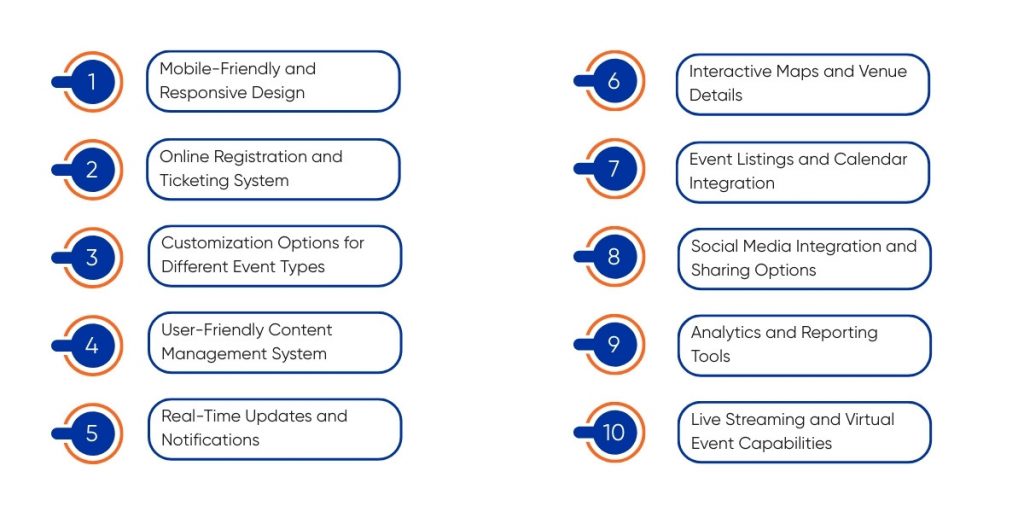
If you’ve been doing food events for a while, you already know the truth: it’s not the cooking that gets messy, it’s everything around the event. Applications, messages from organizers, permits, staff, stock planning… once you start doing multiple events in a month, things get chaotic real quick. The best event management software doesn’t need to be fancy. It just needs to keep your events from falling apart. Here’s what actually matters.
1. Event Applications + Calendar Tracking
Most vendors don’t miss events because they’re not organized; they miss them because everything is scattered. One organizer texts you on WhatsApp. Another sends a form by email. Another asks you to “confirm by next week,” and you forget because you were busy at another event. Before you know it, you’ve lost track of who replied and who didn’t.
That’s why having everything in one place matters. You should be able to see:
What events you applied for, what’s confirmed, what’s pending, and what deadlines are coming up without digging through messages.
2. Permits & Documents
If you’ve done events, you already know this pain. One day, it’s a health permit. The next day, it’s insurance. Then, some random festival asks for a menu sheet you don’t even remember sending before. And of course, they always ask at the worst time, usually when you’re already setting up or on the road. Having all your documents stored and ready saves you from that last-minute panic of “wait, where did I save that file?”
3. Inventory Planning Per Event
This one hits every vendor at some point. You think an event will be busy… so you pack extra. Then the weather turns bad, or footfall is lower than expected, and you’re left managing unsold stock and lost revenue. Or you go light, thinking it’s a normal crowd… and suddenly you’re sold out by peak time and losing sales. Every event behaves differently. You learn that the hard way. So being able to plan stock based on past events or similar setups makes life way easier — less guessing, more control.
4. Staff Scheduling & Coordination
Once you stop running everything alone, things get tricky. One weekend, you might have two events in different places. One needs two people, another needs four. Someone calls in sick at the last minute, someone mixes up timings… and suddenly you’re short-staffed at the worst possible moment. It’s not even about hiring more people; it’s about knowing who is going where without confusion. That’s where proper scheduling actually saves you stress.
5. Expense & Payment Tracking
A lot of vendors think, “Yeah, the event went well, we sold a lot.” But when you sit down later and add everything, vendor fee, travel, fuel, staff pay, food cost, the profit doesn’t always match what you thought. Some events that look busy are actually not that profitable. If you don’t track each event separately, you’ll never really know which ones are actually worth your time.
Source: https://itrobes.com/
6. Event Performance Analytics
After a while, every vendor starts thinking the same thing: “Why do some events always feel worth it… and others not so much?” It’s not just a gut feeling. Some events genuinely perform better than others, better crowd, better spending, better timing. When you can actually compare events side by side, it becomes easier to decide: which ones to repeat, which ones to skip, and which ones are just wasting your time.
7. Advanced Stuff (When You Start Scaling)
Once things get bigger, you start needing a bit more help. Like checking updates on your phone while traveling, getting reminders so you don’t miss deadlines, syncing sales from POS, or having reports that show you what’s really going on without digging manually. It’s not about overcomplicating things; it’s just about not losing control when the number of events increases.
Ready-Made vs Custom Event Management Software: Which is Better for Food Vendors?
| Factor | Ready-Made Software | Custom Software |
| Cost | Lower upfront cost, subscription-based pricing | Higher initial investment, long-term ownership |
| Setup Time | Quick setup, ready to use immediately | Longer development and implementation time |
| Flexibility | Limited to pre-built features and workflows | Fully tailored to your specific operations |
| Scalability | Scales within platform limits and plans | Designed to grow with your exact business needs |
| Integrations | Supports common integrations only | Can integrate with any tools you need |
| Ownership | Platform-controlled system and data environment | Full control over system, features, and data |
| Customization | Minimal customization options | Fully customizable to match business processes |
| Maintenance | Handled by provider | Requires ongoing updates and support management |
Which One Should Food Vendors Choose?
Honestly, there’s no one “perfect” choice here; it depends on where you are in your journey as a food vendor.
If you’re just getting started or doing a handful of events every month, ready-made software is usually more than enough. It’s quick to set up, doesn’t cost much upfront, and already comes with the basic tools you need to manage events without overthinking things. At this stage, most vendors just need something that keeps things organized without adding extra complexity.
But once your events start picking up more teams, more locations, more coordination, you start feeling the limits of generic tools. That’s when custom software starts to make sense. It’s built around how you actually work, not how a system thinks you should work. So instead of adjusting your process to fit the tool, the tool is built around your process.
To keep it simple:
- Ready-made software → best when you want something fast, simple, and affordable
- Custom software → best when your event operations have grown too complex for basic tools
Most food vendors don’t jump straight into custom systems. They start with ready-made tools, and only upgrade when they hit a point where managing events starts feeling more complicated than running the business itself.
How Much Does Custom Event Management Software Cost?
The cost of custom event management software isn’t fixed because it depends on how complex your food business operations are. A vendor doing a few local events will need something very different compared to someone managing multiple trucks, teams, and cities.
In real terms, development usually falls into three practical levels.
Basic MVP Development
This is where most vendors start when they want to move away from spreadsheets, WhatsApp messages, or manual tracking.
A basic system usually includes simple event listings, application tracking, basic scheduling, and manual entry for expenses or notes. It’s not heavily automated, but it brings everything into one place so nothing gets lost in scattered communication. At this stage, the focus is simple — getting structure and visibility without overbuilding features.
Typical Cost Range: ₹1.5 lakh – ₹5 lakh (or $2,000 – $6,000) depending on design and features.
Mid-Level Business Platform
This is the most common stage for vendors who already depend on events as a steady source of income.
Here, the system becomes more operational. It can handle multiple events at the same time, manage staff assignments, track expenses per event, and provide basic performance insights. Some setups also include integrations with POS systems or payment tools, so sales data doesn’t need to be entered manually. At this level, the software starts saving real time in day-to-day operations, not just organizing information.
Typical Cost Range: ₹5 lakh – ₹15 lakh (or $6,000 – $18,000), depending on integrations and scale.
Advanced Enterprise Solution
This level is for established food businesses running at scale, multiple locations, multiple trucks, or large teams working across different cities and events.
Everything here is highly customized. Workflows are built around how the business actually runs, dashboards are designed for decision-making, and systems often connect with inventory, logistics, payments, and sales in real time. At this stage, the software becomes part of daily operations, not just a supporting tool.
Typical Cost Range: ₹15 lakh – ₹50+ lakh (or $18,000 – $60,000+), depending on complexity, integrations, and real-time capabilities.
What Actually Drives the Cost Up or Down
In real projects, pricing depends less on the “category” and more on complexity.
For example:
- Simple event tracking keeps costs on the lower side
- Adding automation (approvals, reminders, multi-event coordination) increases development time
- Integrating POS systems, payment gateways, or external tools adds complexity
- Supporting multiple teams or locations requires a stronger architecture
- Advanced dashboards and reporting need deeper backend development
Even small feature additions can increase cost because everything in custom software is connected.
Ongoing Maintenance and Support
One thing many vendors don’t consider is that the best event management software isn’t a one-time build.
After launch, there are ongoing costs for hosting, updates, bug fixes, and improvements as the business grows. As event operations scale, most systems need continuous updates to stay useful and aligned with real workflows. In practice, the software evolves along with the business, especially for vendors expanding into more events each season.
Future Trends in Event Management Software for Food Vendors
Event management software for food vendors is steadily evolving from simple booking and scheduling tools into more intelligent, data-driven platforms. While many of these capabilities are still developing, the overall direction is clear: more automation, better decision support, and tighter integration across operations.
Below are the key trends shaping the future of this space.
1. AI-Driven Demand Forecasting and Planning
One of the most important developments is the growing use of AI to support demand forecasting. Modern systems are beginning to analyze factors such as past event performance, weather conditions, and location trends to estimate customer turnout and sales potential.
For food vendors, this helps improve preparation planning, reduce overstocking, and minimize food waste. While not yet perfect or universal, this capability is becoming increasingly common in advanced event and food service platforms.
2. Smarter Event Matching and Scheduling
Event management tools are gradually introducing smarter scheduling features that help vendors discover and manage opportunities more efficiently.
Instead of manually tracking multiple applications, platforms are moving toward:
- Suggesting relevant events based on vendor profile and history
- Reducing scheduling conflicts
- Centralizing event applications in one dashboard
This shift helps vendors spend less time on coordination and more time focusing on operations.
3. Improved Inventory Tracking and Waste Reduction
Inventory management is becoming more closely connected with event sales data. Some systems now help vendors track ingredient usage across events and identify patterns in demand.
This makes it easier to:
- Estimate required stock more accurately
- Reduce excess preparation
- Improve cost efficiency over time
Although still evolving, this is one of the most practical and widely adopted improvements in food vendor software.
4. Integration of All-in-One Vendor Platforms
A clear trend in the industry is the move toward unified platforms that combine multiple functions into a single system.
Instead of using separate tools for booking, payments, CRM, and reporting, vendors are increasingly looking for solutions that bring everything together.
This integrated approach helps reduce manual work, avoids data duplication, and improves overall operational visibility.
5. Real-Time Insights and Analytics
Modern event platforms are placing greater emphasis on real-time dashboards and reporting features.
These tools allow vendors to monitor:
- Sales performance during events
- Customer engagement trends
- Popular menu items
While still more common in larger platforms, real-time analytics are becoming more accessible to smaller vendors as well.
Source: https://www.zuddl.com/
6. Early Use of AI Assistants in Operations
Some event management systems are starting to introduce AI-powered assistants that help with basic operational tasks.
These tools can assist with:
- Generating reports
- Answering platform-related questions
- Providing recommendations based on past data
However, they are still in early stages and mainly serve as support tools rather than fully autonomous managers.
7. Predictive Staffing and Resource Planning (Emerging)
In more advanced systems, early versions of predictive staffing tools are beginning to appear. These tools aim to estimate staffing needs based on expected event size, time, and historical performance.
At present, this is mostly seen in larger enterprise systems, but it shows strong potential for future adoption in the food vendor space.
8. Mobile-First and Offline Capabilities
Since food vendors operate in outdoor and high-traffic environments, mobile accessibility remains a critical requirement.
Future-focused platforms continue to improve:
- Mobile-first interfaces
- Offline data capture during events
- Automatic syncing when connectivity is restored
This ensures smoother operations even in low-network conditions.
9. Growing Focus on Sustainability Tracking
Sustainability is becoming an important consideration for event organizers and food vendors alike.
Some modern systems are beginning to explore features that track:
- Food waste levels
- Packaging usage
- Operational efficiency indicators
These insights can help vendors align with eco-friendly event requirements and improve long-term efficiency.
Final Notes
At the end of the day, most vendors struggle with whether it’s food trucks, festival stalls, or farmers’ markets, which are not just “operational issues.” They are coordination problems, timing gaps, and a lack of real-time control.
That’s exactly where a platform like Appkodes, a leading startup mobile app development company fits in.
Instead of juggling WhatsApp messages, spreadsheets, and last-minute calls, vendors can move toward a single digital system that handles bookings, schedules, payments, and updates in one flow.
The real shift is not just convenience, it’s predictability. When operations become predictable, waste reduces, earnings stabilize, and decision-making becomes faster.
In simple terms:
Less chaos → more control → better business outcomes.
For vendors trying to scale beyond just “surviving the next event,” this kind of structured system becomes less of a luxury and more of a foundation.

Arun Andiselvam
Founder of AppKodes. As a serial entrepreneur, I have successfully established five brands over the past 12 years. After creating a successful rank tracker for SEO agencies, I am currently dedicated to developing the world's first SEO Project Management software.