How to Build a Food Truck App in 2026: What Nobody Tells You Before You Start
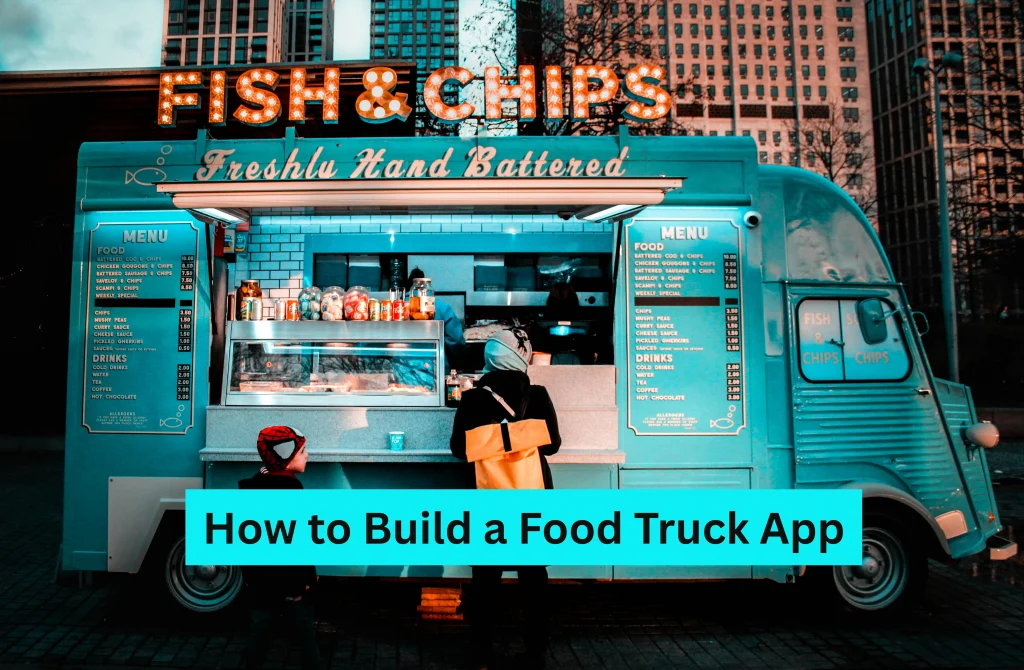
Yesterday, I read an article about a food truck owner from Northglenn, Colorado, who got scammed after receiving what looked like a legitimate invitation to a local food truck carnival.
The email appeared official, the event sounded real, and she did what most owners would do: paid the deposit, prepared her inventory, and showed up ready for business. But when she reached the venue, her name wasn’t on the vendor list. The booking was never real, and the person who contacted her had no connection to the event.
And it makes me stop and ask how easily this still happens today?
How many food truck owners are actually double-checking whether an event is real before sending money? And in a business where timing, preparation, and investment all move fast, how often is “trust” replacing verification?
Most owners still rely on emails, messages, or informal contacts to secure events, without any proper system to confirm what is genuine and what isn’t. But what happens when that trust is misplaced? One wrong booking doesn’t just mean disappointment; it means lost money, wasted stock, and missed opportunities.
This is exactly the gap that needs attention and the reason a more structured, trusted system is becoming essential. The global food truck industry is projected to grow significantly to USD 4.17 billion by 2034. As the industry expands, so does the need for stronger verification and reliability in how events and vendors connect.
A dedicated food truck app isn’t just about listings, bookings, or convenience anymore. Apart from its normal functions, it also acts like a fingerprint when it comes to security for digital ordering, where every event and every vendor is verified, traceable, and accountable before any money or commitment changes hands.
In this guide, we’ll break down why this problem keeps happening and how to build a food truck app that actually solves this.
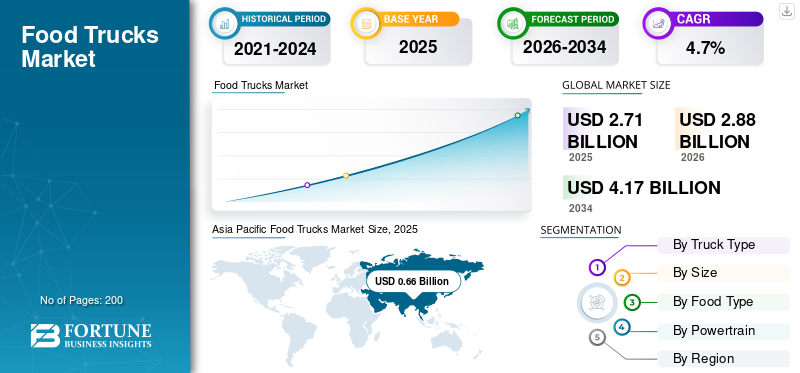
Source: https://www.fortunebusinessinsights.com/
What is a Food Truck App?
A food truck app is a digital platform that helps food truck businesses connect with customers by offering real-time access. It allows users to discover nearby food trucks, explore menus, track live locations, and place orders online, while enabling food truck owners to manage operations, payments, customer engagement, and daily sales more efficiently from a single platform.
Types of Food Truck Apps
Food truck platforms are usually built as a connected system with different apps for different users, each designed to handle a specific part of the overall experience.
A customer app is the front-facing part of the system. This is where users explore nearby food trucks, check menus, see live availability, and place orders. It focuses on convenience and speed, making it easy for customers to decide what to eat and where to find it without any confusion.
A vendor app is designed for food truck owners and staff. It helps them manage incoming orders, update menus in real time, track sales, and handle day-to-day operations. It essentially acts as the digital control center for running the food truck efficiently, especially during busy hours.
An admin dashboard works behind the scenes and gives platform owners full control over the entire ecosystem. From managing multiple food trucks to monitoring performance, commissions, users, and analytics, this panel ensures everything runs smoothly and stays organized at scale.
In some systems, a driver or delivery panel is also included. This is used when food trucks or platforms offer delivery services. It helps drivers manage pickup requests, navigate routes, and update delivery status in real time, ensuring orders reach customers without delays.
Who Actually Needs a Food Truck App in 2026?
Not every food truck business needs a custom app. Let’s be honest about that. You need an app if:
- You have 3+ regular weekly locations, and customers struggle to find you
- You do catering or corporate bookings and currently manage them through WhatsApp or email
- You want to build a customer loyalty program and reward repeat customers
- You’re running multiple trucks and need centralized order management
- You’re building a food truck marketplace (connecting customers with multiple trucks)
You don’t need a custom app (yet) if:
- You’re just starting out and have fewer than 100 regular customers
- Your current sales are fully handled through walk-ins and social media
- Your budget is under $5,000
For that second group, a well-optimized Google Business Profile, an Instagram page with your weekly schedule, and a simple online menu and POS system integration will do more for your business, even in a third-party app.
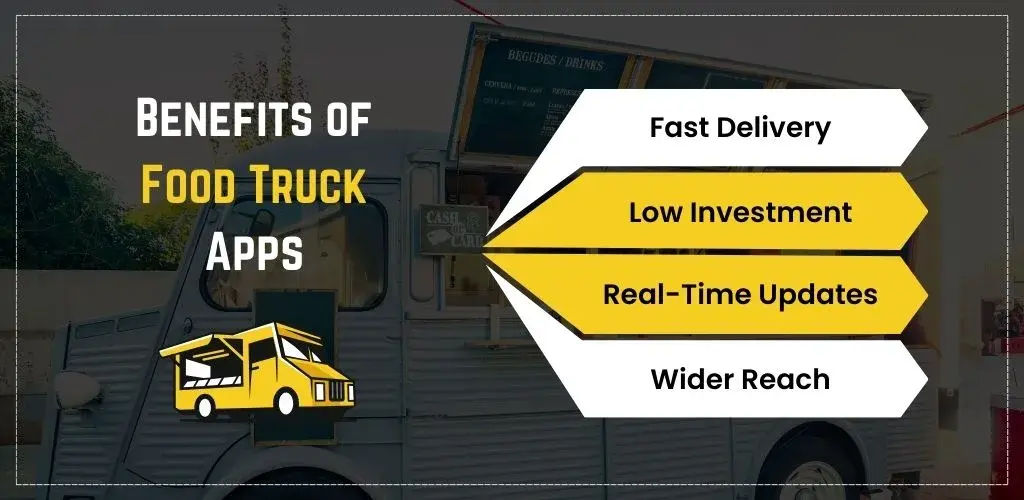
Source: https://enatega.com/
Now, for everyone else, let’s dive deeply into how to build a food truck app that makes you unique in the crowd. For that, you need to research deeply into the food truck market. Let’s see how to do it.
How to Conduct Deep Market Research Before Building Your Food Truck App?
This step is less about “collecting information” and more about breaking down how the existing system actually behaves in real usage.
The strongest starting point is competitor analysis, because the market already has patterns that shape user expectations. Delivery aggregators, food discovery apps, and hybrid platforms dominate attention today, but most of them treat food trucks like a normal restaurant listing.
That’s where the mismatch begins. They are built for fixed-location businesses, not for moving kitchens. So even when features look similar, the execution fails in real conditions like live movement, sudden location changes, or short operating windows.
By studying these gaps, you know the real problem is not a lack of apps; it is a lack of purpose-built systems for mobility-based food businesses.
From there, customer expectations become clearer. Users don’t explicitly say it, but their behavior shows that they want certainty and timing. They want to know exactly where a truck is right now, whether it will stay long enough, and if the food they want will still be available when they arrive.
Most existing platforms only show static listings or delayed updates, which creates friction between intent and action. This gap is where opportunity exists for you.
On the operational side, food truck businesses are still running in a fragmented way. Orders come from multiple sources, inventory is tracked manually or loosely, and peak-hour demand is handled based on experience rather than data.
The result is missed orders, stock imbalance, and inconsistent customer experience, which directly affect revenue. Now, let’s take a quick look at how to build a food truck app for your business
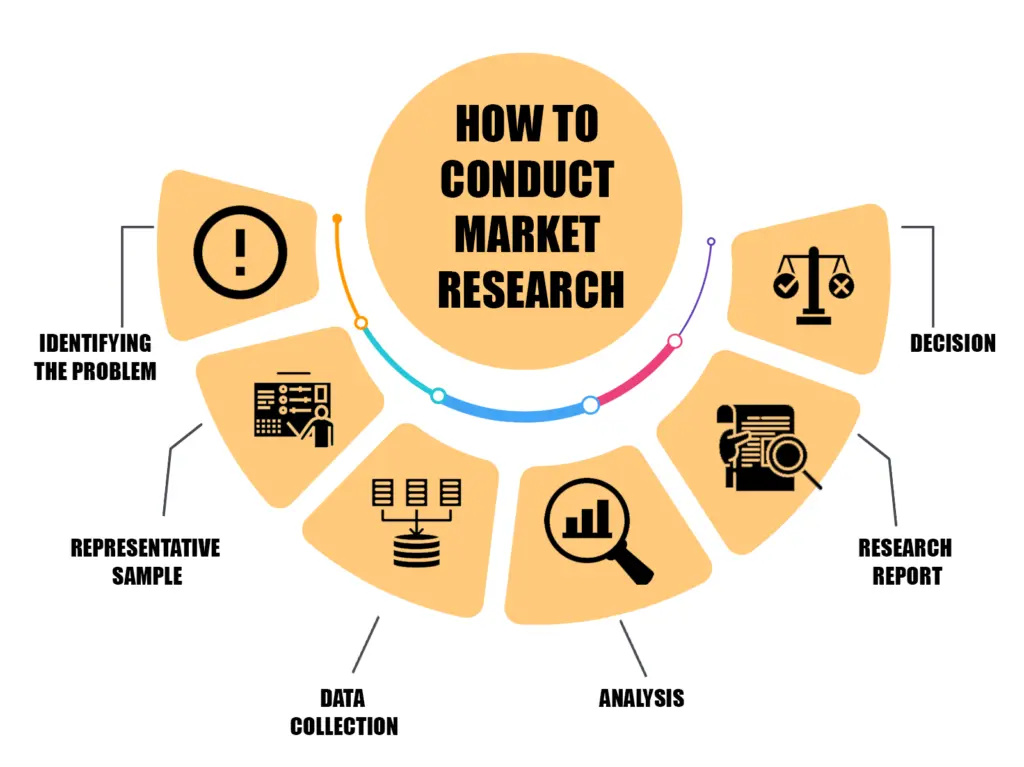
Source: https://www.fynzo.com/
Step-by-Step Food Truck App Development Process
Behind every food truck app is a simple intention: bringing order to something that rarely slows down. This step-by-step breakdown shows how that idea moves from planning into a working product.
Step 1: Choose the Food Truck App Business Model
The business model decides how your food truck app actually makes money, and it needs to match real usage behavior, not just theory.
A commission-based model is the most common in marketplaces, where you earn a percentage on every order.
A subscription model works better for vendors who prefer predictable monthly costs instead of paying per order.
The freemium model allows basic access for free while charging for premium features like analytics or promotions.
Food trucks can also use featured listings, where they pay to show up at the top of search results or map views during busy hours, especially in high-traffic US cities.
Step 2: Define Core Features
At this stage, the focus is on separating what you need to launch fast versus what can come later. The MVP (Minimum Viable Product) should focus on essentials like real-time location tracking, menu browsing, ordering, and payments.
Advanced features such as loyalty systems and multi-truck management can be added after validating user demand. Alongside this, scalability planning is important from day one so the system can handle more trucks, more cities, and higher order volumes without breaking performance.
Step 3: Design UI/UX for Fast Ordering
In food truck apps, speed is everything. The UI/UX must be built around instant action rather than browsing. Features like one-tap ordering, a map-first experience, and quick checkout flows reduce friction and increase conversions. The goal is simple: a user should see a truck on the map and place an order in seconds, not minutes.
Step 4: Select the Right Tech Stack
The technology stack should balance speed of development with long-term scalability. On the frontend, frameworks like Flutter or React Native allow cross-platform mobile development. On the backend, options like Node.js, Laravel, or Django support scalable APIs and real-time data handling.
For databases, PostgreSQL works well for structured data, while MongoDB is useful for flexible, fast-changing data like menus and locations. For maps and live tracking, the Google Maps API or Mapbox is essential. And for payments, integrations like Stripe (global) or Razorpay (India-focused) ensure smooth, secure transactions.
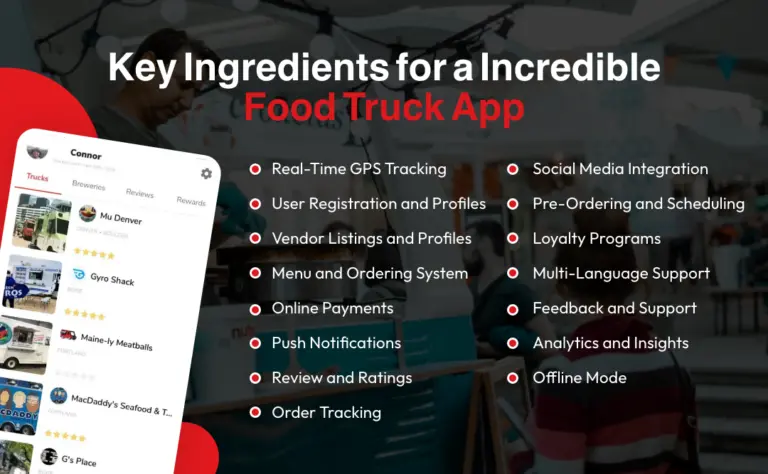
Key Features Required to Develop a Food Truck App
Every successful food truck app is shaped by the features behind it. Not just functionality for the sake of it, but tools that solve real operational gaps, from discovery to bookings and on-ground execution.
1. Real-Time Food Truck GPS Tracking
A key feature of a food truck app is live GPS tracking. It allows customers to see the exact location of a food truck in real time, so they always know where to go without confusion.
With route visibility, users can understand the truck’s movement and plan their visit easily. Nearby alerts also help customers get notified when a food truck is approaching their area, making it more likely they won’t miss it.
2. Online Food Ordering System
The online ordering system makes the entire experience smooth and fast. Customers can browse the menu, select their favorite items, and add them to the cart in just a few taps. It also supports pre-ordering meals and scheduling pickups, which is especially useful during busy lunch hours when saving time matters the most.
3. Digital Payments Integration
Modern food truck apps support multiple payment options to make transactions quick and hassle-free. Users can pay using UPI, debit or credit cards, digital wallets, or simple QR code scanning. This removes the need for cash handling and speeds up the entire checkout process for both customers and vendors.
4. Push Notifications & Geo Alerts
Push notifications help keep customers updated in real time. Whether it’s a “truck arriving near you” alert, a lunch-hour special offer, or a limited-time discount, these notifications bring customers back at the right moment. Geo-based alerts make the experience more personal by sending updates based on the user’s exact location.
5. Loyalty & Rewards Program
Loyalty features help food trucks build long-term customer relationships. Users can earn stamp-based rewards, get referral benefits for inviting friends, and unlock special offers for repeat purchases. This helps customers come back again and again instead of choosing other apps or competitors.
6. AI-Based Food Recommendations
AI makes the app smarter by suggesting food based on user behavior. It analyzes past orders, understands preferences, and recommends personalized dishes. It can also highlight trending items so customers don’t miss out on popular choices within their area.
7. Ratings and Reviews
Ratings and reviews build trust between customers and food trucks. Users can share feedback based on their experience, helping others make better decisions. This also gives food truck owners valuable insights to improve their food quality and service over time.
8. Food Truck Analytics Dashboard
A food truck analytics dashboard gives owners a clear picture of how their business is performing in real time. It highlights peak selling hours, helping them understand when customers are most active so they can plan staffing and stock better.
It also shows best-selling menu items, making it easier to focus on what actually drives revenue. On top of that, location performance insights reveal which spots bring in the most sales, while detailed revenue reports help track overall business growth and make smarter decisions for the future.
Advanced Features That Make a Food Truck App Stand Out
Beyond the basics, what makes a food truck app stand out is how intelligently it adapts to real-world demands. Advanced features are what turn a functional app into a powerful ecosystem.
1. Live Queue Tracking
Live queue tracking helps customers see how crowded a food truck is before they arrive. It shows real-time waiting status so people can decide whether to visit now or come later. For owners, it helps manage crowd flow better and reduce long waiting times during peak hours.
2. Route Optimization for Food Trucks
Route optimization helps food truck owners plan the best locations and travel paths for the day. Instead of guessing where to go, the system suggests high-demand areas based on customer activity, events, and historical data, helping maximize sales and reduce idle time.
3. Multi-Truck Franchise Management
This feature is designed for businesses running multiple food trucks under one brand. It allows centralized control of menus, pricing, staff, and performance across all trucks, making it easier to scale operations without losing consistency.
4. Cloud Kitchen Integration
Cloud kitchen integration connects food trucks with delivery-only kitchens. This helps expand reach beyond physical locations, allowing businesses to receive online orders and fulfill them through nearby kitchen setups when trucks are not in operation.
5. AI Demand Forecasting
AI demand forecasting predicts customer demand based on past trends, weather, time of day, and location data. This helps food truck owners prepare the right amount of food, reduce waste, and improve overall efficiency.
6. Inventory & POS Integration
Inventory and POS system integration ensures smooth day-to-day operations by tracking stock levels and sales in real time. Every order automatically updates inventory, helping owners avoid shortages and manage ingredients more effectively.
7. Delivery Aggregator Integration
Food truck apps can also connect with major delivery platforms to expand their reach. This allows orders to flow from multiple sources, increasing visibility and sales opportunities across different customer bases.
- DoorDash
- Uber Eats
Source: https://devtechnosys.com/
Overhyped Food Truck App Features That Don’t Increase Orders or Revenue
Table booking — food trucks don’t have tables. Skip it.
Social sharing buttons — customers don’t share through app buttons. They share on Instagram Stories. Don’t waste development time here.
In-app reviews — Google Reviews and Zomato already own this space. Redirect customers there instead of building a separate review system nobody trusts yet.
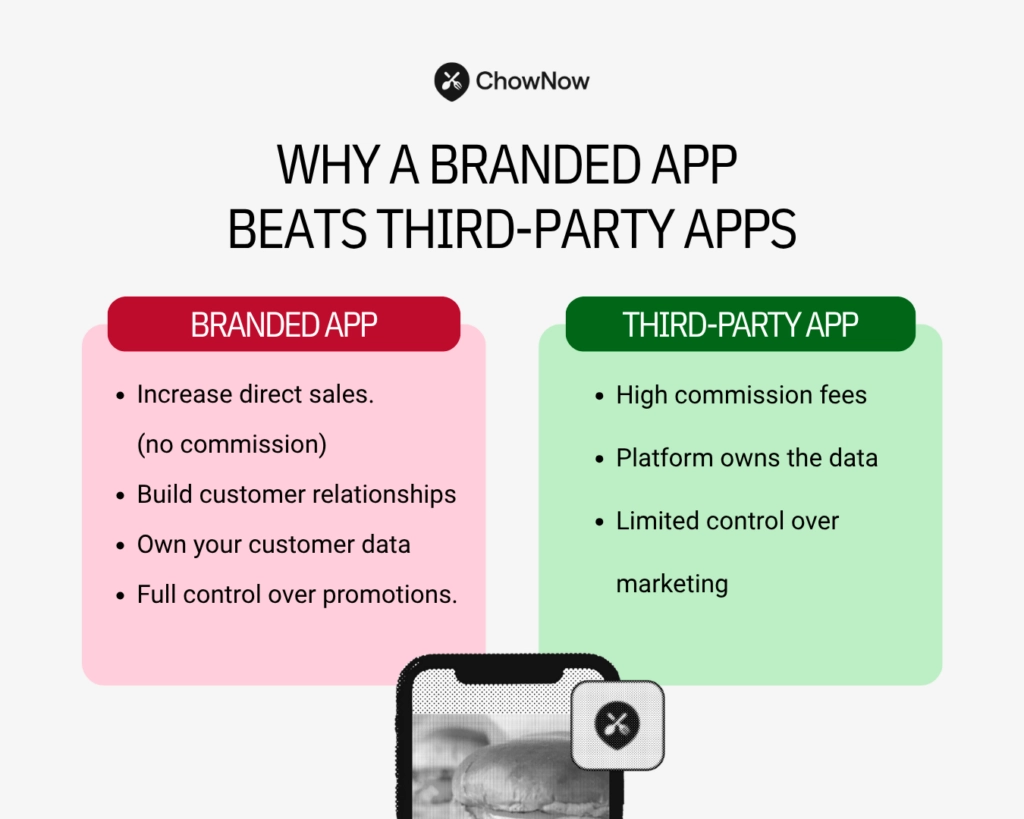
Why Owning Your Own Food Truck App is Better Than Third-Party Delivery Platforms
In the US food truck market, most trucks rely heavily on platforms like Uber Eats or DoorDash for visibility. But in real time, this creates a dependency problem.
For example, during a busy weekday lunch in Austin or Los Angeles, a food truck might be getting strong walk-in traffic, but its online orders are still controlled by algorithm rankings.
If the platform boosts a competitor higher, even temporarily, your order volume can drop without any change in your actual demand or food quality. You are essentially competing for visibility inside someone else’s system.
Now compare that with an owned food truck app in a real scenario. Let’s say your truck operates near a corporate park in San Francisco from 11 AM to 2 PM.
With your own app, you can instantly push a live update like: “We’re parked at Mission Bay today, fresh tacos ready, skip the line & pre-order now.” Within minutes, nearby repeat customers get notified and start placing direct orders. No commission fees, no ranking battles, just direct conversion based on location and timing.
Another real-world example is the peak lunch rush in cities like New York or Chicago. On third-party apps, you often deal with delayed updates, stacked delivery fees, and limited customer insights.
But with your own app, you can see real-time demand spikes like “Chicken bowls selling 2x faster between 12:30–1:30 PM” and immediately react with targeted offers such as “Flash $2 off for next 20 minutes near Midtown.” That level of control directly impacts daily revenue, especially during short operating windows.
Even customer retention behaves differently in the US market. On aggregators, a customer may order once and never see your truck again unless the algorithm brings you back into their feed.
Source: https://get.chownow.com/
But with an owned app, you can build direct retention loops like “You’ve visited us 3 times this month in LA, your next coffee is on us,” or “We’re back near your office in Seattle, pre-order now and skip the line.” This turns one-time buyers into repeat customers without paying platform commissions every time.
The reality is simple: third-party platforms help you get discovered, but they don’t help you grow ownership.
In a competitive US food truck ecosystem where location, timing, and repeat business decide survival, owning your app means owning your revenue stream in real time. Hope you now know enough about how to build a food truck app. Now it’s time to know how much it costs to develop one.
How Much Does Food Truck App Development Cost?
| Advanced Food Truck App Development Cost | Details |
| App Type | Advanced Food Truck App |
| Purpose | Build a scalable, feature-rich food truck platform |
| Key Features | AI recommendations, reporting dashboard, live GPS tracking, multi-vendor support, loyalty programs, advanced admin panel |
| Development Complexity | High |
| Best For | Growing businesses and enterprise-level platforms |
| Estimated Development Cost | $40,000 – $120,000+ |
| Development Timeline | 3 – 4 Months |
| Scalability | High scalability with enterprise-ready architecture |
| Tech Requirements | Advanced backend infrastructure, real-time systems, cloud scalability, security integrations |
Factors Affecting Development Cost
Several elements directly impact the total cost of building a food truck app. The platform choice (iOS, Android, or both) plays a major role in budget and timeline. UI/UX complexity also affects cost; simple interfaces are cheaper, while map-heavy and real-time designs require more effort.
Integration of third-party APIs like maps, payments, and analytics adds to development time. Finally, long-term maintenance and scalability requirements increase overall investment, especially if the app is expected to support multiple cities or vendors over time.
Revenue Models That Make Food Truck Apps Profitable
Behind every successful food truck app is a clear monetization strategy. These revenue models define how the platform earns while supporting vendors and users in the ecosystem.
1. Commission on Orders
One of the most common revenue models is taking a small commission from every order placed through the platform. Whenever a customer orders food from a truck, the app earns a percentage of that transaction. This works well at scale, but margins depend heavily on order volume and pricing structure.
2. Subscription Plans for Vendors
Instead of charging per order, many platforms offer monthly or yearly subscription plans to food truck owners. Vendors pay a fixed fee to access the platform’s tools, such as order management, analytics, and customer reach. This model provides predictable revenue for the platform and stable costs for vendors.
3. Featured Food Truck Listings
Food trucks can pay to appear in top positions within search results or map views. These featured placements increase visibility during peak hours like lunch and weekends, helping trucks attract more customers while generating additional income for the platform.
4. In-App Advertisements
Advertising inside the app is another monetization method where brands or food trucks promote their offers to users. These ads can appear as banners, push notifications, or sponsored listings, creating a steady passive revenue stream.
5. Delivery Charges
If the platform handles delivery, it can earn through delivery fees charged to customers. These charges vary based on distance, time, or demand and become an additional revenue layer on top of orders.
6. Loyalty Memberships
Premium memberships allow customers to subscribe for benefits like discounts, free delivery, or priority access. This not only generates recurring revenue but also improves customer retention and repeat orders within the platform.
Challenges in Food Truck App Development
On the surface, a food truck app looks straightforward, but behind it lies a complex system of moving parts. These are the key challenges developers face while bringing such platforms to life.
Managing Real-Time Location Accuracy
One of the biggest challenges is keeping food truck locations accurate in real time. Since trucks are constantly moving or changing spots based on demand, even a small delay in GPS updates can confuse customers and reduce trust. The system needs continuous tracking that balances accuracy with battery and data usage.
Handling Peak Hour Orders
Food trucks often experience sudden spikes during lunch or event hours. Managing a high volume of simultaneous orders without slowing down the app or crashing the system is a major technical challenge. Proper backend scaling and load balancing are essential to keep operations smooth during rush periods.
Inventory Sync Issues
When orders come in from multiple channels, keeping inventory updated in real time becomes difficult. Without proper synchronization, there is a risk of accepting orders for items that are already sold out, leading to cancellations and poor customer experience.
Internet Connectivity Problems
Food trucks operate in open or crowded outdoor environments where network connectivity is not always stable. Designing the app to handle weak or intermittent internet without losing orders or location updates is a key challenge that needs offline support and auto-sync mechanisms.
Multi-Vendor Coordination
In platforms with multiple food trucks, coordinating menus, pricing, availability, and order flow across vendors becomes complex. Each vendor operates independently, so the system must ensure smooth communication and consistent data flow without conflicts or delays.
Launch Strategies That Actually Drive Downloads
Building the app is 40% of the job. But how to build a food truck app that brings you a lot of downloads? Here’s what works specifically for food trucks.
Before launch — build the list. For 4–6 weeks before your app goes live, collect phone numbers and emails from every customer. Tell them: “Our app is launching soon… you’ll get a free item on your first in-app order.” By launch day, you want 200+ people ready to download on day one. App Store algorithms reward early download velocity.
Launch week — make it an event. Park at your busiest location. Put a large banner on the truck: “Our app is live… download now and skip the line forever.” Have a staff member at the window specifically helping customers download the app on the spot. Offer a visible incentive, a free drink, and a 20% discount for anyone who downloads and places their first order that day.
Week 2–4 — Use push notifications strategically. Send 2–3 notifications per week, maximum. Any more and people will uninstall. Keep them hyper-relevant: today’s location, a sold-out warning on a popular item, a flash deal. Never send generic “we miss you” notifications they don’t work and damage your brand.
Ongoing — turn your most loyal customers into promoters. Add a referral feature: “Share your code, your friend gets ₹50 off, you get ₹50 credit.” Word-of-mouth is the highest-converting channel for food businesses. Your app just needs to make it easy to share.
What Trends are Actually New This Year?
The food truck app space in 2026 is shifting from simple ordering systems to intelligent, hyperlocal, and real-time ecosystems. Apps are no longer just about placing orders; they are becoming tools that predict demand, guide customers instantly, and automate operations behind the scenes.
#1 Voice Search for Food Discovery
Voice-based ordering is becoming a natural part of food discovery. Instead of browsing menus, users can simply say what they want, like “find taco trucks near me open now,” and get instant recommendations. This shift is driven by the rise of conversational AI and voice assistants, making food ordering faster and more intuitive, especially during busy hours when users don’t want to scroll through apps.
#2 Hyperlocal Food Recommendations
Apps are moving toward micro-location intelligence, where recommendations are based not just on city level, but on exact neighborhoods, streets, or even walking distance. In 2026, hyperlocal systems are becoming the standard, focusing on speed, proximity, and real-time availability. This helps users discover food trucks that are actually reachable within minutes, not just visible on a map.
#3 Drone & Autonomous Delivery Experiments
Delivery is slowly moving beyond traditional riders. In the US, companies are already testing drone-based food delivery in limited regions, aiming to reduce delivery time and bypass traffic bottlenecks. While still in early stages due to regulations, these experiments show that last-mile delivery is heading faster, more automated, and less dependent on human logistics.
#4 Smart POS Integrations
Food truck apps are increasingly integrating with smart POS systems that sync orders, inventory, and payments in real time. This eliminates manual tracking and reduces errors during peak hours. With AI-driven backend systems becoming more common, POS integration now acts as the operational backbone, connecting sales, stock, and analytics into one live system.
#5 QR Code as the App Entry Point
Instead of asking customers to search the App Store, print a QR code on your truck, packaging, and receipts. One scan opens the ordering page directly or triggers an app download prompt. This single change typically increases app adoption by 40% compared to just telling customers the app name.
How to Choose the Right Food Truck App Development Company
Choosing the right development partner is not just about building an app; it’s about finding a team that understands how food truck businesses actually operate in real time. The wrong choice can lead to slow performance, poor user experience, and an app that fails during peak demand hours.
1. Check Industry Experience
Start by looking at whether the company has real experience in building on-demand, location-based, or marketplace apps. Mobile app for food truck business depend heavily on live tracking, real-time ordering, and peak-hour performance. A team that has worked only on basic apps may struggle with these requirements in real-world usage.
2. Review Portfolio
A strong portfolio tells you how they solve real problems, not just how the app looks. Check if they have built apps involving maps, live updates, payments, or multi-vendor systems. Emphasize how well their previous apps perform during heavy load conditions, particularly in managing high traffic and real-time data updates without lag or failure.
3. Ask About Scalability
A food truck app might start with a few vendors, but it can quickly grow across cities. The development company should be able to explain how the system scales when user load increases, when multiple trucks go live at the same time, or when new regions are added without performance issues.
4. Verify API Integration Expertise
Modern food truck apps rely on multiple integrations—maps, payments, notifications, analytics, and delivery systems. The team should be comfortable working with APIs like Google Maps, payment gateways, and third-party logistics tools. Poor integration often leads to delays, errors, and broken user experiences.
5. Discuss Post-Launch Support
Launching the app is only the beginning. Real usage exposes bugs, performance issues, and feature gaps. A reliable development partner should provide ongoing support, regular app updates, and optimization, especially during high-demand periods like weekends, events, or peak lunch hours.
Why Choose Appkodes for Food Truck App Development
If you look at how most food truck apps fail, it’s not because of the idea, it’s because of execution. Real food truck businesses need speed, real-time tracking, and scalable systems, not months of custom development that drains budget before launch.
Appkodes, a leading startup mobile app development company, fits into this gap by offering a ready-to-customize foundation for on-demand and marketplace apps, so you don’t start from zero.
Why Founders Choose Appkodes in Real Projects:
- Built on proven marketplace + delivery architecture, not experimental code
- Faster launch cycle compared to full custom development (weeks, not months)
- Supports real-time ordering, real-time GPS tracking, and vendor systems out of the box
- Designed for multi-truck scaling and city-level expansion
- Reduces early-stage risk by using a tested base instead of building everything from scratch
- Flexible customization for branding, features, and a user-friendly interface, business model changes
- Resolve software bugs, frequent updates, scaling, and post-launch improvements
In real terms, this means you don’t spend 3–6 months just building the basics—you start with a working system and immediately focus on customers, trucks, and revenue.
If your goal is to launch fast, test the market, and scale without heavy upfront development risk, Appkodes becomes a practical starting point rather than a long-term bottleneck.
If you’re serious about developing a food truck app, start with a ready framework and move to market while competitors are still building from scratch.

Arun Andiselvam
Founder of AppKodes. As a serial entrepreneur, I have successfully established five brands over the past 12 years. After creating a successful rank tracker for SEO agencies, I am currently dedicated to developing the world's first SEO Project Management software.