Start a Food Truck Business with No Experience: A Practical Roadmap
Today, everything gets automated and simple with rapid tech growth, but it can’t change one thing. Guess what? Has food ever lost its importance? Not really.
From the time you were a child to where you are now, food has always been a part of your everyday life. You, me, almost everyone enjoys good food. And today, more than just eating, we are especially drawn toward street-style food truck food because it feels quick and full of variety.
Answer me honestly: When was the last time you really enjoyed your food?
Maybe it was pizza, something grilled, or your favorite fast food. And while looking at the crowd, the orders, the energy around… did a thought cross your mind? “Why not me? Why can’t I start something like this… maybe a food truck?”
But almost immediately, another thought would have followed: “Is this even possible for me?”
That’s where most people stop. But here’s the reality today: millennials and Gen Z are actively looking for new food experiences. They want something different, something unique, something worth trying. And that’s exactly why food trucks are gaining so much attention with adventurous food concepts and gourmet-style street food, especially in places like the United States.
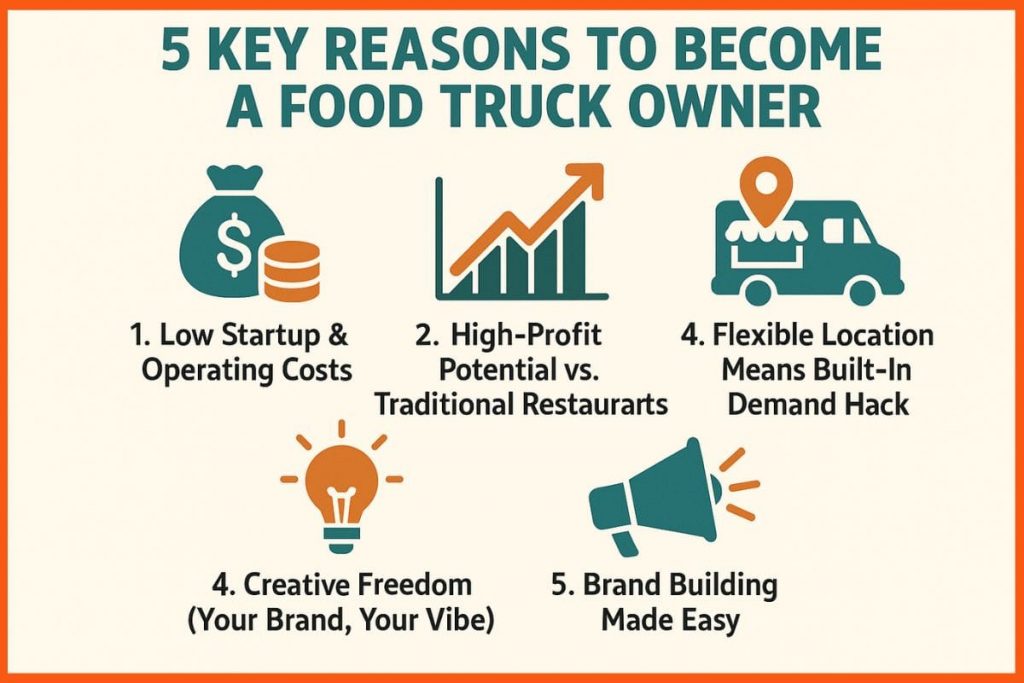
Now let’s talk practically. Compared to opening a traditional restaurant, starting a food truck requires much lower investment and operational costs. This means the barrier to entry is much lower than most people assume. And it’s not just theory, real data supports this.
More than 60% of food truck owners have reported becoming profitable within their very first year. At the same time, there are already over 48,000 food trucks operating across cities in the United States, employing more than 14,000 people. So clearly, people are not just thinking about it; they have already started doing it.
The only question now is, are you going to keep ignoring it, or are you finally going to explore it seriously? This blog will guide you step by step on how to start a food truck business with no experience.
Can You Start a Food Truck Business with No Experience?
What does “no experience” actually mean in this business?
In the food truck world, “no experience” doesn’t mean you’re starting from zero; it means you haven’t handled real service pressure yet. There’s a difference. On paper, your business plan looks simple. In reality, you’re taking 25 orders in an hour, customers are waiting, one item runs out, and something breaks mid-service. That’s the actual environment.
So before you open, you need exposure more than confidence.
- Spend a couple of days observing a busy street food stall during peak hours.
- Run a small trial, sell to 50–100 people at a local event, or even within your network.
- Build a basic costing sheet so you know exactly what each plate costs you.
These aren’t big steps, but they prevent the kind of mistakes that usually happen in the first week of operations.
Skills you really need vs what you can learn later
You don’t need to master everything before launching, but you do need to get a few things right from day one.
You need to be able to cook fast and consistently. If one order takes too long or the quality keeps changing, customers won’t come back. You need basic costing clarity; if you don’t know your margins, you’re guessing your profit. And most importantly, your prep should be tight. Rush hours don’t give you time to figure things out.
Everything else can come later. Branding, social media growth, advanced pricing strategies, and POS optimization are scale problems, not survival problems. Early on, you should focus on keeping the service smooth, the food consistent, and the cash flow under control.
Learn what keeps you running first, then improve what helps you grow.
How to Start a Successful Food Truck Business: A Step-by-Step Guide
According to Mordor Intelligence, the food truck market size is expected to reach USD 6.46billion by 2031. The opportunities might seem vast at first, but turning them into a sustainable venture requires the right approach.
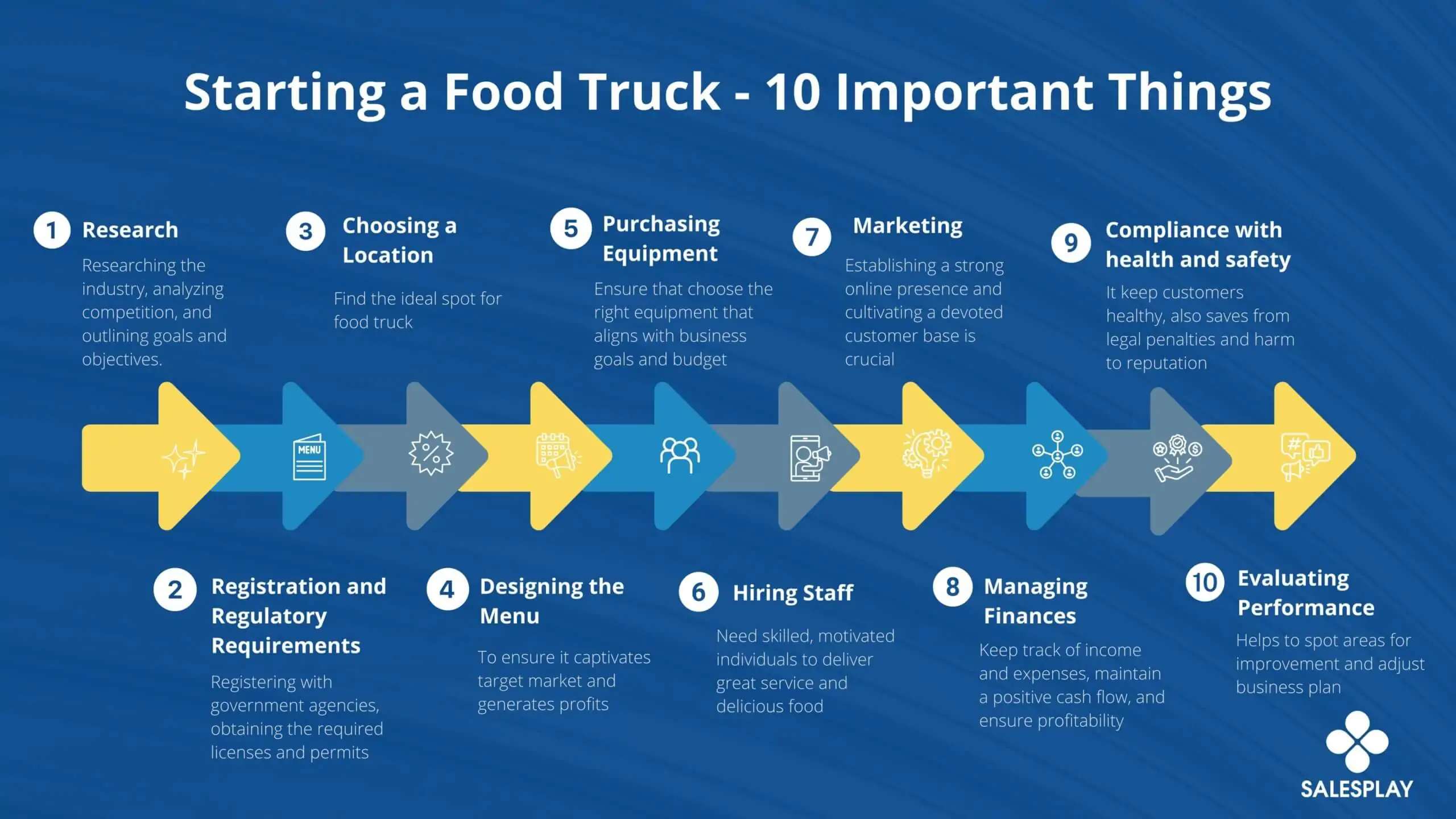
Source: https://salesplay.com/
Step 1: Choose a Profitable Food Truck Concept
Don’t build your food truck around your taste; build it around demand. Let’s say you’re starting a food truck. One mistake you can’t afford to make is putting only the items you personally like on your menu and expecting it to work. That won’t work in most cases.
First, you need to understand what people actually want.
For example, recently there’s been a growing interest in Korean food; many people are curious to try items like Korean fried chicken, corn dogs, ramen, and more, so it becomes a good opportunity. When you approach it this way, you start attracting customers faster because they’re already interested in trying those foods.
A real-world example of this working is Kogi BBQ in the US. They didn’t build their menu based on personal preference. Instead, they researched what people in their area liked, kept the menu simple, and introduced Korean–Mexican fusion tacos. Since it matched what the local audience preferred, they became very popular. So the idea is not to copy them, but to understand.
So this is the approach you need to take. Do your local research. Observe what’s trending, what’s selling, and what people are repeatedly buying, not just what looks interesting online. Then build your concept around that.
You can go with a single-item focus (one strong signature dish) or a small, well-curated menu of 3–5 items; both approaches work. What matters most is real customer demand, and validating that early gives you a strong starting point.
Step 2: Find High-Demand Locations
What if your food truck serves delicious food but still struggles with incomplete sales and is left with leftover food? Mostly, the issue is not your menu, but the location you choose.
A strong food truck can fail in the wrong place, while even a simple menu can perform extremely well in a high-demand spot with consistent foot traffic. In real-world situations, food demand always follows a recurring spots pattern; it never happens randomly. In Asian countries like India, you’ll clearly see this behavior.
Evening chaat sales spike around shopping streets and local markets where people come to relax after work.
Night-time biryani sales perform best near transport corridors, IT park exits, and late-working zones where people look for filling meals after long hours.
Morning and afternoon demand shifts completely toward quick bites near office clusters and college zones.
Vendors know that when they are present at the right time and in the right place, people naturally move toward them. It allows them to fit into people’s routine of relaxing and grabbing their favorite foods while moving through their day. This is why location is not just “a spot,” it’s a timing-based opportunity.
So, the best locations for your food truck are places where natural crowd movement already exists.
High-performing areas include office districts during lunch breaks, college gates during exit hours, metro and bus transit points during peak travel times, beach fronts and public parks during evenings, exhibition grounds and weekend flea markets, and festival or event zones where temporary crowds gather in large numbers.
Each of these locations works perfectly. Often, you’ll notice one food truck with continuous queues while others remain idle just a few meters away. The difference is not the food; it’s being present at the exact point where demand naturally forms.
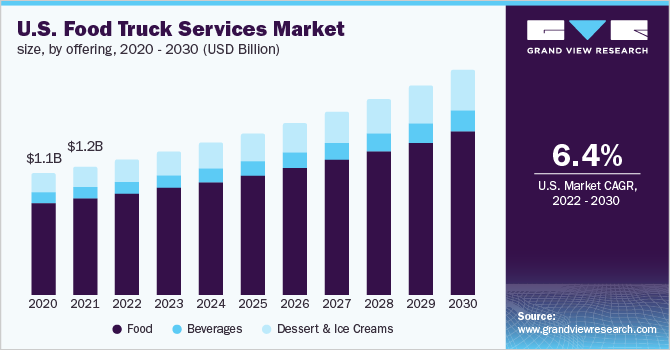
Source: https://www.grandviewresearch.com/
Step 3: Understand Food Truck Licenses and Legal Requirements
Know this before start a food truck business with no experience. It isn’t about getting one license and beginning operations. In reality, you’ll deal with multiple authorities, each handling a different part of your business, from food safety and taxes to where you’re allowed to operate.
While requirements vary by state, the overall structure is similar across countries such as the U.S., the U.K., and India, and understanding that structure is what helps you avoid delays and penalties later.
Core Licenses (Required in Almost Every Country)
Before anything else, your business must be legally registered and tax-compliant. This includes registering your business entity and setting up a tax identification number so you can legally operate, invoice, and handle payments.
Alongside this, you must secure food safety compliance based on your country.
In the United States, this is typically handled through local health department permits and food service inspections after business registration and obtaining an EIN.
In the United Kingdom, you must register your food business with the local council and comply with food hygiene regulations, often supported by food safety training.
In India, a mandatory FSSAI license is required, along with local municipal approvals in some regions. These approvals are critical because authorities evaluate your actual food handling setup, not just documentation.
Location & Operating Permits
Once your core licenses are in place, you still need permission to operate in specific locations. This usually involves permits or approvals from local municipal authorities to sell in designated public or private areas.
In the United States. Cities, zoning, and local regulations restrict where food trucks can operate. Having business and food safety licenses does not automatically give permission to sell anywhere, and operating in unauthorized locations can result in fines or enforcement action.
Safety & Inspection Requirements
Food trucks that use cooking equipment such as gas stoves, grills, or fryers must comply with fire and safety regulations before operating. This includes inspections of gas systems, electrical systems, and fire safety measures as part of the approval process required by local authorities in each country.
In the United States, fire inspections are conducted by local fire departments as part of the mobile food vendor permitting process.
In the United Kingdom, compliance is enforced under fire safety legislation by local councils, and gas appliances must be certified by a Gas Safe registered engineer when used.
In India, food safety is regulated by FSSAI, and fire safety clearance may be required depending on the type of setup and local authority regulations.
In addition to fire safety, health inspections are carried out in all three regions to ensure food hygiene standards are met. These inspections focus on food handling practices, cleanliness, storage, and operational compliance, and are conducted by local regulatory authorities.
Vehicle & Setup Compliance
Beyond licenses, a food truck must also meet operational requirements. This includes registering the vehicle for commercial use and, in countries like India, maintaining valid fitness and pollution certificates for commercial vehicles.
In the United States, many local health departments require food trucks to operate in connection with a licensed commissary kitchen for preparation, storage, or cleaning, although requirements vary by city and jurisdiction. These operational requirements are often reviewed during inspections and can delay approval if not properly arranged.
Mandatory Compliance (Often Missed)
There are also compliance areas that are not always labeled as licenses but are still legally required. This includes maintaining proper insurance coverage, following regulated waste and grease disposal rules, and complying with allergen labeling requirements, which are mandatory in the U.K. under food safety laws.
Depending on the type of operation and setup, local health departments may also impose additional compliance requirements. These areas are commonly enforced during inspections, and violations can result in penalties even if primary licenses are in place.
Additional & Activity-Based Licenses
Certain licenses are required depending on how you plan to operate your food truck. For example, selling alcohol requires a separate liquor license, and catering or participating in events often requires temporary or event-specific permits issued by local authorities.
Some types of food operations involving higher-risk food handling may also be subject to additional compliance requirements under local food safety regulations. These requirements are not mandatory for every business, but they become relevant based on the scope and nature of operations.
Step 4: Buy or Rent a Food Truck: What’s Smarter?
This is one of those decisions that looks simple but affects everything: your budget, your risk, even how fast you can launch. There’s no single “right” choice here. What matters is how confident you are about your brand concept.
New vs Used vs Rental
Going for a new truck gives you a clean slate. Everything is built for your workflow, and you won’t deal with repairs immediately. It also helps during inspections because your setup is fresh and compliant if built properly. But the downside is obviously a high upfront cost and higher pressure to make money quickly. If your concept takes time to click, you’ll feel that pressure.
A used truck is how many operators actually start. Lower entry cost, faster setup, and less financial stress. But it comes with trade-offs; you might need to fix things, adjust the layout, or upgrade parts to meet compliance. It’s not “plug and play.” Still, if you’re careful while buying, it’s one of the safest ways to enter the business.
Rental is the least talked about, but it is very practical for beginners. You don’t own the asset, but you also don’t carry long-term risk. It’s useful if you want to test your menu, location, or even just understand operations before committing. The limitation is that the flexibility you can’t fully customize, and long-term renting can become expensive if you don’t convert to ownership.
- New truck → control + higher pressure
- Used truck → balanced + manageable risk
- Rental → low risk + limited control
Cost vs Risk
At a basic level, this decision is about how much risk you want to take upfront. A new truck usually puts you in the highest investment bracket:
- U.S.: $60K–$120K+
- India: ₹10–20 lakhs+
Your risk is high because your fixed investment is high. But you get full control and a clean setup.
A used truck brings that down significantly:
- U.S.: $30K–$60K
- India: ₹5–10 lakhs
Your risk is lower, but you may spend extra later on fixes or upgrades.
A rental setup spreads your cost over time:
- U.S.: $1K–$3K/month
- India: ₹20K–₹80K/month
Your upfront risk is minimal, but the long-term cost can add up if you continue renting without transitioning.
Step 5: Set Up Your Kitchen for Speed, Not Just Cooking
One of the most important processes. The food truck kitchen is not the same as a restaurant kitchen; every inch must be planned carefully. You have space limitations and small working areas, so performance depends on how well you organize and optimize the available space.
The best approach is to divide the kitchen into three main functional areas to ensure a smooth workflow:
Preparation Area
This is where ingredients are stored and pre-prepared before cooking. It usually includes warm trays, cutting boards, compact storage systems, a small refrigerator, and organized containers to keep ingredients ready and accessible during service.
Cooking Area
This is the core zone where all food is actually cooked and assembled. It should be designed for fast movement, safety, and easy access to cooking equipment so that high-volume orders can be handled without delay.
Service Area
This is the final output zone where food is packed and handed over to customers. It should be clean, minimal, and structured in a way that avoids confusion during peak rush hours and ensures quick delivery.
Equipment selection plays a vital role in high-volume operations. You can choose commercial-grade equipment, which is designed for daily business use with medium to heavy durability and better space efficiency, or heavy-duty/restaurant-grade equipment, which is built for continuous, large-scale cooking with higher capacity and stronger performance.
In most food truck setups, a combination of both is used depending on the menu and operational needs.
Power and utility systems are also critical for smooth operations. A generator is required, and its capacity must be planned based on the total load of all kitchen appliances, such as cooking equipment, refrigeration, and lighting systems.
Along with this, you need a proper fresh water storage system for cooking and cleaning purposes, and a wastewater storage system to maintain hygiene and meet basic compliance standards.
When the space is properly divided, food truck equipment is chosen strategically, and utilities are correctly planned, even a small kitchen can deliver high-volume, restaurant-quality output consistently.
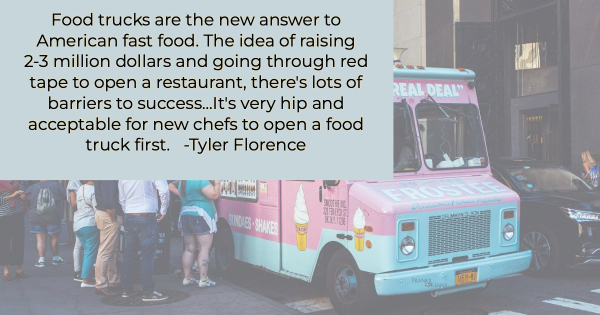
Source: https://frankjkenny.com/
Step 6: Create a Simple Menu That Makes Money
A most profitable food truck menu is usually built around high-margin items that sell consistently throughout the day. A strong menu does not offer too many choices, but focuses on what works repeatedly.
The objective is to reduce customer decision time and increase service speed. Most successful food trucks operate with a limited “hero menu” (3–6 core items), where multiple dishes use the same ingredients. This approach minimizes waste, simplifies operations, and improves efficiency during peak hours.
One effective strategy is the base + variation model. Instead of preparing completely different dishes, you create variations from a single base.
For example, grilled chicken can be used across burgers, wraps, and rice bowls. This keeps inventory controlled while still giving customers a sense of variety.
Pricing should be structured around customer perception rather than just cost. People pay for value, not ingredients. A tiered pricing model (budget, standard, premium) helps guide buying decisions naturally. The most profitable items should sit in the standard range, where demand and margins are typically highest.
To increase average order value, the combo design must be intentional. Instead of random vegan food combinations, align them with customer behavior:
- Lunch combos (main + drink) for office customers
- Snack combos (smaller portion + beverage) for evening traffic
- Family combos (shareable portions) for group orders
Another key driver of success is signature items. One or two standout dishes should be easy to prepare, cost-effective, and memorable enough to define your brand and encourage repeat purchases.
Apart from that, introducing a limited-time rotation item updated weekly or monthly creates urgency, attracts returning customers, and allows you to test new ideas without disrupting your core menu.
For example, if your core menu is built around burgers and wraps, you can introduce a “Spicy Peri Peri Chicken Wrap – Limited Edition (This Month Only)”. It uses your existing ingredients (chicken, sauces, wraps) while adding a new flavor variation.
Similarly, if you run a rice bowl concept, you could launch a “Weekend Special: Korean BBQ Bowl”, available only on Saturdays and Sundays, to create time-based demand.
Step 7: Set Up Payments & Order System (Don’t Ignore This)
A smooth payment and order system is essential for running a food truck efficiently, especially during peak hours. Even if your food is good, slow billing or confusion in orders can reduce sales and affect customer experience.
Cash vs Digital Payments
While cash is still used, most customers prefer digital payments for speed and convenience. Accepting UPI, cards, and mobile payments helps you serve faster and increases conversions. Keep your QR code clearly visible and ensure the payment process is quick and simple. At the same time, always have cash as a backup in case of network issues.
Why a Point Of Sale System Matters (Even for Beginners)
A food truck POS system helps you take orders quickly, track daily sales, and manage operations efficiently. It reduces manual errors by organizing orders clearly, which is especially important during rush hours. A structured system improves speed, accuracy, and overall workflow, even for small setups.
How to Get Customers for Your Food Truck (Without Paid Ads)
You can attract food truck customers using social media, local partnerships, and launch promotions.
Getting customers for a food truck is less about advertising and more about visibility in the right places at the right time. One of the most powerful tools is Instagram and short-form video content, where simple clips of food preparation, sizzling sounds, and real-time serving moments can quickly attract local attention. Posting consistently around your operating locations helps people nearby discover you organically.
Another effective strategy is local influencer collaboration, especially with micro-creators in your city who focus on food reviews or street food content. Even small collaborations can bring strong foot traffic because people trust local recommendations more than traditional ads. Inviting them during your soft launch or new menu trials can create immediate awareness.
Launch offers and word-of-mouth marketing also play a major role in early growth. Simple strategies like combo discounts, “buy one get one” for limited hours, or free add-ons for first-time customers can encourage trial. Once customers enjoy the food and service, word-of-mouth becomes your strongest long-term marketing tool, especially in high-footfall areas where repeat exposure builds reputation naturally. So, how to manage operations with ease? Read below.
Source: https://startuptalky.com/
Food Truck Success = 6 Repeatable Systems (Lessons from Top Brands)
Successful food trucks don’t grow just because of good food; they grow because they follow repeatable systems that improve visibility, speed, and consistency. If you understand these before start a food truck business with no experience, you can apply them to your own business without copying anyone directly.
1. Visibility System (Make It Easy to Find You)
Kogi Korean BBQ
One of the biggest challenges for any food truck is visibility. Kogi Korean BBQ addressed this by using social media to share real-time location updates, making it easy for customers to find them online. For your food truck, consistently updating your location, maintaining fixed timings, and being active online can significantly increase footfall.
2. Menu Focus System (Reduce Complexity, Increase Speed)
Bleecker Burger
Bleecker Burger built its success by keeping the menu simple and focused rather than offering too many options. This approach improves speed, reduces confusion, and maintains quality. For a food truck, limiting your menu to a few strong items with shared ingredients helps you serve faster and operate more efficiently.
3. Signature Product System (Be Known for One Thing)
The Rib Man
The Rib Man stands out by focusing on a signature offering supported by distinctive flavors. Instead of trying to do everything, they built a strong identity around one core product. For your food truck, having one or two standout items can create strong brand recall and encourage repeat customers.
4. Exposure System (Accelerate Growth with Visibility)
The Lime Truck
The Lime Truck gained wider recognition through increased exposure, which also helped refine its operations. Visibility plays a major role in growth, especially in the early stages. Participating in local events, collaborating with communities, and increasing brand presence can help you reach more customers quickly.
5. Location Strategy System (Right Place = More Sales)
SWAT Food Truck
Location plays a critical role in food truck success. SWAT Food Truck benefited from choosing high-footfall areas and the right operating timings. Testing different locations, identifying peak hours, and consistently operating in high-demand spots can significantly improve your daily sales.
6. Positioning System (Know Your Price & Audience)
The Lalit Food Truck
Clear positioning helps define your brand and attract the right customers. The Lalit Food Truck focused on delivering a premium experience with consistent quality. Whether you choose budget, mid-range, or premium, your pricing, food quality, and branding should align to create a clear and consistent perception.
Ready to Start Your Food Truck?
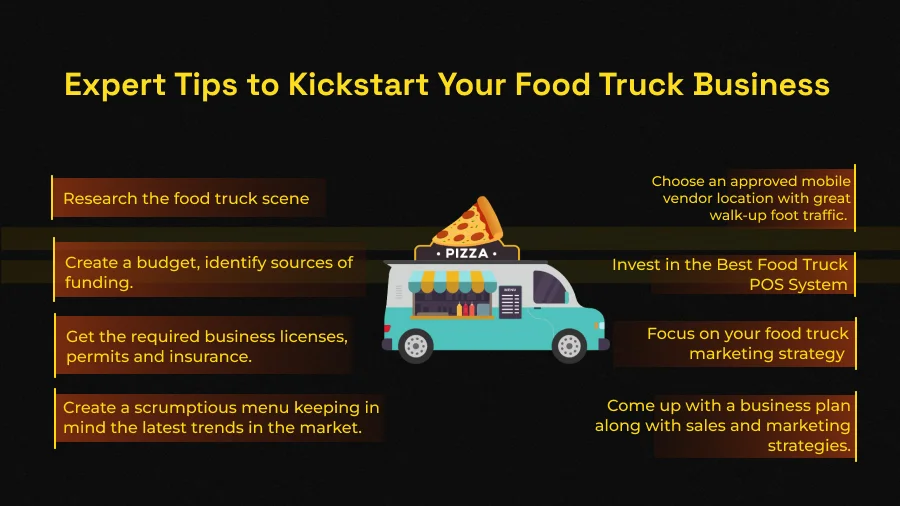
You’ve read everything. You understand the idea, the cost, and the effort. But none of that matters if you don’t take action. Let’s keep it simple.
First 3 Things to Do Today
Don’t try to do everything at once. Just start here:
- Decide your food concept — not 20 items, just 3–5 that you can execute fast
- Research your local demand — what people are already buying, not what you like
- Set a rough budget range — how much you can realistically invest
That’s it. Clarity comes from action, not overthinking. And as you move forward, one thing you shouldn’t ignore is how you’ll manage orders, payments, and daily operations smoothly. Instead of figuring everything out on your own, you can reach out to Appkodes to get the right digital setup for your food truck business from the beginning.nd the business faster. Excited to get into the industry? Know how we can help you.
Source: https://restaurantify.com/
How Appkodes Helps You Build a Digital Ordering System
If you’re planning to start a food truck business with no experience, one important step is moving beyond only walk-in customers. Along with early decisions like logo design and understanding that expenses vary based on setup and location, doing proper market analysis helps you position your business better from the beginning. Appkodes provides ready-made software solutions to help you build your own ordering platform/data connection.
Instead of depending completely on third-party delivery apps, a custom system lets you create a more direct relationship with your customers. With a food ordering platform, you can:
- Take direct online orders through your own website or app
- Show menu, pricing, and updates in one place
- Allow pre-orders and pickup orders to reduce waiting time
- Share location details and operating hours clearly
- Build a repeat customer base through direct communication
This approach plays a key role in how to start a successful food truck business, especially because demand is often location-based and time-sensitive. A simple, direct online ordering system helps reduce confusion during peak hours and gives customers a faster way to place orders, especially when expenses vary depending on your operational choices.
In short, if your goal is to start a food truck business with no experience, Appkodes helps food truck owners set up a structured online ordering system that supports operations, improves customer convenience, and reduces dependency on third-party platforms, making the business easier to manage as it grows.

Arun Andiselvam
Founder of AppKodes. As a serial entrepreneur, I have successfully established five brands over the past 12 years. After creating a successful rank tracker for SEO agencies, I am currently dedicated to developing the world's first SEO Project Management software.