10 Reasons Construction Firms are Switching to an Open Source Construction Management System
Construction firms are spending billions on software every year, yet nearly 40% of projects still run late or go over budget. How is that possible?
Even with popular platforms like Procore and Buildertrend, teams often struggle with miscommunication, slow workflows, and tools that just don’t fit the way projects actually work. Are these systems keeping up with today’s fast-moving jobsites, or are firms stuck in expensive, one-size-fits-all solutions that slow them down?
Deadlines are tighter than ever, labor is harder to find, and clients expect faster, more transparent delivery. Every small delay, every overpriced license, and every bottleneck can add up, costing firms time, money, and their competitive edge.
With the global construction management software market expected to reach 28.05 billion by 2034, picking the right tools isn’t just important; it could make or break a company.
So how can firms take control? How can software actually work for teams instead of forcing teams to adapt to it? Some companies are finding answers in solutions that are flexible, adaptable, and cost-effective, giving them the freedom to manage projects the way they need to.
For general contractors, homebuilders, specialty contractors, and project managers weighing their software options, the real question isn’t just whether to change it, but what it will cost them if they don’t. And increasingly, the solution points to one thing: open source construction management systems. This blog will show you what most of the firms are missing.
Reason 1: Licensing Costs are Killing Small Construction Firms’ Margins
Most construction business owners don’t realize it at first, but software licensing is quietly becoming one of their biggest fixed expenses.
At the start, a few hundred dollars a month for platforms like Procore or Buildertrend seems reasonable. You subscribe, onboard your team, and everything runs smoother. But as projects grow, teams expand, and dependencies multiply, that “small monthly fee” slowly turns into a substantial financial commitment.
For a 20-person firm, what began as $375 or $1,099 per month can add up to $9,600–$18,100 annually. And that’s just the base cost; add integrations, extra users, or advanced features, and the bill climbs even higher. Unlike material costs or labor, software expenses are subtle. They don’t demand attention. They just sit there, quietly reducing your margins year after year.
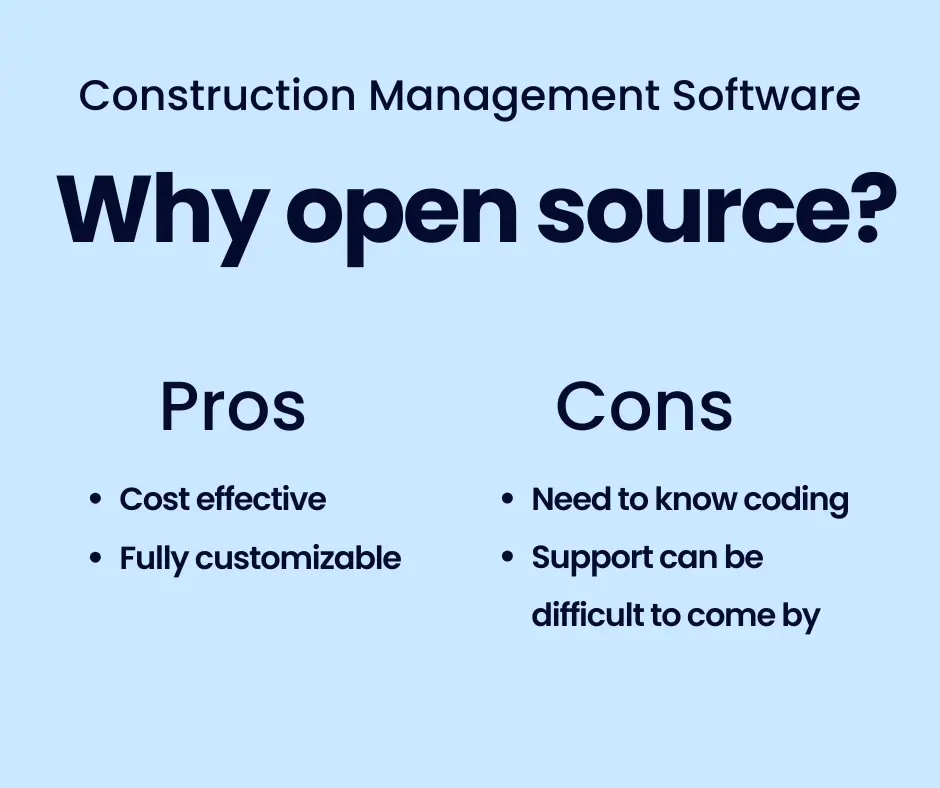
Open-source construction management system approaches this differently. Instead of charging for every user, project, or upgrade, it removes licensing fees altogether. You’re not renting the software, you’re owning it. Costs shift to hosting, setup, and customization, which are often predictable and significantly lower.
For the same 20-person firm, this could mean spending roughly $1,800–$4,800 per year instead of $12,000+. That difference is more than just a saving; it’s an opportunity. The money saved from licensing can go into better on-site technology, stronger team training, or hiring skilled professionals who actually move projects forward. And that’s the real advantage.
Source: https://www.fuzen.io/
Reason 2: Full Control Over Customization and Workflows
In real projects, workflow gaps show up in everyday tasks.
For example, many mid-sized contractors still use a mix of software + Excel + WhatsApp to manage operations. A site engineer might log daily progress in the system, but when it comes to RA bill approvals (Running Account bills), the process shifts outside, shared on email or WhatsApp for faster response. Why? Because the built-in approval flow doesn’t match how decisions actually happen.
Another common case is cost tracking vs billing.
The project team records costs based on site activities (labour, material, subcontract), but the finance team prepares client bills based on the BOQ (Bill of Quantities). Since the software doesn’t align both structures, teams spend hours at month-end reconciling numbers manually.
Inspections face similar issues.
On infrastructure or commercial projects, consultants often require specific formats like concrete pour checklists or MEP testing reports. If the CMS only provides generic templates, teams end up maintaining separate Excel or paper formats just to meet compliance.
An open-source construction management system addresses this by allowing firms to build workflows around these exact scenarios. So instead of switching between tools or duplicating work, everything runs within a single, aligned system.
The 3 Workflow Customizations Construction Firms Request Most from Their CMS
1. Custom Cost Code Structures
A contractor working on BOQ-based projects needs cost tracking that matches both site execution and client billing. Custom codes remove the need for manual reconciliation between project and finance.
2. Trade-Specific Inspection Forms
For a concrete pour, teams need a slump test, a cube test, and checklist approvals. Generic forms don’t capture this; custom forms ensure compliance and reduce rework.
3. Subcontractor Approval Workflows
A subcontractor bill typically goes through the site engineer → project manager → finance. Flexible workflows ensure it moves step-by-step without manual follow-ups or delays.
Reason 3: No Vendor Lock-in or Forced Upgrades
Most SaaS construction platforms are ecosystems designed to keep you inside them. Your data, workflows, and integrations are all tied to how that platform is built. Over time, that creates dependence. Leaving it becomes disruptive.
Open source cms breaks that pattern. The system belongs to you, not the vendor. Your data isn’t trapped, your workflows aren’t dictated, and your future isn’t tied to someone else’s roadmap.
- No renewal shocks or pricing changes you didn’t plan for
- No mandatory upgrades that force your team to adapt overnight
- No restrictions on how or where you move your data
This becomes critical as your firm grows. What works today won’t be enough tomorrow, new processes, new tools, new requirements. With a vendor lock-in construction software, every change depends on vendor’s timelines. With open source cms, you move when you’re ready.
There’s also a risk factor most firms underestimate. Lock-in doesn’t just slow you down; it limits your options. Whether it’s integrating with new tools, entering regulated projects, or adapting to client requirements, being tied to a vendor can quietly become a constraint.
Avoiding lock-in isn’t just about flexibility. It’s about independence. It ensures your software supports your growth instead of controlling it.
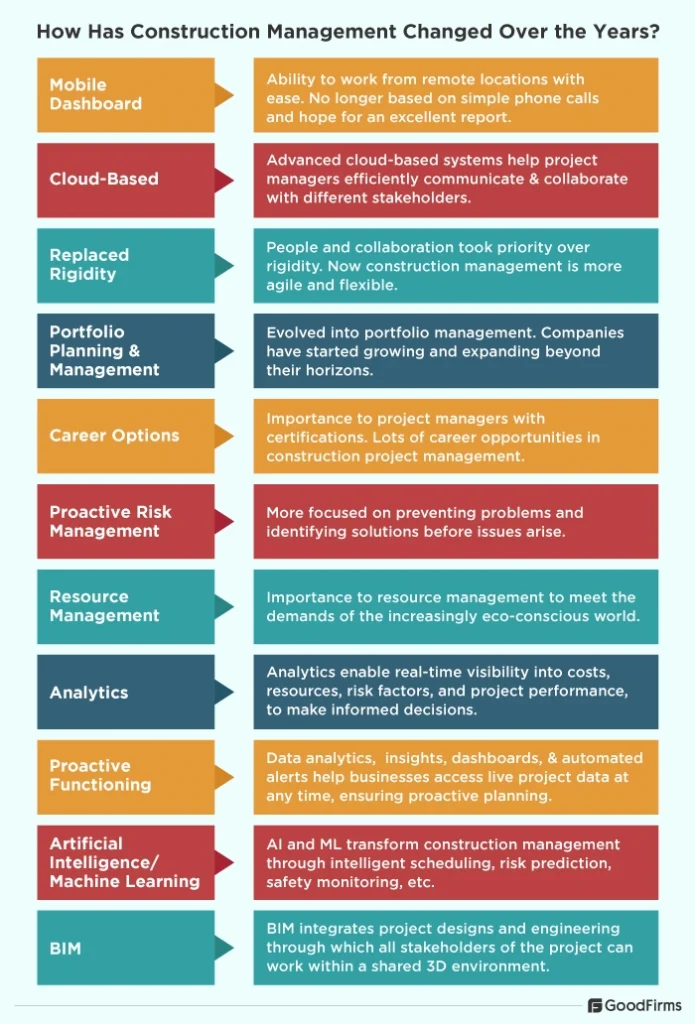
Source: https://www.goodfirms.co/
Reason 4: Faster, Deeper Integrations with the Tools You Already Use
Let’s be honest, construction firms don’t need another software ecosystem. They need their existing tools to finally talk to each other without a fight. Here’s where open source quietly wins a battle that most people don’t even realize is happening.
The majority of mid-size general contractors are already running QuickBooks or Xero for accounting, Excel for cost tracking, and some combination of Revit or Navisworks on the BIM side. The dream, and it’s always been a dream with proprietary construction software, is getting all of these to share data cleanly.
In practice, it usually means manual exports or paying a third party just to move a number from one column to another.
Open source breaks that cycle. Because the codebase is yours to work with, your development team (or a trusted vendor) can write direct integrations into whatever you’re running, QuickBooks, MS Project, Primavera P6, Gusto, or ADP, without asking anyone’s permission or paying a per-connector fee. The API is open. The rules are yours.
Compare that to Procore’s marketplace model. Yes, 400+ integrations sounds impressive on a sales deck. But each one is a separate vendor, a separate contract, and a separate point of failure. When something breaks at 11 pm before a Monday morning job walk, you’re filing a ticket with a company you’ve never spoken to for a connection you’re paying monthly just to maintain.
The real-world math here is pretty striking. A mid-size GC recently connected its open source construction management system directly to its accounting general ledger, no middleware, no monthly connector fee, just a clean API integration built once.
The result? Twelve hours a week in manual data entry, gone. That’s one and a half workdays handed back to a project coordinator who can now actually focus on the project.
The firms winning in the next decade won’t necessarily be the ones with the most software. They’ll be the ones who got their software to stop working against them.
Reason 5: Enterprise-Grade Features Without the Enterprise Price Tag
For years, the knock on open source construction systems was simple: they just can’t do what Procore does. And honestly? A few years ago, that was fair criticism. It’s not 2026 anymore.
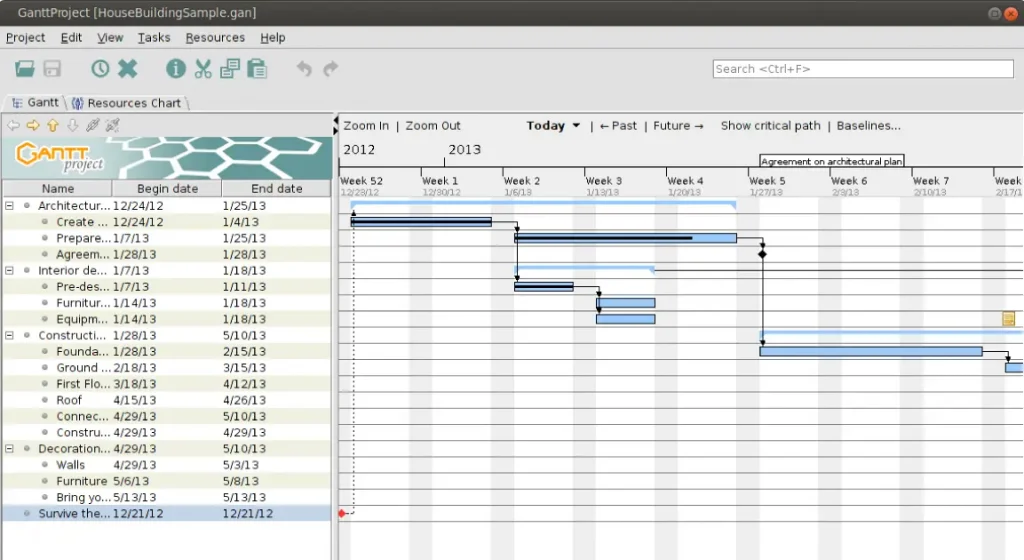
Today’s leading open source construction management platforms ship with:
- Gantt scheduling
- RFI management
- Submittal tracking
- Budget control
- Change order workflows
- Mobile field apps that work on-site without a PhD in IT
In 2026, open source feature parity with platforms like Procore and Buildertrend is closer than the sales pitch for either would ever admit.
- The benchmark those platforms set, north of 200 distinct features across project management, financials, and field operations, is no longer an unreachable ceiling.
- It’s a target that community-driven development is actively chipping away at, quarter by quarter.
And that’s the part worth paying attention to. Community-driven doesn’t mean chaotic; it means the roadmap is shaped by contractors who are actually on job sites, not a product team optimising for upsell potential.
When a feature request comes from fifty general contractors hitting the same problem, it gets built. That kind of alignment between developers and end users is genuinely rare in enterprise software.
But here’s where we’ll be straight with you, because honesty builds more trust than a clean sales pitch ever will. Open source isn’t all the way there yet.
- If you’re expecting deeply polished UX out of the box, the kind where every screen feels like it was designed by a team of thirty, you’ll find rough edges.
- AI-powered agents, the smart assistants that Procore and others are starting to bake into their platforms, are still early or absent in most open source options.
- And when something breaks at 6 am on a pour day, there’s no 24/7 support line with an SLA. You’re leaning on community forums, documentation, or whoever you’ve hired to maintain the system.
Those are real trade-offs. Any blog that tells you otherwise is selling something. You’re paying Procore’s enterprise tier to fund that polished UX, that AI roadmap, and that support team, whether you use them or not. For firms with strong internal IT capacity or a reliable implementation partner, the honest calculation is increasingly tilting the other way.
The gap is closing. The price difference isn’t.
Source: https://www.resourcemanagementguru.com/
Reason 6: Stronger Data Security and Compliance Control
There’s a conversation happening in boardrooms and bid meetings that rarely makes it into software marketing material: where does our project data actually live, and who can access it?
For a growing number of construction firms, the answer to that question is becoming a deciding factor.
When you run a self-hosted open source platform, your data stays where you put it. It doesn’t pass through a vendor’s cloud infrastructure, it doesn’t sit in a shared data center alongside a thousand other firms’ project files, and it doesn’t move to a new region when a SaaS provider decides to restructure their hosting arrangements. You make those calls. Full stop.
That matters in normal commercial construction. It matters enormously when you’re bidding on public sector work, defence contracts, or healthcare facility projects, sectors where data residency requirements aren’t a compliance nicety, they’re a contract condition.
Increasingly, government procurement frameworks explicitly require that sensitive project data remain within national borders, on infrastructure that the contracting firm controls. Self-hosted open source is often the cleanest way to demonstrate that.
Between 2023 and 2024, several major SaaS platforms across the construction and real estate sectors experienced significant data breaches not because their security was careless, but because shared infrastructure is an inherently larger attack surface. When hundreds of firms share the same underlying platform, a single vulnerability can expose all of them.
Self-hosting doesn’t make you immune to security risk, but it removes you from that particular equation entirely.
On the compliance side, the arithmetic is straightforward. Demonstrating GDPR, CCPA, or ISO 27001 compliance when you own and control your infrastructure is a fundamentally different exercise than doing it when your data is sitting in someone else’s environment. Auditors want evidence. Evidence is easier to produce when you control the systems generating it.
You set the encryption standards. You own the access control policies. You decide when patches get applied and who reviews them, not your vendor’s internal security team working on their schedule.
Reason 7: Scales with Your Firm Without Scaling Your Costs
Here’s a scenario every growing construction firm eventually lives through.
You have a good year. Projects multiply, a regional office opens, headcount climbs, and the pipeline looks better than it has in years. Then the software renewal lands in your inbox, and the number has grown right alongside the business.
With Procore’s Annual Contract Value model, that’s not a coincidence. It’s the design. Every additional user adds to the total price. Volume is the mechanism. Growth, for all its hard work, comes with a compulsory software tax.
An open source construction management system doesn’t work that way.
- Add fifty users or five hundred, the software doesn’t send an invoice.
- Open a new regional office and spin up a new instance, no call with a sales rep, no revised contract, no “we’ll need to move you to the next tier.”
- Upload ten thousand documents this year instead of a thousand, same cost.
This is particularly powerful for firms in a growth phase, the ones moving from five active projects a year to fifty, or acquiring a smaller contractor and absorbing their workflows overnight. Those are exactly the moments when a per-seat or per-volume pricing model becomes painful, and exactly the moments when the last thing leadership wants is a licensing conversation sitting in the critical path.
The infrastructure math tells the honest version of this story. Yes, self-hosted open source carries hosting and server costs, and those do grow as data volume and user load increase. But they scale in a way that’s predictable, gradual, and largely commoditised. Cloud hosting costs per gigabyte have fallen consistently for a decade. SaaS contract escalations have not.
One firm that tripled its project volume over three years kept its software cost essentially flat. The hardware spend ticked up modestly. The licensing bill didn’t move. That’s the compounding advantage, and it gets more meaningful every year the firm grows.
At a certain size, the conversation stops being about features and starts being about structure. Open source gives growing firms a cost structure that grows with them, not one that extracts from them.
Reason 8: Active Developer Communities Driving Continuous Improvement
Software is never finished. The question isn’t whether your construction management platform will need fixing, updating, and improving over time; it’s who decides when that happens, and whose priorities drive it.
With proprietary platforms, the answer is straightforward: theirs. A product team, working to a roadmap shaped by enterprise client relationships and internal commercial targets, decides what gets built and when. If you’re a mid-size GC running thirty projects a year, you are almost certainly not the customer whose feature request makes it to the top of the queue. The firms writing the largest cheques are. That’s just how enterprise software product decisions get made.
Open source communities operate on a different logic entirely.
- The leading open source construction platforms today have thousands of active contributors such as developers, contractors, project managers, and implementation partners — submitting fixes, flagging issues, and shipping improvements on continuous release cycles.
- When a bug surfaces, it doesn’t wait for a quarterly patch window. It gets raised on GitHub, triaged by the community, and often resolved in days.
The people closest to the problem are also the people empowered to fix it. That changes the speed of improvement in a way most proprietary platforms struggle to match.
The support experience is different too, in ways that matter. Instead of opening a ticket and waiting 48 hours for a first response, you’re posting in a forum or Slack group where actual practitioners, people running the same platform on real job sites, are answering from direct experience. That’s a fundamentally different quality of help than a support agent working from a script.
Transparency is the other underrated advantage.
- Open source roadmaps are public. You can see what’s being worked on, what’s been requested, and what’s been deprioritised.
- You can vote on features, submit your own, or commission development on something your firm specifically needs.
There’s no black box, no “that’s on our roadmap for a future release” with no further detail.
Contrast that with the experience smaller firms routinely describe with enterprise platforms: feature requests that disappear into a portal, release notes that arrive without warning, and UX changes that break familiar workflows because a larger client cohort wanted something different.
Community-driven development is sometimes framed as a risk. The reality, for the mature platforms that have earned serious adoption in the construction space, is the opposite. It’s a development model where the people who care most about the outcome are also the ones building it.
That tends to produce pretty good software.
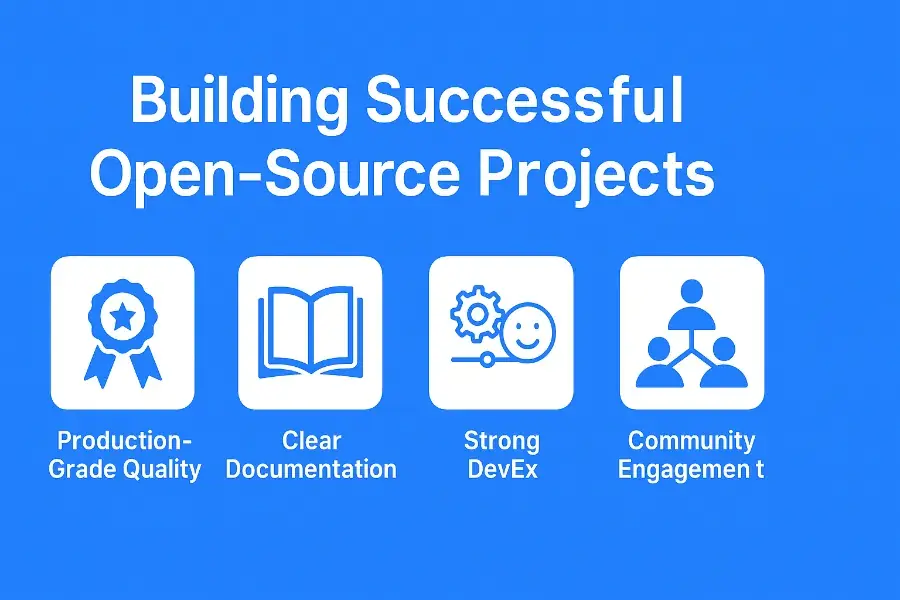
Reason 9: A Better Fit for Niche and Specialist Contractors
Procore is an impressive piece of software. It’s also, unmistakably, built with a certain kind of firm in mind, the large commercial general contractor running complex, multi-trade projects with a full back-office team to match. Suppose that’s your firm, a lot of what Procore ships makes sense. If it isn’t, you spend a meaningful amount of your day navigating a platform that was designed for someone else’s problems.
- The bloat problem: One of the most consistent complaints from specialty contractors in Procore and CMiC reviews is feature overload.
- Electrical contractors don’t need the full submittal workflow suite.
- Civil firms struggle when the default project structure doesn’t fit highway or infrastructure work.
- Fit-out and interior contractors need residential selections management, not enterprise procurement modules built for $200M hospital projects.
The features are there but so is everything else, and there’s no clean way to hide what’s irrelevant.
- Open source construction management system solves it structurally: Because the codebase is yours, you can build a deployment that mirrors your business.
- MEP subcontractors can focus on coordination workflows, RFI management, and trade-specific scheduling without carrying dead-weight modules.
- Civil contractors tracking highway compliance can build specific fields and report directly into the system, rather than approximating them with generic forms.
- Modular growth for smaller firms: You don’t have to implement everything at once.
- Start with project management and document control.
- Add budget tracking when the finance team is ready.
- Layer in mobile field reporting once site adoption is solid.
The platform grows with the firm, at the firm’s pace, without a vendor relationship that bills for unused features.
- Software that respects your size: A boutique electrical contractor running twelve projects a year has fundamentally different software needs than a tier-one GC managing a city block. Open source respects that distinction, not just in marketing, but in structure and cost.
Specialist contractors have spent long enough paying for features built for someone else. The better question is why it took this long to have an alternative worth taking seriously.
Source: https://ranthebuilder.cloud/
Reason 10: Competitive Advantage Through Technology Ownership
Every firm thinks about cost, control, and capability, but the real differentiator is reputation built through owning your technology. The firms pulling ahead aren’t just those with low overhead or long track records; they’re organized, transparent, and digitally mature in ways that inspire trust before a contract is signed.
Owning your tech stack means moving on your timeline, not a vendor’s. Workflows can be fixed immediately, reporting stays predictable, and proprietary processes create operational moats competitors can’t replicate. That eighteen-month effort to refine RFI responses, subcontractor coordination, and budget visibility becomes your advantage, not something anyone else can license.
Talent follows technology. Project managers and field supervisors notice outdated, clunky tools. Firms with modern, well-configured systems attract better people and retain them longer, creating a compounding advantage that rarely shows up on a spreadsheet.
At the bid table, ownership speaks louder than price. Live dashboards, transparent document trails, and mobile-first reporting demonstrate reliability and professionalism, signaling that your firm is easy to work with and hard to surprise.
The firms that grasp this early are already pulling ahead. The technology decisions made now will determine who leads and who follows. Ownership isn’t just a feature; it changes everything.
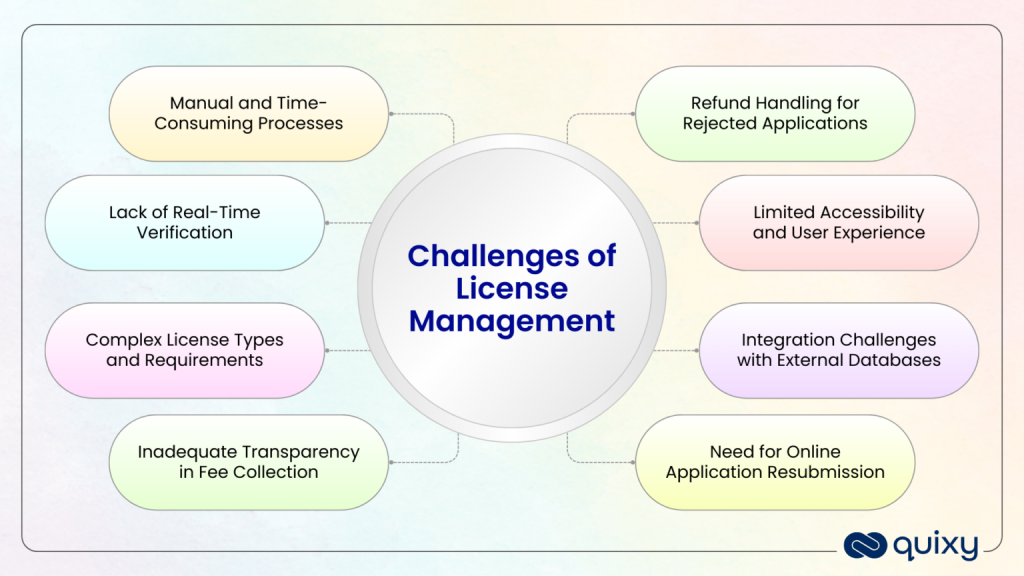
What to Consider Before Making the Switch
Nine reasons to move toward construction project management software, and not one cave is buried in the fine print. That changes here. Because the honest version of this conversation includes a section that most open source advocates skip, the part where we tell you it isn’t right for every firm, and help you figure out which side of that line you’re on.
#1 Start with Your Internal Capability
Open source doesn’t come with a customer success manager who onboards your team, migrates your data, and schedules your training sessions. What it comes with is flexibility, and flexibility requires someone who can use it.
That doesn’t mean you need a full-time developer on payroll, but you do need at least one technically confident person internally, or a trusted implementation partner externally, who can own the setup and keep it running. If neither of those exists right now, that’s the first thing to solve, not the last.
#2 Hosting is a Real Decision, Not a Default
Self-hosted means you’re choosing and managing your infrastructure, a cloud provider, a server configuration, and a backup strategy. Managed hosting options exist for most major open source platforms and reduce that burden significantly, but they come with cost and still require someone who understands what they’ve signed up for. Budget this into your planning from day one, not as an afterthought.
#3 The Timeline People Underestimate Most is Migration
Getting from evaluation to a live pilot project typically runs four to eight weeks on most open source platforms, and that’s assuming the process moves cleanly. Data migration from an existing SaaS platform, staff training, and the inevitable period where your team is running two systems simultaneously all add friction.
Plan for it. The firms that hit the eight-week mark without drama are usually the ones that planned for twelve.
#4 On Hidden Costs, and There are Some
The software licence is free. The implementation, training, custom development, and ongoing server maintenance are not. A realistic first-year budget for a mid-size firm making the switch should include implementation time (either internal hours or an external partner), at least one round of staff training, and a contingency for the custom workflow development that almost always comes up once the system is live and people start using it seriously.
Open source is still dramatically cheaper than enterprise SaaS at scale, but going in expecting zero cost is how firms end up surprised.
The sweet spot, if you’re trying to locate yourself on the map, looks something like this: five to fifty employees, three or more active projects running simultaneously, a genuine frustration with SaaS per-seat costs, and at least one person internally who finds technology interesting rather than threatening.
That profile describes a firm that is very likely to come out ahead. A two-person operation running one project at a time, or a hundred-person firm with zero internal technical capacity and no appetite to build it, is a harder case.
None of this is a reason to stay where you are if where you are isn’t working. It’s a reason to go in clear-eyed with a plan, a realistic timeline, and an honest read on what your firm can absorb.
The switch is worth it for the right firms. The right firms are the ones that prepare for it properly.
Source: https://quixy.com/
The Bottom Line: This isn’t a Trend, it’s a Strategic Shift
If you’ve read this far, you’ve already felt it; something is changing in how construction firms think about software. And it’s not subtle anymore.
The ten reasons you’ve just seen aren’t theory. They reflect what real firms are dealing with in 2026: rising costs, vendor lock-in, and roadmaps shaped by priorities that aren’t theirs. Systems that get more expensive as the business grows are no longer just frustrating; they’re a strategic problem.
That’s where Appkodes, a leading startup mobile app development company, changes the equation.
We don’t just offer another open source construction management system. We bring the control and flexibility of open source into a system that’s structured, reliable, and built for how construction teams actually work. You shape your workflows and scale without being forced into pricing tiers or rigid upgrades.
Instead of adapting your operations to fit your Procore alternative, the system adapts to you. That means no lock-in, no unnecessary pricing pressure as you grow, and no constraints on how your team works or integrates with other tools.
This shift isn’t about chasing something new. It’s a response to a model that no longer fits how modern construction firms operate. The companies moving early aren’t experimenting; they’re making a calculated decision based on control, cost, and long-term advantage.
Because at a certain point, this stops being about software features. It becomes about ownership and the impact that has on the projects you win and the margins you keep.
That’s the real story. And it’s only getting clearer.
Ready to See How This Works for Your Firm?
Wherever you are in the decision, early research, active evaluation, or ready to move, there’s a useful next step:
[Download the Free Comparison Checklist] Open Source CMS vs. Procore vs. Buildertrend features, costs, and trade-offs laid out side by side. Put this on the agenda for your next leadership meeting.
Book a Free 30-Minute Consultation and tell us how your firm works. We’ll map the right construction management setup to your actual workflow.

Arun Andiselvam
Founder of AppKodes. As a serial entrepreneur, I have successfully established five brands over the past 12 years. After creating a successful rank tracker for SEO agencies, I am currently dedicated to developing the world's first SEO Project Management software.