How Estimating Software for Residential Construction Prevents Budget Overruns
Residential construction budgets often go beyond the planned amount, even in small home projects. At the beginning, cost planning may look simple, but real construction work is rarely predictable. Material prices change often, labor costs increase unexpectedly, and site conditions can create extra work. In many residential projects, owners also request design or layout changes during construction, which adds more cost to the project.
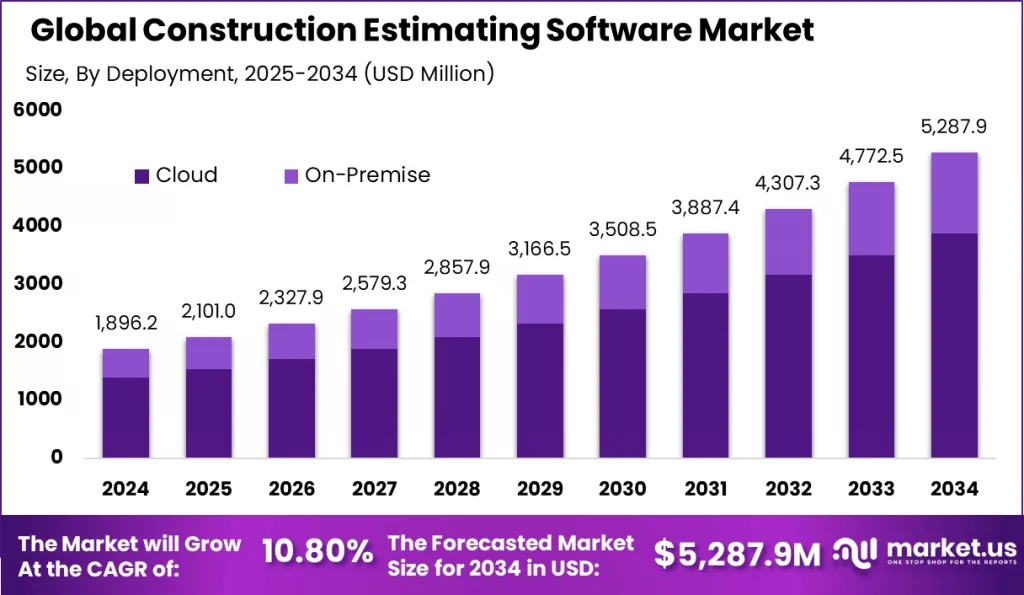
Because of these challenges, many builders are now using digital estimation tools to improve cost planning. The global construction estimating software market reached USD 1,896.2 million in 2024 and is expected to grow to about USD 5,287.9 million by 2034. This shows how construction companies are increasingly depending on estimating software to manage project costs more accurately.
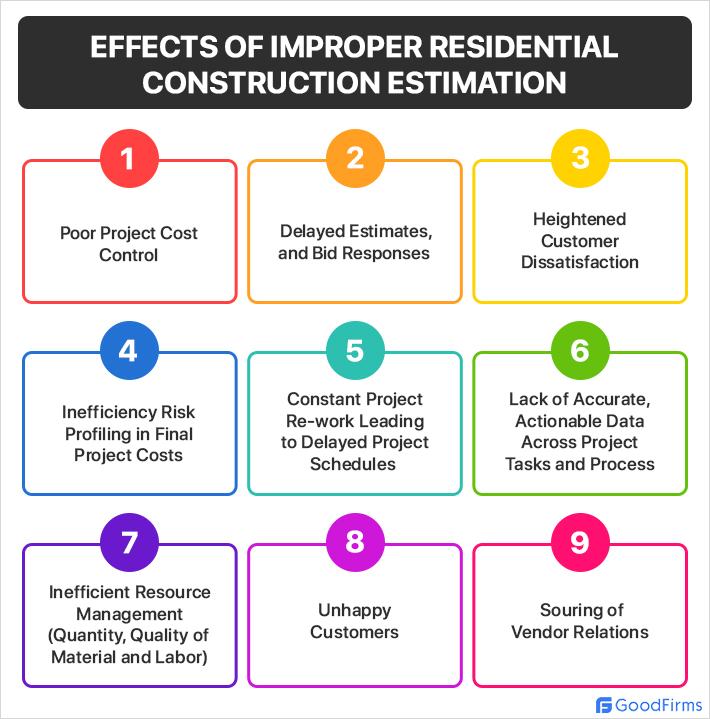
The biggest problem in residential construction is that even a small estimation mistake can lead to major financial loss later. Missing a small work item, using the wrong quantity, or calculating labor costs incorrectly may not seem serious at first. But as the project continues, these small errors slowly increase the total project cost. Since home construction projects usually have tight budgets, small mistakes can quickly turn into large cost overruns.
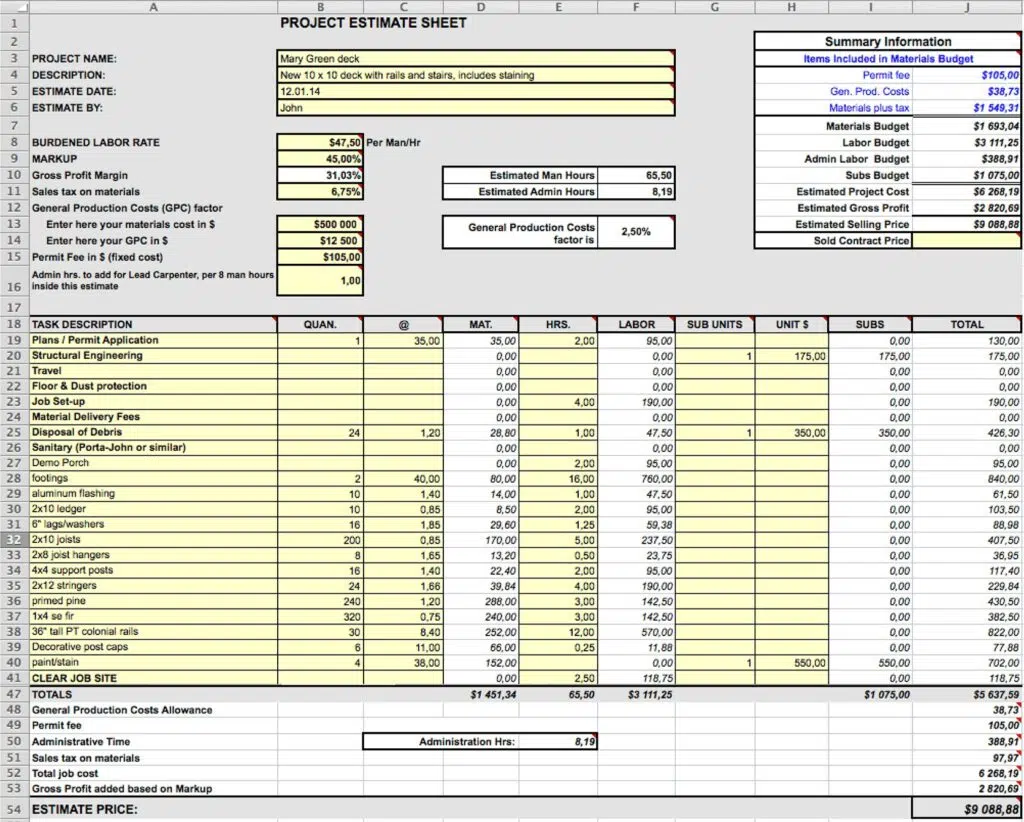
Estimating software for residential construction helps reduce these problems by making the estimation process more organized and accurate. Instead of depending only on manual calculations, builders can create detailed estimates for materials, labor, and other project costs in a structured way. The software also makes it easier to update costs whenever prices or project requirements change.
Because of this, estimating software helps builders control budgets better, reduce unexpected expenses, and keep residential projects financially stable from start to finish.
Source: https://market.us/
Why Residential Construction Estimation is Harder Than it Looks
At first glance, estimating a single-family home feels straightforward. The scope is defined, the floor plans are ready, and the materials are familiar. On paper, it should be a simple cost exercise. But in practice, residential construction estimation is one of the most complex parts of the building process. And the difficulty rarely comes from the obvious places.
1. Different Perspectives Create a Hidden Gap
One of the first challenges comes from how differently homeowners and contractors view the same project. For a contractor, a home build is a structured process made up of scopes, trades, quantities, and timelines. Everything is broken down into measurable work.
For a homeowner, however, it’s much more emotional. It represents a future lifestyle, comfort, and personal vision. Because of this, budget expectations often start with a fixed number in mind, and the design is expected to fit within it.
That’s where the gap begins. Contractors are estimating based on real-world costs, while homeowners are often anchored to what they hope the project will cost. This difference doesn’t always show up immediately, but it becomes clear later when adjustments are expensive.
2. Mid-Project Changes Add Up Quickly
Residential construction is highly flexible, and changes during the project are extremely common.
A layout might be adjusted after framing starts. Finishes may be upgraded once the homeowner sees the space. Sometimes, additional rooms are added after the design feels different in real life than it did on paper. These changes are understandable, but each one affects more than just a single line item. They influence labor, materials, scheduling and often lead to rework.
Without a system that reflects these updates in real time, costs begin to drift slowly and often unnoticed, until the budget is already stretched.
3. Material Costs are Not the Same Everywhere
Another major challenge is regional variation in material pricing.
The cost of materials like lumber, concrete, steel, roofing, or drywall can vary significantly depending on location. For example, lumber pricing in the Pacific Northwest is shaped by local supply and transport efficiency, while the same materials may cost more in Florida or Gulf Coast regions due to logistics and demand differences.
Even though industry averages exist, they rarely reflect the true cost of a specific local market. As a result, estimates based on national averages can easily miss the mark.
4. Labor Costs Vary Just as Much
Labor is another major factor that changes by geography and sometimes even more dramatically than materials.
A framing crew in rural Tennessee will not charge the same rates as a crew in the Seattle metro area. Similarly, finish carpenters in Austin operate under different cost structures compared to those in the Boston suburbs. In many urban markets, labor alone can account for 40% or more of the total residential project cost. At that level, even a small percentage error in labor assumptions can significantly distort the overall estimate.
5. The Real Challenge is Not Math, it’s Judgment
None of these factors is hidden or unknown. Contractors are aware of them. The challenge is that they are often underestimated or simplified using templates, historical data, or experience from a different market. And that’s where estimation becomes difficult, not in calculation, but in judgment. Every residential project is shaped by:
- Local market conditions
- Human decision-making
- Frequent design changes
- Real-time cost fluctuations
Together, these factors make residential estimation less about fixed numbers and more about constantly adapting to changing realities.
Source: https://www.goodfirms.co/
Where Residential Cost Estimates Break Down and Why
Understanding why estimates fail is just as important as knowing that they do. In residential construction, cost overruns rarely come from one big mistake. They usually come from several small issues that happen across different stages of the project.
Foundation and framing are often where the first gaps appear. Concrete quantities depend on accurate measurements and depth assumptions, which can easily vary when working from drawings. Rebar and framing takeoffs also involve many small items, and even small misses or rounding differences can slowly add up. These are not careless mistakes; they are normal risks in manual estimation.
Finishing work is where costs most often go higher than expected. Tile, paint, cabinetry, and other finishes depend heavily on design choices that often change during the project. A small change like shifting a kitchen layout or extending flooring can increase both material and labor costs. Individually, these changes seem small, but together they can push the budget up by 20–30%.
Mechanical, electrical, and plumbing (MEP) work is also commonly underestimated. While main items like pipes, wiring, and ducts are included, smaller details like fittings, fixture connections, panel upgrades, and extra circuits are often missed. These items don’t always show clearly on drawings, so they get overlooked in manual estimates.
Change orders also affect budgets more than expected. The initial cost is usually easy to calculate, but the real impact includes extra labor, schedule changes, material reorders, and possible rework. Because of time pressure, these are often estimated too low, and the difference affects the final budget.
Vendor pricing is another common issue. Estimates often use average or past prices, but actual costs vary by region and supplier. When real prices come in higher, especially in certain markets, there is usually no buffer left in the estimate. Each of these breakdowns is predictable. And because they’re predictable, they’re solvable, which is exactly what the right estimating software for residential construction is built to do.
How Estimating Software for Residential Construction Solves These Problems in Projects
Most residential cost estimation challenges are predictable rather than random. This allows specialized estimating software to address them systematically across every stage of the build, beyond what general construction management systems offer.
1. Floor Plan–Based Material Takeoff
The most time-consuming part of any residential estimate isn’t the math, it’s the measurement. Manually scaling dimensions off a floor plan, calculating square footage room by room, and converting those numbers into material quantities is where most estimation errors are born. A misread dimension on a foundation plan or a missed wall segment in the framing takeoff can quietly inflate or deflate a bid by thousands of dollars before a single permit is pulled.
Estimating software eliminates that step entirely. By importing the floor plan directly, whether it’s a PDF, a CAD file, or a drawn layout, the software converts those dimensions into concrete quantities automatically: how many board feet of lumber, how many sheets of drywall, how many squares of roofing material. The result is a takeoff grounded in the actual geometry of the home, not in a contractor’s best reading of a printed drawing at 7 a.m.
2. Room-by-Room Cost Breakdown
A lump-sum estimate tells a homeowner what a project costs. A room-level breakdown tells them why. That distinction matters enormously in residential construction, where clients are emotionally invested in specific spaces and often have very different expectations about where money should go.
When estimating software tracks costs at the room level, separating out the kitchen, primary bath, garage, bedrooms, and living areas, both the contractor and the homeowner gain a much clearer picture of where the budget is actually allocated. It surfaces conversations that need to happen early: why the primary bath is carrying 18% of the finishing budget, or why the kitchen cabinetry alone is pushing the project close to its ceiling.
Catching those imbalances in the estimate phase, rather than mid-construction, keeps projects on track and clients informed.
3. Hidden Cost Capture for MEP and Hardware
Finishing a home is where budgets quietly fall apart. The structural and framing costs are usually well-estimated, they’re visible, measurable, and familiar. It’s the secondary layer of costs that tends to get underestimated or missed altogether: the outlet runs from panel to room, the plumbing rough-in for a second-floor laundry, the door and window hardware across twenty openings, the insulation that wasn’t fully accounted for in the wall assembly.
None of these is expensive in isolation. Together, they routinely add 10 to 15 percent to a finishing budget that the original estimate didn’t account for.
Residential estimating software addresses this by building those line items into the estimate from the start, flagging MEP requirements based on room type, pulling hardware quantities from door and window schedules, and ensuring that insulation is calculated as part of the wall and ceiling assemblies rather than treated as an afterthought. The surprise costs don’t disappear, but they stop being surprises.
4. Live Local Material Pricing
A lumber price in Portland, Oregon, looks nothing like a lumber price in Charlotte, North Carolina. Concrete costs in Phoenix differ from concrete costs in Boston.
National average pricing data, which many manual estimates and generic tools rely on, smooths over those regional differences in ways that can quietly skew a bid in either direction, sometimes making a project look more affordable than it is, sometimes pricing a contractor out of work unnecessarily.
Residential estimating software solves this by syncing material rates with regional supplier data rather than national benchmarks. For contractors operating in high-cost markets like coastal California, the New York metro area, or the Colorado Front Range, this isn’t a minor refinement; it’s the difference between a bid that reflects reality and one that doesn’t.
And as material costs shift, which they have done dramatically in recent years, live pricing ensures that estimates reflect what materials actually cost today, not what they cost when a rate sheet was last updated.
5. Instant Change Order Recalculation
Design changes are a given in residential construction. A homeowner adds a mudroom after seeing the framed space. A couple of upgrades from LVP to solid hardwood throughout the main level. A primary bath grows by fifty square feet when the floor plan gets revised. Each of these changes has a cost not just the obvious line item, but the downstream effects on adjacent materials, labor, and timeline.
In a manual process, recalculating the full impact of a design change takes time. That delay creates pressure: contractors either give a rough number on the spot and commit to something they haven’t fully costed, or they ask the homeowner to wait, which erodes confidence in the process.
Estimating software removes that pressure entirely. When a floor plan changes, the estimate updates in real time for every affected material quantity, every labor hour, and every subcontractor scope. The homeowner gets a clear, defensible answer to the question that always comes next: “So what does that add to the total?”
Source: https://buildern.com/
Residential vs. Commercial Estimating Software: Key Differences
It’s a fair question: if estimating software for residential construction already exists for construction broadly, why does it matter whether a tool is built specifically for residential work? The short answer is that residential and commercial construction don’t just differ in size; they differ in structure, decision-making, and what “accuracy” actually means on the ground.
| Area | Commercial Estimating Tools | Residential Estimating Tools |
| Project Type | Large-scale projects like offices, retail spaces, and multi-storey buildings | Custom homes, villas, and small to mid-size residential builds |
| Work Structure | CSI divisions, trade-based cost breakdowns, and highly standardized scopes | Room-based structure, space-driven planning, flexible scopes |
| Floor Plans | Used as reference; quantities often derived separately | Core input for takeoffs, room-wise cost, and material mapping |
| Takeoff Process | Often manual or semi-manual, depending on the workflow | More direct, floor-plan-driven quantity extraction |
| Cost Tracking | Organized by trade and division (MEP, structural, etc.) | Organized by room/space (kitchen, bath, living, etc.) |
| User Focus | Contractors, project managers, procurement teams | Contractors + homeowners (client-facing clarity needed) |
| Reporting Style | Technical, code-based, internal documentation | Simple, visual, easy-to-explain breakdowns for clients |
| Decision Flow | Structured, defined scope from the start | Evolving scope with frequent design changes |
| Sensitivity to Change | Minor variances absorbed in large budgets | Small changes significantly impact total cost |
| Accuracy Requirement | Works at high-level estimates with contingencies | Requires tight, line-item level precision |
The point isn’t that commercial tools are better or worse. They’re just built for a different construction logic. Residential estimating needs a system designed around how homes are actually planned, changed, and priced in real time.
Real-World Impact
2,000 Sq Ft Custom Home Example
To understand what estimating software actually changes in practice, it helps to look at a real scenario instead of general claims about accuracy or efficiency.
Take a standard 3-bedroom, 2-bath custom home around 2,000 square feet, single story, mid-range finishes, built in a typical mid-size US market. This is one of the most common residential project types, and also one of the most frequently misestimated.
With a manual estimating process, cost overruns on a project like this typically fall in the range of 12–18% above the original contract value. This isn’t unusual; it comes from small gaps that build up across the project.
Material quantities are often measured manually instead of derived directly from geometry, finishing costs miss small but important MEP and hardware details, and change orders are frequently priced without fully capturing downstream impact. On a $400,000 build, even a 15% overrun means about $60,000 in unplanned cost.
What estimating software changes is not one single thing; it’s the accumulation of small corrections across the entire workflow.
Material quantities become more accurate because they are generated from the actual floor plan instead of rounded manual takeoffs. Finishing costs become more predictable because MEP items, hardware allowances, and trim details are included from the start rather than added later during execution. Change orders become clearer because their full cost impact on labor, sequencing, and material adjustments is calculated before work begins, not after.
The result shows up gradually during the project, not all at once. Less material waste. Fewer surprises during finishing. Fewer cost disputes during change orders. And more alignment between estimated cost and actual spend.
The impact is visible in two areas: numbers and relationships. When projects stay closer to the original contract value, contractor margins remain stable, and homeowners trust the estimate they were given. Just as importantly, fewer cost surprises mean fewer disputes at the end of the build.
In residential construction, that trust matters as much as accuracy. A homeowner who feels the budget was handled transparently is far more likely to recommend the contractor for the next project. That is the real value of residential estimating software, not just tighter estimates, but smoother projects and stronger client confidence.
Who Gets the Most Value from Residential Estimating Software
Residential estimating software isn’t a one-size-fits-all tool, but it comes close. Across the US housing market, a handful of professionals consistently see the biggest return from making the switch from spreadsheets and manual takeoffs.
Custom home builders feel the impact most immediately. Every project is unique different floor plan, a different finish level, different client with different expectations. That variability makes manual estimating slow and error-prone. When a client asks, “What happens to the budget if we add a home office?” a custom builder using estimating software can answer that in minutes, not days. That responsiveness builds trust and closes contracts faster.
Residential general contractors running anywhere from five to twenty homes a year face a different challenge: volume. At that scale, a small miscalculation that might be manageable on one job becomes a systemic margin problem across a full pipeline. Estimating software brings consistency; every bid follows the same methodology, every material takeoff pulls from the same updated pricing, and nothing falls through the cracks between jobs.
Architects and designers are increasingly expected to deliver more than drawings. Clients want to know what a design actually costs before it goes to a contractor for a bid. Estimating software gives architects a way to provide credible early-stage cost guidance tied directly to the floor plan, not a rough ballpark, but a structured breakdown that holds up when the GC runs their own numbers.
ADU and additional contractors work in some of the tightest financial conditions in US residential construction. In high-cost markets like Los Angeles, the Bay Area, Seattle, or Denver, the margin between a profitable ADU project and a money-losing one is razor-thin. Every overlooked electrical run or underpriced finish material comes directly out of profit. These contractors need line-item accuracy, and estimating software delivers it.
Spec home developers managing multiple simultaneous builds have the most to gain from speed and standardization. When you’re building four or five homes at once across similar floor plans, estimating software lets you clone and adjust estimates rather than rebuilding from scratch each time. It also makes it easier to model how material price swings, such as lumber costs, for instance, which have been notoriously volatile, affect margin across an entire portfolio, not just one lot.
The common thread across all of these is simple: residential construction is unforgiving when the numbers are wrong. Estimating software doesn’t eliminate risk, but it replaces guesswork with a repeatable process, one that holds up in front of clients, survives design changes, and protects margin from the first estimate to the final invoice.
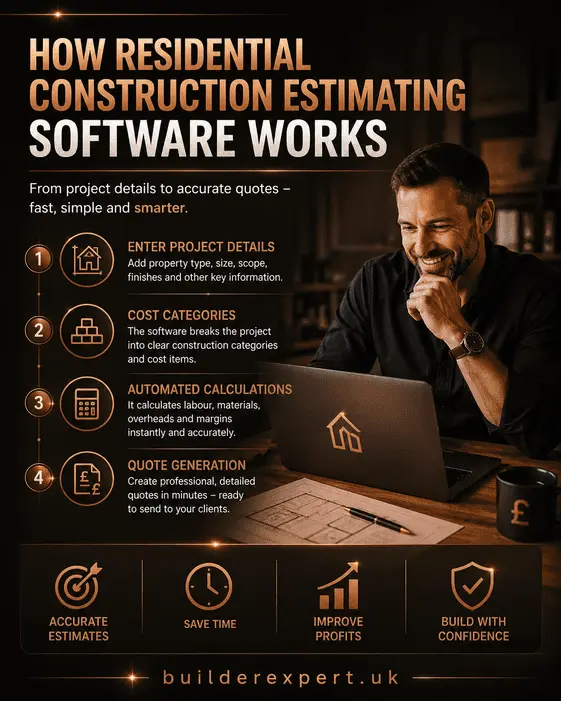
Source: https://builderexpert.uk/
Why Appkodes Can Be a Strong Choice for Construction Software
Appkodes, a leading startup mobile app development company, offers construction-focused software solutions designed to simplify how contractors plan, estimate, and manage projects. In residential construction, especially where budgets are tight and changes happen frequently, having a structured digital system helps reduce confusion and improve control over costs.
Instead of relying on spreadsheets, manual tracking, or disconnected tools, Appkodes brings key construction workflows into one system. This makes it easier to stay aligned from estimation to execution. What makes it useful in real construction environments is how it supports everyday project needs:
- Cost estimation is built around real workflows rather than isolated calculations
- Project tracking that keeps updates visible across teams in real time
- Material planning that reduces missed items and quantity errors
- Change order handling that reflects cost impact more clearly before execution
- Centralized data instead of scattered files and manual sheets
For residential contractors, this structure matters because most cost issues don’t come from the original estimate; they come from changes during the build. Appkodes helps reduce that gap by making it easier to update the scope, adjust quantities, and track cost variations as the project evolves. It also offers flexibility across different types of residential work:
- Small custom homes
- Multi-unit residential projects
- Mid-scale contractor-driven builds
This adaptability allows teams to shape the system around their actual workflow instead of adjusting their process to fit the software. Another important advantage is clarity in communication. Construction isn’t just internal work; clients are part of the process too. Appkodes supports clearer breakdowns that help explain costs in a simple, structured way without unnecessary technical complexity.
- Room-wise and scope-wise visibility for easier client understanding
- Cleaner cost breakdowns for discussions and approvals
- Better transparency during change requests and revisions
Overall, Appkodes focuses on making construction estimation and project control more connected and practical. For contractors looking to improve accuracy, reduce manual work, and maintain better budget control across residential projects, it offers a reliable, technology-driven approach.
To explore solutions or discuss requirements for your construction workflow, you can connect with the Appkodes team and get a tailored setup for your business.
FAQs
1. What is estimating software for residential construction?
A digital platform that calculates material quantities, labor costs, and total project budgets for homes, ADUs, and residential renovations using floor plans and local pricing data.
2. How does estimating software improve cost accuracy in home construction?
It eliminates manual measurement errors, captures commonly overlooked MEP and hardware costs, and recalculates in real time when designs change.
3. Can estimating software handle mid-project design changes?
Yes, most residential estimating tools recalculate total cost impact instantly when floor plans or finish specifications are updated.
4. Is residential estimating software worth it for smaller builders?
Especially for smaller builders, where one cost overrun on a single-family home has an outsized impact on margin.
5. What hidden costs does estimating software help catch?
Electrical rough-in, plumbing fittings, door and window hardware, underlayment, and trim items are frequently missed in manual residential estimates.

Arun Andiselvam
Founder of AppKodes. As a serial entrepreneur, I have successfully established five brands over the past 12 years. After creating a successful rank tracker for SEO agencies, I am currently dedicated to developing the world's first SEO Project Management software.