Is Construction Estimating Software Worth the Cost? A Real ROI Analysis
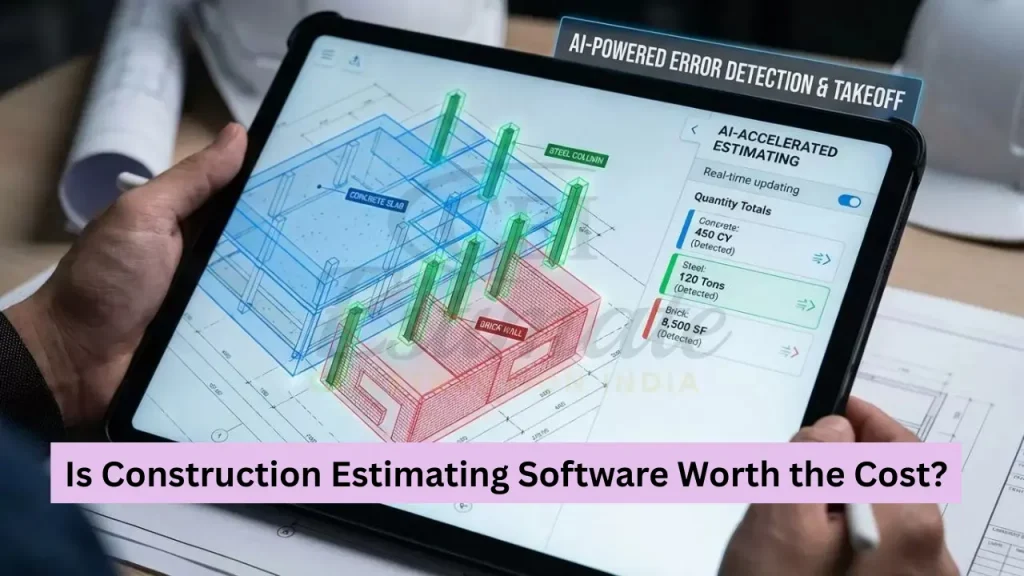
Think about the last time a project ran over budget. Chances are, it wasn’t a sudden surprise at the end; the warning signs were already there in the very first estimate. The construction industry doesn’t just have a building problem. It has an estimating problem. When early numbers are off, everything that follows gets affected: missed bids, squeezed margins, client dissatisfaction, and crews working on budgets that were never realistic.
The data makes this even clearer. Around 98% of megaprojects face cost overruns or delays, and only about 8.5% of projects finish both on time and within budget. Despite this, the global construction estimating software market is expected to reach nearly $2.6 billion by 2030. That growth isn’t random; it reflects a shift in how leading firms are approaching estimation.
The companies consistently winning more projects today are not necessarily working harder. They are working with better estimation systems. Instead of relying on assumptions and disconnected spreadsheets, they are building bids on structured, data-driven estimating processes.
That shift is becoming hard to ignore across the industry, as estimating accuracy increasingly defines profitability more than execution itself.
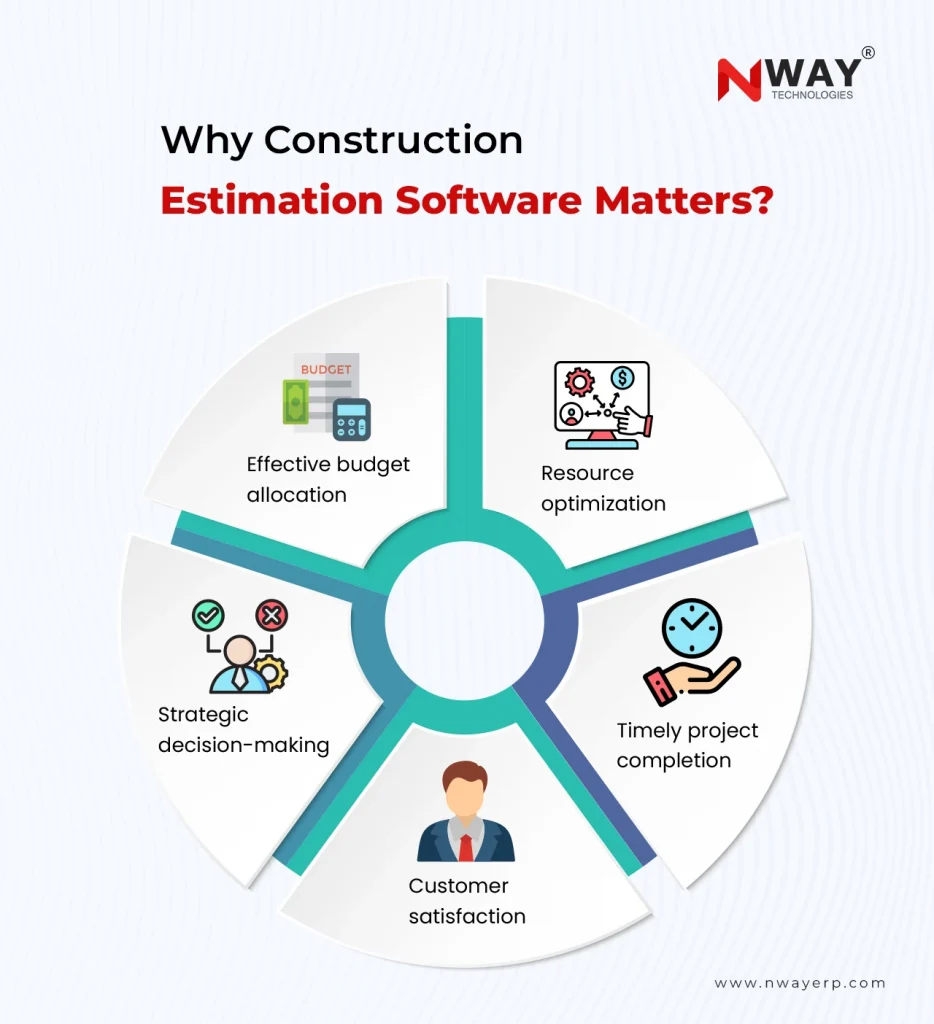
Source: https://www.nwayerp.com/
The 4-Signal ROI Audit: What to Actually Measure
Most ROI discussions get stuck on activity metrics, things like logins, templates used, or feature adoption. These numbers show usage, but they don’t really tell you if estimating is getting better. A more meaningful approach is to track outcomes that directly reflect estimating performance and business impact.
Signal 1: Time Per Estimate
Measure how long it actually takes to complete an estimate from takeoff to final bid submission before and after using the software. Avoid assumptions like “it feels faster.” Use real tracked hours.
Also, break it down by project type and size. Saving three hours on a small residential renovation is very different from saving three hours on a large commercial project. The impact is not the same, even if the time saved is equal.
This signal tells you one thing clearly: efficiency.
Signal 2: Bid Accuracy
Take your last 10 completed projects and compare the estimated cost vs. the actual final cost.
Smaller differences usually mean your estimates are closer to reality. Larger gaps can point to issues in takeoffs, pricing, labor assumptions, or scope clarity.
Of course, not every variance is an estimating mistake. Scope changes, design updates, and site conditions also affect final cost. But when you review this regularly, patterns start to appear and that’s where improvement happens.
This is your quality signal, because it directly affects profitability.
Signal 3: Bid Win Rate
Track how many bids you win compared to how many you submit, and watch how that number changes over time.
Construction estimating software alone won’t guarantee more wins. But faster turnaround, consistent pricing, and cleaner proposals can definitely improve your chances.
The key is not a single percentage; it’s the trend. If your win rate is improving while your margins stay healthy, that’s a strong signal that your estimating process is becoming more effective.
This is your competitive signal.
Signal 4: Rework and Change Order Trends
Instead of just counting change orders, focus on why they happened and when they were discovered.
- During estimating: issue caught early and corrected with minimal impact
- During bid review: caught before execution, reducing risk
- During construction: discovered late, often leading to cost and schedule impact
Not all change orders are bad. Many come from clients, design updates, or unexpected site conditions. The real goal is to reduce change orders that come from estimating misses.
A simple way to track this is to review your last 10 projects and group change orders into:
- Estimating-related
- Client-requested
- Design-related
- Site-condition-related
Over time, fewer estimating-related issues are a strong sign that your process is improving.
The 4-Signal Self-Audit
You can perform a simple audit by reviewing your recent projects and evaluating the following four areas:
| Signal | Measure | Positive Trend | Needs Attention |
| Time per estimate | Hours from takeoff to bid submission | Time requirements decreasing while maintaining quality | No measurable improvement or increasing effort |
| Bid accuracy | Estimated cost compared with actual project cost | Variances becoming smaller over time | Large or recurring variances without clear explanation |
| Bid win rate | Bids won compared with bids submitted | Stable or improving win rate with healthy margins | Declining win rate or frequent price-related losses |
| Estimating-related change orders | Change orders linked to estimating gaps | Fewer estimating-related issues over time | Recurring estimating-related corrections across projects |
The value of this audit comes from trend analysis rather than fixed benchmarks. Reviewing the same metrics consistently allows firms to identify whether their estimating process is improving, stagnating, or creating avoidable risks.
5 Signs Your Estimating Software is Delivering Less Value Than Expected
In many cases, the issue is not the software itself. The bigger challenge is the gap between the capabilities you’re paying for and the way the software is actually being used.
1. Your Team Maintains Parallel Spreadsheets
One of the strongest red flags is when estimators continue building spreadsheets to verify or cross-check software-generated estimates.
A bit of validation is normal. But when spreadsheets become a parallel system, it creates extra work, increases the chance of mismatched numbers, and weakens the efficiency gains the software was meant to deliver.
If people trust the spreadsheet more than the software, it’s worth asking a simple question: why isn’t the system trusted?
2. Estimators Spend More Time Entering Data Than Analyzing It
Estimating tools should reduce repetitive work, not replace one form of data entry with another.
If estimators are spending most of their time manually entering quantities, costs, or line items, then the workflow isn’t fully optimized. Instead of focusing on analysis, pricing strategy, risk, and scope review, they get stuck in administrative work.
The real goal of automation isn’t digitizing tasks, it’s freeing time for better decision-making.
3. Cost Information is Difficult to Keep Current
Construction pricing changes frequently due to material availability, supplier updates, and market shifts.
If keeping cost data updated requires constant manual effort, estimates quickly become outdated. That leads to pricing risks and reduced accuracy.
Integrations with supplier databases, live cost feeds, or regularly maintained cost libraries can significantly reduce this problem and improve reliability.
4. Past Estimates are Difficult to Review
After a project is completed, teams should be able to clearly see how the estimate was built, what assumptions were made, what quantities were used, and how pricing decisions were taken.
When that history is unclear or incomplete, it becomes difficult to learn from past work. As a result, the same estimating mistakes can repeat across projects.
Good documentation turns past projects into a learning system for future estimates.
5. User Adoption Has Stalled
Many teams adopt basic features but never move beyond them.
Over time, advanced capabilities like templates, reporting, cost databases, collaboration tools, or automation workflows remain unused. The software is “in use,” but not fully working for the business.
In these cases, the solution is often not a new tool, but better training, process alignment, and workflow optimization.
Across all these signs, the pattern is the same: estimating software delivers real value only when it becomes part of the workflow, not something used alongside spreadsheets or outside processes.
Regularly reviewing how the tool is being used, where time is going, and how estimates are produced can make the difference between “having software” and actually improving estimating performance.

Source: https://zealousys.com/
The honest question to ask your team this week:
“If the software disappeared tomorrow, what would actually break and what would we just rebuild in Excel?”
The answer tells you exactly what the tool has earned, and what it hasn’t.
Practices Commonly Seen in Successful Estimating Teams
In many cases, better estimating results do not come from switching software. They come from using existing tools more consistently and supporting them with strong estimating processes.
How Mature Estimating Teams Actually Work
Many firms start out using the default cost libraries that come with their estimating software and only update them occasionally. It works at a basic level, but it doesn’t reflect real project conditions for long.
More experienced estimating teams take a different approach. They regularly update their cost data using real project information, things like labor productivity, material pricing, subcontractor rates, and supplier feedback. Over time, their estimates stop being based on generic assumptions and start reflecting how their business actually operates in the real world.
Keeping Estimating and Project Data Connected
One of the biggest gaps in construction is the disconnect between estimating and execution.
When project teams can clearly see the original estimate assumptions, quantities, and budgets, it becomes much easier to track performance and understand where costs are changing. This visibility improves accountability and also reduces duplicated effort between teams.
In simple terms, when estimating and project teams stay aligned, decisions become faster and more accurate.
Using Standardized Assemblies and Templates
Building every estimate from scratch using individual line items can slow things down and create inconsistencies between estimators.
That’s why many mature teams build standardized assemblies, templates, and cost structures based on how they actually execute work. These standard models help bring consistency across projects, speed up the estimating process, and make reviews much easier.
Regularly Comparing Estimates with Actual Results
Completed projects are one of the most valuable sources of learning.
When teams regularly compare estimates with actual project costs, they can clearly see where their assumptions were right—and where they weren’t. This can be done at project closeout or reviewed quarterly, but the key is consistency.
Over time, this habit turns estimating into a continuous improvement process instead of something based only on experience or intuition.
Choosing Tools That Match the Way You Work
Not all construction projects are the same. Residential, commercial, industrial, and civil work all come with different cost structures, workflows, and risks.
Because of this, many firms choose estimating tools based on the type of work they do most often. A system that works well for one segment may not fit another.
When the software actually matches the way the business operates, it naturally delivers better long-term results.
The Common Thread
The most successful estimating teams don’t treat software as a standalone tool. They see it as part of a larger system that includes clean cost data, standardized processes, regular reviews, and consistent usage.
When all these pieces work together, estimating becomes more accurate, more predictable, and easier to improve over time.
What the Numbers Look Like When Software is Working
This is not a vendor case study. It’s a simple model you can test using your own data.
Example Scenario: Mid-size General Contractor (40 bids/year)
Assumptions:
- Estimator fully loaded cost: $85/hour
- Average time per estimate before software: 18 hours
- Average time per estimate after software: 11 hours
- Time saved per estimate: 7 hours
Time Impact
7 hours × $85 × 40 bids = $23,800 per year (in recovered time)
This does not automatically translate into profit. It represents capacity, time that can be redirected toward additional bids, improved estimate reviews, or reduced overtime, depending on how the organization operates.
Cost Accuracy Impact (Illustrative Scenario)
Example project:
- Project value: $2,000,000
- Estimate-to-actual difference before: 12%
- Estimate-to-actual difference after: 4%
Difference in variance: $160,000 per project (illustrative gap reduction)
Not all variance reflects estimation errors. Some portion comes from scope changes, market fluctuations, and unforeseen site conditions. Because of this, only a part of the variance reduction can reasonably be attributed to estimating improvement.
For example, if a portion of that variance is considered a preventable estimating gap, the impact becomes meaningful when applied across multiple projects in a year.
Simple ROI Framework You Can Apply
You can adapt this model using your own data:
Time Impact
= Hours saved per bid × Estimator cost rate × Annual bid volume
Cost Accuracy Impact
= Project value × Variance improvement % × Estimating-related portion of variance
Total Annual Impact
= Time impact + Cost accuracy impact
The key variable is not the formula itself, but how accurately you separate estimating-related variance from scope-driven changes.
Volume Matters
Estimating software has a fixed cost (licensing, setup, training), which can vary widely depending on platform and scale.
At higher bid volumes, time savings and process improvements are easier to justify. At lower volumes, the same software may not produce enough measurable benefit unless it significantly improves accuracy or reduces rework.
The most relevant comparison is not industry benchmarks, but your actual bid volume and estimating workflow.
Practical Takeaway
If the calculated benefits appear limited, the issue is not always the software itself. In many cases, the difference comes from how deeply the tool is integrated into estimating workflows, cost data updates, and review processes. Stronger adoption typically leads to stronger measurable outcomes.
Source: https://www.constructionbase.ai/
Honest Take: When Estimating Software isn’t the Right Answer
In many cases, the most useful guidance is not about what to buy but whether to buy at all.
If You’re Doing Fewer Than 5 Projects a Year, Run the Math First
At low project volumes, the economics of estimating software can be difficult to justify.
For example, a mid-tier platform costing $6,000–$10,000 per year spread across a small number of projects can result in a high effective cost per bid, even before considering implementation time, training, and adoption effort.
In some cases, a well-maintained spreadsheet built around a firm’s actual cost structure may be sufficient, especially when the estimating process is simple and consistent. The key objective is not software adoption — it is producing reliable estimates in the most efficient way for the business size and complexity.
Highly Specialized Trades May Need Different Approaches
Most commercial estimating software is designed around common construction patterns such as standard assemblies, typical labor productivity assumptions, and widely used cost categories.
For highly specialized work such as restoration, heritage projects, niche mechanical systems, or highly custom civil work, these assumptions may not always align with real project conditions.
In such cases, configuring generic software to match the business logic can require significant effort. Some firms may find better results using specialized tools or carefully structured spreadsheets that more closely reflect how their work is actually priced and executed.
Software Does Not Replace Estimating Discipline
Estimating software is most effective when it supports a well-defined estimating process.
If there is an unclear scope definition, inconsistent review practices, or limited feedback from completed projects, software will typically automate those weaknesses rather than resolve them.
Before adopting a construction estimating software, it is useful to evaluate whether the estimating process itself is consistent and repeatable without software support. Strong processes tend to improve software outcomes, not the other way around.
Buying for the Right Reasons Matters More Than Features
Software decisions are sometimes influenced by external pressure, such as competitors adopting tools, internal requests from team members, or strong impressions during demonstrations.
However, the most effective reason to invest in estimating software is a clearly defined operational need. This could include persistent estimating delays, inconsistent pricing outcomes, or reliance on individual expertise that creates risk for the business.
If the problem cannot be clearly described, it may be worth refining the process requirements before evaluating tools. A clear problem definition typically leads to better software selection and better long-term outcomes.
How to Evaluate Your Current Estimating Tool in 30 Days
A structured review over one month can provide more clarity than extending a software renewal without analysis.
The goal is not to judge the tool in isolation, but to understand how well it supports your actual estimating process.
Week 1: Run a 4-Signal Review
Review your last 10 completed projects and evaluate four key areas:
- Time per estimate
- Bid accuracy trend
- Win rate trend
- Estimating-related change orders
Use actual job records, bid logs, and cost reports wherever possible instead of assumptions or estimates. This step is about understanding real performance patterns.
If consistent data is not available, that itself is an important insight about reporting and process maturity.
Week 2: Speak with Your Estimators
Instead of surveys, conduct short one-on-one conversations with estimators.
Two useful questions:
- What slows you down the most during an estimate?
- What parts of the process do you work around instead of using the system directly?
Workarounds are especially valuable signals because they often highlight gaps between the software design and actual field usage. Multiple perspectives can reveal issues that usage dashboards do not show.
Week 3: Benchmark a Live Estimate
Select one ongoing estimate and track time spent across key activities such as takeoff, pricing, review, and submission.
Where possible, compare it with a similar past estimate from before software adoption. If historical comparisons are not available, this exercise can serve as a baseline for future evaluations.
The focus here is consistency in tracking rather than precision in a single data point.
Week 4: Estimate Your Break-Even Point
A simple way to evaluate cost efficiency:
Cost per bid = Annual software cost ÷ Number of estimates per year
For example, a $12,000 annual platform used for 40 bids results in a cost of approximately $300 per bid.
From here, evaluate whether the time saved, accuracy improvements, and reduction in estimating-related issues justify this cost based on your own business context.
Decision Framework
The following matrix can help summarize findings:
| Signal Area | Continue as-is | Optimize first | Re-evaluate or consider change |
| Audit results | Generally strong performance across signals | Mixed results across signals | Multiple weak areas identified |
| Estimator feedback | Tool is trusted and consistently used | Some workarounds exist | Frequent reliance on external tools (e.g., spreadsheets) |
| Cost per bid | Clearly justified by operational benefit | Close to break-even range | Cost outweighs observed value |
| Adoption level | Core features actively used | Partial usage of features | Low usage or inconsistent adoption |
How to Use This Framework
The purpose of this exercise is not to produce a perfect score, but to identify patterns across performance, adoption, and cost.
If most indicators fall into one category, that direction is likely the most relevant path forward. If results are mixed, focusing on process improvements before changing tools is often more effective than switching platforms immediately.
Construction estimating Software changes should generally be based on clear operational gaps rather than short-term dissatisfaction or incomplete usage of existing capabilities.
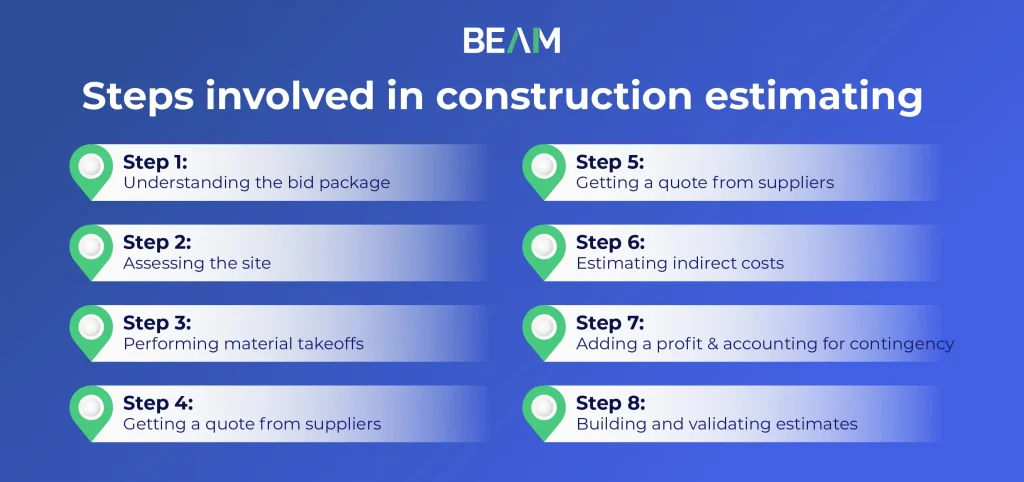
Source: https://www.ibeam.ai/
Turn Construction Estimating into a Faster, Smarter Winning Process
Construction estimating doesn’t have to feel messy, slow, or full of guesswork. With the right system in place, every bid becomes faster, cleaner, and far more accurate, and that’s exactly where Appkodes comes in.
They help you build custom construction estimating software or a construction management system that actually matches your business works in real life. From material and labor calculations to BOQ generation, automated quotes, and project cost tracking, everything is designed to reduce manual effort and improve accuracy where it matters most: your numbers.
Instead of forcing your team into rigid tools, Appkodes, a leading startup mobile app development company, creates a solution that fits your workflow, scales with your projects, and keeps your estimating process organized from start to finish.
So if you’re still losing time on spreadsheets, rework, or inconsistent estimates, it might be time to change how you build your bids.
Turn estimates into a competitive advantage. Build smarter, bid faster, and win more projects. Start your custom solution with Appkodes today.

Arun Andiselvam
Founder of AppKodes. As a serial entrepreneur, I have successfully established five brands over the past 12 years. After creating a successful rank tracker for SEO agencies, I am currently dedicated to developing the world's first SEO Project Management software.