Why Traditional Software Business Models Are Failing (And What Smart Companies Do Instead)

Software companies are at an inflection point in their history. Service industry jobs have been growing in number and generating over $6 trillion in annual revenue; the combined total of all software companies (including hardware) generates approximately $370 billion annually.
This difference creates both opportunity and interest for companies looking to grow and create new revenues. Furthermore, the estimated incremental potential of $4.4 trillion from the use of AI is substantial and represents efficiency improvements alone.
The forward-thinking leaders are recognizing the changing landscape of software monetization. Rather than relying solely on traditional rigid SaaS models, they are developing hybrid models that combine subscription-based pricing with consumption-based pricing models. They realize that the application of AI impacts not only how products are developed and built but also how they should be packaged, priced, and scaled.
The next several sections will outline three key challenges facing the development and execution of conventional software business models in today’s AI-driven economy and what high-performing organizations are doing differently to capitalize on the value creation opportunities presented by these emerging trends.
Scaling Beyond In-House Limits
Grow beyond internal capacity by leveraging external expertise, scalable technology, and smarter operations.
1. The Infrastructure Bottleneck Most MSPs Overlook
Your IT infrastructure spending reveals a critical problem: 60-80% of IT budgets go toward maintaining legacy systems. This leaves minimal room for investment in technologies that could actually transform your software as well as startup monetization strategies. These budget constraints mean 47% of MSPs report seeking to modernize and combine siloed IT tools, with costs as the most important concern.
Operational fragmentation is another way that bottlenecks worsen, as it’s reported by 40% of MSPs that their business is hindered by fragmented operations (tools, data) that also limit visibility to meet enterprise-level results at an enterprise-level cost.
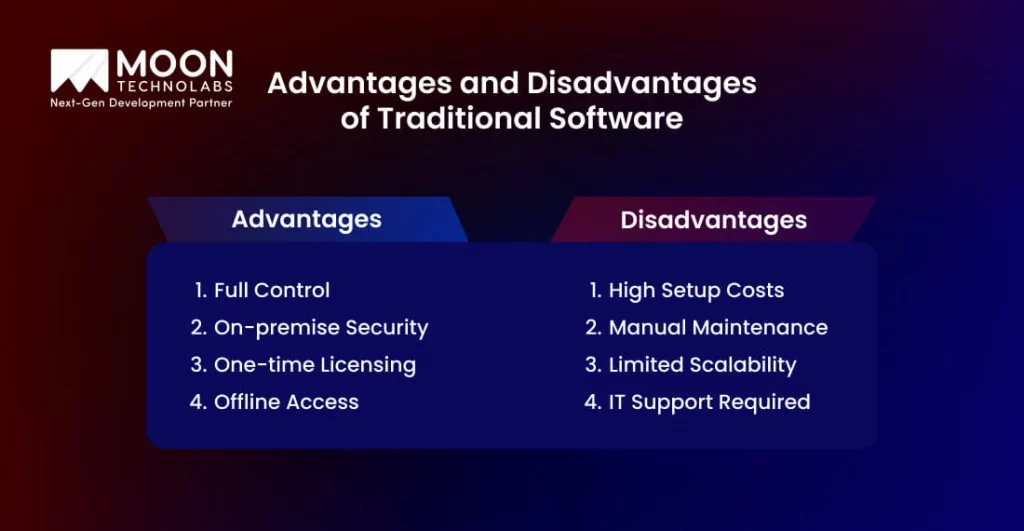
When working with third-party vendors, you will have direct access to tier three, SOC 2 audited data center environments that provide you with enterprise-level security and compliance immediately. You are able to expand your service offerings without adding additional overhead to your organization.
Source: https://www.moontechnolabs.com/
2. Workforce Elasticity as a Competitive Advantage
Rigid headcount structures expose MSPs to unnecessary risk, especially when demand shifts faster than hiring cycles can keep up. Smart operators move toward elastic workforce strategies instead. An elastic model lets you adjust capacity in real time, protecting agility and compliance while maintaining tight cost control.
You keep a strong internal core team and bring in specialized talent only when key initiatives require it. For example, many growing providers turn to Support Adventure MSP outsourcing to add experienced technicians and service coordinators without overextending long-term payroll commitments.
The increased use of elastic staffing is a result of a larger trend within the IT services industry, where 41% of MSPs report ongoing resource and skill shortfalls. Using elastic staffing to solve these resource and skill shortfalls allows you to rapidly fill resource and skill gaps on a project-by-project basis.
Rather than recruiting permanent employees to help staff during busy times, you will be able to add temporary resources to help you manage the increased workload.
3. Automating Operations Without Losing Human Expertise
48% of MSPs are bogged down by human-intensive operations, yet automation without strategic oversight introduces compliance risks and quality issues. Your automation strategy should improve human capabilities rather than replace them.
AI tools improve operational efficiency by handling repetitive tasks, but they don’t deal very well with the nuanced contextual understanding required for complex decision-making.
Human oversight ensures legal and ethical standards, applies judgment to ambiguous data that AI cannot interpret, and upholds data privacy regulations. You automate routine processes like ticket triage and root cause analysis.
This frees your workforce to focus on strategic business objectives while you retain the human checkpoints that matter most for compliance and quality control.
The Three Critical Challenges Killing Traditional Software Monetization Strategy
Software monetization strategy failures cost more than revenue. They erode customer trust and stall growth when you cannot express value clearly. Three specific challenges create the bulk of these failures.
Challenge 1: Knowing How to Communicate and Prove ROI
Nearly 70% of internal communications professionals admit that measuring ROI remains the most important challenge. Your software as a business faces a fundamental problem: tangible metrics exist (email opens, meeting attendance), but connecting those actions to engagement or productivity proves difficult.
Long-term effects compound this issue since the communication effect appears over time, making short-term outcome connections nearly impossible.
You are likely to face resistance from stakeholders regarding approval of your software investment if you cannot clearly communicate how it will deliver value to the business.
Demonstrating features alone is unlikely to be enough; smart business leaders understand that demonstrating Return on Investment (ROI) requires combining both qualitative insight and quantifiable data to provide a full-spectrum view of results.
Challenge 2: Unpredictable Pricing in Usage-Based Environments
Usage-based pricing models also create significant variability in IT budgets. 78 percent of IT leaders reported experiencing unexpected charges related to either consumption-based pricing or AI pricing over the last twelve months.
Moreover, 61 percent of those same IT leaders have cut projects as a result of increased SaaS costs that were not expected. With variable costs associated with usage-based pricing models, creating a predictable financial plan becomes increasingly difficult.
This is because IT-related costs can vary significantly depending on factors outside of IT’s control, such as when a company launches a major marketing campaign and the resulting number of API calls for an application doubles instantly, or when an integration fails and spikes compute cycles.
Challenge 3: Failed Adoption After Original Pilot Programs
AI pilot failure has become the norm, with 95% of corporate AI initiatives showing zero return. The issue stems from human factors rather than technology. Research reveals 63% of poor AI integration challenges originate from people-related issues, with user proficiency accounting for 38% of all AI failure points.
Organizations treat pilots as isolated experiments rather than parts of governed development cycles, creating context collapse when systems meet real production complexity.
What Smart Companies are Doing: The New Software as a Business Model
Market leaders are abandoning single-model pricing structures. 46% of SaaS companies have adopted hybrid pricing that combines subscription stability with consumption flexibility. Analysis of over 30 SaaS vendors introducing generative AI capabilities shows roughly 65% have introduced hybrid approaches that layer AI usage meters on top of seat-based pricing.
Hybrid Pricing: Combining Subscription with Consumption
Hybrid models deliver a recurring base fee for platform access, among other variable charges tied to actual usage. This structure can increase average revenue per user by up to 40% compared to single-model approaches.
The cost of a marketing automation platform can be $99/month for up to 2000 contacts, with each additional 500 contacts costing $10.
This model is ideal for a vertical SaaS solution for smaller businesses that have a fixed base cost in order to make it affordable to enter the market, as well as provide for growing at a low cost by increasing use rather than moving to a larger, more expensive tier.
Activity-Based and Outcome-Based Pricing Metrics
Rather than providing access to a product or service, smart companies are tying their revenue to the results of that product or service. 77% of business leaders say they are seeing customer requests for outcomes based on pricing; however, only 32% of those same leaders define usage based on those outcomes when creating pricing models.
For example, Intercom’s Fin AI agent charges $0.99 per ticket that was resolved using the AI agent. Riskified charges only for transactions that were approved, fraud-free, and guarantees approved transactions against fraud.
Platform Fees Untethered from User Counts
Seat-based pricing remains the most common form of pricing for approximately 40% of all companies; however, 97% of companies that are experiencing faster growth expect their pricing metric to change.
As such, platform fees are now being captured through the use of usage-based metrics such as API calls, transactions processed, or the number of workflows completed, as opposed to simply charging by the number of users.
AI Agents and Autonomous Workflow Pricing
AI agent pricing follows three logics: outcome-based (pay for results), action/workflow-based (pay per instance of work), or hybrid models pairing predictable base fees with variable usage tails. About 68% of vendors charge for AI improvements or include features within premium tiers.
Flexible Commitment Structures and Fungibility
Credit systems abstract the complexity that spreads usage in a variety of actions. Customers purchase credit blocks where each action consumes a defined quota from their credit bucket. Tokens act as a secondary, all-inclusive metric that brings simplicity without sacrificing the link to value.
How Business Smart Leaders are Executing the Transition
Execution separates companies that talk about new software business models from those actually capturing value. The transition requires simultaneous changes in multiple functions.
Redesigning Sales Compensation and Customer Success Roles
Sales teams need compensation tied to actual consumption, not just bookings. Account executives often only get paid based on customer usage in consumption-based environments. Customer success managers must become more product-oriented and technical, as with Microsoft’s Customer Success Architects, who drive Azure consumption. Sales and CS report into tightly arranged pods rather than siloed organizations.
Building Usage Tracking and Billing Infrastructure
You need flexible tech stacks that accommodate fluctuating transaction volumes. Mature billing systems with native subscription and revenue management features automate invoicing to support high-volume businesses. Engineering teams build consumption metering capabilities that feed usage data to downstream billing systems through APIs.
Creating Clear Investor Narratives for Consumption Models
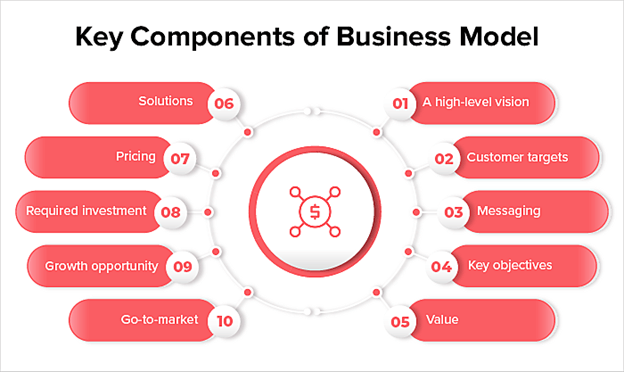
Start with market chance, what customers want, and your sustainable competitive advantages. Present a roadmap showing how you’ll implement the strategy, then demonstrate effect in broad strokes focused on long-term returns rather than quarterly guidance.
Starting with Free AI Allocations to Drive Adoption
A successful freemium strategy will need to provide a great amount of value to your target audience at some point as early as possible through a “lightweight” version of your product. To be successful, you will need to find a balance between what are considered “free” product features (those that help drive both acquisition and retention) and those that clearly trigger upgrades.
Source: https://2stallions.com/
Testing and Iterating with Real Customers Faster
Software businesses that changed pricing saw a median 14% increase in net dollar retention. Run structured experiments using A/B tests, cohort rollouts, or pilots with clear success metrics.
Conclusion
The traditional software business models generating revenue from software products no longer apply in a world dominated by AI and where customer expectations are changing rapidly. Therefore, it is now critical to create hybrid pricing models that include elements of both subscription-based stability and flexible consumption.
Your ability to succeed will depend upon how quickly you can test out different pricing models with real customers, how quickly you can transform how internal roles are defined to be consumption metric-based, and how quickly you can build a stable system to accurately measure customer consumption.
Rather than waiting for “perfect” conditions that will never exist, start testing different pricing models today with the support of Appkodes. The sooner you experiment and analyze the results, the faster you’ll understand what truly drives sustainable growth.

Thangamanikandan Bharathan
Starting as an iOS developer and moving up to lead a mobile team at a startup, I've expanded my expertise into Project Management, DevOps and eventually becoming a COO & Chief Service Officer in the IT sector. As a CSO, I excel in team leadership, technical advice, and managing complex business functions, focusing on combining technology and operations to drive growth. I'm keen to connect for collaborations or to exchange insights in the tech world!